LOVE

LOVE

Isaiah 31:4-6 NET.

4 Indeed, this is what the LORD says to me: “The LORD will be like a growling lion, like a young lion growling over its prey. Though a whole group of shepherds gathers against it, it is not afraid of their shouts or intimidated by their yelling. In this same way, the LORD who commands armies will descend to do battle on Mount Zion and on its hill. 5 Just as birds hover over a nest, so the LORD who commands armies will protect Jerusalem. He will protect and deliver it; as he passes over, he will rescue it. 6 You Israelites! Return to the one against whom you have so blatantly rebelled!

We are now in our fourth Sunday of Advent meditations. During this season, we have explored various themes found throughout scripture. In November, we focused on the theme of hope. We examined a passage in Ecclesiastes that encouraged people to live with hope, even though everyone eventually goes to the grave. It’s only when the New Testament message of the gospel of Jesus Christ is included that it genuinely makes sense. That is the purpose behind this Advent theme. We are reminded to center our hope on Christ and Christ alone. The Bible teaches us that we are mortal and that there is no hope for us after death. Therefore, we must find our hope in Christ and Christ alone. In the New Testament, we learn that Jesus revealed life and immortality through the gospel. He is our hope for eternal life.

In the second week of Advent, we learned about peace. However, the message of peace also relates to a prophecy about a great day of the Lord that will bring destruction upon the Earth. On that day of destruction, most people will realize they trusted the wrong thing and will be doomed. But the good news, as foretold in the book of Isaiah, is that before this day of the Lord, God will send a message of peace. That message was born in a stable in Bethlehem. Jesus Christ is our peace. Again, we see both good and bad news. A day of ultimate war and destruction is coming, and this terrible day of the Lord will happen according to God’s own will. It cannot be stopped or changed by human effort. It will surely happen because it is part of God’s plan. But the good news is that God has another plan. We learn about that plan in the Bible. We know that God will send his only Son to pay the price for our sins. He is the Prince of Peace. He makes peace possible. He brings peace not only between people but also between God and us.

Last week, we examined another passage from Isaiah’s prophecy. Isaiah spoke out against the nation of Moab, foretelling its destruction. He said that God would take away Moab’s joy. This doomed nation serves as an example of all the nations that have rejected Christ. On the day of judgment, there will be no joy for them. They put their trust in the wrong things and will try all kinds of ways to reconcile themselves, but they will never look to the Son of God for salvation. This is terrible news—God is even upset that this nation has not repented, and He mourns for them. However, there is no hope for them because they have not turned to the King of Kings. Yet, amid this darkness and sorrow, there is good news: joy is available forever in Christ. The Advent season prompts us to ask whether we have room in our hearts for Jesus Christ. The joy of Christmas is ours if we can answer yes. Similarly, the joy of His second coming is ours if we have made room for Jesus as our Lord and Savior. Otherwise, like the Moabites, we will only experience loss, and even our sincere prayers will never reach God. Worse still, when Jesus returns in His glory with all His angels, He will greet us not as our Lord and Savior but as our Judge. To experience true, lasting, and incredible joy, we must open our hearts to Jesus.

We now enter the fourth week of Advent, and our fourth message focused on the theme of love. As Christians, we often say that God is love, and we have evidence to support this. He demonstrated His love by creating us. He showed His love by giving us the gift of life. He has blessed us with a beautiful creation, supportive families, and wonderful friendships. However, there is also evil in this world. This evil challenges our understanding of God’s love. We are compelled to confront the reality that things are not right in the world that God created. The Bible explains why this is the case.

In the book of Genesis, we learn that God created everything good. But He gave our ancestors the choice of whether it would stay good or become corrupted by sin. They chose to sin. Their decision turned a perfect creation into an age of imperfection and corruption. You and I were born into that age.

The Israelites in Isaiah’s time were born into the same era. They faced destruction by a mighty superpower that aimed to wipe them out. Because they were in danger, the Israelites had a choice. They could either trust in their God or seek help from a neighboring nation. In this chapter, Isaiah encourages the Israelites not to rely on the Egyptians but to trust in their God for protection and safety. In today’s passage, Isaiah explains why they should trust in their God rather than rely on their neighbor.

The Lord’s love is a fearless love (4).

To understand what Isaiah is saying in verse 4, imagine a group of shepherds who realize that one of their lambs has been attacked by a fierce lion. The shepherds are courageous. They gather together and try to scare the lion away to protect the injured lamb. However, all their efforts are in vain. The lion is not going to release his prey.

In Isaiah’s imagery, the lion represents God Himself, and the lamb symbolizes the nation of Israel. Isaiah chose a lion as a symbol of God because lions are fearless. He wanted to demonstrate that God was unafraid of any of the surrounding nations. Israel didn’t need to rely on Egypt; they had a God they could trust. They could trust God because He loved them, and He loved them with fearless love. He would not abandon them. The God of armies isn’t afraid of anyone else’s army.

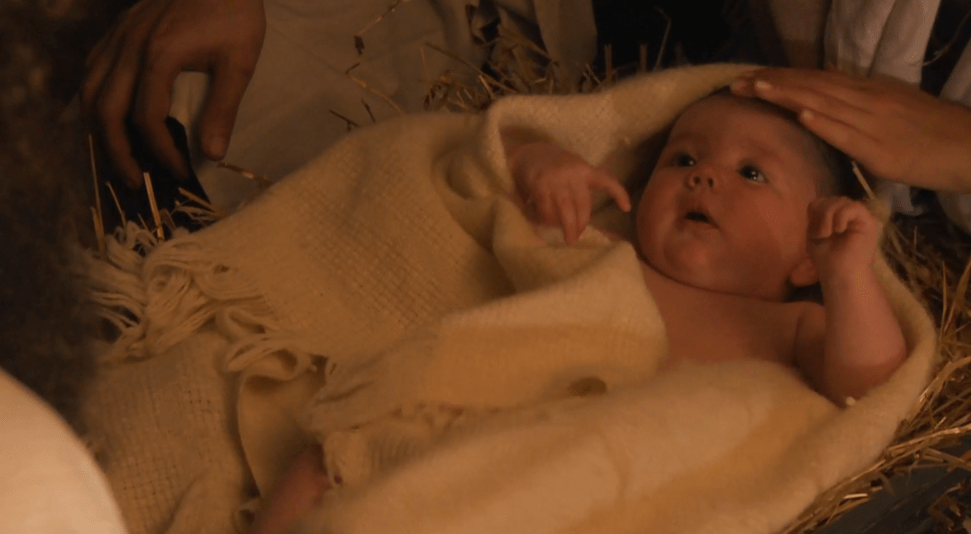
The Christmas message is also a message of fearless love. Lord came down to this earth during a time of great violence. His life was in danger from the very beginning. But God would not let us go. He clung to His people even when we were still in our sins. To show us how much He loves us, He sent His Son to the cross to die in our place. His fearless love was a stubborn love. It will never let go of us. Though danger surrounds us, we can trust in God’s stubborn, fearless love.

The Lord’s love is a protective love (5).

In verse 5, the image shifts from a lion to birds. Since moving to Delco, I’ve learned a lot about birds. Once, walking on the lawn beyond the cemetery, I was approached by a bird. I had no idea why it wanted to attack me, but it soon became clear that the bird must have a chick nearby and was protecting it. Similarly, there was a time when I was leaving the house when birds suddenly swooped very close to my head. They were dive-bombing me. Again, I had no idea why I was the target of this experience, but then I noticed the nests. The birds had built nests in the rafters of the fellowship hall, and I was getting dangerously close to them. The same thing happened when I tried to enter the church building—suddenly, the birds were there, aggressively defending their nests. Wherever the nests were, the birds would be there to protect them.

So I can understand Isaiah’s illustration here. He says just as birds hover over a nest, so the Lord who commands armies will protect Jerusalem. God’s love is a protective love.

In the New Testament, we learn that Jesus is the door through which the sheep come in and out, finding safety. He leads us into the way of life and away from the way of destruction. Ultimately, we will see victory for eternity through the resurrection. And during this life, we will understand what it means to live victoriously through the power of His Holy Spirit. It is wise to be protected by a loving Savior.

In the New Testament, Jesus pleas for people to come to him. He calls on all who are weary and burdened, promising to give them rest. He invites us to take his yoke upon ourselves and learn from him because he is gentle and humble in heart, and we will find our rest in him because his yoke is easy and his burden is light. We don’t need to rely on ourselves. We don’t have to depend on the world around us. Our Lord loves us, and we can trust in him.

All this talk about Advent truly centers on God’s plan. God has a plan for the universe, and we’re living it out. We haven’t reached the end yet; we still face hardships, difficulties, and challenging experiences. But we can look back at what God has said in the past and realize he was working out his plan then. We can also look forward to what God has promised to do in the future and trust him to follow through.

We can look to Christ as our example in doing just that. He faced hardship and suffering, including the cross, because he trusted God. He endured the cross until it was finished. The next time we see him, he won’t be as a baby in the manger, but as a victorious, triumphant king returning. That is God’s plan — to bring hope, peace, love, and joy to the world.

What Advent challenges us to do is to embrace that plan. The season invites us to accept God’s plan for our lives and to live accordingly. It challenges us to make room in our lives for the Savior of the world while He is still pleading for us to repent.

The Lord’s love is a pleading love (6).

Isaiah pleads in verse 6. He tells the Israelites to return to the one they have openly rebelled against. As God’s prophet, Isaiah speaks for God and urges his nation to turn back to Him. They had rebelled and were trying to do things their own way. Now, when faced with danger, they look for an alternative other than returning to their God. God could reject them and let them suffer the consequences of their rebellion. But that is not the God of the Bible. The God of the Bible is always pleading for people to come back to Him. He does not want to destroy us; He desires repentance and restoration. That is why, in this passage, the prophet is pleading with the people to repent.

Deuteronomy 31

Deuteronomy 31

Deuteronomy 31:1 Then Moses continued to speak these words to all Israel,

Deuteronomy 31:2 saying, “I am now 120 years old; I am no longer able to continue to go out and come in. Yahveh has told me, ‘You will not cross the Jordan.’

Deuteronomy 31:3 Yahveh your God is the one who will cross ahead of you. He will exterminate these nations before you, and you will drive them out. Joshua is the one who will cross ahead of you, as Yahveh has said.

Deuteronomy 31:4 Yahveh will do to them just what he did to Sihon and Og, the kings of the Amorites, and their land when he exterminated them.

Deuteronomy 31:5 Yahveh will give them over to your face, and you must do to them exactly as I have commanded you.

Deuteronomy 31:6 Be strong and tough; don’t be terrified of their faces. You see, Yahveh, your God is the one who will go with you; he will not leave you or abandon you.”

Deuteronomy 31:7 Moses then summoned Joshua and said to him in the sight of all Israel, “Be strong and tough, because you will go with this people into the land Yahveh swore to give to their fathers. You will enable them to take possession of it.

Deuteronomy 31:8 Yahveh is the one who will go before you. He will be with you; he will not leave you or abandon you. Do not be afraid or discouraged.”

Deuteronomy 31:9 Moses wrote down this instruction, and he gave it to the priests, sons of Levi, who carried the ark of Yahveh’s covenant, and to all the elders of Israel.

Deuteronomy 31:10 Moses commanded them, and this is what he said: “At the end of every seven years, at the same time in the year of debt revoking, during the Festival of Huts,

Deuteronomy 31:11 when all Israel assembles in the presence of Yahveh your God at the place he chooses, you are to read this instruction aloud before all Israel.

Deuteronomy 31:12 Collect the people – men, women, dependents, and the guests within your city gates– so that they may listen and learn to fear Yahveh your God and be careful to do all the words of this instruction.

Deuteronomy 31:13 Then their children who do not know the instruction will listen and learn to fear Yahveh your God as long as you live in the land you are crossing the Jordan to take possession of.”

Deuteronomy 31:14 Yahveh said to Moses, ” Notice the time of your death is now approaching. Call Joshua and present yourselves at the conference[1] tent so that I may command him.” When Moses and Joshua went and presented themselves at the conference tent,

Deuteronomy 31:15 Yahveh appeared at the tent in a column[2] of cloud, and the cloud stood at the entrance to the tent.

Deuteronomy 31:16 Yahveh said to Moses, “Notice you are about to lie down with your fathers, and these people will soon prostitute themselves with the foreign gods of the land they are entering. They will abandon me and break the covenant I have established with them.

Deuteronomy 31:17 My nose will burn at them on that day; I will abandon them and hide my face from them so that they will become easy prey. Many troubles and afflictions will come to them. On that day, they will say, ‘Haven’t these troubles come to us because our God is no longer with us? ‘

Deuteronomy 31:18 I will certainly hide my face on that day because of all the evil they have done by turning to other gods.

Deuteronomy 31:19 Therefore, write down this song for yourselves and teach it to the Israelites; place it on their lips so that this song may be a witness for me against the Israelites.

Deuteronomy 31:20 When I bring them into the land I swore to give their fathers, a land flowing with milk and honey, they will eat their fill and prosper. They will turn to other gods and worship them, despising me and breaking my covenant.

Deuteronomy 31:21 And when many troubles and afflictions come to them, this song will testify against them, because their descendants will not have forgotten it. You see, I know what they are prone to do, even before I bring them into the land I swore to give them.”

Deuteronomy 31:22 So Moses wrote down this song on that day and taught it to the Israelites.

Deuteronomy 31:23 Yahveh commanded Joshua, son of Nun, and this is what he said, “Be strong and tough, because you will bring the Israelites into the land I swore to them, and I will be with you.”

Deuteronomy 31:24 When Moses had finished writing down on a scroll every single word of this instruction,

Deuteronomy 31:25 he commanded the Levites who carried the ark of Yahveh’s covenant, and this is what he said:

Deuteronomy 31:26 “Take this book of the instruction and place it beside the ark of the covenant of Yahveh your God so that it may stay there as a witness against you.

Deuteronomy 31:27 You see, I know how rebellious and hard-necked you are. Notice, if you are rebelling against Yahveh now, while I am still alive, how much more will you rebel after I am dead!

Deuteronomy 31:28 Collect all your tribal elders and officers before me so that I may speak these words directly to them and call sky and land as witnesses against them.

Deuteronomy 31:29 For I know that after my death you will become completely corrupt and turn from the path I have commanded you. Disaster will come to you in the future because you will do what is evil in Yahveh’s sight, angering him with what your hands have made.”

Deuteronomy 31:30 Then Moses recited aloud every single word of this song to the entire collected assembly of Israel:


[1]‎  אֹ֥הֶל מוֹעֵ֖ד= conference tent.

[2] עַמּוּד= column.

Deuteronomy 31 quotes:

“The structure of chapter 31 provides important insight into its meaning. Within Deuteronomy’s larger structure, it begins the final section (chs. 31 – 34) as a frame to chapters 1 – 3. In this respect, it importantly reminds all Israel at the outset of the Lord’s intent to go ahead of his people and destroy the nations which they will encounter across the Jordan, as he did to Sihon and Og on the eastern side of the Jordan. Yet Israel must be strong and courageous in carrying out this task (v. 6). At the same time, Moses’ imminent death (vv. 2, 16) and Joshua’s succession and encouragement (cf. 1:38 and 3:28), using the same terms/language given to Israel, are located at important junctures within the chapter (vv. 7–8, 14 and 23). At the structural heart of the chapter (vv. 14–23), the Lord appears at the Tent of Meeting to speak of Moses’ imminent death and Joshua’s commission. Israel will prostitute themselves to the foreign gods of the land that they are entering, and thus break the covenant. This will lead to Yahweh hiding his face from them (vv. 17– 18). The response to this situation is a written song, which will serve as a perpetual witness against Israel in time to come (vv. 19–22). On either side of this centrepiece is the written law first given to the priests, the sons of Levi, to be read publicly every seven years at the Feast of Tabernacles to an assembly of all the people, in four categories: men, women, children and aliens (vv. 9–13). Then at verses 24–29, the written Book of the Law is given to the Levites to place beside the ark of the covenant, as a passive witness against Israel, anticipating their future rebellion and corruption. This leads to a second assembly (v. 28) of all the elders and officials (possibly also four in number; cf. 29:10[ET]), echoing the gravity of the assembly at Horeb (cf. 4:10), as a counterpart to verse 12. They gather as Israel’s responsible leaders, in view of certain future failure and the danger of replicating the sin of the golden calf episode (vv. 27 and 29). In the meantime, the Lord, through Moses, will speak these words to them, which probably means the words of the song to follow in verse 30, and at the same time he calls upon the third witness of heaven and earth against their inevitable apostasy, thus fulfilling the maximum requirement of the law (17:6; 19:15).”

Woods, Edward J.. Deuteronomy: An Introduction and Commentary (Tyndale Old Testament Commentaries Book 5) . InterVarsity Press. Kindle Edition.

“The approaching decease of Moses, which has already been anticipated (see 1:37–38 and 3:23–29), now becomes the central focus for the remaining chapters of the book.1 Moses is aware of his approaching death, and in the light of that fact he once again encourages the people in their faith and takes care of some final practical matters relating to the covenant community. First he encourages the people as a whole (vv. 1–6), and then, in the presence of the people, he encourages Joshua in particular, who would soon be assuming the role of leadership (vv. 7–8).”

Craigie, Peter C.. The Book of Deuteronomy (The New International Commentary on the Old Testament) (p. 369). Wm. B. Eerdmans Publishing Co.. Kindle Edition.

Deuteronomy 31 links:

“To be gathered to his people”
accompany and enable
congressional warning
double-edged witness
Excursus- “To Be Gathered”
in retrospect- no empty word
in retrospect- the source of strength and courage
Maranatha Daily Devotional – Monday, June 14, 2021
Maranatha Daily Devotional – Wednesday, June 12, 2019
noseburn and a hidden face
not the best news
read this instruction aloud
the other verses
The sky above – shamayim, the land beneath – erets
thou shalt sleep
with us through it all


The JOHN shelf in Jeff’s library

Deuteronomy 30

Deuteronomy 30

Deuteronomy 30:1 “When all these things happen to you– the empowerments and afflictions I have set before you– and you come to your senses while you are in all the nations where Yahveh your God has driven you,

Deuteronomy 30:2 and you and your children return to Yahveh your God and obey him with all your heart and all your throat by doing everything I am commanding you today,

Deuteronomy 30:3 then he will restore your fortunes, have compassion on you, and gather you again from all the peoples where Yahveh your God has scattered you.

Deuteronomy 30:4 Even if your exiles are at the end of the sky, Yahveh will gather you and bring you back from there.

Deuteronomy 30:5 Yahveh, your God, will bring you into the land your fathers took possession of, and you will take possession of it. He will cause you to prosper and multiply you more than he did your fathers.

Deuteronomy 30:6 Yahveh, your God, will circumcise your heart and the hearts of your descendants, and you will care about him with all your heart and all your throat so that you will live.

Deuteronomy 30:7 Yahveh, your God, will put all these oaths on your enemies who hate and persecute you.

Deuteronomy 30:8 Then you will again obey Yahveh and follow all his commands I am commanding you today.

Deuteronomy 30:9 Yahveh, your God, will make your prosperity survive in all the work of your hands, your offspring, the offspring of your livestock, and the produce of your land. Indeed, Yahveh will again delight in your prosperity, as he delighted in that of your fathers,

Deuteronomy 30:10 when you obey Yahveh your God by watching his commands and prescriptions that are written in this book of the instruction and return to him with all your heart and all your throat.

Deuteronomy 30:11 “You see, this command that I command you today is certainly not too complicated or beyond your reach.

Deuteronomy 30:12 It is not in the sky, so you have to ask, ‘Who will go up to the sky, get it for us, and proclaim it to us so that we may follow it?’

Deuteronomy 30:13 And it is not across the sea so that you have to ask, ‘Who will cross the sea, get it for us, and proclaim it to us so that we may follow it?’

Deuteronomy 30:14 But the message is very near you, in your mouth and your heart, so that you may follow it.

Deuteronomy 30:15 See, today I have set before you life and prosperity, death and adversity.

Deuteronomy 30:16 You see, I am commanding you today to care about Yahveh your God, to walk in his ways, and to watch his commands, prescriptions, and rules, so that you may stay alive and multiply, and Yahveh your God may empower you in the land you are entering to take possession of.

Deuteronomy 30:17 But if your heart turns away and you do not listen and you are led astray to bow in worship to other gods and serve them,

Deuteronomy 30:18 I tell you today that you will certainly be destroyed and will not prolong your days in the land you are entering to take possession of across the Jordan.

Deuteronomy 30:19 I call sky and land as witnesses against you today that I have set before you life and death, empowerment and affliction. Choose life so that you and your descendants may stay alive,

Deuteronomy 30:20 care about Yahveh, your God, obeying him, and staying faithful to him. Because he is your life, and he will prolong your days as you stay in the land, Yahveh swore to give to your fathers Abraham, Isaac, and Jacob.”

Deuteronomy 30 quotes:

“Theologically, chapter 30 addresses the future anticipated at 4:25–31, and so provides further commentary on that statement. The future orientation of verses 1–10 points to a certain exile and dispersion of the Lord’s people, when all these blessings and curses … come upon you (in that order), after living in the Promised Land for some time. Therefore, the chapter addresses the issue of whether the covenant can continue, and on what basis. At the same time, it assumes that Israel will fail (28:1 – 29:28[ET]; cf. 31:24–29), but after exile and judgment, God’s mercy and covenant faithfulness will again prevail in restoring faithless Israel. If this happens, they should not lose hope (Jer. 24:1–10), for if they take the blessings and curses to heart (v. 1), and return to the Lord with all their heart and soul (vv. 2, 10), then the Lord will bring them back from captivity and restore their fortunes (vv. 3–5, 9). But in order to make this return to the Lord both possible and permanent in terms of obedience to all his commands (v. 8), the Lord himself will circumcise their hearts, as well as the hearts of their children, so that they might love him with all their heart and soul, and live (v. 6; anticipating Jer. 31:31–34; Ezek. 36:24–32). Then returning to the present Moab generation in verses 11–14, the future ideal of verses 6 and 8 is now put in more realistic terms relating to the accessibility of the law and the present possibility of obeying it. These verses constitute the rhetorical heart of the chapter, leading to the matter of an appropriate choice by Israel in verses 15–20: See, I set before you today life and prosperity, death and destruction (v. 15), concluding at verse 19: Now choose life … For the LORD is your life, and he will give you many years in the land he swore to give to your fathers, Abraham, Isaac and Jacob. The final choice is between love of Yahweh and obedience to his promise and laws, leading to life (cf. 32:46–47), or following the gods of Canaan, leading to death (vv. 16–18; cf. Josh. 24:14–15).”

Woods, Edward J.. Deuteronomy: An Introduction and Commentary (Tyndale Old Testament Commentaries Book 5) . InterVarsity Press. Kindle Edition.

“At some future point, when disobedience brought on the curse of the covenant and the people were dispersed among foreign nations, there would come a turning point. The turning point would be followed by certain steps; the process described here was to influence in many ways the preaching of the prophets in subsequent generations. (a) You shall return to your senses (v. 1)—the people would remember that the circumstances in which they found themselves were not the result of “fate,” but an inevitable consequence of disobeying the covenant with the Lord, which resulted in the curse of the Lord. (b) Return to the Lord (v. 2)—once they knew the reason for the curse that had befallen them, the course of action would become clear. In repentance, they must return to the Lord of the Covenant, individually and as families.

(c) You shall listen to his voice (v. 2)—the repentance involved not only turning back from the evil past, but a new and wholehearted commitment of obedience to God’s voice, which was expressed for them in God’slaw and was written in a book (see v. 10). (d) Then the Lord your God will restore your fortunes1 (v. 3)—the nature of exile would be such that repentance alone could not lead to freedom, for the people would be in foreign lands under foreign authorities. Having remembered, repented, and obeyed, then the people could look to God for his aid in restoring them to that previous position; only then could they expect to know once again his compassion (v, 3). God, acting in the course of human history (just as he had done in bringing his people out of Egypt), would regather his people from the places to which he had scattered them in judgment.”

Craigie, Peter C.. The Book of Deuteronomy (The New International Commentary on the Old Testament) (pp. 363-364). Wm. B. Eerdmans Publishing Co.. Kindle Edition.

Deuteronomy 30 links:

full repentance
his mission
in retrospect- a simple choice
in retrospect- the secretly disobedient
LET THE MISTREATED REJOICE
Maranatha Daily Devotional – Tuesday, November 12, 2024
not the best news
regathered and returned
riches that please God
staying faithful to him
The one and only – Mark 12-28-30
the one and only
the promise – eternal life
The sky above – shamayim, the land beneath – erets


The DEUTERONOMY shelf in Jeff’s library.

Deuteronomy 29

Deuteronomy 29

Deuteronomy 29:1 These are the words of the covenant Yahveh commanded Moses to establish with the Israelites in the land of Moab, in addition to the covenant he had made with them at Horeb.

Deuteronomy 29:2 Moses summoned all Israel and said to them, “You have seen with your own eyes everything Yahveh did in Egypt to Pharaoh, to all his officials, and his entire land.

Deuteronomy 29:3 You saw with your own eyes the great trials and those great signs and wonders.

Deuteronomy 29:4 Yet to this day, Yahveh has not given you a heart to understand, eyes to see, or ears to hear.

Deuteronomy 29:5 I led you forty years in the open country; your clothes and the sandals on your feet did not wear out;

Deuteronomy 29:6 you did not eat bread or drink wine or beer – so that you might know that I am Yahveh your God.

Deuteronomy 29:7 When you reached this place, King Sihon of Heshbon and King Og of Bashan came out against us in battle, but we defeated them.

Deuteronomy 29:8 We took their land and gave it as an inheritance to the Reubenites, the Gadites, and half the tribe of Manasseh.

Deuteronomy 29:9 Therefore, watch the words of this covenant and follow them so that you will succeed in everything you do.

Deuteronomy 29:10 “All of you are standing today before Yahveh your God – your leaders, tribes, elders, officials, all the men of Israel,

Deuteronomy 29:11 your dependents, your wives, and the guests in your camps who cut your wood and draw your water –

Deuteronomy 29:12 so that you may enter into the covenant of Yahveh your God, which he is establishing with you today, so that you may enter into his oath[1]

Deuteronomy 29:13 and so that he may establish you today as his people and he may be your God as he promised you and as he swore to your fathers Abraham, Isaac, and Jacob.

Deuteronomy 29:14 I am establishing this covenant and this oath not only with you,

Deuteronomy 29:15 but also with those who are standing here with us today in the presence of Yahveh our God and with those who are not here today.

Deuteronomy 29:16 “Indeed, you know how we stayed in the land of Egypt and passed through the nations where you traveled.

Deuteronomy 29:17 You saw their repulsive things[2] and idols made of wood, stone, silver, and gold, which were among them.

Deuteronomy 29:18 Or else there may be a man, woman, clan, or tribe among you today whose heart turns away from Yahveh our God to go and worship the gods of those nations. Be sure there is no root among you bearing poisonous and bitter fruit.

Deuteronomy 29:19 When someone hears the words of this oath, he may celebrate himself, and this is what he says: ‘I will have peace even though I follow my own stubborn heart.’ This will lead to the destruction of the well-watered land as well as the dry land.

Deuteronomy 29:20 Yahveh will not be willing to forgive him. Instead, his anger and jealousy will burn against that person, and every oath written in this scroll will descend on him. Yahveh will blot out his name under the sky,

Deuteronomy 29:21 And Yahveh will separate him from all the tribes of Israel for harm, according to all the oaths of the covenant written in this book of instruction.

Deuteronomy 29:22 “Future generations of your children who follow you and the foreigner who comes from a distant country will see the plagues of that land and the sicknesses Yahveh has inflicted on it.

Deuteronomy 29:23 All its land will be a burning waste of sulfur and salt, unplanted, producing nothing, with no plant growing on it, just like the fall of Sodom and Gomorrah, Admah and Zeboiim, which Yahveh demolished in his fierce anger.

Deuteronomy 29:24 All the nations will ask, ‘Why has Yahveh done this to this land? Why this intense outburst of anger?’

Deuteronomy 29:25 Then people will answer, ‘It is because they abandoned the covenant of Yahveh, the God of their fathers, which he had established with them when he brought them out of the land of Egypt.

Deuteronomy 29:26 They began to serve other gods, bowing in worship to gods they had not known – gods that Yahveh had not permitted them to worship.

Deuteronomy 29:27 Therefore Yahveh’s nose burned at this land, and he brought every affliction written in this book on it.

Deuteronomy 29:28 Yahveh uprooted them from their land in his anger, rage, and intense wrath and tossed them into another land where they are today.’

Deuteronomy 29:29 The hidden things belong to Yahveh our God, but the revealed things belong to us and our children permanently, so that we may follow all the words of this instruction.


[1]אָלָה = oath. Deuteronomy 29:12, 14, 19, 20, 21; 30:7.

[2]שִׁקּוּץ = repulsive thing.

Deuteronomy 29 quotes:

“Chapter 29 draws attention to the terms and implications of Israel’s entering into the covenant that is sealed with a ‘curse’ (v. 12 [ET]), involving both present and future generations (vv. 11–15). The new element here is that all members of the community, from the leaders to menial servants, stand as individuals before the Lord (vv. 9–15), and are thus under the curse and wrath of God if the covenant is broken. The chapter especially recalls the standpoint of chapter 13 on apostasy and idolatry (v. 18 [ET]). This is then developed in terms of the person who might hear the words of the curse, and then invoke a blessing upon himself, thinking that he is safe from the curse, while continuing in his own stubborn and rebellious ways (cf. 27:15–26). Such a person is a root, whose bitter poison can bring ruin to the entire nation (v. 19 ET]). Earlier, this is attributed to the absence of ‘a heart to know, eyes to see and ears to hear’ to ‘this day’ (v. 4 [ET]). Such sin will never be forgiven within Israel. The wrath of the Lord (vv. 20–28 [ET]) will ‘burn’ against such a person, and ‘single’ him out for the full quota of curses contained in chapters 27 – 28 (v. 21 [ET]). In time this will lead to the land itself becoming an unproductive burning waste like Sodom and Gomorrah, prompting the nations to ask why this should be so. The answer will be that Israel abandoned the covenant of the Lord by worshipping other gods they did not know, gods he had not given them (vv. 22– 28; cf. 4:19; 28:64). As a result, the Lord’s anger will burn against the land, uprooting Israel and thrusting them into another land, as it is now. Finally, verse 29 [ET] flows into the following chapter, where the resolution to this failure is described.”

Woods, Edward J.. Deuteronomy: An Introduction and Commentary (Tyndale Old Testament Commentaries Book 5) . InterVarsity Press. Kindle Edition.

“In the concluding charge, Moses returns first of all to dwell briefly on some of the themes already contained in the earlier discourses (vv. 1–8.1 The substance of the material presented here in summary form is a recollection of God’s acts in history, from the Exodus, through the testing period in the wilderness, and up to the arrival of the people on the plains of Moab. To the reader, the repetition may seem somewhat tedious at first sight, but the significance of the repetition appears in v. 3: the Lord has not granted you,2 up to this day, a mind3 to understand, and eyes to see, and ears to hear. With the perspective of time, the Israelites could learn to see God’s presence in their past experience, but it required insight and perception.”

Craigie, Peter C.. The Book of Deuteronomy (The New International Commentary on the Old Testament) (p. 356). Wm. B. Eerdmans Publishing Co.. Kindle Edition.

Deuteronomy 29 links:

a burning waste
entering one covenant
extraordinary
faith and reality
in retrospect- the secretly disobedient
internal miracle
stubbornly faithful followers
swept away
time machine


The DEUTERONOMY shelf in Jeff’s library.

Deuteronomy 28

Deuteronomy 28

Deuteronomy 28:1 “Now if you faithfully obey Yahveh your God and are careful to do all his commands I am commanding you today, Yahveh your God will put you far above all the nations of the land.

Deuteronomy 28:2 All these empowerments will come and overtake you because you obey Yahveh your God:

Deuteronomy 28:3 You will be empowered in the city and empowered in the country.

Deuteronomy 28:4 Your offspring will be empowered, and your land’s produce, and the offspring of your livestock, including the young of your herds and the newborn of your flocks.

Deuteronomy 28:5 Your basket and kneading bowl will be empowered.

Deuteronomy 28:6 You will be empowered when you come in and empowered when you go out.

Deuteronomy 28:7 “Yahveh will cause the enemies who rise against you to be defeated before you. They will march out against you in one direction but run away from you in seven directions.

Deuteronomy 28:8 Yahveh will command for you empowerment on your barns and on everything you do; he will empower you in the land Yahveh your God is giving you.

Deuteronomy 28:9 Yahveh will establish you as his sacred people, as he swore to you, if you watch the commands of Yahveh your God and walk in his ways.

Deuteronomy 28:10 Then all the peoples of the land will see that you bear Yahveh’s name, and they will stand in awe of you.

Deuteronomy 28:11 Yahveh will make your prosperity survive[1] with offspring, the offspring of your livestock, and your land’s produce in the land Yahveh swore to your fathers to give you.

Deuteronomy 28:12 Yahveh will open for you his abundant storehouse, the sky, to give your land rain in its season and to empower all the work of your hands. You will lend to many nations, but you will not borrow.

Deuteronomy 28:13 Yahveh will make you the head and not the tail; you will only move upward and never downward if you listen to Yahveh, your God’s commands, which I am commanding you today, and are careful to follow them.

Deuteronomy 28:14 Do not turn aside to the right or the left from all the things I am commanding you today, and do not follow other gods to worship them.

Deuteronomy 28:15 “But if you disobey Yahveh your God by carefully following all his commands and prescriptions I am giving you today, all these afflictions will come and overtake you:

Deuteronomy 28:16 You will be afflicted with a curse in the city and afflicted with a curse in the country.

Deuteronomy 28:17 Your basket and kneading bowl will be afflicted with a curse.

Deuteronomy 28:18 Your offspring will be afflicted with a curse, and your land’s produce, the young of your herds, and the newborn of your flocks.

Deuteronomy 28:19 You will be afflicted with a curse when you come in and afflicted with a curse when you go out.

Deuteronomy 28:20 Yahveh will send against you curses, confusion, and rebuke in everything you do until you are exterminated and quickly destroyed because of the wickedness of your actions in abandoning me.

Deuteronomy 28:21 Yahveh will make pestilence cling to you until he has exterminated you from the land you are entering to take possession of.

Deuteronomy 28:22 Yahveh will afflict you with wasting disease, fever, inflammation, burning heat, drought, blight, and mildew; these will pursue you until you are destroyed.

Deuteronomy 28:23 The sky above you will be bronze, and the land beneath you iron.

Deuteronomy 28:24 Yahveh will turn the rain of your land into falling dust; it will descend on you from the sky until you are exterminated.

Deuteronomy 28:25 Yahveh will cause you to be defeated before your enemies. You will march out against them in one direction but run away from them in seven directions. You will be an example of terror to all the kingdoms of the land.

Deuteronomy 28:26 Your corpses will be food for all the birds of the sky and the wild animals of the land, with no one to scare them away.

Deuteronomy 28:27 “Yahveh will afflict you with the boils of Egypt, tumors, a festering rash, and scabies, from which you cannot be cured.

Deuteronomy 28:28 Yahveh will afflict you with madness, blindness, and mental confusion,

Deuteronomy 28:29 so that at noon you will grope as a blind person gropes in the dark. You will not be successful in anything you do. You will certainly be exploited and robbed continually, and no one will help you.

Deuteronomy 28:30 You will become engaged to a woman, but another man will rape her. You will build a house but not stay in it. You will plant a vineyard but not enjoy its fruit.

Deuteronomy 28:31 Your ox will be slaughtered before your eyes, but you will not eat any of it. Your donkey will be taken away from you and not returned to you. Your flock will be given to your enemies, and no one will help you.

Deuteronomy 28:32 Your sons and daughters will be given to another people, while your eyes grow weary looking for them every day. But you will be powerless to do anything.

Deuteronomy 28:33 A people you don’t know will eat your land’s produce and everything you have labored for. You will only be exploited and crushed continually.

Deuteronomy 28:34 You will be driven mad by what you see.

Deuteronomy 28:35 Yahveh will afflict you with painful and incurable boils on your knees and thighs– from the sole of your foot to the top of your head.

Deuteronomy 28:36 “Yahveh will bring you and your king that you have appointed to a nation neither you nor your fathers have known, and there you will worship other gods, of wood and stone.

Deuteronomy 28:37 You will become an object of desolation, scorn, and ridicule among all the peoples where Yahveh will drive you.

Deuteronomy 28:38 “You will sow much seed in the field but harvest little, because locusts will devour it.

Deuteronomy 28:39 You will plant and cultivate vineyards but not drink the wine or gather the grapes because worms will eat them.

Deuteronomy 28:40 You will have olive trees throughout your territory but not moisten your skin with oil, because your olives will drop off.

Deuteronomy 28:41 You will father sons and daughters, but they will not remain yours because they will be taken prisoner.

Deuteronomy 28:42 Buzzing insects will take possession of all your trees and your land’s produce.

Deuteronomy 28:43 The guest among you will rise higher and higher above you, while you sink lower and lower.

Deuteronomy 28:44 He will lend to you, but you won’t lend to him. He will be the head, and you will be the tail.

Deuteronomy 28:45 “All these afflictions will come, pursue, and overtake you until you are exterminated, since you disobeyed Yahveh your God and watch the commands and prescriptions he gave you.

Deuteronomy 28:46 These curses will be a sign and a wonder against you and your descendants permanently.

Deuteronomy 28:47 Because you didn’t serve Yahveh your God with joy and a cheerful heart, even though you had an abundance of everything,

Deuteronomy 28:48 you will serve your enemies Yahveh will send against you, in famine, thirst, nakedness, and a lack of everything. He will place an iron yoke on your neck until he has exterminated you.

Deuteronomy 28:49 Yahveh will bring a nation from far away, from the ends of the land, to swoop down on you like an eagle, a country whose language you won’t understand,

Deuteronomy 28:50 a ruthless nation, showing no respect for the old and not sparing the young.

Deuteronomy 28:51 They will eat the offspring of your livestock and your land’s produce until you are exterminated. They will leave you no grain, new wine, fresh oil, young of your herds, or newborn of your flocks until they cause you to be destroyed.

Deuteronomy 28:52 They will besiege you within all your city gates until the high and fortified walls that you trust in come down throughout your land. They will besiege you within all your city gates throughout the land Yahveh your God has given you.

Deuteronomy 28:53 “You will eat your offspring, the meat of your sons and daughters Yahveh your God has given you during the siege and hardship your enemy imposes on you.

Deuteronomy 28:54 The most sensitive and refined man among you will look grudgingly at his brother, the wife he embraces, and the survivors of his children,

Deuteronomy 28:55 refusing to share with any of them his children’s meat that he will eat because he has nothing left during the siege and hardship your enemy imposes on you in all your towns.

Deuteronomy 28:56 The most sensitive and refined woman among you, who would not venture to set the sole of her foot on the land because of her refinement and sensitivity, will begrudge the husband she embraces, her son, and her daughter,

Deuteronomy 28:57 the afterbirth that comes out from between her legs and the children she bears, because she will secretly eat them for lack of anything else during the siege and hardship your enemy imposes on you within your city gates.

Deuteronomy 28:58 “If you are not careful to watch all the words of this instruction, which are written in this scroll, by fearing this glorious and awe-inspiring name – Yahveh, your God –

Deuteronomy 28:59 and Yahveh will bring overwhelming plagues on you and your descendants, severe and lasting plagues, and terrible and chronic sicknesses.

Deuteronomy 28:60 He will afflict you again with all the diseases of Egypt, which you dreaded, and they will cling to you.

Deuteronomy 28:61 Yahveh will also afflict you with every sickness and plague not recorded in the book of this instruction until you are exterminated.

Deuteronomy 28:62 Though you were as numerous as the stars of the sky, you will be left with only a few people because you disobeyed Yahveh, your God.

Deuteronomy 28:63 Just as Yahveh was glad to cause you to prosper and to multiply you, so he will also be glad to cause you to be destroyed and to exterminate you. You will be ripped out of the land you are entering to take possession of.

Deuteronomy 28:64 Then Yahveh will scatter you among all peoples from one end of the land to the other, and there you will worship other gods, of wood and stone, which neither you nor your fathers have known.

Deuteronomy 28:65 You will find no peace among those nations, and there will be no resting place for the sole of your foot. There, Yahveh will give you a trembling heart, failing eyes, and a lethargic throat.

Deuteronomy 28:66 Your life will hang in doubt before you. You will be in dread night and day, never sure of survival.

Deuteronomy 28:67 In the morning, you will say, ‘If only it were evening! ‘ and in the evening, you will say, ‘If only it were morning! ‘– because of the dread you will have in your heart and because of what you will see.

Deuteronomy 28:68 Yahveh will take you back in ships to Egypt by a route that I said you would never see again. There, you will try to sell yourselves to your enemies as male and female slaves, but no one will buy you.”


[1]יָתַר

Deuteronomy 28 quotes:

“The blessings (vv. 1–14) and curses (vv. 15–68) of chapter 28 follow the pattern of Ancient Near Eastern treaties in seeking to motivate loyalty and obedience in the subjects of the conquering king.

But within the Pentateuch, the unity and concept of blessing and curse drives the narrative from Genesis (the fivefold blessing given to Abraham at 12:1–3, reversing the fivefold curse of Gen. 3 – 11); the blessing of Jacob (Gen. 49:1–33); Leviticus 26:1–13 (blessings); Leviticus 26:14–46 (curses); and Deuteronomy 27 – 28, 32 – 33.91 Therefore, the assumption behind the blessings and curses within the Pentateuch is the sovereignty of Yahweh (monotheism) in all the affairs of life. This especially relates to the Lord’s covenant with Abraham and his progeny to give them a land (Gen. 12:1–3). But in order to possess this promise in all its fullness, Israel must replicate Abraham’s obedience to all of the Lord’s commands (cf. Gen. 26:5; Deut. 28:1, 15, 58). The main sin that will undo this blessing and incur Yahweh’s curses will be Israel’s proclivity to go after other gods and serve them (28:14). Within chapter 28, the curses are four times longer than the blessings (cf. Lev. 26:14–46; three times longer than the blessings), which initially may have served the purpose of motivating obedience to the laws of chapters 5 – 28 (cf. 29:19–21). But it may also suggest that Israel will fail in its attempt to keep the demands of the covenant (cf. 31:14–29). Even though the curses will inevitably follow the blessings (30:1), God’s grace will also prevail in the possibility of Israel’s return to the Lord (30:1–10), suggesting that the curses were not always logical or irreversible in their desired and rhetorical effects. Finally, the terms of the covenant (28:69 [MT]; 29:1 [ET]) from chapters 5 – 28 were to be understood as a new embodiment or renewal of the Horeb covenant, and not its replacement.”

Woods, Edward J.. Deuteronomy: An Introduction and Commentary (Tyndale Old Testament Commentaries Book 5) . InterVarsity Press. Kindle Edition.

“The conclusion to the specific stipulations (26:16–19) was followed in the address by instructions relating to the future renewal of the covenant in the vicinity of Shechem, after the initial stages of the conquest. In that future renewal ceremony, blessings and curses would be declared to the people (27:11–26). Now the focus in the address of Moses returns to the present moment, and in ch. 28 the substance of the address is an exhortation based upon the blessings and curses pronounced during the renewal of the covenant on the plains of Moab.”

Craigie, Peter C.. The Book of Deuteronomy (The New International Commentary on the Old Testament) (p. 335). Wm. B. Eerdmans Publishing Co.. Kindle Edition.

Deuteronomy 28 links:

a godforsaken condition
a responsible people
a sign and a wonder
bearing his name
better homes and gardens
doubt and dread
exploitation and crushing
exterminate!
futility
glad to
he’d be glad to
heads or tails?
holy terrors
in retrospect- health and prosperity
in retrospect- what if?
Maranatha Daily Devotional – Wednesday, June 14, 2023
missing variable
oppression and domination
prosperous instead of predators
stipulations
The sky above – shamayim, the land beneath – erets
trapped in a lifestyle
trapped in Ebal
within the contest


The DEUTERONOMY shelf in Jeff’s library.