
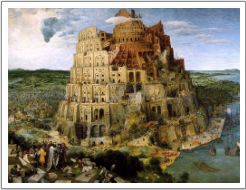
ACST 23. The Ethnic Being

In revealing the essence of humanity, the Bible has presented humans as beings which share a common unity (ancestry in Adam and responsibility before God), but also diversity (male and female). These truths are revealed in the book of Genesis, which has provided a good foundation for an understanding of humanity. It may hold the key to understanding another kind of diversity as well: ethnic and racial distinctions.

For the purposes of this study, racial distinctions are those physical characteristics which can be used to identify someone: such as bone structure, facial characteristics, and skin color. Racial distinctions are hereditary, and appear to change slowly. Ethnic distinctions are those social characteristics that identify someone as having been reared in (or adjusted to) a particular culture. Ethnic distinctions are environmental, and are constantly changing. Some ethnic communities are closely identified with certain races, while others are not. Taken together, both racial and ethnic differences are reminders of a fundamental fact of human nature: humans are ethnic beings.

The reason for this fact that all human beings have an ethnic identity may be revealed in Genesis.

Now the whole earth had one language and the same words. And as people migrated from the east, they found a plain in the land of Shinar and settled there. And they said to one another, “Come, let us make bricks, and burn them thoroughly.” And they had brick for stone, and bitumen for mortar. Then they said, “Come, let us build ourselves a city and a tower with its top in the heavens, and let us make a name for ourselves, lest we be dispersed over the face of the whole earth.” And the LORD came down to see the city and the tower, which the children of man had built. And the LORD said, “Behold, they are one people, and they have all one language, and this is only the beginning of what they will do. And nothing that they propose to do will now be impossible for them. Come, let us go down and there confuse their language, so that they may not understand one another’s speech.” So the LORD dispersed them from there over the face of all the earth, and they left off building the city. Therefore its name was called Babel, because there the LORD confused the language of all the earth. And from there the LORD dispersed them over the face of all the earth.1

The creature God created appears to have had a remarkable unity until this time in history. That unity probably was a racial one as well. This can be seen from the fact that God chose to place an identifying mark upon Cain to protect him from future vengeance.2 So, if racial distinctions were passed on through Adam, one would expect Cain’s appearance to be already distinct enough that such a mark would be unnecessary.

Perhaps the transformation that God caused at Babel was more than a simple change of languages. It might have been the beginning point for racial distinctions as well. If that were so, the communities that eventually emerged from the scattering at Babel would be based on linguistic and racial distinctions. Cultural differences would evolve from these separated communities.

Jenkins suggests that that the Babel story is given to answer at least two questions: “1) Where did the variety of languages come from? and 2) How did man disperse and populate the world.”3 Perhaps the answer to a third question, “What is the origin of ethnic identity” may be found here also. What is certain is that at some point in human history the human species has diverged into a number of distinct ethnic groups.

From One Ethnic Identity to Many

The king James version follows the textual tradition which added the word haimatos (blood)4 to Acts 17:26. Thus the KJV reads “And hath made of one blood all nations of men for to dwell on all the face of the earth.” This rendering accents the fact that the human race has an origin in one bloodline. Most modern translations reject the word haimatos as an editorial addition, and translate something like “And he made from one man every nation.”5 But the word “man” is not in the text. It might just as easily be translated “And he made from one nation every nation.”

The word for nation in that text is ethnos, which is the generic word for ethnic groups as well as political groups. The apostle Paul was of one ethnic group (Jews) and he was speaking to the Athenians, who were of another ethnic group (Greeks). His statement recognized the ethnic distinctions between the two groups, while at the same time appealing to a common origin.

The Purpose of Ethnic Identities

God’s intention for the existence of these ethnic identities is to preserve them throughout eternity under the lordship of Christ. That can be inferred from Rev. 7:9, where John says “After this I looked, and behold, a great multitude that no one could number, from every nation, from all tribes and peoples and languages, standing before the throne and before the Lamb, clothed in white robes, with palm branches in their hands.” John uses four terms, and each implies ethnic distinctions. It is clear that eternity is not intended to eradicate ethnic distinctions, but will celebrate them. These distinctions, which cause a great deal of turmoil, hatred and violence in this fallen world, will be enjoyed passionately in the restored world.

In Revelation, the Lamb is the king of the ethnic groups.6 All ethnic groups will come and worship him.7 Satan will be banished to the bottomless pit so that he will be unable to deceive the ethnic groups any longer.8 The ethnic groups will walk in the light of the Lamb himself.9 The ethnic groups will bring their glory and honor into the new Jerusalem.10 Each ethnic group will receive healing and life from the tree of life.

No Favorites

Jesus was born into a human context, so he has an ethnic identity as well. He had a conversation once with a woman who was a Samaritan. She was from another ethnic group. As soon as she perceived that Jesus was “a prophet” she immediately called to attention a distinction between Jews and Samaritans: “Our fathers worshiped on this mountain, but you say that in Jerusalem is the place where people ought to worship.”12

Jesus’ reply to her tells us how seriously we should take ethnic distinctions when it comes to our relationship to God:

“Woman, believe me, the hour is coming when neither on this mountain nor in Jerusalem will you worship the Father. You worship what you do not know; we worship what we know, for salvation is from the Jews. But the hour is coming, and is now here, when the true worshipers will worship the Father in spirit and truth, for the Father is seeking such people to worship him. God is spirit, and those who worship him must worship in spirit and truth” (John 4:21-24).

For the Samaritans, worship of God was defined by ethic considerations: it had to take place on Mt. Gerazim. For the Jews, worship had to take place at the temple, which was in Jerusalem. Jesus spoke of a time when worship did not have to do with ethnic externals. God was going to reach out to all ethnic groups and call them to himself equally through the Gospel.

Salvation is “from the Jews” in the sense that the message of salvation by grace originated in the Old testament. Also, it was through the Jewish ethnic group that Christ came. But that does not imply that God favors any particular ethnic group – not even the Jews. He wishes to redeem the entire human race, and that includes people from every race and culture. Christ’s death put an end to the hostility that had separated the ethnic groups:

For he himself is our peace, who has made us both one and has broken down in his flesh the dividing wall of hostility by abolishing the law of commandments and ordinances, that he might create in himself one new man in place of the two, so making peace, and might reconcile us both to God in one body through the cross, thereby killing the hostility. (Ephesians 2:14-16).

So, when Jesus gave his marching orders for his disciples to convert the world to the Christian faith, he told them to make disciples of panta ta ethné: every ethnic group.13 The good news is for everybody. This is also why the apostle Paul got very angry when false teaches came to the churches he established and taught them that they had to be more Jewish to please God.14 Paul said that those teachers — who taught a kind of ethnocentricity — were ruled by the flesh, not the Holy Spirit.15 Many today are deceived into believing that they have to become more Jewish in order to be more spiritual. Nothing could be further from the truth.

God Hates Racism

Racism is a special kind of hatred that exists because of ignorance and fear. God does not endorse any kind of hatred. God loves the entire human species and wants to show that love to everyone for eternity. Our differences may have begun as a result of God’s judgment upon humanity at Babel. But the end result of those differences is the greater glory of God. His majesty will be enhanced by the great diversity of those who stand before the throne and the Lamb, clothed in white robes, with palm branches in their hands. Christians of diverse ethnic groups should unite under Christ their king and worship and serve together. We do not need to preserve our ethnic unity when we assemble in Christ’s name. Christ’s authority supersedes all other authorities. He is the King of kings and Lord of lords.16

In our modern society, ethnic diversity is celebrated. Churches who intentionally seek to win all the people in their communities to Christ – regardless of race or ethnic origin – are noticed. These are the kinds of churches that the general population will take seriously. Churches have an opportunity to model the kind of unity in Christ that we claim will be ours for eternity. We do not have to wait until Christ returns to begin doing that.

______________________________________

1 Genesis 11:1-9

2 Genesis 4:15. This mark was not a racial distinction. It was given only to Cain, not his descendents. Also, the human race as we know it today is completely descended from Noah, who was a descendant of Seth, not Cain.

3 Everett Jenkins, The Creation: Secular, Jewish, Catholic, Protestant, And Muslim Perspectives (Jefferson, NC: McFarland & Co., 2003), 170.

4 Gk. Haimatos is the genitive of haima.

5 ESV.

6 Rev. 15:3.

7 Rev. 15:4.

8 Rev. 20:3.

9 Rev. 21:23-24.

10 Rev. 21:25.

11 Rev. 22:2.

12 Matt. 28:19.

13 Gal. 1:6; 2:16; 3:8, 13-14, 28; 4:9, 20, 25-26; 6:15.

14 Gal. 3:3; 4:23, 29; 5:13-21, 24; 6:8, 12.

15 John 4:20.

16 1 Tim. 6:15; Rev. 17:14; 19:16.

ACST 22. The Social Being

Genesis 1:27 shows that human beings were invested at their creation with an authority and responsibility for the rest of creation by virtue of their being created in God’s image and likeness. The verse is also important because it defines human beings as “male and female.” Here is the foundation for a recognition of human beings as social beings. Human beings are capable of being alone, but are designed at the outset (as Genesis records) to operate in groups.

This fact is essential to the study of the human nature. A theology that merely accents the nature and destiny of the human person as an individual misses much of what the Bible has to say. It is in the context of our relationships with God and with other sentient beings that humans learn what God wants from them. The Bible does not just consist of didactic material, but also provides a great deal of history as a record of human interactions and human-divine interactions. Even much of the didactic material in the Bible consists of instructions on how to live among other human beings.1

Political theorist Hannah Arendt speaks of humanity as having a two-fold origin: “As God’s creature, man has his origin in his Creator, before whom he stands as an individual; as descendant from Adam, man has his origin in his First Parent, which is a common origin ensuring the unity of the human race and accounting for the human person’s social nature.”2

Each of these origins has implications that help us to understand who we are as human beings. The fact that human beings had their origin as a distinct creation of God leads to an awareness that humans are not independent of God. This leads to many implications, among which are human creature-hood, mortality and responsibility (as discussed in chapters 19-21). Likewise, the fact that all human beings trace their origin to that of Adam accents our unity, and leads to an awareness that humans are not independent of each other.

This unity and inter-dependence manifests itself in a diverse number of social contexts in which interpersonal relationships are developed and thrive. The core context for relationship development is the marriage. Moses recounts that in creating Adam God said “It is not good that the man should be alone; I will make him a helper fit for him.”3 A great deal of theological information is packed into that short statement.

1. This is the first hint in the Genesis historical account that something is not quite right. It is not yet an account of sin, or of the coming rebellion, or of the subsequent fall (about which we learn in Genesis 3). Instead, it represents the creation as needing completion in order for it to function properly as God intended it. The creation of light on the first day4 needed the help of special lights which were created on the fourth day.5 The creation of an expanse of sky and a planet of water on the second day6 called for air and sea creatures to fill them on the fifth day.7 The creation of the land on the third day8 called for the creation of land animals and humanity on the sixth day.9 So, in Moses’ first creation account, God is said to have created both male and female together.10 In his second account Moses elaborates on the creation of humanity itself, pointing out that Adam was created first, then Eve was added to be a helper to him. These two accounts are both historical. The first highlights how humanity is needed to complete the picture of creation as a whole. The second highlights how Eve was needed to complete the picture of Adam – for Adam to become what God intended of him.

2. God identified the element that was “not good” in Adam. It was not good that Adam – of all the creatures of the earth – was alone. Adam was capable of functioning alone. He had been placed in the garden “to work it and keep it.”11 He was capable of relating to God alone. God gave Adam instructions about what he could eat in the garden, and what he should avoid. God warned Adam not to eat of the forbidden tree in the midst of the garden. Adam apparently understood those instructions and that warning. His relationship with God was intact. We are not told how long Adam existed in this state before Eve was created. We are only told that God decided (or at least declared) that the situation was not good.

3. Adam needed Eve because of the plan of God. The creator wanted humanity to “be fruitful and multiply and fill the earth.”12 Adam could not do that himself. God brought the human relationship of marriage into existence in order to complete what he started in creation. He could have created billions of perfect humans himself and immediately filled the planet. Instead, he chose to complete his masterpiece utilizing those who bore his image. It is also difficult to imagine Adam having dominion over the earth without reproducing himself and sharing that dominion with other humans. So Adam needed Eve in order to fulfill both the reproduction and the dominion mandates.

4. Eve was the proper fit for Adam. She complemented him. Her strengths bolstered his weaknesses. Her weaknesses gave him opportunity to manifest his strengths. Perhaps the story of God’s surgery on Adam suggests this connection between the two:

So the LORD God caused a deep sleep to fall upon the man,
and he slept; then He took one of his ribs and closed up the
flesh at that place. The LORD God fashioned into a woman
the rib which He had taken from the man, and brought her to
the man. The man said, “This is now bone of my bones, And
flesh of my flesh; She shall be called Woman, Because she was
taken out of Man.” (Genesis 2:21-23 ESV)

What is left of Adam is incomplete. Likewise, Eve was created for a purpose and finds her purpose (at least partly) in the completion of Adam.

The Norm, But Not A Mandate

These texts fall short of mandating that every man must become married in order to fulfill God’s plan for his life. Neither do they say that every woman must be married in order to be in the center of God’s will. The texts do establish that the male and female relationship solemnized by marriage13 was God’s intention for humanity as a whole, in order for the human race to accomplish God’s will and find personal fulfillment in doing so. The Bible speaks of those who have left their houses (or households) because of their commitment to Jesus, and of those who choose to remain unmarried as a sign of their Christian commitment.14 One must avoid giving the impression that an unmarried Christian is somehow missing God’s will. At the same time, Scripture encourages healthy marriages as the norm. Christians are told to “Let marriage be held in honor among all, and let the marriage bed be undefiled, for God will judge the sexually immoral and adulterous.”15

Husband and Wife

The Bible affirms heterosexual marriages as part of the original creation mandate16 and always speaks of marriage as a union between males and females.17 Homosexual practice is regarded in the Bible as a sin that needs to be repented of, not as an alternative lifestyle that should be accommodated.18 Homosexual thoughts fall under the category of sexual sin, or works of the flesh, which must be crucified so that believers can walk by the Spirit.19

One reason that the Bible takes a hard line in its promotion of heterosexual marriage alone is that marriage is the core social unit. The social units are horizontal relationships which can help believers better understand and function in our relationship with God. By means of the social units, God teaches us his purposes and values. When the social units work correctly, we learn wisdom and spirituality. When the social units break down, we learn foolishness and depravity.

In view of this, it is not surprising that The Bible has a great deal to say to wives on how they are to relate to their husbands,20 and to husbands on how they are to relate to their wives.21 Both parties are responsible to uphold the relationship while maintaining the dignity and integrity of the marriage. For this reason, the Bible speaks of marriage as an analogy for the relationship between God and his people,22 or between Christ and his church.23 The potential dynamic of mutual love and adoration combined with mutual submission and respect that can be manifested in human marriage serves as a helpful similitude for God’s relationship with his people.

Families

Another social unit that serves as a factory for producing spiritual success or failure is the family. Once again, the Bible takes family relationships very seriously, providing insight and instruction for fathers and mothers24 and sons and daughters.25

The children who learn to respect their parents honor them, while foolish children dishonor and abuse their parents. The parents who take advantage of their children’s loyalty to lead them into sin reap the consequences of the rebellion they encouraged.

Other Communities and Societies

A variety of social units exist which can be used by the Holy Spirit to turn us into the kind of people God wants us to be. Connections with some of these societies are geographically based. Some, however, find these connections by means of identifying with personal interests, goals and associations. Sociologists have long understood the vital ties between voluntary associations with communities and personal well-being.

Benefits Derived from Social Connections
26

• Recognition of others; feedback from others about ourselves
• Acknowledgement and reciprocation of emotion and feelings
• Provides safety net or social support
• Enhances health and well-being, recovery from illness, longevity
• Expands friendships and creates new social networks
• Connectedness gives life meaning and happiness
• Connections are necessary to meet basic needs of survival
• Connections are the way we learn the rules for living in a particular culture
• Connections link the past and present
• Through connections we identify with others, share ideas, and talents that may benefit larger groups of people

We not only learn from these voluntary associations with communities, but we also have opportunity to minister to others through them. God intended for this to be the case. The second greatest commandment he gave humanity was to love our neighbors as ourselves.27 In fact, a great deal of the Mosaic Law had to do with neighbor relations.28

The Church

Chief among these communities and societies is the Church of Jesus Christ. The Church is not an evolutionary by-product. It is God’s intention for every believer. Chapters 55-60 of this book will explore the nature, purpose, and identity of the Church. At this point it is important to address the Church’s role as a means of producing human beings that function as God intends them to. Acts 9:31 highlights five aspects of the church’s role in making human beings the kind of people God intended: “So the church throughout all Judea and Galilee and Samaria had peace and was being built up. And walking in the fear of the Lord and in the comfort of the Holy Spirit, it multiplied.”

The church should seek peace in all it’s forms, but should also be prepared for persecution. Christ warned that persecution and trouble would never be far from the church.29 But it was the church’s responsibility to seek peace, both politically and culturally.

The Church should promote edification among its members through the operation of spiritual gifts.30 As each member uses the talents and supernatural ministries and manifestations, the whole body is built up, which in turn strengthens every member.

The Church should promote a healthy balance between fear of God and the comfort the Holy Spirit can bring. Fear of God keeps people from taking him for granted, or abusing the privilege of his presence or his name. Church discipline helps to maintain that healthy fear.31 The Comfort the Holy Spirit gives promotes a social atmosphere of peace and courage. Prayer during times when that peace is challenged is an important role for the church.32

The Church should manifest growth due to local witnessing33 and global missions.34 Just as growth is expected in healthy organisms, so it is to be expected in the church, which is described as a body.

The Heavenly Realms

Paul shows that the church plays a very important role in terms of proving God’s wisdom to the spirit beings among us as well:

To me, though I am the very least of all the saints, this grace was given, to preach to the Gentiles the unsearchable riches of Christ, and to bring to light for everyone what is the plan of the mystery hidden for ages in God who created all things, so that through the church the manifold wisdom of God might now be made known to the rulers and authorities in the heavenly places. This was according to the eternal purpose that he has realized in Christ Jesus our Lord, in whom we have boldness and access with confidence through our faith in him (Ephesians 3:8-12).

This highlights the important role human beings play in confirming the faithfulness of the elect angels, and condemning the rebellious ones. The context in which we manifest God’s wisdom is our social relationships. Theologians recognize that “to be human means to be a social being. Our existence is always embedded in some wider social reality.”35 That social reality is even more immense than the planet. It reaches to the heavens themselves.

_______________________

1 Note, for example, how the OT Wisdom literature and Christ’s Sermon on the Mount concern themselves with how to live properly in the context of human societies. Their principles are not abstract, but apply to those who are seeking to skillfully live among other human beings.

2 Stephan Kampowski, Arendt, Augustine, And The New Beginning (Grand Rapids: Wm B. Eerdmans, 2008), 229.

3 Genesis 2:18.

4 Genesis 1:1-5

5 Genesis 1:14-19.

6 Genesis 1:6-8

7 Genesis 1:20-23

8 Genesis 1:9-13.

9 Genesis 1:24-31

10 Genesis 1:26-27.

11 Genesis 2:15.

12 Genesis 1:28.

13 Genesis 2:24.

14 Matt. 19:29; 1 Cor. 7:1-40.

15 Hebrews 13:4.

16 Genesis 2:24.

17 1 Cor. 7, Eph. 5.

18 1 Cor. 6:9; 1 Tim. 1:10.

19 Gal. 5:19-24.

20 Ezekiel 16:45; Amos 4:1; John 4:18; 1 Cor. 11; 14:35; Eph. 5:22-24; Col. 3:18; Titus 2:4-5; 1 Pet. 3:1-6,10.

21 Prov. 5:15; Eccl. 9:9; Ezekiel 18:6,11,15; 22:11; 33:26; Mal. 2:14-15; 1 Cor. 7; Eph. 5:25-28; Col. 3:19; 1 Pet. 3:7.

22 Isaiah 54:6; 61:9; 62:5; Jeremiah 2:2, 32; 3:1,20; Ezekiel 16:1-32; Hosea 1:2; 2:2.

23 John 3:29; Eph. 5:32; Rev. 19:7; 21:2,9; 22:17.

24 Prov. 23:24; 30:11.

25 Exodus 20:12; Prov. 23:25.

26 John G. Bruhn, The Sociology of Human Connections (Las Cruces, New Mexico: Springer, 2005), 10.

27 Leviticus 19:18; Matt. 19:19; 22:39; Mark 12:31.

28 Exodus 20:6; 22:7-15; Leviticus 19:13-18; 25:14-15; Deuteronomy 19:4-12.

29 Matthew 24:9.

30 Acts 13:1; 1 Cor. 14; Eph. 4:11-12.

31 Matthew 18:17.

32 Acts 12:5.

33 Acts 1:8; Eph. 3:10.

34 Acts 11:21.

35 Stanley J. Grenz, Theology for the Community of God (Grand Rapids: Wm B. Eerdmans Publishing, 2000), 425.

ACST 21. The Mortal Being

The early chapters of Genesis have proven to be very helpful as a guide to understanding human nature. They have shown that human beings are creatures, like the animals, but that human beings were intended to be more than that. They were created in God’s image and likeness, which implies a special authority from God and responsibility to him. God tested this responsibility in the Garden of Eden by planting two special trees in Eden: the tree of life (which, if eaten would have granted Adam and Eve immediate immortality), and the tree of knowing good and evil.

Of these two trees, only the latter was prohibited. The first humans were allowed to eat of all the other trees, including the tree of life. If our ancestors had simply made the correct decision, they would have remained alive forever, along with all their descendants.

Instead, they were deceived to believe that it was the other tree that actually held promise. Satan had told them “For God knows that in the day you eat from it your eyes will be opened, and you will be like God, knowing good and evil” (Genesis 3:5). That statement was the truth, but it implied a lie: that the tree offered immunity from death. Instead “being like God” merely meant having experienced both good and evil. God had known both the good of his original creation and the evil of Satan’s rebellion. Taking of the tree of knowing good and evil would cause humans to experience evil personally – thus wreck the purity of Eden, and human intimacy with their creator.

God’s response to that sin led to a further consequence: human mortality. The persons of the Triune One speak among themselves and say …

“Behold, the man has become like one of us in knowing good
and evil. Now, lest he reach out his hand and take also of
the tree of life and eat, and live forever-” therefore the
LORD God sent him out from the Garden of Eden to work
the ground from which he was taken. He drove out the man,
and at the east of the Garden of Eden he placed the cherubim
and a flaming sword that turned every way to guard the way
to the tree of life. (Genesis 3:22-24)

Before the fall, human beings had the potential to become immortal. They had the potential to become something more than what they were. As a consequence of the rebellion in Eden, this opportunity was taken away.

God wanted human beings to be immortal. He still does. He wants to establish a relationship with us that will bring glory and joy to both parties forever. Yet God cannot endure unrighteousness forever. Until a solution can be found that will undo the Eden rebellion, God cannot grant immortality to human beings. He was thus forced by his own nature to banish us from paradise.

So, although intended for immortality, human beings are now reduced to the same nature as the animals God has placed us over. The ancient scientist Solomon recognized this:

I said in my heart with regard to the children of man that
God is testing them that they may see that they themselves
are but beasts. For what happens to the children of man
and what happens to the beasts is the same; as one dies,
so dies the other. They all have the same breath, and man
has no advantage over the beasts, for all is vanity. All go
to one place. All are from the dust, and to dust all return.
(Ecclesiastes 3:18-20).

This is the bad news the Bible gives us, which serves as the backdrop for the good news of eternal life available through Christ.

Advent Christians proclaim Christ, and his second coming as the time when God is going to grant immortality to the saved and undo the Edenic curse. But Advent Christians have also championed the truth of this bad news: that all humanity is mortal and subject to real death. We feel that it is dishonoring God’s word to say that humans are both mortal and immortal at the same time.1 We also feel that it is inconsistent evangelism to claim that Jesus offers eternal life and then teach people that they already have eternal life.

Conditional Immortality

So, instead of teaching people that immortality is innate (that is, that all human beings are born with it), we teach that it is conditional. God offers eternal life to those who put their faith in Christ: those are the conditions. One of the first post-apostolic writers to express conditionalism was Theophilus of Antioch:

God did not create humanity as either mortal or immortal, but, …
with the capacity for them both. If humanity inclined towards
those things which relate to immortality by keeping the command-
ments of God, then it would receive immortality as a reward from
God… On the other hand, if humanity should incline towards those
things which relate to death by disobeying God, then humanity
would be the cause of its own death.2

When a certain man came to Jesus once, asking “what good deed must I do to have eternal life?”3 – Jesus did not challenge his theological inference that eternal life is something that must be obtained. If immortality were innate, then Jesus should have stopped the man and pointed that out. Instead, Jesus agreed with the man that he needed eternal life, and then challenged the man to follow him – that he might get what he was asking for.4

The Gospel is all about how God offers us what we do not have on the basis of his grace, through the atoning death of Christ. Christ’s death has met the conditions. Following Christ is the solution to the curse of Eden. A conditionalist is someone who does not trust in her own innate ability to live forever, but trusts in Christ’s completed work on the cross, and looks forward to the day when Christ will make her immortal.

Conferred Immortality

Advent Christians take death seriously, and that leads to our special appreciation of the gift of immortality. We understand the awful consequences that are the result of sin entering God’s creation, and that makes us appreciate Christ all the more. When we read Romans 6:23, it makes perfect sense as it is: “For the wages of sin is death, but the free gift of God is eternal life in Christ Jesus our Lord.” But if a person believes that immortality is not conferred as a gift, but is an innate possession, they have to supply some interpretation for Romans 6:23 to fit their view. It then reads “For the wages of sin is death (but only death of the body, because the real person is the soul and it cannot die), but the free gift of God is eternal life in Christ Jesus our Lord (except that eternal life is actually a right we have by birth, so Christ does not give it).”

William Newton Clarke complained that conditionalists “argue from the silence of scripture regarding the natural immortality of man, and from the uniform association of ‘eternal life’ with Christ.”5 He was exactly right – although it is hardly reason for complaint. Scripture is silent on the natural immortality of humans because it rejects the notion. Eternal life is either conferred upon the faithful or it is innate by reason of creation. There is no logic that allows for both, or any scripture that proves both.

Future Immortality

Advent Christians have never argued against the concept of human immortality. We simply insist that that great gift will be given to humans at the appropriate time. It has not been the possession of all humans from birth. Instead, it will be given to some humans at the return of Christ. Speaking of that return, Paul says that it will happen “in a flash, in the twinkling of an eye, at the last trumpet. For the trumpet will sound, the dead will be raised imperishable, and we will be changed. For the perishable must clothe itself with the imperishable, and the mortal with immortality” (1 Corinthians 15:52-53 NIV).

That glorious day will be the beginning of “the times of restoration of all things, which God has spoken by the mouth of all His holy prophets since the world began.”6 The fact that raising the dead is first on Christ’s list when he returns should be an encouragement to us. It should enable us to face the death of our loved ones (or even our own eventual death) with courage, knowing that although death is real, it is only temporary.

Life Only In Christ

The doctrine of human mortality is Christocentric, not anthropocentric.7 It reveals Christ as the giver of life, not just the one who can “get you to heaven.” John states the options bluntly: “Whoever has the Son has life; whoever does not have the Son of God does not have life.”8 The Bible is about Jesus Christ. The Old Testament pointed forward to him, the New Testament points back to him. Human mortality is the need which only Christ could meet. Paul says that God “saved us and called us to a holy calling, not because of our works but because of his own purpose and grace, which he gave us in Christ Jesus before the ages began, and which now has been manifested through the appearing of our Savior Christ Jesus, who abolished death and brought life and immortality to light through the gospel.”9

Over against this clear teaching from the Bible on human mortality is the persistent mistaken notion that humans are born with immortal souls or spirits that consciously survive the death of their bodies. This view sees the references to death in the scripture as usually referring to this physical death, and therefore irrelevant on the subject of the soul’s survival. The view thus confirms both mortality and immortality at the same time. Any scriptural evidence in favor of human mortality can immediately be dismissed as not pertinent, since it (in the innate immortality view) always refers to the material aspect of human existence, and not the spiritual.

Scriptures that Clash with the Innate Immortality Tradition

This view reflects the same Greek dualism mentioned in chapter 20.10 It is a worldview that is read into scripture, rather than being a part of it. It has become embedded in Christianity the way many other non-biblical traditions have. By taking a closer look at doctrines taught in scripture, the clashes between those doctrines and the innate immortality tradition become more evident.

1 Timothy 6:16

In chapter 15 we noted that scripture teaches that God “alone has immortality” (1 Timothy 6:16). The innate immortality view denies this, although its proponents do exercise a great deal of verbal gymnastics to try to affirm it.11 At issue, then, is not simply the doctrine of human nature, but the doctrine of God’s nature as well. To claim immortality for sinful humanity is to deny it as an exclusive attribute of God. But when the first humans sinned, God said that they “must not be allowed to … live forever.”12 Their sin had not only affected their relationship with God (resulting in banishment from his presence in Eden), but it changed them. They had been immortable (capable of becoming immortal by eating of the tree of life). Now they were simply mortal.

Some argue that the term “immortality,” when it refers to God, has a different meaning than when it refers to all other beings. They argue that “the meaning of ‘immortality’ in the Bible largely depends on its context.”13 They see this as adequate justification for ignoring the contradiction found in the traditional doctrine of the immortal soul, and affirming both the exclusive immortality of God and the universal immortality of humanity as dependent upon him. Conditionalists see this as double-speak. While it is true that all words depend on their context for meaning, there is nowhere in the context of 1 Timothy 6:16 that redefines the term or assumes a distinction between how it is used by Paul there, compared to how he or other biblical authors use it elsewhere.

Genesis 2:17

This is precisely what God (with tears in his eyes) warned Adam and Eve would happen if they disobey his Edenic prohibition. He said “but of the tree of the knowledge of good and evil you shall not eat, for in the day that you eat of it you shall surely die.”14 That phrase “you shall surely die” is a combination of two forms of the same verb. The word mot is the infinitive absolute of the verb “to die” and refers to the state of mortality was humanity’s fate after the rebellion in Eden. From the moment they ate of the tree, humanity became a dying race. The second word is the imperfect tense of the same verb. The word tamut refers to the eventual and inevitable death that would come to each member of the race as a result of the fall. Together these two forms of a verb reflect a Hebrew idiom that accentuates the certainty of an action. Thus the translations render the phrase “you will surely die.” The innate immortality doctrine turns this into an empty threat since it claims that the real essence of a human person never dies.

Romans 5:12

Paul tells us that “When Adam sinned, sin entered the world. Adam’s sin brought death, so death spread to everyone, for everyone sinned.”15 Sin and death have been a matched set in human experience ever since that initial sin in Eden. It is not merely the body which sins, but the whole person. That is why we need a Savior, not just someone who can raise us from the dead. Christ is both. He can restore our inner beings as well as raise our bodies. Both have been affected by sin; the wages of that sin is death to both, and the gift of God is eternal life for both.16

John 3:16

The Bible speaks of a coming day of judgment when all those who are not redeemed by Christ’s blood will totally perish in the fires of Gehenna hell.17 When the Bible speaks of believers being saved, it usually refers to this event. In other words, to perish is not simply to die. To perish is to utterly die. It refers to the ultimate, permanent death in Gehenna, not to the temporary death at the end of this life. So when Jesus told Nicodemus that “God so loved the world, that he gave his only Son, that whoever believes in him should not perish but have eternal life” he was speaking of the two ultimate fates of mankind. To perish is to be ultimately destroyed. To have eternal life is to escape that destruction. Many texts point out the same distinction.18 The innate immortality doctrine blurs that distinction because it insists that no human being ultimately perishes. Thus all human beings ultimately have eternal life.

The innate immortality view distorts a crucial and essential doctrine of the Christian faith: the purpose of Christ’s death on the cross. According to the Bible, Christ’s death was to protect us from ultimate destruction, not to get our souls to heaven when our bodies die.

1 Corinthians 15:22-23

The Bible is also explicit on the issue of just when believers will gain the gift of immortality. It did not happen at our birth, and it will not happen at our death. Believers will be made alive at the return of Christ. Paul says “For as in Adam all die, so also in Christ shall all be made alive. But each in his own order: Christ the firstfruits, then at his coming those who belong to Christ.” Paul compares two events in history. The first event was the fall of humanity in the garden of Eden. As a result of that event, human nature became a fatal condition. The second event is the return of Christ to this earth.

The analogy Paul uses to describe the resurrection is a crop harvest. Each resurrection is a stage in the harvest. Since Christ is the Firstfruits, he was resurrected first. This took place three days after his death. The second stage of the harvest includes “those who belong to Christ” when he comes. This is the believers’ resurrection. Paul does not speak of Christ restoring souls with their risen bodies. Instead he speaks of the whole person being “made alive.” This is when the promise of eternal life will be fulfilled for us.

The doctrine of innate immortality also subverts this plain teaching of scripture. According to that view, no human being ever dies, so none will ever need to be made alive. The concept of the resurrection takes a back seat to the more immediate idea of conscious survival of death. It makes the return of Christ less crucial, and rather anticlimactic.

Summary

The consequences of original sin in the Garden of Eden include the mortality of all human beings, which makes homo sapiens no different from the animals in terms of mortality and eventual death. This dark reality is the backdrop upon which the
brilliant light of eternal life offered by Christ emerges in scripture. In contrast, the tradition of innate immortality dilutes the teachings of scripture. Believing that one is already immortal by nature can make one less appreciative of the nature of God, the influence of sin, the purpose of Christ’s death on the cross, and the reason for his second coming.

Defending Human Mortality

A number of scripture texts should be studied in order to get a comprehensive understanding of the issue of human mortality. These texts include those which define human (and other) beings as mortal compared with God (who alone is immortal). They also include those texts which have been used by proponents of the innate immortality to defend that tradition. Rather than deal with all these passages in a summary fashion here, a number of excursuses will be inserted after this chapter, each dealing with an individual text or topic relevant to the issue of human mortality.

____________________

1 William West explores this contradiction in Resurrection And Immortality (Xulon Press, 2006), 77.

2 Theophilus of Antioch, ad Autolycum (shortly after 180 AD) quoted in Alister E. McGrath, ed. The Christian Theology Reader (Malden Mass: Blackwell Publishing, 2007), 646.

3 Matthew 19:16.

4 Matthew 19:21.

5 William Newton Clarke, An Outline of Christian Theology (BiblioBazaar, LLC, 2009), 452.

6 Acts 3:21 NKJV.

7 Viewing mortality as an anthropocentric issue places too much emphasis on humans as created rather than humans as redeemed. Conditionalists argue that viewing mortality as an anthropocentric issue distracts believers from seeing the connection between human need for resurrection life and the solution for that problem offered in the atonement.

8 1 John 5:12.

9 2 Timothy 1:9-10.

10 Page 148.

11 Page 104.

12 Genesis 3:22 NIV.

13 Christopher W. Morgan, Robert A. Peterson, Hell Under Fire (Grand Rapids: Zondervan, 2004), 206. These authors discredit the conditionalist argument for exclusive immortality of God because they are seeking to defend the traditional concept of hell as the perpetual torture of immortal human souls.

14 Genesis 2:17.

15 Romans 5:12 NLT.

16 Romans 6:23.

17 Malachi 4:1; Matthew 5:22,29,30; 10:28; 18:9; 23:33; Mark 9:43,45,47; Luke 12:5.

18 See also John 4:14; 5:21; 10:28; 17:2.

ACST 20. The Ruling Being

God invested human beings with a special authority over and responsibility for the rest of his creation:

Then God said, “Let us make man in our image, after our likeness. And let them have dominion over the fish of the sea and over the birds of the heavens and over the livestock and over all the earth and over every creeping thing that creeps on the earth.” So God created man in his own image, in the image of God he created him; male and female he created them. And God blessed them. And God said to them, “Be fruitful and multiply and fill the earth and subdue it and have dominion over the fish of the sea and over the birds of the heavens and over every living thing that moves on the earth.” (Genesis 1:26-28).

In this text, Moses reveals that special authority and responsibility in several ways:
First, he says that God created human beings “in his image.” The word for image that Moses used is tselem. This word has a particularly important background in Ancient Near Eastern politics. It is in that context that we learn of “powerful kings in the ancient world” who “placed their tselem (statues of themselves) to represent their sovereignty in territories where they were not present.”1 Moses, being trained in the courts of Pharaoh in Egypt, would have been fully aware of the political implications of that word. Under the inspiration of the Holy Spirit, he chose that word to describe the status of human beings.

Some of the implications seen in the use of tselem as a description of humanity are as follows:

1. As already seen from Genesis 2:7, human beings are created beings. Their status as tselem does not change that fact. Individuals loyal to the king were fully aware that the tselem represented the king, but the statues did not have the same nature as the king. No subject of a king in the Ancient Near East would have ever suggested that the tselem was “flesh and blood” like the king. The tselem was a mere representation.

2. As a representation, the tselem was to be honored and revered. This honor was appropriate because the tselem was representing the king – to whom the honor and reverence was rightly due. When the tselem was a mere object, that honor and reverence was obviously limited. When the king had biological tsalmim (that is, sons or grandsons), they were to be treated with the same deference as the king himself – because they represented him. In Genesis Adam and Eve were recognized by the other creatures as special representatives of God.

3. Biological tsalmim were also expected to take on special responsibilities that went along with representing their father or grandfather. They were princes, and were given territories where they were to reign as representatives of the king. In Genesis, the Garden of Eden was to be tended by Adam and Eve.

The second way that Moses reveals that special authority and responsibility humans have been given at creation is the use of the word “likeness.” This word can imply a physical resemblance. It is not clear that the word is being used in that way by Moses. Instead, it appears to be used here as a parallel and synonym to tselem. When the two words are used together, they are an example of hendiadys, where two words are used for the same idea. Hebrew is a language that uses parallels constantly. Even in English we often use hendiadys, as in the phrase “nice and warm” to describe the day.

The third way that Moses reveals that special authority and responsibility humans have been given at creation is the use of the word dominion. This word implies that the other creatures of God’s creation will require someone to supervise their lives – to make decisions for them. Moses specifically mentioned in the text the fish, birds, and land animals, but he said it in such a way as to imply that their habitats are also included as humanity’s responsibility.

A fourth significant word is subdue, which is similar to the idea of having dominion, except that the object is different. Humans were to have dominion over the other creatures, but they were to subdue the earth. Eventually this mandate would produce in human beings all the branches of knowledge now encapsulated by the broad term science. In our endeavor to subdue the earth, we had the need to understand it. This became particularly important after the fall, which turned the earth into something analogous of a wild animal, which, if not tamed, would turn against us.

Along with the mental drive to know our environment, these two commands (have dominion over the inhabitants of the earth, and subdue the earth itself) imply the drive to protect and cultivate the environment as well. It is unfortunate that modern science has ignored this implication. The damage godless human beings have done to a planet we had the responsibility to protect is an indictment upon us. It is not a coincidence that nations who have largely abandoned God for atheism and agnosticism and secularism have led the way in the raping of the planet, irresponsibly gutting its natural resources while poisoning its ecological systems.

It is tragic that some of this irresponsibility has been shared with nations who have a Judeo-Christian background, and thus should have known better. Ironically, some have actually appealed to these same texts as somehow approving of irresponsible use of the earth’s resources. Also, some who believe that Jesus will have no use for this planet after his second coming have appealed to that belief as justification for a hands-off approach to environmental issues. After all, if “it’s all going to burn anyway” why conserve or protect the environment?2

Questions like this reveal a pragmatic approach to ethics. They show an attitude that is more interested in what one can get away with than what one should do out of principle. They also reflect the same kind of dualism that the ancient Greeks infected Western civilization with. The Greeks drew a line in the universe between the physical, material world and the noumenal, spiritual world. They viewed the material world as evil and eternally insignificant.3 Only the world of the mind and spirit was important because only it is real and permanent.

The worldview reflected in the first chapters of Genesis is not like that. The cosmos was not presented as a throw-away wrapper, from which only humanity (or merely the souls of humans) was to be protected and preserved. The cosmos is the sphere of responsibility and authority from within which humanity was to exercise its due place. There is no hint in the Genesis account that human beings are given the planet to do with it whatever they will. Instead, numerous specific commands (and later prohibitions) from God reflect the fact that the earth is important to him, and must be treated fairly. God placed limits on the sovereignty of humanity over the creation. That was entirely consistent with the notion of tselem.

Three more commands found in this passage of Genesis are important and helpful in defining the extent to which humans have been given authority over the planet. The three are practically synonymous as well – so this appears to be an example of hendiatrys. Adam and Eve are told to “Be fruitful and multiply and fill the earth.”
This mandate to procreate has never been ignored by humanity as a whole.

There have been times, however, when people have struggled with the ramifications of overpopulation, and rightfully so, because the responsibility to manage the planet includes making sure its resources are protected and preserved. Even humans do not have approval for decisions that would endanger the survival of the world as a whole. So, even within the mandates from God in Genesis there is indication that rightfully ruling the planet will require a balance between preserving the human species and preserving the habitat of humanity and all the other species and resources it contains.

God made a covenant with Adam – a covenant which he never rescinded. Human government is responsible to him to continue to meet the stipulations of that covenant. When Christ returns, he will take his place as king of kings and lord of lords.4 One of the functions of the millennial kingdom which he will set up is the restoration of this planet. It will be an undoing of all the damage done to the world by man under the influence of demonic powers. The result of this reign will be a planet that reflects its initial goodness, and brings glory to its Creator.

The Bible also tells us that believers who serve Christ now will reign with him then.5 At least part of what that means is that we will share in the task of restoring this earth to its original intended glory. Our reign will have purpose, and that purpose will reflect back on the original intended purpose of humanity at creation. Eternity promises to be more of the same, but the millennium is important because before we can take on the task of serving and worshipping Christ in the rest of the universe, we must participate in the undoing of sin’s effects upon our original charge: planet earth.6

Christians have a role in promoting two things as part of our present-day fulfillment of the creation mandates. First, we have an obligation to continue to fill the earth with people who reflect God’s glory. That is more than biological reproduction. It means evangelism, and preserving the means by which we can continue to evangelize. Isaiah predicts a time when “the earth will be filled with people who know the LORD.”7 This vision of our future is as much prescription as description.

Second, we have an obligation to continue to preserve and protect the earth from the various things that endanger it. Christians should be vocal and persistent in environmental efforts. They should support laws which restrict the abuse of the land, and laws which protect the species which inhabit it. They should support farmers who choose to grow food that is healthy and toxin free. They should also support the grocers who stock their products. They should also support politicians who make the environment a key theme in their policies.

Too often churches totally ignore the environmental issues that are clearly put forth in the creation mandates. Christians often complain about the state’s interference when local governments restrict them for environmental reasons. But such activities are legitimate for government, and should be encouraged by the church. With the power to rule comes the responsibility to protect that which we rule.

This is one of the many areas where the Church should cooperate with the State. Each should reinforce the other’s efforts in promoting a healthy environment for the good of all citizens. In the fight for a decent world to live in, if Christians choose to “sit this one out” it sends the message that this is not a serious matter to God.

Such indifference ultimately reflects negatively on God’s glory. Thankfully, many protestant denominations are starting to take this responsibility seriously.8 Such efforts will help restore the reputations of both God and his people, because the world has been led to believe that neither cares about the planet God created.

A word of caution is due, however. The mandates in Genesis did not require that human beings be merely passive, in fear that we upset some God-given balance in nature. God did not command the earth to rule over us. Instead, he invited his ultimate creation (humanity) to share with him in the management and support of everything they see. This challenge to rule is a tremendous one. Homo Sapiens has taken up that challenge and has continued to learn more and more of this tremendous complicated universe God has placed us in. We continue to adapt this world to meet our needs and wishes. Yet – as we learned in Babel – there are limits to our nature.

There are limits to which our Creator will not allow us to go. Humans can become godly, but they cannot become deity. We are limited by our nature, which includes the fact that our time on this earth is limited by our mortality. It is this limit that we will explore more fully in the next chapter.

__________________________________

1 James M. Childs, Greed: Economics and Ethics in Conflict (Minneapolis: Fortress Press, 2000), 25.

2 Matthew T. Dickerson, David O’Hara, Narnia and the Fields of Arbol: The Environmental Vision of C.S. Lewis (Lexington: University Press of Kentucky, 2009), 142.

3 Nikolaĭ Berdiaev, Spirit and Reality (Sophia Perennis et Universalis, 2009), 75.

4 Rev. 19:16.

5 Rev. 20:6

6 For more information on the millennium, see chapter 62, “The Kingdoms,” and chapter 65, “The Reign.”

7 Isaiah 11:9 NLT.

8 See Robert Booth Fowler, The Greening Of Protestant Thought (Chapel Hill: University of North Carolina Press, 1995), 16.

ACST 19. The Created Being

From the sovereign LORD of the universe we move our consideration to the being created in his image – humanity. Whereas God can best be described as “The Independent One,” humans are first described in such a way as to highlight their dependence upon him. In his account of man’s creation, Moses said “then the LORD God formed the man of dust from the ground and breathed into his nostrils the breath of life, and the man became a living creature” (Genesis 2:7).

The pagan creation myths tended to focus on violent conflict. Moses speaks of creation as a benevolent, artistic act. God takes the elements with which he has molded the other parts of his universe, and he carefully produces just one more work of art. Then the creator of all life breathes life into his ultimate creation. We can only truly understand who we are by beginning with the reality of our total dependence upon God for life and existence.

Formed From Dust

There are three statements in Genesis 2:7 that, together, make up a pretty good summary of this dependence we have on God. First, Adam was made up of the dust from the ground. It does not say simply that Adam’s body was made from the dust. There is no dualism here. God did not create two things: Adam’s body and his spirit.

“The Bible teaches us to view the nature of man as a unity, and not
as a duality, consisting of two different elements, each of which move
along parallel lines but do not really unite to form a single organism. …
it is not the soul but man that sins; it is not the body but man that dies;
and it is not merely the soul, but man, body and soul, that is redeemed
by Christ.”1

The being created was Adam before he was ever animated by the breath from God’s nostrils. After his sin, God reminded Adam that “By the sweat of your face you shall eat bread, till you return to the ground, for out of it you were taken; for you are dust, and to dust you shall return” (Genesis 3:19). God did not say “your body is dust, but you are something else.” He did not say, “your body will return to the dust, but you will go somewhere else.”

The very name “Adam” spoke of the dependence human beings have on the elements from which this planet is made. He is (‘adam), and he was taken out of the (‘adamah— ground). Later in Genesis we will learn that humans have the potential to be something more, but even that is a miracle of God’s grace. Eternal life was never an entitlement. As first created, humans were just as dependent upon God for life as any of the other creatures God made.

In fact it was also “out of the ground (‘adamah) the LORD God formed every beast of the field and every bird of the heavens” (Genesis 2:19). Both “man and all creatures of the earth were equally formed out of the dust of the ground … (so) … he and all the creatures of the earth have been regarded by God as mortal beings composed of dust of the ground and the breath of life.”2

Awareness of this fact of dependence upon the divine for life leads to a certain humility. Abraham, for example, could say “Behold, I have undertaken to speak to the Lord, I who am but dust and ashes” (Genesis 18:27). He did not flatter himself by imagining that he was something in God’s eyes. He admitted his utter dependence upon the sovereign Lord.

Job appeals to God on the basis of his dependence on Him: “Remember that you have made me like clay; and will you return me to the dust?” (Job 10:9). Job pleads for his life, and at the same time acknowledging that God is the one who gave this life to him – so God is capable of undoing it. Job recognized that he had no innate quality that would prevent God from ending his existence.

Solomon philosophized over this fact that we are just as dependent upon God as all the other creatures as well.

For what happens to the children of man and what happens to the beasts is the same; as one dies, so dies the other. They all have the same breath, and man has no advantage over the beasts, for all is vanity. 20 All go to one place. All are from the dust, and to dust all return (Ecclesiastes 3:19-20).

His point was that it made no sense for a man to waste his life on hard work if in the end it would make no eternal difference. Only in a world where God holds out a promise does anything matter. Without him, life is meaningless. We are just like the animals.

That would be a rather bleak idea if we knew nothing more than Genesis 2:7. Indeed, our complete dependence upon God is a scary truth. But it is a truth that is foundational. We have to understand our “in Adam” identity before we can grasp with gratitude our “in Christ” hope.

The first man was from the earth, a man of dust; the second man is from heaven. As was the man of dust, so also are those who are of the dust, and as is the man of heaven, so also are those who are of heaven. Just as we have borne the image of the man of dust, we shall also bear the image of the man of heaven. (1 Corinthians 15:47-49)

The gospel promises that human beings who are in Christ will one day bear his image. That includes immortality. However, that promise is conditional. It only applies to those who are “in Christ.” Also, it will only be experienced after his return, and the resurrection of the righteous.

There have always been those who insist that, in spite of Genesis 2:7 and 1 Corinthians 15, we already have immortality. To do so blurs the distinction which Paul saw so clearly between the creation and the restoration. It also ignores the fact that we are made of mortal, perishable, corruptible dust.

Given Life by God

The second major statement about the nature of humanity in Genesis 2:7 is the fact that God breathed into Adam’s nostrils, the breath of life. As previously stated, Adam was already Adam when God formed him from the dust. Whatever the breath of life was, it did not impart Adam’s personality or personhood. It was not some separate “soul” which took up residence in the body, but could have easily done without it. The phrase nishmat chayim is rendered literally “a breath of lives.” It refers to the animation of something that is at first lifeless. That same phrase is found in Genesis 7:22 referring to the animals and men who died in Noah’s flood: “Everything on the dry land in whose nostrils was the breath of life died.”

So, the phrase itself does not imply any kind of “immortal soul” that would survive death. Instead, it implies the same thing that the dust did: humans are dependent upon God for life. The breath remains God’s breath, and he can take it back whenever he wishes.

Life is a gift from God. It was true of the animals. It is true of human beings as well. There is a difference between Adam and the animals he named, but that difference is not that Adam has some kind of “get out of death free card.” The first lesson we learn about ourselves is a humbling one: we depend upon God for life.

That breath that God gave Adam that day was simply the ability to breathe. This is seen in uses of the term neshamah elsewhere in scripture. Moses told the Israelites when they conquer the promised land to save alive nothing that breathes (Deut. 20:16). In other words, no survivors. Joshua obeyed and “devoted to destruction all that breathed” (Joshua 10:40; 11:11,14). If neshamah implied some kind of immortal soul, those statements would be contradictions.

The prophet tells us to “Stop regarding man in whose nostrils is breath, for of what account is he?”3 It is much more important to regard the Independent One from whom the breath came. Human beings may be mighty or wise, but remove their breath, and they are again reduced to dust. They have great potential for advancement, but they are still dependent upon their creator for their next breath.

The process by which God gave breath to Adam on the day of his creation continues to be carried on by God for human beings today. God is the one who “created the heavens and stretched them out, who spread out the earth and what comes from it, who gives breath to the people on it and spirit to those who walk in it.”4 He continues to give life, we continue to receive it.

Spirit (ruach) is just another name for that life-breath. It too, is the same animating breath that gives life to the animals.5 As for the animals, when God takes “away their breath, they die and return to their dust” (Psalm 104:29). As for humanity, “When his breath departs he returns to the earth; on that very day his plans perish” (Psalm 146:4). This all important gift from God — without which we could not exist — is a reminder that we are completely dependent on him.
The good news that we will pursue in later chapters is that God plans to resurrect those who are destined for eternal life. But until that day of resurrection at Christ’s second coming, our fate at death is the same as that of the lost. The most common description of this fate in the Bible is sleep. This metaphor “suggests an instructive parallel in which death is likened to falling asleep at night, the intermediate state to the hours of unconscious rest, and the resurrection to the experience of awakening to a new day.”6

A Composite Unity

The result of this creation process described in Genesis 2:7 is a being who is made up of the stuff of earth, infused with life from heaven. The Bible does not place the accent on one or the other of these facts, but insists on both. The result of creation is a composite unity. As Moses put it, “then the LORD God formed the man of dust from the ground and breathed into his nostrils the breath of life, and the man became a living creature.” Adam was not given a “soul,” he became one.

“Notice that the Bible presents man as a unitary being. While
discussing man’s spirit, soul, and body, the Scripture places
the emphasis upon man as a complete person. It is man –
the complete being – who was created, who fell into sin, who
can be saved, who dies, who will be raised again, and who will
be judged.”7

This composite unity must remain together in order to be alive. The real human being is not one or the other, but “a combination of body and soul or spirit.”8 If you separate the dust from the life, you no longer have a living creature. This also is a gentle reminder of our ultimate dependence upon God for life. Since sin came into God’s creation, mortality has been everyone’s condition, and death has ended every life. If not for the promise of a redeemer, and a future resurrection, that would be the end of our story.

Human beings are created beings, and, as such, we have an affinity with all other creatures, and the rest of the cosmos that God created. Realizing this should instill in us a desire to preserve and protect the environment, and guard the universe from abuse. This is the most fundamental fact about ourselves in scripture (that we are created beings). From this fact flows the second most fundamental fact (that we are responsible to creation). We explore that responsibility in the next chapter.

_________________________
1 Louis Berkhof, Systematic Theology (London: The Banner of Truth Trust, 1949), 192. quoted in Freeman Barton, Heaven, Hell and Hades (Lenox Mass:Henceforth … Publications, 1990), 16.

2 George Wisbrock, Mortal By Design. (Chicago Ridge IL: by author, 2003), 13.

3 Isaiah 2:22.

4 Isaiah 42:5.

5 Genesis 7:22 speaks of the breath of the spirit of life (nishmat-ruach chayim) referring to the animating breath in all the men and animals that died in the flood.

6 Clarence H. Hewitt, Faith For Today. (Boston: The Warren Press, 1941), 106.

7 David A. Dean, Resurrection Hope. (Charlotte: ACGC, 1992), 40.

8 James A Nichols, Jr., Christian Doctrines (Nutley NJ: Craig Press, 1970, 119.