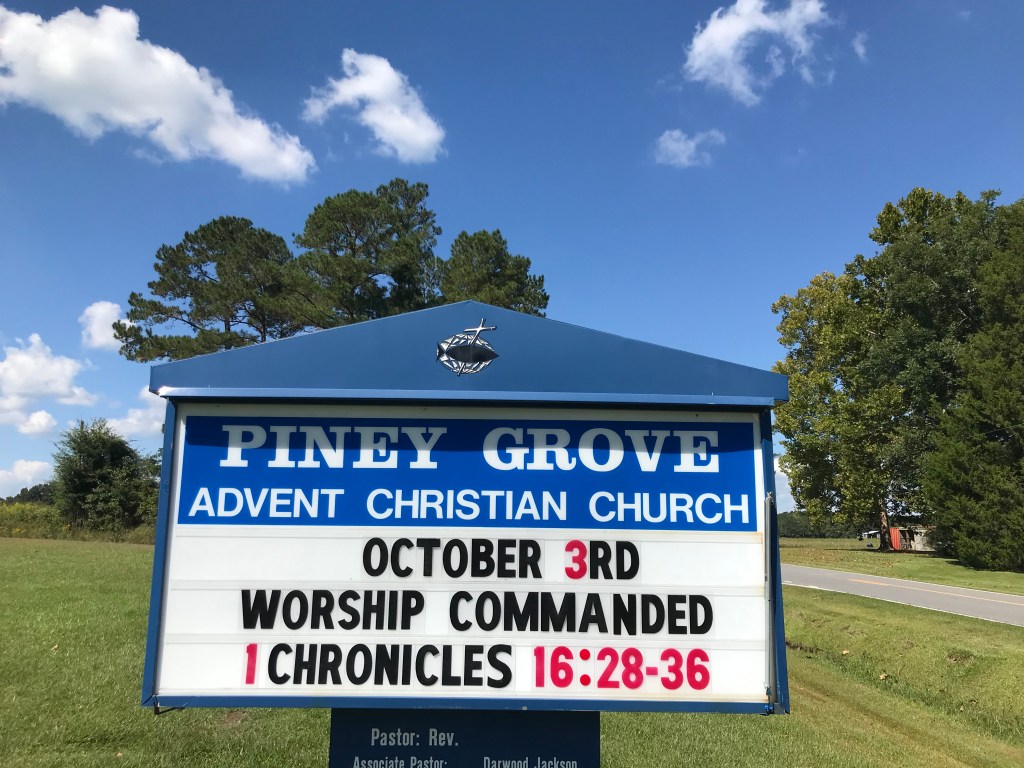
WORSHIP CLARIFIED

WORSHIP CLARIFIED

John 4:20-26 NET

20 Our fathers worshiped on this mountain, and you people say that the place where people must worship is in Jerusalem.” 21 Jesus said to her, “Believe me, woman, a time is coming when you will worship the Father neither on this mountain nor in Jerusalem. 22 You people worship what you do not know. We worship what we know because salvation is from the Jews. 23 But a time is coming – and now is here – when the true worshipers will worship the Father in spirit and truth, for the Father seeks such people to be his worshipers. 24 God is spirit, and the people who worship him must worship in spirit and truth.” 25 The woman said to him, “I know that Messiah is coming” (the one called Christ); “whenever he comes, he will tell us everything.” 26 Jesus said to her, “I, the one speaking to you, am he.”

During the month of October, we have been looking at the subject of worship. It was important for us to go back to the Old Testament because that is where the Holy Spirit began teaching God’s people about worship.

In our study of 1 Chronicles 16, we found out that worship was God’s idea, and that we can honor and appreciate people, but only God deserves our worship.

In our study of 2 Kings 21, we found that worship can be corrupted by inviting other gods into our worship, and by picking up practices of other religions and world-views and trying to worship our God the way they worship their gods.

There is a lot more that we can learn from the Old Testament about worship, so some day we are going to come back to it. But for now, we are going to focus on some New Testament passages.

You might remember that a few months ago, I asked the LORD to tell me what he wanted me to focus on in my preaching here in Piney Grove. I believe he answered that prayer. He told me to focus on the commands of Christ.

It makes sense to focus on the commands of Christ because when our Lord gave us his Great Commission, he told us to teach the nations to obey everything he has commanded (Matthew 28:20).

I wanted to do that systematically. The Bible says that “every scripture is inspired by God and useful for teaching, for reproof, for correction, and for training in righteousness, that the person dedicated to God may be capable and equipped for every good work” (2 Timothy 3:16-17). I believe that every means every. So I don’t want to just stay in the familiar territory of the Gospels and Epistles of the New Testament, because there is some useful teaching on Christ’s commands in the Old Testament.

So, what I decided to do was reread the Gospels, and every time I encountered something that Jesus commanded, I would write that down on the list. Each of those commands would become a topic, and my plan is to preach a series of sermons on each topic. I would start each series in the Old Testament, and conclude in the New Testament. Doing it that way might take a long time, but that’s alright. I’m not going anywhere.

So, that’s why we have rested today at John chapter 4. It is here that Jesus has his conversation with the Samaritan woman at the well. Here we learn that…

Worship is not the same thing as worship traditions (20).

This woman at the well understood something about worship, and it was something significant. She knew that worship was something that people fight over. She recognized that when you get a Jewish person and a Samaritan person in the same room, you don’t bring up the subject of worship.

She told Jesus that her ancestors have the tradition of viewing Mount Gerazim as a place of deep spiritual significance. She knew from the Old Testament that Mount Gerazim was where the blessings of the covenant were pronounced by the Israelites in Moses’ time. I don’t know how she – herself showed reverence for that mountain, but she probably had some traditional way of doing that.

I remember when I was living in the Philippines, the people there had lots of religious traditions. One of my favorites that I noticed is that some Jeepney drivers had a set of rosary beads hanging from their rear-view mirror. Whenever they passed a cathedral, they would reach out and touch those beads. Now, those drivers may have been alcoholics. They may have cursed like sailors. They almost always drove recklessly like crazy people. But if you wanted to get in a fight, say something about those beads.

In the church today, we have not outgrown the passion for defending our traditions when it comes to worship. Everybody has their own favorite kind of worship music and their favorite style of worship. Some are comfortable with the worship style they grew up with, while others want to do something new.

I’m not here to convince you that your favorite way of worshiping is wrong. I don’t have a style of worship that I recommend for everyone. I would recommend for all of us that we don’t get hung up on a particular style of worship.

My reason for this is how Jesus responded to this woman’s statement about tradition and worship. He told her that the Jews had a very good reason for focusing their worship at Jerusalem. But then he told her something important about the relationship between traditions and worship.

Traditions change, but worship should not (21).

Jesus told her that a time would soon come when it did not matter which mountain you were near. It would not matter which region you were from, or living in. Both the Samaritans and the Jews would be worshiping God based on something else besides tradition.

Both cultures had learned that three keys to proper worship were “location, location, location.” But both cultures would be transformed by something that would put an end to that kind of thinking. That something that both cultures would be exposed to was the gospel.

It took time for that to happen. The disciples were just learning the gospel from Jesus himself. Yet, they could not understand why Jesus had chosen to go through Samaria, instead of avoiding it.

Notice also what happened when the disciples came back from their trip into town to buy supplies. John records that they “were shocked because he was speaking with a woman” (4:27). The Jewish Rabbis had taught that it is better to burn the Law than teach it to a woman. That was tradition. They had taught that even a husband should not talk with his wife about the Bible and that such a practice could wind up sending them both to hell. That was tradition. This was particularly true in public. The Rabbis taught that a man should not greet a woman in a public place, not even his own wife. That was tradition.

Jesus comes along and blows that tradition out of the water. He is God’s Messiah, and our example. The God of the Bible created both Adam and Eve in his own image and blessed them both with minds capable of learning from him and following his commands. His word to children was “Listen, my child, to the instruction from your father, and do not forsake the teaching from your mother” (Proverbs 1:8).

But then Jesus went on to explain another thing about worship that both the Jews and the Samaritans were going to have to learn.

Worship has to be sincere, and traditions can hinder that (23-24).

He said “a time is coming – and now is here – when the true worshipers will worship the Father in spirit and truth, for the Father seeks such people to be his worshipers. God is spirit, and the people who worship him must worship in spirit and truth.”

Jesus said that the Father is looking for a certain kind of worshiper. This kind of worshiper is not going to be so easily identified. You will not just be able to go to Mount Gerazim and find him. You might not even find any in Jerusalem.

No, Jesus says the evidence of a true worshiper is that the worship is “in spirit and truth.” But what does that mean?

The only explanation Jesus gives is that he says that God is spirit. What does that mean in this context? In the previous chapter, John had recorded Jesus’ conversation with Nicodemus.

Jesus told Nicodemus that “What is born of the flesh is flesh, and what is born of the Spirit is spirit” (John 3:6). If I were to show you a family photo with myself, Penny, and our three daughters, you would see a physical resemblance. Flesh gives birth to similar flesh.

But Jesus told Nicodemus that a person cannot enter the kingdom unless he is born of the Spirit. He said “The wind blows wherever it will, and you hear the sound it makes, but do not know where it comes from and where it is going. So it is with everyone who is born of the Spirit” (John 3:8). One thing you might not know is that in the original of that verse, the word for wind and the word spirit is the same Greek word.

Spirit is like the wind. It is real, but you cannot see it. It is not tangible. You can only see its effect on tangible things. So, someone who is worshiping in Spirit takes on the characteristics of God’s Holy Spirit. Those characteristics cannot be explained by that person’s fleshly heritage. They will have nothing to do with where that person is from in the flesh – Gerazim, Jerusalem – it does not matter. What matters is the Holy Spirit is the source of the worship.

Those worshipers worship in truth. This is the easiest statement in the whole text to explain. It speaks of authenticity. A hypocrite might go to Gerazim, and act like a worshiper. He might go to Jerusalem and act like a worshiper. The traditions can actually hinder true worship.

But here is something else John mentioned in chapter 3:

“Now this is the basis for judging: that the light has come into the world and people loved the darkness rather than the light because their deeds were evil. For everyone who does evil deeds hates the light and does not come to the light, so that their deeds will not be exposed. But the one who practices the truth comes to the light, so that it may be plainly evident that his deeds have been done in God” (John 3:19-21).

So, to worship in truth is to allow the light of Jesus’ presence to expose your falsehood, and replace it with his truth. That is authentic worship. It does not pretend to approach God on one’s own merit. It allows the light/truth to change you on the inside. It is giving up my control and allowing God to be sovereign – even over how I worship him.

LORD, we want to worship you – your way. Expose the darkness of our own traditions and fleshly choices. Teach us how to let go and let your Holy Spirit move us where you want us to go.

Video of today’s message
click for my e-books

WORSHIP COMMANDED

WORSHIP COMMANDED

1 Chronicles 16:28-36 NET

28 Ascribe to the LORD, O families of the nations, ascribe to the LORD splendor and strength! 29 Ascribe to the LORD the splendor he deserves! Bring an offering and enter his presence! Worship the LORD in holy attire! 30 Tremble before him, all the earth! The world is established, it cannot be moved. 31 Let the heavens rejoice, and the earth be happy! Let the nations say, ‘The LORD reigns!’ 32 Let the sea and everything in it shout! Let the fields and everything in them celebrate! 33 Then let the trees of the forest shout with joy before the LORD, for he comes to judge the earth! 34 Give thanks to the LORD, for he is good and his loyal love endures. 35 Say this prayer: “Deliver us, O God who delivers us! Gather us! Rescue us from the nations! Then we will give thanks to your holy name, and boast about your praiseworthy deeds.” 36 May the LORD God of Israel be praised, in the future and forevermore. Then all the people said, “We agree! Praise the LORD!”

I want to begin today’s message with a very controversial and politically charged statement. I’m asking you to bear with me because I am not bringing this up just to ruffle feathers. I am not saying this as clickbait. I’m making this statement for two reasons. One, it is true. Two, it can illustrate something that is taught in today’s text about the subject matter of this series of messages.

Now that I have warned you so that you can be prepared, here is the statement: “BLACK LIVES MATTER.”

I call this statement politically charged because people generally have a political agenda behind using it. It is designed to make white people rethink their attitudes. It draws attention to the fact that it is very easy to ignore people who are different than you are and to devalue their existence. This is especially true if those people are a minority.

I don’t have a “BLACK LIVES MATTER” bumper sticker on my car, but I do believe that black lives matter. When I say that, though, I am not making a political statement. I’m making a theological statement. I believe that every human being matters because God created us all, and he created us all equal in his sight. For that reason, I am trying my best to erase from my heart the racial prejudice, bigotry, and fear that I learned growing up. I think that is only fair because when our Lord Jesus returns, he is not going to set up separate countries for separate races. If we are part of his kingdom now, we will be part of his kingdom then, and the color of our skin is not going to be the basis of our value to him. It shouldn’t be a basis for our valuing people now.

Jesus grew up among a people who had mastered the art of devaluing the other ethnic groups around them. The Romans looked down on everyone but Romans. The Jews hated the Gentiles, but they especially hated the Samaritans. The Jews would not associate with Samaritans. But Jesus walked into a Samaritan town one day and preached the gospel to a Samaritan woman at the well.

While they were having a conversation, the woman brought up the subject of worship. She said that her ancestors worshipped on Mount Gerazim, and the Samaritans still do. But she pointed out that the Jews insist that true worship must take place in Jerusalem.

But Jesus told her that true worship is not about the place where you go. It’s about your attitude when you are worshipping. He talked about worshipping the Father in spirit and truth. I’ll talk more about that conversation later in the series.

True worship was very important to Jesus. He commissioned us to teach others to obey all his commands. One of those commands is that we should worship the Father in spirit and truth.

Today I want us to look at this passage from the Old Testament because it was given in the context of the welcoming of the ark into Jerusalem as David was setting up his kingdom, and preparing for the worship in the temple which would be built by his son Solomon. It tells us that in Israel, people mattered because they were made in God’s image. But God mattered most of all. So, worship was not to be something that only a few religious people did. It was not a fringe activity. Because God matters most of all, worship was essential.

This Scripture helps us to understand why we need to worship God.

We must worship God because he is glorious (28-29).

The command was to “Ascribe to the LORD, O families of the nations, ascribe to the LORD splendor and strength! Ascribe to the LORD the splendor he deserves! Bring an offering and enter his presence! Worship the LORD in holy attire!”

Notice that even though this prayer was being prayed in Israel at a certain event, it was intended to reach beyond the borders of Israel and beyond the limits of time. It is a command to all the families of the nations. Every human being is commanded to acknowledge the glory of God.

His glory is described using two words in Hebrew. First, there is Kavod (כָּבוֹד) — a word signifying honor, splendor, and magnificence. Then, there is Oz ( עוֹז) — meaning strength. Together these words indicate that our God is the supreme being in both character and power. That is what we mean when we say he is glorious.

Human glory is always limited. There is always someone more honorable, more beautiful, and stronger. So we should not worship any human being. We should respect everyone and acknowledge the inherent worth of all human beings, no matter who they are or how old they are. But God is in a different category altogether.

We must worship God because he is sovereign (30-31).

“Tremble before him, all the earth! The world is established, it cannot be moved. Let the heavens rejoice, and the earth be happy! Let the nations say, ‘The LORD reigns!’ “

Ezekiel had a vision in which he saw four amazing living beings with wings and wheels. The wings and wheels depicted their ability to move wherever they wanted. Ezekiel was impressed by these four beings until he looked up, and over their heads was a sky, and then he looked above that and saw God himself on the throne, and fire and brilliant light was coming out of him. The vision showed Ezekiel who he should be impressed with.

Knowing that God is sovereign should produce two opposite reactions in us. First, we should tremble. We should fear God above all others. Jesus taught us that we should fear God, not those human rulers because all they can do is kill us. But God can destroy us completely in Gehenna. He’s the one we should fear.

But the second emotion this passage in 1 Chronicles encourages seems like a contradiction. It tells the earth to be happy. True happiness does not come from ignoring God. True happiness comes from submitting to his sovereign plan for our lives.

We must worship God because he is good (32,34).

“Let the sea and everything in it shout! Let the fields and everything in them celebrate! Give thanks to the LORD, for he is good and his loyal love endures.”

The sea and the fields are always celebrating God’s goodness. The abundance they share with us is a testimony of a loving God who has built provision in his creation. He did that even before he created us. He did that because he is good. Every harvest — whether it is fish from the sea or grapes from the vine — testifies to our Lord’s goodness. Every tithe check in the offering plate is our way of saying “Thank you God for providing.” Our worship is the least we can do seeing that God has been so good to us.

We must worship God because he will deliver us (33,35-36).

“Then let the trees of the forest shout with joy before the LORD, for he comes to judge the earth! Say this prayer: “Deliver us, O God who delivers us! Gather us! Rescue us from the nations! Then we will give thanks to your holy name, and boast about your praiseworthy deeds.” May the LORD God of Israel be praised, in the future and forevermore. Then all the people said, “We agree! Praise the LORD!”

Now the trees of the forest are getting into the act. Their worship sounds strange coming from trees. They are praying for God to rescue them from the nations. They are promising to praise God for his rescue. Why would they say something like that? Because the LORD is coming to judge the earth. It is not just people whom the LORD will deliver. Jesus says he is making all things new. He has a plan to restore the universe to God’s original intention.

Paul told the Romans “that the creation itself will also be set free from the bondage of decay into the glorious freedom of God’s children. For we know that the whole creation groans and suffers together until now” (Romans 8:20-21). Even though the world around us is filled with amazing majestic beauty, it is also falling apart. Go to the forest, and you will see tall, stately trees, but you will also see fallen, decomposing trees. When you see that, remember that the trees are telling us that they also long for God’s new creation.

God is glorious. God is sovereign. God is good. God is going to rescue the universe. No wonder we are commanded to worship him.

audio file of this message
click for my e-books

A NEW ACCESS

A NEW ACCESS

Ephesians 2:11-22 NET

11 Therefore remember that formerly you, the Gentiles in the flesh — who are called “uncircumcision” by the so-called “circumcision” that is performed on the body by human hands — 12 that you were at that time without the Messiah, alienated from the citizenship of Israel and strangers to the covenants of promise, having no hope and without God in the world. 13 But now in Christ Jesus you who used to be far away have been brought near by the blood of Christ. 14 For he is our peace, the one who made both groups into one and who destroyed the middle wall of partition, the hostility, 15 when he nullified in his flesh the law of commandments in decrees. He did this to create in himself one new man out of two, thus making peace, 16 and to reconcile them both in one body to God through the cross, by which the hostility has been killed. 17 And he came and preached peace to you who were far off and peace to those who were near, 18 so that through him we both have access in one Spirit to the Father. 19 So then you are no longer foreigners and noncitizens, but you are fellow citizens with the saints and members of God’s household, 20 because you have been built on the foundation of the apostles and prophets, with Christ Jesus himself as the cornerstone. 21 In him the whole building, being joined together, grows into a holy temple in the Lord, 22 in whom you also are being built together into a dwelling place of God in the Spirit.

For several weeks now, we have been studying what it means to be reborn — to be born from above.

On August 8th, we discovered from the prophet Jeremiah that God intended to make a new covenant with Israel because the old covenant had been broken. We learned that the new covenant would begin with forgiveness. We learned that it would involve discipleship and that it would produce a change of heart.

The next week, August 15th, we learned more about the new heart God promised his people from the prophet Ezekiel. It would be an internal change, not just an external change. God would take the initiative and share his Holy Spirit by pouring it out on them. The Holy Spirit would enable God’s people to bless the nations by sharing the gospel of salvation with them.

The next week, August 22nd, we examined this promise more carefully by looking at Joel’s prophecy of a new outpouring, and its fulfillment in Acts 2 at Pentecost. We saw how this outpouring enabled the believers at Pentecost to reach the unsaved wherever they went — that it helped them to fulfill Christ’s prophecy in Acts 1:8. Reaching the Gentiles was God’s plan all along.

The next week, August 29th, we looked at Christ’s interview with Nicodemus. This passage is the basis for this entire series because it revealed Jesus’ command for us all to be born from above.

Last week, September 19th, Penny shared the ultimate result of being born again — that Christ plans on making a whole new universe, and living in that new universe is our ultimate destiny.

I want to conclude the series by talking about the new access that believers have today as a result of being born from above.

Christ gave us all access to God without rituals (11,18).

In verse 11, Paul reminds the Ephesian Christians that they were formerly “Gentiles in the flesh.” They were called “uncircumcision” by the so-called “circumcision” that is performed on the body by human hands.

The ritual of circumcision set the Jews apart as a seperate people. It identified them as a people of a certain race and religion. It served as a means of identifying who had access to God and who did not. But Paul’s point was that circumcision was only a ritual of the flesh. As a ritual of the flesh, circumcision could not identify the new birth. It could not be the symbol of the new covenant. It could not reveal who had a new heart. It could not symbolize forgiveness.

In fact, no ritual of the flesh could do that. In verse 18, Paul says that through Christ both Jews and Gentiles have access in one Spirit to the Father. Access to God is not determined by the religious rituals one performs. It is determined by the relationship one has with God. This relationship is made possible through Christ — by means of what he did.

Since the gift of the Holy Spirit was poured out on both Jews and Gentiles, possessing the Holy Spirit replaced circumcision as the sign of access to God. Circumcision could not be the permanent sign for two reasons. First, it was a matter of the flesh and did not reveal the heart. Second, it only included half the population. It only applied to males.

The presence of the Holy Spirit in our lives is a sign of access to God, and is revealed by the power his gives us to minister in his name, as we pray for others, and share the gospel with others so that they too can be born from above.

Christ gave us access to citizenship in his kingdom together with all its perks (12,19).

Paul told the Gentile Ephesians that they were once “without the Messiah, alienated from the citizenship of Israel and strangers to the covenants of promise, having no hope and without God in the world” (12). It was a citizenship issue. Those who were citizens had access to all the benefits of citizenship.

Now, Paul tells them that they “are no longer foreigners and noncitizens, but you are fellow citizens with the saints and members of God’s household” (19). God’s kingdom work is done by means of his kingdom citizens. His family business is done by his household. Through Christ’s death on the cross, we all have access to citizenship in that coming kingdom. The Holy Spirit within us makes us part of God’s family and empowers us to do the family business — reconciling others to God.

Christ gave us access to the presence of God through his death on the cross (13, 16a).

Paul told the Ephesian Christians that now in Christ Jesus they who used to be far away have been brought near by the blood of Christ (13). God reconciled both Jews and Gentiles “in one body to God through the cross” (16a). The issue in both of those verses is the distance that sin puts between people and our holy God. When we are first born, we are born separated from God because of sin. That separation continues until we are born from above. When we are blessed with forgiveness, God welcomes us into his presence for the first time. Christ’s death pays for our sins and reconciles us to God, so that we can enter his presence.

Christ gave us access to peace by removing the barrier of the law (14-17).

Paul told the Ephesian Christians that Christ “is our peace, the one who made both groups into one and who destroyed the middle wall of partition, the hostility” (14). When we were born, there was a wall of partition between us and our creator. Christ destroyed that wall.

Paul explained to the Ephesians that Christ did this by nullifying in his flesh the law of commandments in decrees. Christ did this to create in himself one new man out of two, thus making peace, and to reconcile them both in one body to God through the cross, by which the hostility has been killed. (15-16). The wall of hostility was the law itself. It was a barrier for all of us. Christ destroyed the barrier by fulfilling the law — both with his sinless life and his sacrificial death.

Paul told the Ephesians that Christ came and preached peace to them were far off and peace to the Jews who were near (17). The peace he had to offer was for everyone — both Jew and Gentile. This is the peace with God we can have if we accept the excellent message that Christ preached.

Christ gave us access to his eternal plan by making us part of his holy temple (20-22).

The temple in Jerusalem was a physical symbol of God’s presence among his people. But that temple was only a promise of the permanent temple that God plans for eternity.

Paul told the Ephesian Christians that they have been built on the foundation of the apostles and prophets, with Christ Jesus himself as the cornerstone (20). That permanent temple incorporates both Old Testament and New Testament saints. It is not a place, but a people. But because God’s plan is to manifest his presence in the hearts of his people, we can be thought of as his temple.

Paul told the Ephesian Christians that in Christ the whole building, being joined together, grows into a holy temple in the Lord, in whom they also are being built together into a dwelling place of God in the Spirit (21-22). The good news for us today is that God wants to be among us. But he does not want to merely reside in a building and be worshipped by people who can visit the site. He wants to reside in us, and that all of us can experience that building process that makes us holy enough for God to live in, and work his miracles through.

REMEMBERING A TRAGEDY

REMEMBERING A TRAGEDY

Matthew 14:6-14 (NET)

6 But on Herod’s birthday, the daughter of Herodias danced before them and pleased Herod, 7 so much that he promised with an oath to give her whatever she asked. 8 Instructed by her mother, she said, “Give me the head of John the Baptist here on a platter.” 9 Although it grieved the king, because of his oath and the dinner guests he commanded it to be given. 10 So he sent and had John beheaded in the prison. 11 His head was brought on a platter and given to the girl, and she brought it to her mother. 12 Then John’s disciples came and took the body and buried it and went and told Jesus. 13 Now when Jesus heard this he went away from there privately in a boat to an isolated place. But when the crowd heard about it, they followed him on foot from the towns. 14 As he got out he saw the large crowd, and he had compassion on them and healed their sick.

Yesterday was the anniversary of the 9/11 attacks in the United States. We call it Patriot Day. In honor of that holiday, I wanted to share some memorable quotes about that tragedy and its consequences.

Sandy Dahl, wife of flight 93 pilot Jason Dahl said “If we learn nothing else from this tragedy, we learn that life is short and there is no time for hate.”

President George W. Bush said “Our enemies made the mistake that America’s enemies always make. They saw liberty and thought they saw weakness.”

Deepak Chopra said “September 11 was a reminder that life is fleeting, impermanent and uncertain. Therefore we must make use of every moment and nurture it with affection, tenderness, beauty, creativity, and laughter.”

Senator John Kerry said, “It was the worst day we have ever seen, but it brought out the best in all of us.”

Colin Powell said, “You can be sure that the American spirit will prevail over this tragedy.”

Today’s Scripture text recalls a terrible tragedy in the life of Jesus: the death of his relative and forerunner John the Baptist. When we remember a tragedy, we inevitably think of choices that led to it.

Choices. We all make choices, and the choices we make result in consequences. On 9/11, some terrible men made some terrible choices, and it resulted in a tragedy for thousands of people and shocked our nation.

Choices. Someone can call himself pro-choice, but what he really means is that he wants the government to allow him to make a choice without suffering the consequences. The Bible teaches us that some of our choices will have terrible consequences — both in this life and on judgment day. You can call yourself pro-choice all you want, but if the choices you want to make endanger other people’s lives, there will be consequences.

Herod’s choices (6).

King Herod Antipas was the ruler of Galilee & Perea from 4 BC to 39 AD, so he had the authority to make lots of choices that affected lots of people.

Earlier in this chapter, we learn that Herod Antipas had married Herodias, who had been his brother’s wife. When John the Baptist pointed out that the marriage was unlawful, Herod had him put in prison. He was not the first political leader who thought that he was above the law, and he would not be the last.

Putting John in prison was a compromise for Herod. Also in this chapter, we read…

“Although Herod wanted to kill John, he feared the crowd because they accepted John as a prophet” (Matthew 14:5).

But the events described in today’s text sent Herod over the edge. Herod made the choice to let himself be entertained by his new wife’s daughter. She danced for him and her display pleased him. He was so entranced by her beauty that he disengaged his brain.

He made the choice to promise this young girl to give her whatever she asked for. I would say that the words “What were you thinking” apply here. But I have already said that his lust had disengaged his brain.

That happens a lot with lust. It is not a toy to be played with. The book of Proverbs tells us …

“the commandments are like a lamp, instruction is like a light, and rebukes of discipline are like the road leading to life, by keeping you from the evil woman, from the smooth tongue of the loose woman. Do not lust in your heart for her beauty, and do not let her captivate you with her alluring eyes; for on account of a prostitute one is brought down to a loaf of bread, but the wife of another man preys on your precious life” (Proverbs 6:23-26).

But Herod was not the only one whose choices led to the tragedy that day.

Herodias’ choices (8,11).

Herodias was Herod Antipas’ wife. She had already made the choice to leave her first husband — Herod Philip — and move up the ladder to Herod Antipas. She also agreed to have that troublemaker John the Baptist imprisoned. But when she found out about her husband’s rash promise, she decided to take her sinful life to the next level. She advised her daughter to ask for John’s head on a platter.

Herodias was also pro-choice, and her choice was to eliminate a life that was inconvenient for her. God holds people accountable who make those kinds of choices. That is the case even when the government approves of them. Herodias’ husband was the government. He sanctioned this murder of an innocent. But his government sanction did not make it any less a murder.

Salome’s choices (6,8).

We don’t learn the young woman’s name in the New Testament, but history tells us it was Salome. She chose to entertain her stepfather. She chose to listen to the advice of her mother, conspiring to have an innocent man murdered. John’s “head was brought on a platter and given to the girl, and she brought it to her mother. Then John’s disciples came and took the body and buried it and went and told Jesus” (11-12).

Salome was not an innocent victim in this tragedy, but she was a victim. The people who should have given her good advice led her down the wrong path. The people she looked up to brought her down. Lots of people in this generation are puppets to a culture that has turned them against righteousness, against the truth, and against God.

But I also want us to notice the choices that Jesus made as a result of this tragedy.

Jesus’ choices (13-14).

The first choice that Jesus made was very natural.

“Now when Jesus heard this he went away from there privately in a boat to an isolated place” (13a).

When we face a tragedy, we need time to reflect and recover. That is what Jesus and his disciples intended to do. They wanted to get away. The normality of life had been disrupted by a senseless tragedy.

Just before the events of 9/11, I was an intended victim of another terrorist attack, while serving as a missionary in the Philippines. We went away for a ministry trip and came back with a coffin carrying one of our students. I can understand the need to get away, rest and reflect. I needed to do the same thing. My reflection on that tragedy helped me to come back to work with a new sense of purpose. I stopped asking “Lord, why me?” and I started asking “Lord, why did you spare me?”

But Jesus’ plans for a time of quiet recovery were interrupted.

“But when the crowd heard about it, they followed him on foot from the towns. As he got out he saw the large crowd, and he had compassion on them and healed their sick” (13b-14).

The tragedies we experience cannot stop us from the ministry we have been called to. In spite of our pain, we are called to heal the pain of others. Regardless of our sorrow at the loss we experience, there are others who have needs, and Christ calls on us to help meet those needs.

These tragedies can turn hate into infectious disease, but they don’t have to. We can triumph over the tragedies in life by responding with acts of love. We can heal the hurts, and comfort those who have lost loved ones. We can follow the example of our Lord and turn tragedy into an opportunity for healing and compassion. That is making the right choice.

audio file of today’s message
click for my e-books

LABOR ON

LABOR ON

I never paid much attention to Labor Day when I was growing up, although I was glad to have a day off from school. The holiday originated in the 19th century in the USA, and celebrates workers and promotes workers’ rights.

We are experiencing a very interesting development in our country right now. There are lots of jobs available, and very few seem to be jumping to get back into the work force. One reason – I imagine – is that people are afraid of exposure to other workers who might have COVID-19. Another reason might be that some are reluctant to reenter the workforce because they are getting along okay on unemployment benefits and don’t need the work.

There are other reasons, but my message today is not an attempt to deal with that problem. I am more interested in a worker problem that Jesus introduces in today’s text.

Matthew 24:45-51 NET

45 “Who then is the faithful and wise slave, whom the master has put in charge of his household, to give the other slaves their food at the proper time? 46 Blessed is that slave whom the master finds at work when he comes. 47 I tell you the truth, the master will put him in charge of all his possessions. 48 But if that evil slave should say to himself, ‘My master is staying away a long time,’ 49 and he begins to beat his fellow slaves and to eat and drink with drunkards, 50 then the master of that slave will come on a day when he does not expect him and at an hour he does not foresee, 51 and will cut him in two, and assign him a place with the hypocrites, where there will be weeping and gnashing of teeth.

This passage is part of what has been called the Olivet Discourse or the eschatological discourse of Jesus. It is called the Olivet discourse because Jesus was sitting on the Mount of Olives when he taught it. It is called the eschatological discourse because it has to do with the last days, and eschatos (ἔσχατος) is the Greek word for last.

The best way to understand the eschatological discourse is to bear in mind that the disciples had asked three questions:

“Tell us, when will these things happen? And what will be the sign of your coming and of the end of the age?” (Matthew 24:3 NET).

Jesus had just told his disciples that the Jerusalem temple was going to be destroyed. That was the “these things” they were curious about. So part of the eschatological discourse was Jesus explaining what was going to happen really soon – within the next generation, which is about 40 years. Jesus told them that it would be a terrible time of danger and anyone who could would escape Jerusalem. The rest would undergo horrible suffering. The siege of Jerusalem from AD 66-70 fulfills this prediction completely. Jesus’ lament about the pregnant women, or those nursing infants is especially relevant, since the siege cut off supplies to the city, so some of those with small children eventually resorted to cannibalism. Josephus estimated that a million people died in the siege, and the battles with the Roman soldiers that ensued.

But the disciples also asked Jesus what would be the sign of his coming. Jesus knew that he was not going to come back in just 40 years, so he had to answer that question differently. Every generation there is a new teaching cropping up that insists that we are living in the very time the Lord is going to come back. Jesus told his disciples not to believe any of those teachings. There will be NO SIGN before the coming of the Lord. The only signs Jesus mentioned in specific answer to that question were lightning and buzzards. Lightning speaks of the sudden, unexpected nature of the coming. Before you know what is going on, Jesus will break through the clouds. Buzzards show up after the prey is dead. Likewise, the sign of the Jesus coming is the Jesus coming himself. His point is that there will be no getting ready just before the event. We have to be ready now.

The disciples also asked about the end of the age. They thought the destruction of Jerusalem would certainly be the end of the age, but Jesus knew that it would not be. Jesus taught that the age would last a much longer time, with many signs appearing and disappearing throughout the age, like labor pains. Comparing all four synoptic Gospels, those labor pain signs include:

    ◦ False Messiahs
    ◦ Wars, rumors of wars, revolutions
    ◦ International strife
    ◦ Famines, earthquakes, pestilences (like COVID-19)
    ◦ Fearful events, great signs from heaven
    ◦ Apostasy and schism
    ◦ Persecution, false prophets
    ◦ Martyrdom
    ◦ Increased wickedness
    ◦ Love grows cold, family betrayal
    ◦ Gospel preached to all nations

We are living in that age now. The signs do not point to the age’s end, and they will not increase in intensity just before the end. The whole point of the signs is that they come and go throughout the age, just as labor pains throughout labor. They merely show that the labor is happening.

Today’s text, along with all of Matthew 25, contains material from the eschatological discourse that is only included in Matthew’s Gospel. In it, Jesus answers a question that the disciples should have asked, but didn’t. The question is “What kind of people do we need to be if we are going to be ready for Jesus when he returns?”

We are most familiar with the three parables in chapter 25. Those parables answer that question. To summarize what they teach, consider this:

The parable of the ten virgins teaches that we should stay prepared for Jesus’ return and not grow lazy or complacent. In other words, we need to stay committed and labor on.

The parable of the talents teaches that we should be diligent to invest the time, talents and treasure that we have now because we will be held accountable by Jesus when he returns. In other words, we need to use our resources for his kingdom and labor on.

The parable of the sheep and the goats teaches that when Jesus returns, he will make a distinction between those who only pretended to be his disciples, but in actuality were not. In other words, we need to stay real and labor on.

I want us to consider for a few moments these verses of today’s text. They are a parable as well. They help to answer that question as well. Remember, the question is “What kind of people do we need to be if we are going to be ready for Jesus when he returns?”

The parable has three sets of characters. First, there is Jesus. He is the master. Second there are faithful and wise slaves who labor on for the master while he is away. Third, there are evil slaves who do not labor on for the master while he is away.

Jesus commends his faithful and wise slaves who labor on for him (45-47).

He says… “Who then is the faithful and wise slave, whom the master has put in charge of his household, to give the other slaves their food at the proper time? Blessed is that slave whom the master finds at work when he comes. I tell you the truth, the master will put him in charge of all his possessions.

Jesus is teaching that he has left his slaves with a job to do. We have to take care of each other while he is away. He has put us in charge of managing the affairs of his household. He has made us stewards, responsible for allocating his resources so that his work is done.

He is coming back, and when he does, he expects to find us busy, taking care of one another. Jesus makes the same point in the parable of the sheep and the goats, when he said that if we ignore “the least of these brothers or sisters of mine” it is just like ignoring Jesus himself.

So, my take on today’s passage is this. Taking care of other believers is our work, and we need to stay faithful in carrying out that charge. We need to labor on.

Jesus condemns evil slaves who do not labor on for him (48-49).

He talks about “that evil slave” who says to himself, ‘My master is staying away a long time’ so “he begins to beat his fellow slaves and to eat and drink with drunkards.” The evil slaves are self-centered. They take advantage of the weaker slaves by treating them cruelly, because they can get away with it. They know they’re doing wrong, and they don’t care, because the master’s gone away.

I want you to note that in the eschatological discourse, Jesus was not teaching the Pharisees, the Sadducees or the Herodians. He was teaching his own disciples. He was warning him that there would actually be professing Christians who would be wolves in sheep’s clothing. They would profess and pretend to be his sheep, but they would really be wolves. If you are looking for evidence of these wolves, just look at the sheepfold. If you see sheep who are torn up and scattered, you know the wolf has been there.

Jesus warns us of the ultimate consequences of failing to labor on for him (50-51).

He says “the master of that slave will come on a day when he does not expect him and at an hour he does not foresee, and will cut him in two, and assign him a place with the hypocrites, where there will be weeping and gnashing of teeth.”

He’s talking about hell there. It is not this imaginary hell that bad people supposedly go to when they die. No, this hell is where the master is going to throw false Christians (and other bad people) when he returns.

He says four things about this hell. First, it is going to be made up of people who thought they could avoid it. But Jesus says he’s coming back on a day when those people do not expect him and an hour that they do not foresee.

The second thing he says about this hell is that it is made for hypocrites. It is made for people who say one thing but do another. It is made for people who only pretend to labor on for the master. They are actors, and they are so good at acting, that many of them even convince themselves that they are real. But they have a reservation. They have been assigned a place with the hypocrites.

Now, it is important that we understand what Jesus had already taught about hell. He had already taught – as recorded in Matthew 10:28 – that hell is where God is able to “destroy both soul and body.” Some teach that God cannot destroy someone in hell. Jesus said the opposite.

The apostle Paul called this fate undergoing “the penalty of eternal destruction” (2 Thessalonians 1:9). It is destruction that is eternal. It lasts forever. In other words, it is permanent destruction.

The apostle John said that this place is reserved for “the cowards, unbelievers, detestable persons, murderers, the sexually immoral, and those who practice magic spells, idol worshipers, and all those who lie” – and he called it the second death (Revelation 21:8). Everyone who dies today only dies temporarily, because we will all be raised at Christ’s return to face judgment. But after judgment, people who die the second death will stay dead for eternity.

The third and fourth things that Jesus says about hell here are the two emotional responses that these evil slaves are going experience once they learn their fate.

The first emotion they are going to experience is the horrible sorrow of loss. They will discover that they have lost out on the opportunity to have permanent life. Consequently, Jesus says there will be weeping.

The second emotion they are going to experience is defiant anger at the master who has chosen to punish and destroy them. This is why Jesus says that there will be “gnashing of teeth.” He is not talking about their punishment here – what they are going to suffer. He’s not talking about the pain they are going to experience in hell. He is talking about their intense hatred of the Lord who will put them there.

In the end, our Lord will be vindicated. He is going to make all things new, and there will be some who will not be part of that new creation. His message for us today is that he expects his slaves to labor on with his work until he comes. He expects us to take care of his household – to love one another, and to invest ourselves in his kingdom.

LORD, strengthen us so that we labor on for you – always ready for your return.

audio file of today’s message
click for my e-books