LABOR ON

LABOR ON

I never paid much attention to Labor Day when I was growing up, although I was glad to have a day off from school. The holiday originated in the 19th century in the USA, and celebrates workers and promotes workers’ rights.

We are experiencing a very interesting development in our country right now. There are lots of jobs available, and very few seem to be jumping to get back into the work force. One reason – I imagine – is that people are afraid of exposure to other workers who might have COVID-19. Another reason might be that some are reluctant to reenter the workforce because they are getting along okay on unemployment benefits and don’t need the work.

There are other reasons, but my message today is not an attempt to deal with that problem. I am more interested in a worker problem that Jesus introduces in today’s text.

Matthew 24:45-51 NET

45 “Who then is the faithful and wise slave, whom the master has put in charge of his household, to give the other slaves their food at the proper time? 46 Blessed is that slave whom the master finds at work when he comes. 47 I tell you the truth, the master will put him in charge of all his possessions. 48 But if that evil slave should say to himself, ‘My master is staying away a long time,’ 49 and he begins to beat his fellow slaves and to eat and drink with drunkards, 50 then the master of that slave will come on a day when he does not expect him and at an hour he does not foresee, 51 and will cut him in two, and assign him a place with the hypocrites, where there will be weeping and gnashing of teeth.

This passage is part of what has been called the Olivet Discourse or the eschatological discourse of Jesus. It is called the Olivet discourse because Jesus was sitting on the Mount of Olives when he taught it. It is called the eschatological discourse because it has to do with the last days, and eschatos (ἔσχατος) is the Greek word for last.

The best way to understand the eschatological discourse is to bear in mind that the disciples had asked three questions:

“Tell us, when will these things happen? And what will be the sign of your coming and of the end of the age?” (Matthew 24:3 NET).

Jesus had just told his disciples that the Jerusalem temple was going to be destroyed. That was the “these things” they were curious about. So part of the eschatological discourse was Jesus explaining what was going to happen really soon – within the next generation, which is about 40 years. Jesus told them that it would be a terrible time of danger and anyone who could would escape Jerusalem. The rest would undergo horrible suffering. The siege of Jerusalem from AD 66-70 fulfills this prediction completely. Jesus’ lament about the pregnant women, or those nursing infants is especially relevant, since the siege cut off supplies to the city, so some of those with small children eventually resorted to cannibalism. Josephus estimated that a million people died in the siege, and the battles with the Roman soldiers that ensued.

But the disciples also asked Jesus what would be the sign of his coming. Jesus knew that he was not going to come back in just 40 years, so he had to answer that question differently. Every generation there is a new teaching cropping up that insists that we are living in the very time the Lord is going to come back. Jesus told his disciples not to believe any of those teachings. There will be NO SIGN before the coming of the Lord. The only signs Jesus mentioned in specific answer to that question were lightning and buzzards. Lightning speaks of the sudden, unexpected nature of the coming. Before you know what is going on, Jesus will break through the clouds. Buzzards show up after the prey is dead. Likewise, the sign of the Jesus coming is the Jesus coming himself. His point is that there will be no getting ready just before the event. We have to be ready now.

The disciples also asked about the end of the age. They thought the destruction of Jerusalem would certainly be the end of the age, but Jesus knew that it would not be. Jesus taught that the age would last a much longer time, with many signs appearing and disappearing throughout the age, like labor pains. Comparing all four synoptic Gospels, those labor pain signs include:

    ◦ False Messiahs
    ◦ Wars, rumors of wars, revolutions
    ◦ International strife
    ◦ Famines, earthquakes, pestilences (like COVID-19)
    ◦ Fearful events, great signs from heaven
    ◦ Apostasy and schism
    ◦ Persecution, false prophets
    ◦ Martyrdom
    ◦ Increased wickedness
    ◦ Love grows cold, family betrayal
    ◦ Gospel preached to all nations

We are living in that age now. The signs do not point to the age’s end, and they will not increase in intensity just before the end. The whole point of the signs is that they come and go throughout the age, just as labor pains throughout labor. They merely show that the labor is happening.

Today’s text, along with all of Matthew 25, contains material from the eschatological discourse that is only included in Matthew’s Gospel. In it, Jesus answers a question that the disciples should have asked, but didn’t. The question is “What kind of people do we need to be if we are going to be ready for Jesus when he returns?”

We are most familiar with the three parables in chapter 25. Those parables answer that question. To summarize what they teach, consider this:

The parable of the ten virgins teaches that we should stay prepared for Jesus’ return and not grow lazy or complacent. In other words, we need to stay committed and labor on.

The parable of the talents teaches that we should be diligent to invest the time, talents and treasure that we have now because we will be held accountable by Jesus when he returns. In other words, we need to use our resources for his kingdom and labor on.

The parable of the sheep and the goats teaches that when Jesus returns, he will make a distinction between those who only pretended to be his disciples, but in actuality were not. In other words, we need to stay real and labor on.

I want us to consider for a few moments these verses of today’s text. They are a parable as well. They help to answer that question as well. Remember, the question is “What kind of people do we need to be if we are going to be ready for Jesus when he returns?”

The parable has three sets of characters. First, there is Jesus. He is the master. Second there are faithful and wise slaves who labor on for the master while he is away. Third, there are evil slaves who do not labor on for the master while he is away.

Jesus commends his faithful and wise slaves who labor on for him (45-47).

He says… “Who then is the faithful and wise slave, whom the master has put in charge of his household, to give the other slaves their food at the proper time? Blessed is that slave whom the master finds at work when he comes. I tell you the truth, the master will put him in charge of all his possessions.

Jesus is teaching that he has left his slaves with a job to do. We have to take care of each other while he is away. He has put us in charge of managing the affairs of his household. He has made us stewards, responsible for allocating his resources so that his work is done.

He is coming back, and when he does, he expects to find us busy, taking care of one another. Jesus makes the same point in the parable of the sheep and the goats, when he said that if we ignore “the least of these brothers or sisters of mine” it is just like ignoring Jesus himself.

So, my take on today’s passage is this. Taking care of other believers is our work, and we need to stay faithful in carrying out that charge. We need to labor on.

Jesus condemns evil slaves who do not labor on for him (48-49).

He talks about “that evil slave” who says to himself, ‘My master is staying away a long time’ so “he begins to beat his fellow slaves and to eat and drink with drunkards.” The evil slaves are self-centered. They take advantage of the weaker slaves by treating them cruelly, because they can get away with it. They know they’re doing wrong, and they don’t care, because the master’s gone away.

I want you to note that in the eschatological discourse, Jesus was not teaching the Pharisees, the Sadducees or the Herodians. He was teaching his own disciples. He was warning him that there would actually be professing Christians who would be wolves in sheep’s clothing. They would profess and pretend to be his sheep, but they would really be wolves. If you are looking for evidence of these wolves, just look at the sheepfold. If you see sheep who are torn up and scattered, you know the wolf has been there.

Jesus warns us of the ultimate consequences of failing to labor on for him (50-51).

He says “the master of that slave will come on a day when he does not expect him and at an hour he does not foresee, and will cut him in two, and assign him a place with the hypocrites, where there will be weeping and gnashing of teeth.”

He’s talking about hell there. It is not this imaginary hell that bad people supposedly go to when they die. No, this hell is where the master is going to throw false Christians (and other bad people) when he returns.

He says four things about this hell. First, it is going to be made up of people who thought they could avoid it. But Jesus says he’s coming back on a day when those people do not expect him and an hour that they do not foresee.

The second thing he says about this hell is that it is made for hypocrites. It is made for people who say one thing but do another. It is made for people who only pretend to labor on for the master. They are actors, and they are so good at acting, that many of them even convince themselves that they are real. But they have a reservation. They have been assigned a place with the hypocrites.

Now, it is important that we understand what Jesus had already taught about hell. He had already taught – as recorded in Matthew 10:28 – that hell is where God is able to “destroy both soul and body.” Some teach that God cannot destroy someone in hell. Jesus said the opposite.

The apostle Paul called this fate undergoing “the penalty of eternal destruction” (2 Thessalonians 1:9). It is destruction that is eternal. It lasts forever. In other words, it is permanent destruction.

The apostle John said that this place is reserved for “the cowards, unbelievers, detestable persons, murderers, the sexually immoral, and those who practice magic spells, idol worshipers, and all those who lie” – and he called it the second death (Revelation 21:8). Everyone who dies today only dies temporarily, because we will all be raised at Christ’s return to face judgment. But after judgment, people who die the second death will stay dead for eternity.

The third and fourth things that Jesus says about hell here are the two emotional responses that these evil slaves are going experience once they learn their fate.

The first emotion they are going to experience is the horrible sorrow of loss. They will discover that they have lost out on the opportunity to have permanent life. Consequently, Jesus says there will be weeping.

The second emotion they are going to experience is defiant anger at the master who has chosen to punish and destroy them. This is why Jesus says that there will be “gnashing of teeth.” He is not talking about their punishment here – what they are going to suffer. He’s not talking about the pain they are going to experience in hell. He is talking about their intense hatred of the Lord who will put them there.

In the end, our Lord will be vindicated. He is going to make all things new, and there will be some who will not be part of that new creation. His message for us today is that he expects his slaves to labor on with his work until he comes. He expects us to take care of his household – to love one another, and to invest ourselves in his kingdom.

LORD, strengthen us so that we labor on for you – always ready for your return.

audio file of today’s message
click for my e-books

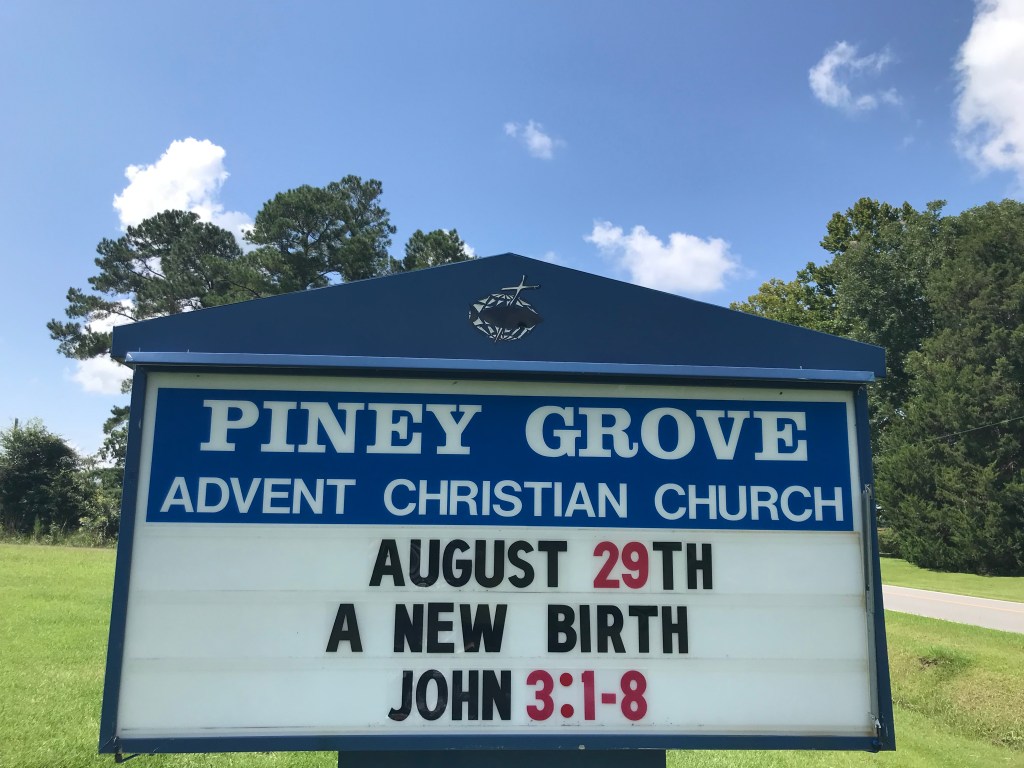
A NEW BIRTH

1 Now a certain man, a Pharisee named Nicodemus, who was a member of the Jewish ruling council, 2 came to Jesus at night and said to him, “Rabbi, we know that you are a teacher who has come from God. For no one could perform the miraculous signs that you do unless God is with him.” 3 Jesus replied, “I tell you the solemn truth, unless a person is born from above, he cannot see the kingdom of God.” 4 Nicodemus said to him, “How can a man be born when he is old? He cannot enter his mother’s womb and be born a second time, can he?” 5 Jesus answered, “I tell you the solemn truth, unless a person is born of water and spirit, he cannot enter the kingdom of God. 6 What is born of the flesh is flesh, and what is born of the Spirit is spirit. 7 Do not be amazed that I said to you, ‘You must all be born from above.’ 8 The wind blows wherever it will, and you hear the sound it makes, but do not know where it comes from and where it is going. So it is with everyone who is born of the Spirit.”

A NEW BIRTH

John 3:1-8 NET

We have been studying what the Bible says about the new birth for some weeks now. Another word for the new birth is regeneration. We also call it being born again. Some translations (like the one we are using this morning) call it being born from above (3,7). The same Greek word (ἄνωθεν) can mean “from above” or “again.” It appears that in John 3, Jesus is talking about being born from above, but Nicodemus is misunderstanding him, and thinks he is talking about another natural birth.

When we Christians talk about our own experience of regeneration, it is okay for us to say that we have been born again. But we need to make it clear that we have done more than just change our habits, or turn over a new leaf. We need to make it clear in our testimony that something has happened in us that cannot be explained by our own choices. God has given us a new birth from above.

What is the evidence that someone has experienced this new birth? Today’s passage reveals some of that evidence.

Someone born from above recognizes who Jesus Christ is (2).

In today’s text, Nicodemus claims to recognize who Jesus is. He says to Jesus “Rabbi, we know that you are a teacher who has come from God.” He bases that assertion on the fact that “no one could perform the miraculous signs that (Jesus does) unless God is with him.” What Nicodemus is saying is what most of the world is comfortable asserting about Jesus. He was a “Rabbi” – a great man. He performed miracles, and he performed those miracles because God was with him. He was a great teacher, and he came from God.

None of those things that Nicodemus said about Jesus were bad things. But Nicodemus is grossly misrepresenting Jesus by his words here. He’s not going far enough. Someone born from above recognizes who Jesus is. He a Son of man, yes, but he’s also the Son of God. He’s the Christ, the Lord, the Master, The Word, The Son of David, The Lamb of God, The Second Adam, The king of the Jews, but also The Light of the world, The Chosen One, The I Am, The Bread of Life, The Way, The Truth and the Life, The Resurrection & the Life.

When the Jewish leaders came to John the Baptist, John admitted that he himself was not the Christ. But he also told them that there was someone greater than him who was present among them, but they failed to recognize him (1:26). That was what Nicodemus was doing.

Even John the Baptist did not recognize him at first. He said…

“I did not recognize him, but I came baptizing with water so that he could be revealed to Israel.” Then John testified, “I saw the Spirit descending like a dove from heaven, and it remained on him. And I did not recognize him, but the one who sent me to baptize with water said to me, ‘The one on whom you see the Spirit descending and remaining – this is the one who baptizes with the Holy Spirit.’” (1:31-33).

The woman at the well in Samaria did not recognize him at first either. Jesus told her “If you had known the gift of God and who it is who said to you, ‘Give me some water to drink,’ you would have asked him, and he would have given you living water” (4:10).

She later said “”I know that Messiah is coming” (the one called Christ); “whenever he comes, he will tell us everything.” That’s when Jesus said to her, “I, the one speaking to you, am he”” (4:25-26).

She went into her village and told people about when she met the Christ. They went out to see for themselves. After meeting him personally, they said “”No longer do we believe because of your words, for we have heard for ourselves, and we know that this one really is the Savior of the world”” (4:42).

Someone born from above recognizes who Jesus Christ is. They meet him for themselves and they form a personal relationship with him. They listen to his teaching, and learn to obey him.

Someone born from above is committed to an invisible kingdom (3).

The kingdom I am talking about is not a visible nation with a flag, and visible territory. It is God’s kingdom, and the Bible says that “no one has seen God.” He is invisible and so is his kingdom. The only way we can know about that kingdom is that Jesus – who is “in closest fellowship with the Father, has made God known” (1:18). Someone born from above is committed to both God and his invisible kingdom.

Sin keeps people out of that kingdom. But Jesus is “the Lamb of God who takes away the sin of the world!” (1:29). John had been told by God – who had sent him to baptize – to look for a sign. God told him that the Holy Spirit would visibly descend and remain on the Messiah. That was how John recognized Christ (1:33-34). Christ himself was the only visible sign of his kingdom while he walked this earth. You and I can can be part of that kingdom, but it must be by faith.

Someone born from above will inherit a glorious destiny (5).

Jesus said that in order to enter the kingdom, a person had to be born of water and the Spirit. He’s talking about being given birth to from above. The emphasis is not on a person getting himself remade. The emphasis is on the action of another causing a person to be reborn, and that person who acts is identified: the Holy Spirit (verses 5, 6, 8).

Unless the new life begins outside of us, in the miraculous grace of God, it is not genuine. This was what Nicodemus was struggling with. His religion – up to this point – was man-made. He did not yet know how to let God transform him into someone new.

Jesus also made a clear distinction between his kingdom and the kingdoms and nations of this world. I am proud to be an American, but I also freely admit that being an American does not make me a Christian. You cannot enter God’s kingdom by citizenship in another kingdom.

When he was on trial before Pilate, Jesus said…

“My kingdom is not from this world. If my kingdom were from this world, my servants would be fighting to keep me from being handed over to the Jewish authorities. But as it is, my kingdom is not from here” (18:36).

He was talking about the reality that his kingdom is not going to emerge like other kingdoms do. In history, kingdoms emerge by conquering other kingdoms. To conquer other kingdoms you have to fight and destroy other kings and their armies. You also have to fight to protect your chosen king. But Jesus told Pilate that his disciples would not be fighting, because his kingdom was not from here,

I think he was referring to the prophecy in Daniel about a king who would come down from the sky.

“I was watching in the night visions, “And with the clouds of the sky one like a son of man was approaching. He went up to the Ancient of Days and was escorted before him. To him was given ruling authority, honor, and sovereignty. All peoples, nations, and language groups were serving him. His authority is eternal and will not pass away. His kingdom will not be destroyed” (Daniel 7:13-14).

Someone born from above will inherit that glorious destiny with Jesus. When our king returns, he will set up his permanent kingdom on this earth, and we will reign with him. The kingdom comes from above, and only those who have been born from above will live in it.

In the meantime, you and I will have a dual citizenship. We will be born into a citizenship of the flesh by natural birth, and born into a citizenship in a kingdom coming from the sky by supernatural birth.

sermon audio file
click for my e-books

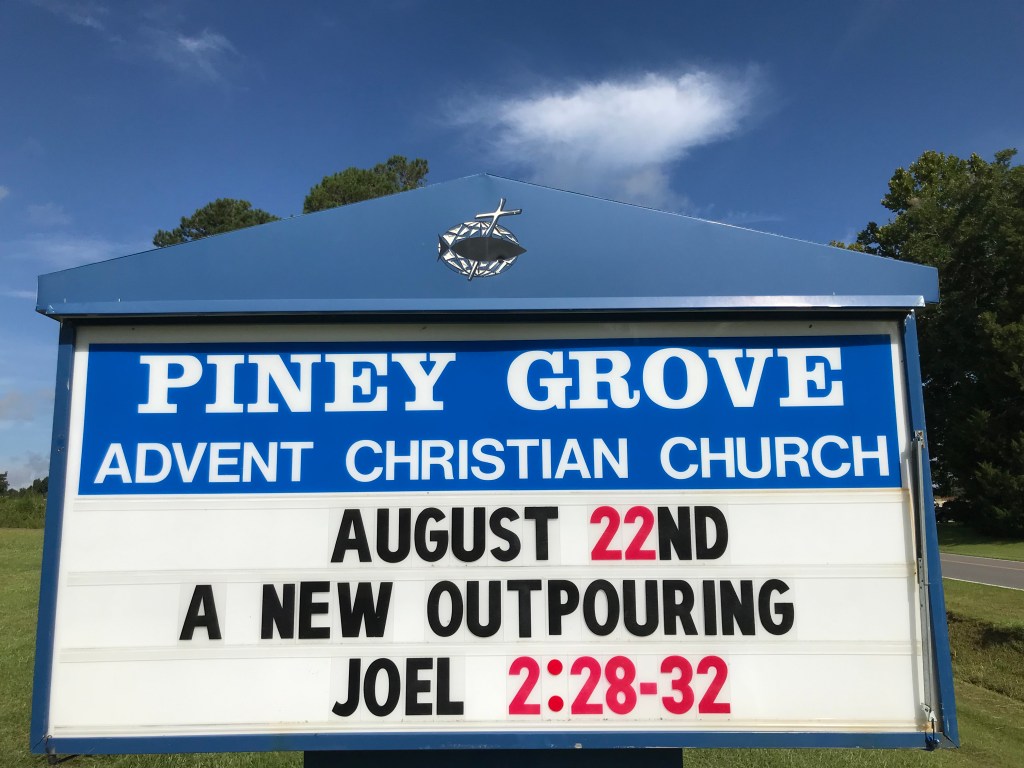
A NEW OUTPOURING

A NEW OUTPOURING

Joel 2:28-32 NET

28 After all of this I will pour out my Spirit on all kinds of people. Your sons and daughters will prophesy. Your elderly will have revelatory dreams; your young men will see prophetic visions. 29 Even on male and female servants I will pour out my Spirit in those days. 30 I will produce portents both in the sky and on the earth – blood, fire, and columns of smoke. 31 The sunlight will be turned to darkness and the moon to the color of blood, before the day of the LORD comes – that great and terrible day! 32 It will so happen that everyone who calls on the name of the LORD will be delivered. For on Mount Zion and in Jerusalem there will be those who survive, just as the LORD has promised; the remnant will be those whom the LORD will call.

In last week’s message we saw how Ezekiel predicted that God would no longer hide his face from his people, but would pour out his Spirit on the house of Israel (Ezekiel 39:29).

This passage by the prophet Joel explains what God would do for them in more detail. It also explains how the outpouring of the Holy Spirit would work out God’s plan not only for Israel, but also his plan for the nations.

Joel predicted that before the outpouring, there would be a series of divine miracles (30-31).

Joel said “I will produce portents both in the sky and on the earth – blood, fire, and columns of smoke. The sunlight will be turned to darkness and the moon to the color of blood, before the day of the LORD comes – that great and terrible day!”

These portents consist of a series of miracles that let people know something significant is happening. Now, if the outpouring of the Holy Spirit happened at Pentecost, does history show a period of significant divine miracles for a period of time before that? Of course it does. We have four Gospels that record those significant miracles performed by our Lord himself.

The Gospels record 34 specific miracles performed by Jesus, but John tells us that “There are many other things that Jesus did. If every one of them were written down, I suppose the whole world would not have room for the books that would be written” (John 21:25). So Jesus’ earthly ministry before his ascension qualifies as a part of the fulfillment of Joel 2:30-31.

But those verses also talk about something else. They talk about a specific event in which there will be a portent in the sky and a portent on the earth. In the sky, the sun will turn to darkness and the moon to the color of blood. On the earth, there will be “blood, fire and columns of smoke.”

Was there such an event prior to the outpouring of the Holy Spirit at Pentecost? Yes, there was. The crucifixion of our Lord himself took place at the same time the temple sacrifices were being prepared. So, on the earth, there was “blood, fire and columns of smoke.” But Three Gospels tell us that during the crucifixion for a three hour period starting at noon, “darkness came over the whole land … because the sun’s light failed” (Luke 23:44-45). There is also some evidence that a lunar eclipse took place on that date, which would account for the appearance of a blood red moon. When Peter preached on Pentecost, he said:

“Men of Israel, listen to these words: Jesus the Nazarene, a man clearly attested to you by God with powerful deeds, wonders, and miraculous signs (portents) that God performed among you through him, just as you yourselves know” (Acts 2:22). Peter quoted the text in Joel to explain the miraculous ministry of Jesus, the portents at the crucifixion and the outpouring of the Holy Spirit at Pentecost.

Now, if you watched this week’s video, one of my questions I asked you to research is “What is the “day of the LORD” mentioned in verse 31? The day of the LORD is often used in scripture to describe the day when Christ comes in judgment. What Joel says here is that this portent will happen before that. It has been 2000 years, and so far the day of the LORD has not happened. But the portent signs at Christ’s crucifixion did happen. The outpouring of the Holy Spirit also came at Pentecost. So, Joel is 2 for 3. The day of the LORD is next.

Joel predicted that the outpouring would result in the removal of barriers to proclaiming the gospel (28-29).

About 120 people had gathered at the temple and were waiting for the power that Jesus had promised.

• First, there was the sound of a violent wind blowing. 
• Then, there were visible tongues of fire that rested on each of the 120 believers.
• Then thousands of Jews visiting from every nation under heaven – there to participate in the Jewish holiday – heard and watched the display of power, and heard the gospel being proclaimed in the languages of the places where they lived. 
• 3000 of those Jewish visitors responded to the gospel message that day and became believers in Jesus Christ. Within a few days, the number had grown to 5000.
• In fact, the book of Acts shows that the outpouring continued, and the Holy Spirit’s empowerment did not stop with the Jews at Pentecost.

First, the Gospel was proclaimed in Jerusalem.
Next, after the death of Stephen “a great persecution began against the church in Jerusalem, and all except the apostles were forced to scatter throughout the regions of Judea and Samaria” (Acts 8:1).

A few verses later, we learn that the outpouring of the Holy Spirit went with these evangelists:

Two chapters after that, Peter is sent to preach the gospel to Cornelius – a Gentile Roman centurion.

• “Now when the apostles in Jerusalem heard that Samaria had accepted the word of God, they sent Peter and John to them. These two went down and prayed for them so that they would receive the Holy Spirit.    Then Peter and John placed their hands on the Samaritans, and they received the Holy Spirit” (Acts 8:14-15, 17).
• “While Peter was still speaking ... the Holy Spirit fell on all those who heard the message. The circumcised believers who had accompanied Peter were greatly astonished that the gift of the Holy Spirit had been poured out even on the Gentiles” (Acts 10:44-45).

Consequently, we learn that there will be no racial or geographical barrier to the outpouring of the Holy Spirit.

But Joel predicted that when the Holy Spirit came at Pentecost, it would come upon all kinds of people (28-29).

“After all of this I will pour out my Spirit on all kinds of people. Your sons and daughters will prophesy. Your elderly will have revelatory dreams; your young men will see prophetic visions. Even on male and female servants I will pour out my Spirit in those days.”

In Joel’s day, God had poured out his Spirit only on a few select prophets. If you wanted to know what God thinks, you would have to search out one of the prophets. But Joel predicts that when God strikes, EVERY believer will have his message. The Holy Spirit will gift and empower all believers regardless of gender, age, or social status.

Joel predicted that the outpouring would enable the survivors in Israel to reach the world with the gospel (32).

“It will so happen that everyone who calls on the name of the LORD will be delivered. For on Mount Zion and in Jerusalem there will be those who survive, just as the LORD has promised; the remnant will be those whom the LORD will call.”

To understand what Joel is saying here, we need to have a better knowledge of all of Joel’s prophecy.

Judah had been hit by a major natural disaster: a series of locust plagues that wiped out the nation’s economy and led to system-wide depression and famine. It was hard to imagine things getting any worse. But Joel does not ride into town with his white horse and tell everybody “there, there, everything is going to get better now.” No, Joel’s message is more like “You ain’t seen nothing yet.” The plague of locusts which came from the north is going to be followed by swarms of armies coming from the same direction. We know from history that those armies came from Assyria, then Babylon, the Persia, then Greece, then Rome.

So, Joel preached that things are bad for his people, and they are going to get worse. But he tells the Jews to hang on, because there are going to be survivors, and some of the descendants of these survivors will be on hand in Jerusalem when God pours out his Holy Spirit.

There will be a remnant left, and “the remnant will be those whom the LORD will call.” He will call on them to proclaim his glorious gospel to the nations. He will use them to reach the nations for Christ. He will use them to tell the people of the world that “everyone who calls on the name of the LORD will be delivered.”

This week’s Facebook video listed three questions from this verse:

  • First, “What does it mean to call on the name of the LORD?” It means to respond to the gospel, and it was the gospel that the Pentecost believers preached.
  • Second, “What is the promise of the LORD mentioned in this verse?” The promise is that even though Judah will go through many disasters and tragedies, there will still be some survivors who will experience the outpouring of the Holy Spirit.
  • Third, “Who are the remnant who will be called by the LORD in verse 32?” The answer is the Jews in Jerusalem who responded to the gospel and received the outpouring at Pentecost.

Joel spoke to a generation who had faced disaster, and they were looking for hope. Joel could speak a word of hope for his generation. But that word of hope was not that everything was going to get better in their lifetime. No, his message to them was to stay faithful even in the midst of the coming disasters because God is going to do something new with the ones who survive – the remnant. The new birth was coming, and along with it, a new outpouring.

In the same way, when his disciples asked Jesus about the future, he did not give them a rosy picture. He told them…

• “Nation will rise up in arms against nation, and kingdom against kingdom. There will be great earthquakes, and famines and plagues (like COVID-19) in various places, and there will be terrifying sights and great signs from heaven. But before all this, they will seize you and persecute you, handing you over to the synagogues and prisons. You will be brought before kings and governors because of my name. You will be betrayed even by parents, brothers, relatives, and friends, and they will have some of you put to death. You will be hated by everyone because of my name” (Luke 21:10-12,16-17).

It is during this age of betrayal, disaster and death that God’s people, empowered by his Holy Spirit will serve as his witnesses.

• “This will be a time for you to serve as witnesses. Therefore be resolved not to rehearse ahead of time how to make your defense. For I will give you the words along with the wisdom that none of your adversaries will be able to withstand or contradict” (Luke 21:13-15).

Christ taught his disciples that this age will not come to an end until we reach the nations with his gospel.

• “And this gospel of the kingdom will be preached throughout the whole inhabited earth as a testimony to all the nations, and then the end will come” (Matthew 24:14).

The new birth has come. The outpouring of God’s Holy Spirit has come, and his Spirit is still pouring out upon everyone who believes in his gospel. The end of this age of disease, disaster and death is coming. But before the end comes, we have a job to do. Jesus told us the purpose of the outpouring.

• “But you will receive power when the Holy Spirit has come upon you, and you will be my witnesses in Jerusalem, and in all Judea and Samaria, and to the farthest parts of the earth” (Acts 1:8).

What is the purpose for the power? It is not to make us feel good, excited or happy. The purpose of the power is to remove the barriers that are keeping our neighbors from understanding and responding to the gospel. That is why God continues to pour out his Holy Spirit on us.

audio file of today’s mressage
click for my e-books

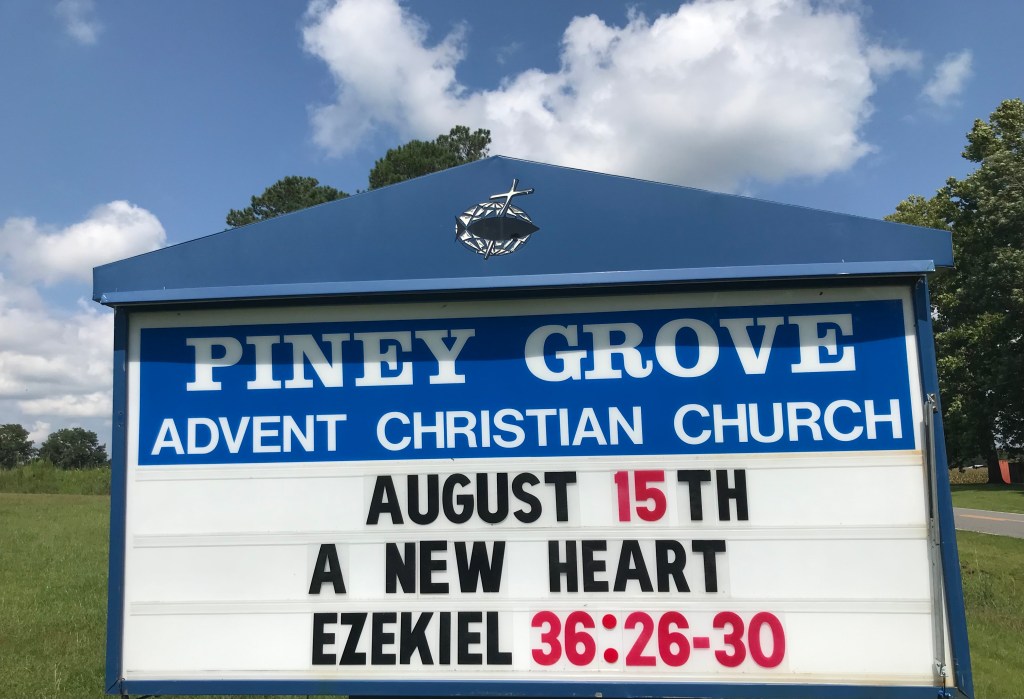
A NEW HEART

sign announcing today’s message

A NEW HEART

EZEKIEL 36:26-30 NET

26 I will give you a new heart, and I will put a new spirit within you. I will remove the heart of stone from your body and give you a heart of flesh. 27 I will put my Spirit within you; I will take the initiative, and you will obey my statutes and carefully observe my regulations. 28 Then you will live in the land I gave to your fathers; you will be my people, and I will be your God. 29 I will save you from all your uncleanness. I will call for the grain and multiply it; I will not bring a famine on you. 30 I will multiply the fruit of the trees and the produce of the fields, so that you will never again suffer the disgrace of famine among the nations.

We have been studying what the Bible teaches about being born again. Last week, we saw that God predicted through Jeremiah that he was going to initiate a new covenant, and that – unlike the old covenant – he would write his teachings on the hearts of his people. In today’s text from Ezekiel, we have more information about just exactly what God promises to do.

God promises to change his people internally

God promises that he “will give (them) a new heart” (26a). He promises to change them internally. It will be the same people, but they will be changed from the inside out. This is what God wants for his people of any age. Paul encouraged the Roman Christians not to be conformed to this present world, but to be transformed by the renewing of their minds so that they may test and approve God’s will in their lives (Romans 12:2). The picture is God changing them from the inside out. That is the picture here in Ezekiel.

This is a process that begins at conversion. Paul told the Corinthians that all believers are being transformed into people who reflect the Lord’s image, and that the process happens in stages “from one degree of glory to another” (2 Corinthians 3:18). We start with a new heart.

If a person has a heart transplant, you don’t see the difference externally at once. But as the body adjusts to its new heart, over time it becomes healthier and stronger. The old heart was giving out, and could only make the body sicker and weaker. The new heart takes over and restores health and vitality.

God also said “(he) will put a new spirit within (them)” (26b). The spirit is the breath that is inside a breathing body. The Hebrews used this breath as a metaphor for the internal life. As such, a good breath inside a person suggested health, vitality and a good attitude. An evil breath (not to be confused with bad breath) meant that the body was unhealthy, dying and full of hate and bitterness.

So, when God said that he was going to put a new spirit in his people, he was talking about restoring their relationship with him through forgiveness, and that would result in health and wholeness.

He also said “(he) will remove the heart of stone from (their) body and give (them) a heart of flesh” (26c). If you have a heart of stone, you are not alive. God created us with hearts of flesh, and those hearts of flesh beat within our chests, and pump blood throughout our bodies, keeping us alive.

But the Israelites had suffered from hardening of their hearts. Their inner selves had become so hard toward God that they were living dead people – a zombie nation. God was going to do something about that. He was going to give them a heart transplant.

God promises to share his Holy Spirit with them

He also said “(he) will put (his) Spirit within (them); (he) will take the initiative” (27a).

Later, he said through the same prophet “I will no longer hide my face from them, when I pour out my Spirit on the house of Israel, declares the sovereign LORD” (Ezekiel 39:29). This is our first clue as to when God was going to fulfill his promise.

The prophet Joel also predicted the same event. He said “I will pour out my Spirit on all kinds of people. Your sons and daughters will prophesy. Your elderly will have revelatory dreams; your young men will see prophetic visions. Even on male and female servants I will pour out my Spirit in those days” (Joel 2:28-29).

Fast forward to the New Testament and we see Peter quoting the text in Joel to explain the outpouring of the Holy Spirit at Pentecost. About 120 people had gathered at the temple and were waiting for the power that Jesus had promised.

• First, there was the sound of a violent wind blowing. 
• Then, there were visible tongues of fire that rested on each of the 120 believers.
• Then thousands of Jews visiting from every nation under heaven – there to participate in the Jewish holiday – heard and watched the display of power, and heard the gospel being proclaimed in the languages of the places where they lived. 
• 3000 of those Jewish visitors responded to the gospel message that day and became believers in Jesus Christ. Within a few days, the number had grown to 5000.

God had promised to pour out his Spirit on his people, and he did. The result was that his Spirit empowered them to proclaim the gospel of Jesus Christ and grow his church.


Now, some of you have watched the video which I posted on our church Facebook site last Monday. In that video, I asked you to read today’s text and respond to three questions.

• The first question was “Is this promise conditional or unconditional?” In was kind of both. What God promised he was going to do, he did. God did not say that if Israel smartened up he would send his Holy Spirit to them. But there were lots more people than just those 3000 who were in Jerusalem for Pentecost. But only those 3000 responded to the miracle with repentance and faith.

Here’s what God promised the Israelites who repented.

If Israel accepts the Holy Spirit, there will be evident blessings:

• The first evident blessing will be OBEDIENCE.

He said “(they) will obey (his) statutes and carefully observe (his) regulations” (27b). The Jews who repented at Pentecost would learn how to obey God. The generations who came before them had struggled with idolatry, paganism and lack of faith. But after Pentecost, these believers would be blessed with the ability to obey the law of God and the commands of Christ.

• The second evident blessing will be WITNESS.

God said “they will live in the land (God) gave to (their) fathers; (they) will be (his) people, and (he) will be (their) God” (28). God enabled these Jewish believers to first represent his kingdom in the land he promised their ancestors. Eventually, he would send them back to the lands they had migrated to. They would “be (his) witnesses in Jerusalem, and in all Judea and Samaria, and to the farthest parts of the earth” (Acts 1:8).

• The third evident blessing will be SANCTIFICATION.

God said “(he) will save (them) from all (their) uncleanness” (29a). Paul told the Thessalonian Christians that God had chosen them “from the beginning for salvation through sanctification by the Spirit and faith in the truth” (2 Thessalonians 2:13). One of the roles of the Holy Spirit in our lives is to sanctify us. He saves us from our uncleanness. He does this by cleaning us from the inside out. When the Holy Spirit was poured out at Pentecost, he began cleaning up the world.

That reminds me. Another of those questions I had introduced in the video was “Does this promise apply to Christians or only to the Jews?” The Thessalonians were Gentiles. The same Holy Spirit who God promised to give to the Jews at Pentecost will do the same thing for us Gentiles. Paul tells the Galatians that there “is neither Jew nor Greek, there is neither slave nor free, there is neither male nor female – for all of you are one in Christ Jesus” (Galatians 3:28).

• The fourth evident blessing will be PROSPERITY.

God said “(he) will call for the grain and multiply it; (He) will not bring a famine on (them). (He) will multiply the fruit of the trees and the produce of the fields, so that (they) will never again suffer the disgrace of famine” (29b-30a). He wanted to bless them so that other people would notice the blessing, and as about the reason for the blessing. If people just come to God for a blessing, they probably wont get one. God is not obligated to bless anyone just because they want to be blessed. His obligations are always tied to his mission. This brings me to my last point.

God had a missional reason for promising this

Note the last three words of today’s text: “among the nations” (30b). God’s purpose for promising to regenerate his people – giving them a new heart and pouring out his Holy spirit on them – was in keeping with his purpose for blessing their ancestor – Abraham.

God had told Abraham…

• “"Go out from your country, your relatives, and your father's household to the land that I will show you. Then I will make you into a great nation, and I will bless you, and I will make your name great, so that you will exemplify divine blessing. I will bless those who bless you, but the one who treats you lightly I must curse, and all the families of the earth will bless one another by your name"” (Genesis 12:1-3).

It was God’s intention that Abraham and all his descendants would be a conduit for him to bless all the nations on the planet. They were supposed to spread God’s blessing, not hoard it for themselves.

Why did God promise to give the Israelites a new heart? Let’s back up a few verses:

• “Therefore say to the house of Israel, ‘This is what the Sovereign Lord says: It is not for your sake that I am about to act, O house of Israel, but for the sake of my holy reputation, which you profaned among the nations where you went. I will magnify my great name that has been profaned among the nations, which you have profaned among them. The nations will know that I am the Lord, declares the Sovereign Lord, when I magnify myself among you in their sight” (22-23).

Now, we know the rest of the story. God’s people had gone out into the nations and profaned his name among the Gentiles. God promised to convert them – to give them a new heart and empower them with his Holy Spirit. This would result in his glory being spread by them to all the nations.

Now, for the final question I had asked on the video.

“If we received what God promised here, what would the results be? What would it look like?”

This is a helpful question, because if our conversion is genuine, it should have certain results, and today’s text points out what some of those results should be.

• First, people who are really born again want to obey Jesus Christ in everything. We have a new heart, and that heart beats for our master.
• Second, people who are really born again want to share this experience with others all over the world. The Holy Spirit within us not only empowers us to witness, he makes evangelism our passion.
• Third, people who are really born again want to clean up. They are tired of living sinful lives and cooperate with the Holy Spirit’s sanctification.
• Fourth, people who are really born again are going to prosper in some way. No, I am not teaching the prosperity gospel, but I am saying that people who are truly born again are going to evidence some kind of prosperity for the gospel’s sake. It may not be financial prosperity. Remember, Peter told the crippled beggar “I have no silver or gold, but what I do have I give you. In the name of Jesus Christ the Nazarene, stand up and walk!” (Acts 3:6). If we are truly born again, God is going to bless us with blessings that other people are going to want. When they come to us for answers, we need to make sure that we tell them that Jesus Christ is the answer.

God wants people with new hearts to draw the nations to him. Do you have a new heart? If you don’t, you can get one at Calvary.

Audio file of this message
click for my e-books

A NEW COVENANT

A NEW COVENANT

Jeremiah 31:31-34 CSB

Jeremiah 31:31-34 CSB

31 “Look, the days are coming”—this is the Lord’s declaration—“when I will make a new covenant with the house of Israel and with the house of Judah. 32 This one will not be like the covenant I made with their ancestors on the day I took them by the hand to lead them out of the land of Egypt—my covenant that they broke even though I am their master”—the Lord’s declaration. 33 “Instead, this is the covenant I will make with the house of Israel after those days”—the Lord’s declaration. “I will put my teaching within them and write it on their hearts. I will be their God, and they will be my people. 34 No longer will one teach his neighbor or his brother, saying, ‘Know the Lord,’ for they will all know me, from the least to the greatest of them”—this is the Lord’s declaration. “For I will forgive their iniquity and never again remember their sin.

God gave me a tremendous month of rest, recreation, and reinforcement during my vacation, and I am very grateful for that gift. I am also very grateful to be back among you good folks in Delco and preaching the gospel here and serving in this church. Absence does not always make the heart grow fonder, but it is true in this case. I missed you all, and I am glad to see you again.

Before I left for vacation, in our annual meeting – I promised that most of my preaching this coming year will focus on the commands of Christ. He commissioned the apostles to teach the things that he has commanded us to obey, and I take that as a personal imperative as your pastor.

For that reason, I want to spend the next few weeks getting very familiar with what Christ told Nicodemus in John, chapter 3. He told Nicodemus that he and everyone else had to be born again – to experience a new birth.

We are not going to look at that passage today, because I want to begin our study in the Old Testament. There are several passages in the Old Testament that predict that new birth. I want us to study those passages first. After we have seen what God has taught in his word as the foundation for the new birth, then we will look at John 3. After that, we are going to look at what God has taught us in other New Testament passages about the new birth.

My goal is to be systematic and comprehensive. I feel that many people miss some very important biblical truths about the new birth because they don’t know what God has said about it in all the scripture. “Every scripture is inspired by God and useful for teaching, for reproof, for correction, and for training in righteousness, that the person dedicated to God may be capable and equipped for every good work” (2 Timothy 3:16 NET). That is why when we study the Bible on any topic, we need to compare what we are learning with what every scripture says on that topic. Otherwise, we run the risk of misunderstanding the subject or misapplying it. This is also why a good study Bible will include some cross references in it. By comparing scripture to scripture, we protect ourselves from an inaccurate understanding of what God has revealed in his word.

That is a safety measure. The scientists and engineers who build ships, planes and rockets build redundant systems in their creations for the same reason. If the power system in the plane I am flying on goes kerflooey, the pilot has an auxiliary backup system he can turn on. If the pilot goes kerflooey, he has a copilot who can take over. They even have an autopilot they can use. Those are all safety measures. In most cases, God has built redundancy into his revelation. So, in order to make sure we accurately understand what Jesus has commanded on any topic, we need to read and study what the whole Bible teaches on that topic.

Our topic today is the new covenant that Jeremiah predicts in today’s text: Jeremiah 31:31-34.

The new covenant was God’s idea

God said “I will make a new covenant” (31). The new covenant was God’s idea. It was not invented by Christians. It was not snuck into theology by the some later revisionist. God said that he would make a new covenant and when the time was right for him to make that covenant, he did. In Jeremiah, he gives his people fair warning that he intended to do that.

When God says he’s going to do something, you better believe he’s going to do it. Early in Genesis, God looked at Adam, said he was alone, and concluded that it was not good. So he said he would create a partner for him – a companion who corresponds to him. So he created Eve. In the marriage vows, both the husband and the wife say “I will.” But we can only do that because God said “I will” first! God said he was going to do it, and he did it.

Later in Genesis, God looked at sinful humanity, and the world corrupted by it, and he said he was going to wash it all clean with a flood. When the time was right, the flood came and it did what God promised it would do. Thankfully, God had provided a redundant system in Noah’s ark, or else that would have been the last chapter in the story.

The new covenant is God’s redundant system because he has a new creation that he plans to commence at the end of this age. Our first birth begins the temporary life of this present creation in this age. Just being born is not enough to secure us a reservation in God’s new creation. For that, we need to be born again. For that, we need to be born from above.

Being born again is not the same thing as being immortal. It’s more like a ticket to it. We begin being immortal not at our conversion, but at our resurrection. Paul talks about that in 1 Corinthians 15 (:42, 50, 52-54). He says that when believers die, their old perishable self is planted, and that at the resurrection, our new imperishable self emerges. When Jesus comes, the dead in Christ will be raised imperishable, and those of us who are still alive will be changed so that we are imperishable too.

And that’s why I like singing the chorus to that folk song “when I hear that trumpet sound, I’m gonna get up outta the ground – ain’t no grave gonna keep my body down.” We have the ticket! By being born again, we have booked passage on God’s eternal, immortal new creation. Jeremiah recorded the fact that God decided he was going to make a new covenant. He did. By God’s grace, you and I can be part of that new covenant.

The old covenant has been broken

Jeremiah also tells us what happened to the old covenant. God calls it “my covenant that they broke” (32).

God does not have two covenants in effect at the same time. The old covenant that God established with the Israelites under Moses was broken by the rebellion of the Israelites. Consequently, the covenant of the law that was carved in letters on stone tablets became a ministry of bondage that produced death. Here’s how Paul described that in 2 Corinthians 3(:7-18 NET).

  • “But if the ministry that produced death – carved in letters on stone tablets – came with glory, so that the Israelites could not keep their eyes fixed on the face of Moses because of the glory of his face (a glory which was made ineffective), how much more glorious will the ministry of the Spirit be? For if there was glory in the ministry that produced condemnation, how much more does the ministry that produces righteousness excel in glory! For indeed, what had been glorious now has no glory because of the tremendously greater glory of what replaced it. For if what was made ineffective came with glory, how much more has what remains come in glory! Therefore, since we have such a hope, we behave with great boldness, and not like Moses who used to put a veil over his face to keep the Israelites from staring at the result of the glory that was made ineffective. But their minds were closed. For to this very day, the same veil remains when they hear the old covenant read. It has not been removed because only in Christ is it taken away. But until this very day whenever Moses is read, a veil lies over their minds, but when one turns to the Lord, the veil is removed. Now the Lord is the Spirit, and where the Spirit of the Lord is present, there is freedom. And we all, with unveiled faces reflecting the glory of the Lord, are being transformed into the same image from one degree of glory to another, which is from the Lord, who is the Spirit.”

The old broken covenant cannot save anyone. It is a broken agreement and cannot give anyone life and it will not buy anyone a ticket to God’s new creation. It was a temporary system that pointed people to Christ. But when Christ came, he said “I am making all things new!” (Revelation 21:5). That is why when that prominent Jewish theologian and spiritual leader Nicodemus came to Jesus to talk to him, Jesus had the audacity to tell him that he had to be born again. The old covenant that he – Nicodemus – represented was not good enough buy him a ticket to the new creation.

That’s why just following the ten commandments is not enough for you and me either. Remember that rich young ruler who came to Jesus, proud of the fact that he had kept all the commandments from his youth? Jesus said he still lacked one thing. He didn’t pay enough for a ticket to the new creation. Jesus told him to sell everything he had and give that money to the poor, and then come and follow him. His all was not on the altar of sacrifice laid. His heart the Spirit did not control. He had not yielded to Christ his body and soul. Jesus loved him, but that was not enough. His superficial obedience to the old covenant was not enough. He was almost perfect, but he was not born again.

So, how do we know if we have paid the full price for our ticket? How do we know that some day we might stand before Christ on the judgment day and find out that we were betting on the wrong horse? We need to understand the new covenant if we want to be part of the new creation. So, what else did Jeremiah teach about this new covenant?

The new covenant is a covenant of discipleship

God says “I will put my teaching within them” (33).

When our Lord commissioned us to make disciples of all nations, he was not coming up with a new job for God’s people to do. Discipling was God’s intention for everyone who entered into a relationship with him via the new covenant. God had begun teaching us how to disciple others in the Old Testament. When Jesus came, he started his earthly ministry by making disciples. He spent three years molding his disciples into people who had a personal relationship with him, and then he set them loose on the world.

You cannot be a disciple without learning something. A disciple by definition is a student. But, unlike high school or college, the school of discipleship does not come to an end after a few years. You don’t graduate from the school of discipleship this side of the resurrection.

God’s disciples are all his children, and no matter how much we learn, that relationship does not change until Jesus comes again. In one of his letters, John wrote:

  • Dear friends, we are God’s children now, and what we will be has not yet been revealed. We know that whenever it is revealed we will be like him, because we will see him just as he is (1 John 3:2 NET).

That is the attitude of a disciple. We are all God’s children and children are always naturally learning. We stay curious because we know we are not yet what we will be some day.

The new covenant is a covenant of discipleship. It is an agreement to keep learning and growing. We never get to the point where we have learned enough or grown enough so that we can leave the school.

Even the great apostle Paul had this attitude. He said “My aim is to know him, to experience the power of his resurrection, to share in his sufferings, and to be like him in his death, and so, somehow, to attain to the resurrection from the dead. Not that I have already attained this – that is, I have not already been perfected – but I strive to lay hold of that for which Christ Jesus also laid hold of me” Philippians 3:10-13 NET).

Paul did not rest in his eternal security. He kept striving to learn more and to be more of the new creation he was destined to be. That is what a disciple under the new covenant is like.

The new covenant involves a change of heart

God also said “(he) will… write (his teaching) on (our) hearts” (33). We will talk more about this next week, when we examine what Ezekiel predicted about the new birth (Ezekiel 36:26-30). I’m just going to read that text today, and we will examine it next week:

“I will give you a new heart and put a new spirit within you; I will remove your heart of stone and give you a heart of flesh. I will place my Spirit within you and cause you to follow my statutes and carefully observe my ordinances. You will live in the land that I gave your fathers; you will be my people, and I will be your God. I will save you from all your uncleanness. I will summon the grain and make it plentiful, and I will not bring famine on you. I will also make the fruit of the trees and the produce of the field plentiful, so that you will no longer experience reproach among the nations on account of famine” (CSB).

The new covenant begins with forgiveness

Finally, God said “(he) will forgive (our) iniquity” (34). The old covenant had a blood sacrifice that covered sins of the Israelites. The new covenant had a blood sacrifice as well. When Jesus had his first communion with his disciples, he had them all drink from a cup symbolizing his death that was soon to happen. Then he told them “ this is my blood, the blood of the covenant, that is poured out for many for the forgiveness of sins” (Matthew 26:28 NET).

His blood was not the blood of the old covenant. The old covenant sacrifices had to be repeated year after year because they could not remove sin and its consequences. But according to the author of Hebrews. Jesus’ death on the cross “put away sin” “once and for all” (Hebrews 9:26). Because of what Jesus Christ did for us, we can be born again. We can be fully and completely forgiven of our past sins, and purchase a ticket for his new creation.

The new covenant begins with forgiveness. Discipleship begins with forgiveness. Our new life in Christ begins with forgiveness. Holiness begins with forgiveness. Sanctification begins with forgiveness. And the best of all is that forgiveness does not have to be earned. In fact, it cannot be earned. It is a free gift waiting to be accepted.

God the Father said “I will” make a new covenant, and he did.

Jesus the Son said “I will” die for their sins, and he did.

Now, the Father and the Son are asking us what we are going to do. If we say “we will” come just as we are and enter into that new covenant, then we can have fellowship with both the Father and the Son and the blood of Jesus will cleanse us from all sin (1 John 1:3, 7). Enter the new covenant today. The new creation is about to begin. Don’t be caught without a ticket.

A NEW COVENANT (audio file)
click for my e-books