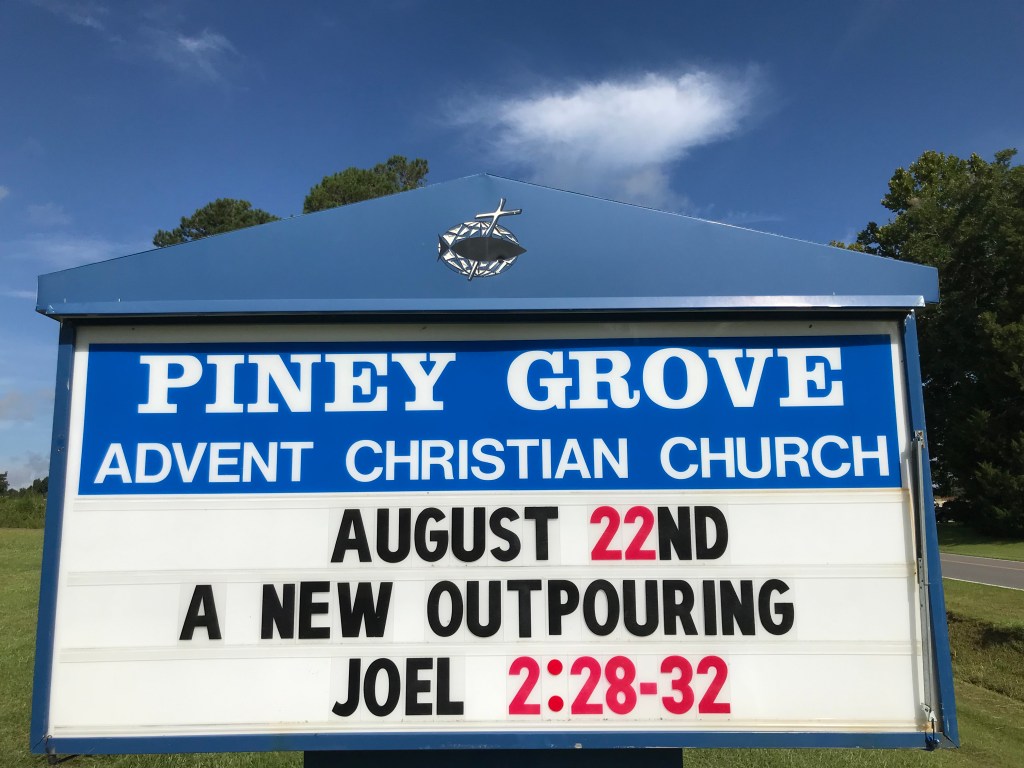
A NEW OUTPOURING

A NEW OUTPOURING

Joel 2:28-32 NET

28 After all of this I will pour out my Spirit on all kinds of people. Your sons and daughters will prophesy. Your elderly will have revelatory dreams; your young men will see prophetic visions. 29 Even on male and female servants I will pour out my Spirit in those days. 30 I will produce portents both in the sky and on the earth – blood, fire, and columns of smoke. 31 The sunlight will be turned to darkness and the moon to the color of blood, before the day of the LORD comes – that great and terrible day! 32 It will so happen that everyone who calls on the name of the LORD will be delivered. For on Mount Zion and in Jerusalem there will be those who survive, just as the LORD has promised; the remnant will be those whom the LORD will call.

In last week’s message we saw how Ezekiel predicted that God would no longer hide his face from his people, but would pour out his Spirit on the house of Israel (Ezekiel 39:29).

This passage by the prophet Joel explains what God would do for them in more detail. It also explains how the outpouring of the Holy Spirit would work out God’s plan not only for Israel, but also his plan for the nations.

Joel predicted that before the outpouring, there would be a series of divine miracles (30-31).

Joel said “I will produce portents both in the sky and on the earth – blood, fire, and columns of smoke. The sunlight will be turned to darkness and the moon to the color of blood, before the day of the LORD comes – that great and terrible day!”

These portents consist of a series of miracles that let people know something significant is happening. Now, if the outpouring of the Holy Spirit happened at Pentecost, does history show a period of significant divine miracles for a period of time before that? Of course it does. We have four Gospels that record those significant miracles performed by our Lord himself.

The Gospels record 34 specific miracles performed by Jesus, but John tells us that “There are many other things that Jesus did. If every one of them were written down, I suppose the whole world would not have room for the books that would be written” (John 21:25). So Jesus’ earthly ministry before his ascension qualifies as a part of the fulfillment of Joel 2:30-31.

But those verses also talk about something else. They talk about a specific event in which there will be a portent in the sky and a portent on the earth. In the sky, the sun will turn to darkness and the moon to the color of blood. On the earth, there will be “blood, fire and columns of smoke.”

Was there such an event prior to the outpouring of the Holy Spirit at Pentecost? Yes, there was. The crucifixion of our Lord himself took place at the same time the temple sacrifices were being prepared. So, on the earth, there was “blood, fire and columns of smoke.” But Three Gospels tell us that during the crucifixion for a three hour period starting at noon, “darkness came over the whole land … because the sun’s light failed” (Luke 23:44-45). There is also some evidence that a lunar eclipse took place on that date, which would account for the appearance of a blood red moon. When Peter preached on Pentecost, he said:

“Men of Israel, listen to these words: Jesus the Nazarene, a man clearly attested to you by God with powerful deeds, wonders, and miraculous signs (portents) that God performed among you through him, just as you yourselves know” (Acts 2:22). Peter quoted the text in Joel to explain the miraculous ministry of Jesus, the portents at the crucifixion and the outpouring of the Holy Spirit at Pentecost.

Now, if you watched this week’s video, one of my questions I asked you to research is “What is the “day of the LORD” mentioned in verse 31? The day of the LORD is often used in scripture to describe the day when Christ comes in judgment. What Joel says here is that this portent will happen before that. It has been 2000 years, and so far the day of the LORD has not happened. But the portent signs at Christ’s crucifixion did happen. The outpouring of the Holy Spirit also came at Pentecost. So, Joel is 2 for 3. The day of the LORD is next.

Joel predicted that the outpouring would result in the removal of barriers to proclaiming the gospel (28-29).

About 120 people had gathered at the temple and were waiting for the power that Jesus had promised.

• First, there was the sound of a violent wind blowing. 
• Then, there were visible tongues of fire that rested on each of the 120 believers.
• Then thousands of Jews visiting from every nation under heaven – there to participate in the Jewish holiday – heard and watched the display of power, and heard the gospel being proclaimed in the languages of the places where they lived. 
• 3000 of those Jewish visitors responded to the gospel message that day and became believers in Jesus Christ. Within a few days, the number had grown to 5000.
• In fact, the book of Acts shows that the outpouring continued, and the Holy Spirit’s empowerment did not stop with the Jews at Pentecost.

First, the Gospel was proclaimed in Jerusalem.
Next, after the death of Stephen “a great persecution began against the church in Jerusalem, and all except the apostles were forced to scatter throughout the regions of Judea and Samaria” (Acts 8:1).

A few verses later, we learn that the outpouring of the Holy Spirit went with these evangelists:

Two chapters after that, Peter is sent to preach the gospel to Cornelius – a Gentile Roman centurion.

• “Now when the apostles in Jerusalem heard that Samaria had accepted the word of God, they sent Peter and John to them. These two went down and prayed for them so that they would receive the Holy Spirit.    Then Peter and John placed their hands on the Samaritans, and they received the Holy Spirit” (Acts 8:14-15, 17).
• “While Peter was still speaking ... the Holy Spirit fell on all those who heard the message. The circumcised believers who had accompanied Peter were greatly astonished that the gift of the Holy Spirit had been poured out even on the Gentiles” (Acts 10:44-45).

Consequently, we learn that there will be no racial or geographical barrier to the outpouring of the Holy Spirit.

But Joel predicted that when the Holy Spirit came at Pentecost, it would come upon all kinds of people (28-29).

“After all of this I will pour out my Spirit on all kinds of people. Your sons and daughters will prophesy. Your elderly will have revelatory dreams; your young men will see prophetic visions. Even on male and female servants I will pour out my Spirit in those days.”

In Joel’s day, God had poured out his Spirit only on a few select prophets. If you wanted to know what God thinks, you would have to search out one of the prophets. But Joel predicts that when God strikes, EVERY believer will have his message. The Holy Spirit will gift and empower all believers regardless of gender, age, or social status.

Joel predicted that the outpouring would enable the survivors in Israel to reach the world with the gospel (32).

“It will so happen that everyone who calls on the name of the LORD will be delivered. For on Mount Zion and in Jerusalem there will be those who survive, just as the LORD has promised; the remnant will be those whom the LORD will call.”

To understand what Joel is saying here, we need to have a better knowledge of all of Joel’s prophecy.

Judah had been hit by a major natural disaster: a series of locust plagues that wiped out the nation’s economy and led to system-wide depression and famine. It was hard to imagine things getting any worse. But Joel does not ride into town with his white horse and tell everybody “there, there, everything is going to get better now.” No, Joel’s message is more like “You ain’t seen nothing yet.” The plague of locusts which came from the north is going to be followed by swarms of armies coming from the same direction. We know from history that those armies came from Assyria, then Babylon, the Persia, then Greece, then Rome.

So, Joel preached that things are bad for his people, and they are going to get worse. But he tells the Jews to hang on, because there are going to be survivors, and some of the descendants of these survivors will be on hand in Jerusalem when God pours out his Holy Spirit.

There will be a remnant left, and “the remnant will be those whom the LORD will call.” He will call on them to proclaim his glorious gospel to the nations. He will use them to reach the nations for Christ. He will use them to tell the people of the world that “everyone who calls on the name of the LORD will be delivered.”

This week’s Facebook video listed three questions from this verse:

  • First, “What does it mean to call on the name of the LORD?” It means to respond to the gospel, and it was the gospel that the Pentecost believers preached.
  • Second, “What is the promise of the LORD mentioned in this verse?” The promise is that even though Judah will go through many disasters and tragedies, there will still be some survivors who will experience the outpouring of the Holy Spirit.
  • Third, “Who are the remnant who will be called by the LORD in verse 32?” The answer is the Jews in Jerusalem who responded to the gospel and received the outpouring at Pentecost.

Joel spoke to a generation who had faced disaster, and they were looking for hope. Joel could speak a word of hope for his generation. But that word of hope was not that everything was going to get better in their lifetime. No, his message to them was to stay faithful even in the midst of the coming disasters because God is going to do something new with the ones who survive – the remnant. The new birth was coming, and along with it, a new outpouring.

In the same way, when his disciples asked Jesus about the future, he did not give them a rosy picture. He told them…

• “Nation will rise up in arms against nation, and kingdom against kingdom. There will be great earthquakes, and famines and plagues (like COVID-19) in various places, and there will be terrifying sights and great signs from heaven. But before all this, they will seize you and persecute you, handing you over to the synagogues and prisons. You will be brought before kings and governors because of my name. You will be betrayed even by parents, brothers, relatives, and friends, and they will have some of you put to death. You will be hated by everyone because of my name” (Luke 21:10-12,16-17).

It is during this age of betrayal, disaster and death that God’s people, empowered by his Holy Spirit will serve as his witnesses.

• “This will be a time for you to serve as witnesses. Therefore be resolved not to rehearse ahead of time how to make your defense. For I will give you the words along with the wisdom that none of your adversaries will be able to withstand or contradict” (Luke 21:13-15).

Christ taught his disciples that this age will not come to an end until we reach the nations with his gospel.

• “And this gospel of the kingdom will be preached throughout the whole inhabited earth as a testimony to all the nations, and then the end will come” (Matthew 24:14).

The new birth has come. The outpouring of God’s Holy Spirit has come, and his Spirit is still pouring out upon everyone who believes in his gospel. The end of this age of disease, disaster and death is coming. But before the end comes, we have a job to do. Jesus told us the purpose of the outpouring.

• “But you will receive power when the Holy Spirit has come upon you, and you will be my witnesses in Jerusalem, and in all Judea and Samaria, and to the farthest parts of the earth” (Acts 1:8).

What is the purpose for the power? It is not to make us feel good, excited or happy. The purpose of the power is to remove the barriers that are keeping our neighbors from understanding and responding to the gospel. That is why God continues to pour out his Holy Spirit on us.

audio file of today’s mressage
click for my e-books

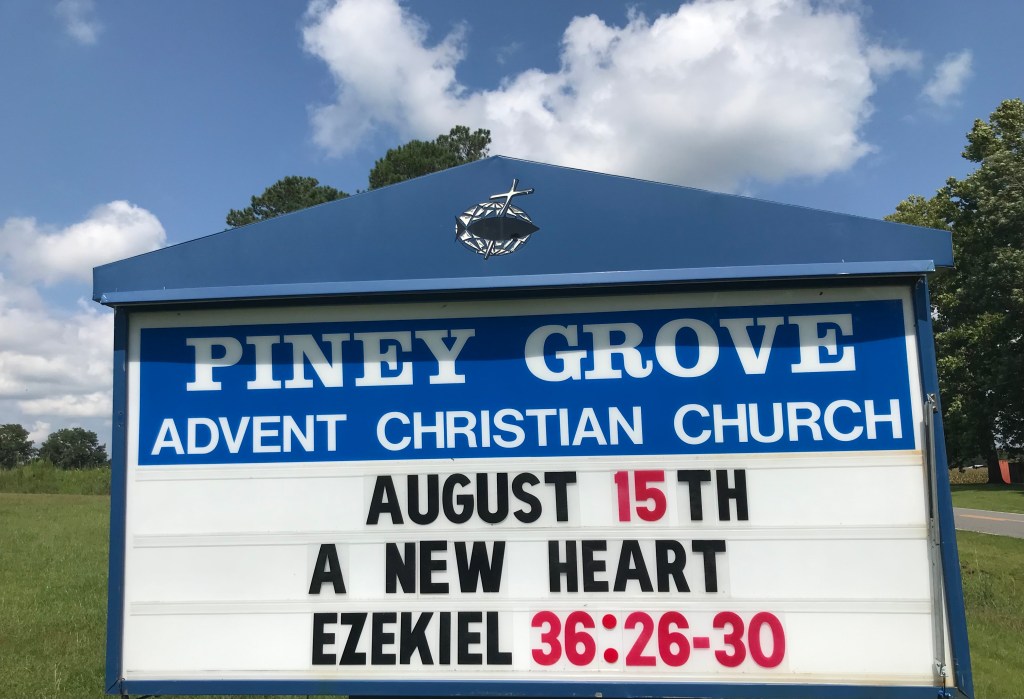
A NEW HEART

sign announcing today’s message

A NEW HEART

EZEKIEL 36:26-30 NET

26 I will give you a new heart, and I will put a new spirit within you. I will remove the heart of stone from your body and give you a heart of flesh. 27 I will put my Spirit within you; I will take the initiative, and you will obey my statutes and carefully observe my regulations. 28 Then you will live in the land I gave to your fathers; you will be my people, and I will be your God. 29 I will save you from all your uncleanness. I will call for the grain and multiply it; I will not bring a famine on you. 30 I will multiply the fruit of the trees and the produce of the fields, so that you will never again suffer the disgrace of famine among the nations.

We have been studying what the Bible teaches about being born again. Last week, we saw that God predicted through Jeremiah that he was going to initiate a new covenant, and that – unlike the old covenant – he would write his teachings on the hearts of his people. In today’s text from Ezekiel, we have more information about just exactly what God promises to do.

God promises to change his people internally

God promises that he “will give (them) a new heart” (26a). He promises to change them internally. It will be the same people, but they will be changed from the inside out. This is what God wants for his people of any age. Paul encouraged the Roman Christians not to be conformed to this present world, but to be transformed by the renewing of their minds so that they may test and approve God’s will in their lives (Romans 12:2). The picture is God changing them from the inside out. That is the picture here in Ezekiel.

This is a process that begins at conversion. Paul told the Corinthians that all believers are being transformed into people who reflect the Lord’s image, and that the process happens in stages “from one degree of glory to another” (2 Corinthians 3:18). We start with a new heart.

If a person has a heart transplant, you don’t see the difference externally at once. But as the body adjusts to its new heart, over time it becomes healthier and stronger. The old heart was giving out, and could only make the body sicker and weaker. The new heart takes over and restores health and vitality.

God also said “(he) will put a new spirit within (them)” (26b). The spirit is the breath that is inside a breathing body. The Hebrews used this breath as a metaphor for the internal life. As such, a good breath inside a person suggested health, vitality and a good attitude. An evil breath (not to be confused with bad breath) meant that the body was unhealthy, dying and full of hate and bitterness.

So, when God said that he was going to put a new spirit in his people, he was talking about restoring their relationship with him through forgiveness, and that would result in health and wholeness.

He also said “(he) will remove the heart of stone from (their) body and give (them) a heart of flesh” (26c). If you have a heart of stone, you are not alive. God created us with hearts of flesh, and those hearts of flesh beat within our chests, and pump blood throughout our bodies, keeping us alive.

But the Israelites had suffered from hardening of their hearts. Their inner selves had become so hard toward God that they were living dead people – a zombie nation. God was going to do something about that. He was going to give them a heart transplant.

God promises to share his Holy Spirit with them

He also said “(he) will put (his) Spirit within (them); (he) will take the initiative” (27a).

Later, he said through the same prophet “I will no longer hide my face from them, when I pour out my Spirit on the house of Israel, declares the sovereign LORD” (Ezekiel 39:29). This is our first clue as to when God was going to fulfill his promise.

The prophet Joel also predicted the same event. He said “I will pour out my Spirit on all kinds of people. Your sons and daughters will prophesy. Your elderly will have revelatory dreams; your young men will see prophetic visions. Even on male and female servants I will pour out my Spirit in those days” (Joel 2:28-29).

Fast forward to the New Testament and we see Peter quoting the text in Joel to explain the outpouring of the Holy Spirit at Pentecost. About 120 people had gathered at the temple and were waiting for the power that Jesus had promised.

• First, there was the sound of a violent wind blowing. 
• Then, there were visible tongues of fire that rested on each of the 120 believers.
• Then thousands of Jews visiting from every nation under heaven – there to participate in the Jewish holiday – heard and watched the display of power, and heard the gospel being proclaimed in the languages of the places where they lived. 
• 3000 of those Jewish visitors responded to the gospel message that day and became believers in Jesus Christ. Within a few days, the number had grown to 5000.

God had promised to pour out his Spirit on his people, and he did. The result was that his Spirit empowered them to proclaim the gospel of Jesus Christ and grow his church.


Now, some of you have watched the video which I posted on our church Facebook site last Monday. In that video, I asked you to read today’s text and respond to three questions.

• The first question was “Is this promise conditional or unconditional?” In was kind of both. What God promised he was going to do, he did. God did not say that if Israel smartened up he would send his Holy Spirit to them. But there were lots more people than just those 3000 who were in Jerusalem for Pentecost. But only those 3000 responded to the miracle with repentance and faith.

Here’s what God promised the Israelites who repented.

If Israel accepts the Holy Spirit, there will be evident blessings:

• The first evident blessing will be OBEDIENCE.

He said “(they) will obey (his) statutes and carefully observe (his) regulations” (27b). The Jews who repented at Pentecost would learn how to obey God. The generations who came before them had struggled with idolatry, paganism and lack of faith. But after Pentecost, these believers would be blessed with the ability to obey the law of God and the commands of Christ.

• The second evident blessing will be WITNESS.

God said “they will live in the land (God) gave to (their) fathers; (they) will be (his) people, and (he) will be (their) God” (28). God enabled these Jewish believers to first represent his kingdom in the land he promised their ancestors. Eventually, he would send them back to the lands they had migrated to. They would “be (his) witnesses in Jerusalem, and in all Judea and Samaria, and to the farthest parts of the earth” (Acts 1:8).

• The third evident blessing will be SANCTIFICATION.

God said “(he) will save (them) from all (their) uncleanness” (29a). Paul told the Thessalonian Christians that God had chosen them “from the beginning for salvation through sanctification by the Spirit and faith in the truth” (2 Thessalonians 2:13). One of the roles of the Holy Spirit in our lives is to sanctify us. He saves us from our uncleanness. He does this by cleaning us from the inside out. When the Holy Spirit was poured out at Pentecost, he began cleaning up the world.

That reminds me. Another of those questions I had introduced in the video was “Does this promise apply to Christians or only to the Jews?” The Thessalonians were Gentiles. The same Holy Spirit who God promised to give to the Jews at Pentecost will do the same thing for us Gentiles. Paul tells the Galatians that there “is neither Jew nor Greek, there is neither slave nor free, there is neither male nor female – for all of you are one in Christ Jesus” (Galatians 3:28).

• The fourth evident blessing will be PROSPERITY.

God said “(he) will call for the grain and multiply it; (He) will not bring a famine on (them). (He) will multiply the fruit of the trees and the produce of the fields, so that (they) will never again suffer the disgrace of famine” (29b-30a). He wanted to bless them so that other people would notice the blessing, and as about the reason for the blessing. If people just come to God for a blessing, they probably wont get one. God is not obligated to bless anyone just because they want to be blessed. His obligations are always tied to his mission. This brings me to my last point.

God had a missional reason for promising this

Note the last three words of today’s text: “among the nations” (30b). God’s purpose for promising to regenerate his people – giving them a new heart and pouring out his Holy spirit on them – was in keeping with his purpose for blessing their ancestor – Abraham.

God had told Abraham…

• “"Go out from your country, your relatives, and your father's household to the land that I will show you. Then I will make you into a great nation, and I will bless you, and I will make your name great, so that you will exemplify divine blessing. I will bless those who bless you, but the one who treats you lightly I must curse, and all the families of the earth will bless one another by your name"” (Genesis 12:1-3).

It was God’s intention that Abraham and all his descendants would be a conduit for him to bless all the nations on the planet. They were supposed to spread God’s blessing, not hoard it for themselves.

Why did God promise to give the Israelites a new heart? Let’s back up a few verses:

• “Therefore say to the house of Israel, ‘This is what the Sovereign Lord says: It is not for your sake that I am about to act, O house of Israel, but for the sake of my holy reputation, which you profaned among the nations where you went. I will magnify my great name that has been profaned among the nations, which you have profaned among them. The nations will know that I am the Lord, declares the Sovereign Lord, when I magnify myself among you in their sight” (22-23).

Now, we know the rest of the story. God’s people had gone out into the nations and profaned his name among the Gentiles. God promised to convert them – to give them a new heart and empower them with his Holy Spirit. This would result in his glory being spread by them to all the nations.

Now, for the final question I had asked on the video.

“If we received what God promised here, what would the results be? What would it look like?”

This is a helpful question, because if our conversion is genuine, it should have certain results, and today’s text points out what some of those results should be.

• First, people who are really born again want to obey Jesus Christ in everything. We have a new heart, and that heart beats for our master.
• Second, people who are really born again want to share this experience with others all over the world. The Holy Spirit within us not only empowers us to witness, he makes evangelism our passion.
• Third, people who are really born again want to clean up. They are tired of living sinful lives and cooperate with the Holy Spirit’s sanctification.
• Fourth, people who are really born again are going to prosper in some way. No, I am not teaching the prosperity gospel, but I am saying that people who are truly born again are going to evidence some kind of prosperity for the gospel’s sake. It may not be financial prosperity. Remember, Peter told the crippled beggar “I have no silver or gold, but what I do have I give you. In the name of Jesus Christ the Nazarene, stand up and walk!” (Acts 3:6). If we are truly born again, God is going to bless us with blessings that other people are going to want. When they come to us for answers, we need to make sure that we tell them that Jesus Christ is the answer.

God wants people with new hearts to draw the nations to him. Do you have a new heart? If you don’t, you can get one at Calvary.

Audio file of this message
click for my e-books

A NEW COVENANT

A NEW COVENANT

Jeremiah 31:31-34 CSB

Jeremiah 31:31-34 CSB

31 “Look, the days are coming”—this is the Lord’s declaration—“when I will make a new covenant with the house of Israel and with the house of Judah. 32 This one will not be like the covenant I made with their ancestors on the day I took them by the hand to lead them out of the land of Egypt—my covenant that they broke even though I am their master”—the Lord’s declaration. 33 “Instead, this is the covenant I will make with the house of Israel after those days”—the Lord’s declaration. “I will put my teaching within them and write it on their hearts. I will be their God, and they will be my people. 34 No longer will one teach his neighbor or his brother, saying, ‘Know the Lord,’ for they will all know me, from the least to the greatest of them”—this is the Lord’s declaration. “For I will forgive their iniquity and never again remember their sin.

God gave me a tremendous month of rest, recreation, and reinforcement during my vacation, and I am very grateful for that gift. I am also very grateful to be back among you good folks in Delco and preaching the gospel here and serving in this church. Absence does not always make the heart grow fonder, but it is true in this case. I missed you all, and I am glad to see you again.

Before I left for vacation, in our annual meeting – I promised that most of my preaching this coming year will focus on the commands of Christ. He commissioned the apostles to teach the things that he has commanded us to obey, and I take that as a personal imperative as your pastor.

For that reason, I want to spend the next few weeks getting very familiar with what Christ told Nicodemus in John, chapter 3. He told Nicodemus that he and everyone else had to be born again – to experience a new birth.

We are not going to look at that passage today, because I want to begin our study in the Old Testament. There are several passages in the Old Testament that predict that new birth. I want us to study those passages first. After we have seen what God has taught in his word as the foundation for the new birth, then we will look at John 3. After that, we are going to look at what God has taught us in other New Testament passages about the new birth.

My goal is to be systematic and comprehensive. I feel that many people miss some very important biblical truths about the new birth because they don’t know what God has said about it in all the scripture. “Every scripture is inspired by God and useful for teaching, for reproof, for correction, and for training in righteousness, that the person dedicated to God may be capable and equipped for every good work” (2 Timothy 3:16 NET). That is why when we study the Bible on any topic, we need to compare what we are learning with what every scripture says on that topic. Otherwise, we run the risk of misunderstanding the subject or misapplying it. This is also why a good study Bible will include some cross references in it. By comparing scripture to scripture, we protect ourselves from an inaccurate understanding of what God has revealed in his word.

That is a safety measure. The scientists and engineers who build ships, planes and rockets build redundant systems in their creations for the same reason. If the power system in the plane I am flying on goes kerflooey, the pilot has an auxiliary backup system he can turn on. If the pilot goes kerflooey, he has a copilot who can take over. They even have an autopilot they can use. Those are all safety measures. In most cases, God has built redundancy into his revelation. So, in order to make sure we accurately understand what Jesus has commanded on any topic, we need to read and study what the whole Bible teaches on that topic.

Our topic today is the new covenant that Jeremiah predicts in today’s text: Jeremiah 31:31-34.

The new covenant was God’s idea

God said “I will make a new covenant” (31). The new covenant was God’s idea. It was not invented by Christians. It was not snuck into theology by the some later revisionist. God said that he would make a new covenant and when the time was right for him to make that covenant, he did. In Jeremiah, he gives his people fair warning that he intended to do that.

When God says he’s going to do something, you better believe he’s going to do it. Early in Genesis, God looked at Adam, said he was alone, and concluded that it was not good. So he said he would create a partner for him – a companion who corresponds to him. So he created Eve. In the marriage vows, both the husband and the wife say “I will.” But we can only do that because God said “I will” first! God said he was going to do it, and he did it.

Later in Genesis, God looked at sinful humanity, and the world corrupted by it, and he said he was going to wash it all clean with a flood. When the time was right, the flood came and it did what God promised it would do. Thankfully, God had provided a redundant system in Noah’s ark, or else that would have been the last chapter in the story.

The new covenant is God’s redundant system because he has a new creation that he plans to commence at the end of this age. Our first birth begins the temporary life of this present creation in this age. Just being born is not enough to secure us a reservation in God’s new creation. For that, we need to be born again. For that, we need to be born from above.

Being born again is not the same thing as being immortal. It’s more like a ticket to it. We begin being immortal not at our conversion, but at our resurrection. Paul talks about that in 1 Corinthians 15 (:42, 50, 52-54). He says that when believers die, their old perishable self is planted, and that at the resurrection, our new imperishable self emerges. When Jesus comes, the dead in Christ will be raised imperishable, and those of us who are still alive will be changed so that we are imperishable too.

And that’s why I like singing the chorus to that folk song “when I hear that trumpet sound, I’m gonna get up outta the ground – ain’t no grave gonna keep my body down.” We have the ticket! By being born again, we have booked passage on God’s eternal, immortal new creation. Jeremiah recorded the fact that God decided he was going to make a new covenant. He did. By God’s grace, you and I can be part of that new covenant.

The old covenant has been broken

Jeremiah also tells us what happened to the old covenant. God calls it “my covenant that they broke” (32).

God does not have two covenants in effect at the same time. The old covenant that God established with the Israelites under Moses was broken by the rebellion of the Israelites. Consequently, the covenant of the law that was carved in letters on stone tablets became a ministry of bondage that produced death. Here’s how Paul described that in 2 Corinthians 3(:7-18 NET).

  • “But if the ministry that produced death – carved in letters on stone tablets – came with glory, so that the Israelites could not keep their eyes fixed on the face of Moses because of the glory of his face (a glory which was made ineffective), how much more glorious will the ministry of the Spirit be? For if there was glory in the ministry that produced condemnation, how much more does the ministry that produces righteousness excel in glory! For indeed, what had been glorious now has no glory because of the tremendously greater glory of what replaced it. For if what was made ineffective came with glory, how much more has what remains come in glory! Therefore, since we have such a hope, we behave with great boldness, and not like Moses who used to put a veil over his face to keep the Israelites from staring at the result of the glory that was made ineffective. But their minds were closed. For to this very day, the same veil remains when they hear the old covenant read. It has not been removed because only in Christ is it taken away. But until this very day whenever Moses is read, a veil lies over their minds, but when one turns to the Lord, the veil is removed. Now the Lord is the Spirit, and where the Spirit of the Lord is present, there is freedom. And we all, with unveiled faces reflecting the glory of the Lord, are being transformed into the same image from one degree of glory to another, which is from the Lord, who is the Spirit.”

The old broken covenant cannot save anyone. It is a broken agreement and cannot give anyone life and it will not buy anyone a ticket to God’s new creation. It was a temporary system that pointed people to Christ. But when Christ came, he said “I am making all things new!” (Revelation 21:5). That is why when that prominent Jewish theologian and spiritual leader Nicodemus came to Jesus to talk to him, Jesus had the audacity to tell him that he had to be born again. The old covenant that he – Nicodemus – represented was not good enough buy him a ticket to the new creation.

That’s why just following the ten commandments is not enough for you and me either. Remember that rich young ruler who came to Jesus, proud of the fact that he had kept all the commandments from his youth? Jesus said he still lacked one thing. He didn’t pay enough for a ticket to the new creation. Jesus told him to sell everything he had and give that money to the poor, and then come and follow him. His all was not on the altar of sacrifice laid. His heart the Spirit did not control. He had not yielded to Christ his body and soul. Jesus loved him, but that was not enough. His superficial obedience to the old covenant was not enough. He was almost perfect, but he was not born again.

So, how do we know if we have paid the full price for our ticket? How do we know that some day we might stand before Christ on the judgment day and find out that we were betting on the wrong horse? We need to understand the new covenant if we want to be part of the new creation. So, what else did Jeremiah teach about this new covenant?

The new covenant is a covenant of discipleship

God says “I will put my teaching within them” (33).

When our Lord commissioned us to make disciples of all nations, he was not coming up with a new job for God’s people to do. Discipling was God’s intention for everyone who entered into a relationship with him via the new covenant. God had begun teaching us how to disciple others in the Old Testament. When Jesus came, he started his earthly ministry by making disciples. He spent three years molding his disciples into people who had a personal relationship with him, and then he set them loose on the world.

You cannot be a disciple without learning something. A disciple by definition is a student. But, unlike high school or college, the school of discipleship does not come to an end after a few years. You don’t graduate from the school of discipleship this side of the resurrection.

God’s disciples are all his children, and no matter how much we learn, that relationship does not change until Jesus comes again. In one of his letters, John wrote:

  • Dear friends, we are God’s children now, and what we will be has not yet been revealed. We know that whenever it is revealed we will be like him, because we will see him just as he is (1 John 3:2 NET).

That is the attitude of a disciple. We are all God’s children and children are always naturally learning. We stay curious because we know we are not yet what we will be some day.

The new covenant is a covenant of discipleship. It is an agreement to keep learning and growing. We never get to the point where we have learned enough or grown enough so that we can leave the school.

Even the great apostle Paul had this attitude. He said “My aim is to know him, to experience the power of his resurrection, to share in his sufferings, and to be like him in his death, and so, somehow, to attain to the resurrection from the dead. Not that I have already attained this – that is, I have not already been perfected – but I strive to lay hold of that for which Christ Jesus also laid hold of me” Philippians 3:10-13 NET).

Paul did not rest in his eternal security. He kept striving to learn more and to be more of the new creation he was destined to be. That is what a disciple under the new covenant is like.

The new covenant involves a change of heart

God also said “(he) will… write (his teaching) on (our) hearts” (33). We will talk more about this next week, when we examine what Ezekiel predicted about the new birth (Ezekiel 36:26-30). I’m just going to read that text today, and we will examine it next week:

“I will give you a new heart and put a new spirit within you; I will remove your heart of stone and give you a heart of flesh. I will place my Spirit within you and cause you to follow my statutes and carefully observe my ordinances. You will live in the land that I gave your fathers; you will be my people, and I will be your God. I will save you from all your uncleanness. I will summon the grain and make it plentiful, and I will not bring famine on you. I will also make the fruit of the trees and the produce of the field plentiful, so that you will no longer experience reproach among the nations on account of famine” (CSB).

The new covenant begins with forgiveness

Finally, God said “(he) will forgive (our) iniquity” (34). The old covenant had a blood sacrifice that covered sins of the Israelites. The new covenant had a blood sacrifice as well. When Jesus had his first communion with his disciples, he had them all drink from a cup symbolizing his death that was soon to happen. Then he told them “ this is my blood, the blood of the covenant, that is poured out for many for the forgiveness of sins” (Matthew 26:28 NET).

His blood was not the blood of the old covenant. The old covenant sacrifices had to be repeated year after year because they could not remove sin and its consequences. But according to the author of Hebrews. Jesus’ death on the cross “put away sin” “once and for all” (Hebrews 9:26). Because of what Jesus Christ did for us, we can be born again. We can be fully and completely forgiven of our past sins, and purchase a ticket for his new creation.

The new covenant begins with forgiveness. Discipleship begins with forgiveness. Our new life in Christ begins with forgiveness. Holiness begins with forgiveness. Sanctification begins with forgiveness. And the best of all is that forgiveness does not have to be earned. In fact, it cannot be earned. It is a free gift waiting to be accepted.

God the Father said “I will” make a new covenant, and he did.

Jesus the Son said “I will” die for their sins, and he did.

Now, the Father and the Son are asking us what we are going to do. If we say “we will” come just as we are and enter into that new covenant, then we can have fellowship with both the Father and the Son and the blood of Jesus will cleanse us from all sin (1 John 1:3, 7). Enter the new covenant today. The new creation is about to begin. Don’t be caught without a ticket.

A NEW COVENANT (audio file)
click for my e-books

DO DISCIPLESHIP

DO DISCIPLESHIP

Matthew 28:16-20 CSB

16 The eleven disciples traveled to Galilee, to the mountain where Jesus had directed them. 17 When they saw him, they worshiped, but some doubted. 18 Jesus came near and said to them, “All authority has been given to me in heaven and on earth. 19 Go, therefore, and make disciples of all nations, baptizing them in the name of the Father and of the Son and of the Holy Spirit, 20 teaching them to observe everything I have commanded you. And remember, I am with you always, to the end of the age.”

So far, in our study of discipleship and discipling, we discovered from the tassel text (Numbers 15) that discipleship is designed to pass from generation to generation, that it begins with repentance and devotion and specific obedience, and that it is a response to who God is.

Then we stopped of at the doorpost text (Deuteronomy 6), where we learned that becoming a disciple is a one-time decision, but being a disciple is a life-long process where we internalize God’s word, personalize and normalize it by making it part of your everyday life. You also publicize God’s word by spreading it to everyone who visits your home and everyone who lives in your city.

Last week, we looked at the rich young ruler in Mark 10, who seemed to be perfect, but he had just one area of his life that he was not willing to surrender to Christ. The kingdom of God is an all-or-nothing proposition.

Now that we have looked at those foundational texts, we are going to take a closer look at the great commission passage, because there are still some questions that need to be answered about the process of discipling.

First of all, I think it’s important to clear up some possible confusion. Last week we looked at the almost perfect son and discovered that we was not perfect enough to inherit eternal life. That might cause some of us to worry that we are not good enough to be a disciple, much less make disciples.

We do not have to be perfect to make disciples (17).

  • “When they saw him, they worshiped, but some doubted”

These were the eleven apostles who had been with Jesus throughout his earthly ministry. But even at this point, after his resurrection, there were some who were not 100% ready.

To me, that is wonderful news. I personally spend a lot more time in Romans 7 than I do in Romans 8. In Romans 7, Paul confesses that he struggles with living an obedient life, and in Romans 8, Paul praises God for the Holy Spirit who gives him victory.

Like Paul, we are going to continue to struggle to live the lives of faith that we began when we became disciples. The good news of today’s text is that those struggles will not prevent us from making disciples. They all worshiped, but some doubted. They had doubts, but they still obeyed. Their doubts did not disqualify them from the task of making disciples.

Our struggles are not going to keep us from leading other people to Christ. In fact, those very struggles may open the door for us to reach people who would never be reached by anyone else.

Jesus knew the potential in those eleven apostles. He knew they had what it takes to begin making disciples. He knows the same thing about us.

Second, we need to understand something about this present age, and how it is put together politically. Some people are turned off when they think about evangelism because they do not want to interfere with anyone’s right to choose their own destiny.

We do not need anyone else’s permission to make disciples (18).

  • “All authority has been given to me in heaven and on earth.”

Jesus told the eleven that he has all authority in the universe. There is no human being who has the right to say “no” to Jesus Christ. He is our king. In fact, he is everybody’s king. There is not an angel in heaven, nor a human being here on earth who has the right to disobey Jesus Christ.

There are some early rulers who will choose to disobey Christ. There will be some of your friends who will refuse to acknowledge the lordship of Jesus Christ. But there will not be one person who has the right to say no to him.

We do not need anyone else’s permission to lead our friends and family to Christ. We do not need anyone else’s permission to go overseas and lead people to Christ. By giving us the command, he has given us the permission, and there is no authority above him that can rescind it.

And, at the end, when we all stand before our Savior and king, there will not be one person there who will object to the fact that you and I shared the gospel with them. In fact, given the fact that we who follow Christ today will inherit permanent life on that day, all those with whom we have shared the gospel will be grateful that we invited them to join us.

Third, we have to understand that from the very beginning, the discipling process was designed to happen as people went about their daily lives.

We should not expect potential disciples to come to us (19).

  • “Go, therefore”

This translation follows a certain tradition that understands the word “go” as being practically the same thing as “make disciples.” It sees the word as having practically the same force as the imperative “make disciples.”

I don’t think that is correct. I personally translate the word “after you go.” Remember, the context. The apostles are in Galilee, and they are heading to Jerusalem. I think what Jesus is telling them is that from now on, wherever they go, making disciples is going to be their primary occupation.

But however you read the word, there is no way it can imply that our job is to stay where we are and disciples will come to us. All eleven of the apostles became missionaries, leading people to Christ and making disciples wherever they went.

In the same way, we need to keep looking for ways to reach the unreached. That often means getting out of our comfort zone and going where we are not familiar, and doing what we are not comfortable with. There is a time to stay, and pray, and pay for others to go. But we need to be sensitive to the Lord’s leading, and be ready to go. It is about 80 miles from Galilee to Jerusalem. Ask yourself: am I willing to travel 80 miles to reach someone with the gospel? Now – think of it this way. It probably took the apostles four days to go to Jerusalem. There is not a point on the globe that you and I cannot reach within four days.

In the book of Acts, when God’s people were not going as they should, the Lord allowed persecution to scatter them. One way or another, the gospel is going to get out there to the masses that do not know the truth. We receive the greater blessing when we go voluntarily.

Fourth, when Jesus gave the great commission, he told his apostles how to initiate the process. He said they were to disciple people by baptizing them. You have to understand what that meant in the first century. Baptism had been made popular by John the Baptist. John lead people to commit themselves to becoming part of God’s coming kingdom which the messiah would lead.

So, in today’s lingo, John the Baptist was an evangelist. What John did was lead people to repent of their sins and join Christ’s kingdom. The baptism was the evidence of repentance and faith.

We cannot make disciples without actually sharing the gospel (19).

  • “baptizing them”

We are not discipling if we simply call on people to join the church. Discipling happens when people understand the gospel and commit themselves to obeying Christ and living according to his kingdom principles.

But that commitment is not the end of the process. It is the middle. The process of discipling begins by hearing the gospel. It reaches its crucial point when the hearer has chosen to be baptized, identifying both with the coming kingdom and the local congregation. But there is more.

Fifth, Jesus commanded the eleven to teach those who are baptized to obey their new king!

We cannot make disciples without change (20).

  • “teaching them to observe everything I have commanded you”

Discipling is only half done once you have led people to the altar. The other half of the process is teaching them how to live their daily lives in obedience to their new king.

It should not surprise us that this is our role. Jesus himself made disciples this way. He first recruited the twelve. Then he spent time with them, teaching them how to live. Then, when it was time for them to go on without him, he told them to do what he did: make disciples.

Sixth, there is one more bit of very helpful instruction about discipling in this text. Jesus told the eleven that even though he was going away, he would still be with them. That is very good news.

We do not have to make disciples by ourselves (20).

  • “remember, I am with you always, to the end of the age”

If we were left alone, without the abiding presence of the Savior himself, we would certainly fail. But with his presence there is power.

We do not have to make disciples by ourselves. He has placed us in churches where we can work together to obey this great commission. Perhaps that is why Jesus assembled the eleven to give them this charge.

And he has promised to be with us throughout the whole process – from the proclamation of the gospel, to the joy of baptismal commitment, to the ongoing process of learning to live according to the principles of our king.

He will be with us wherever we go. Wherever we go, we will find him, and his Holy Spirit – there too. We might go to some strange places. But his presence will help us to adjust, and to find just the right words to turn those strange places into strongholds of his kingdom.

He will be with us always. He is not going to be with us for launching and then abandon us in mid-flight. No, If he’s there at the launching, he will be there at the landing.

THE ALMOST PERFECT SON

THE ALMOST PERFECT SON - 1THE ALMOST PERFECT SON

Mark 10:17-22 CSB

17 As he was setting out on a journey, a man ran up, knelt down before him, and asked him, “Good teacher, what must I do to inherit eternal life?” 18 “Why do you call me good?” Jesus asked him. “No one is good except God alone. 19 You know the commandments: Do not murder; do not commit adultery; do not steal; do not bear false witness; do not defraud; honor your father and mother.” 20 He said to him, “Teacher, I have kept all these from my youth.” 21 Looking at him, Jesus loved him and said to him, “You lack one thing: Go, sell all you have and give to the poor, and you will have treasure in heaven. Then come, follow me.” 22 But he was dismayed by this demand, and he went away grieving, because he had many possessions.

Happy Father’s Day.

I am a very very proud father. My three daughters – Liz and Connie and Naomi – have given me much joy, and they continue to show me the grace of God. Fatherhood comes with its own blessing.

Today’s passage came to mind because I had been planning it for the June series on discipleship. But I also wanted to look at this incident from the standpoint of the father of the young man who came to Jesus.

Any father would have been proud to have this man as a son. In fact, any pastor would have salivated at the chance of inviting this young man into his church. He was the profile of the perfect parishioner. He had so much to contribute as a minister, and he had the means to sponsor his ministry and that of others. He also appears to have dealt with any nasty habits or unconfessed sins that would detract him from ministry. Yes, looking at his list, anyone would have seen him as a qualified candidate. Anyone would have been proud to claim this man as his son.

He was respectful (17).

Fathers are blessed when their children respect them and their mothers. Jesus had actually quoted the commandment to honor father and mother, and this man said that he kept that commandment. If he had actually been disrespectful to his parents, Jesus would have known.

Mark tells us that the man ran up to Jesus, knelt down before him, and addressed him with the respectful title “good teacher.” We live in an age when people have pretty much lost their respect, particularly for religious figures. People have become overly informal and have lost the sense of decorum that was so evident in past generations.

Whatever failures this young man had, he had not lost his respect for Jesus. If I had a son, I would want him to be respectful like that.

The New Testament was written in a culture that allowed slavery. Paul told Timothy to instruct Christian slaves not to be disrespectful to their Christian masters (1 Timothy 6:2).

Peter told Christian slaves to be respectful to their masters, even if they treated them unreasonably (1 Peter 2:18). Showing respect is a sign of our citizenship in the kingdom of God.

The author of Hebrews took it for granted that earthly fathers should be respected, despite the fact that one of the roles of a father is to discipline his children. (Hebrews 12:9).

Paul warned that in the last days difficult times will come and one of the sign of those times is disobedience to parents (2 Timothy 3:2).

Whatever failures this young man had, he had not lost his respect for his parents. If I had a son, I would want him to be respectful like that.

He was as obedient as he knew how to be (18-20).

Jesus started rattling off the ten commandments, and the man pointed out that he had been careful to follow them. This was not a hypocrite. He was what we might call a conscientious person. He wasn’t trying to hide a life of blatant rebellion.

We have been learning that obedience to Christ’s commands is essential to living a life of faith in him.

When our Lord gave his great commission, he told us that we would make disciples by teaching people to obey what he commanded (Matthew 28:20).

The New Testament teaches that “whoever does not obey the Son shall not see life” (John 3:36 ESV).

Grace and obedience work together in the discipleship process. Without grace there can be no obedience. Without obedience, there is no proof of grace. So, we say “salvation by grace alone” but we must be careful when we say that because true grace never stays alone. It produces obedience.

This is why James taught that faith without works is dead, being by itself (James 2:17). True biblical faith is never by itself. It is accompanied by God’s power and produces a life of discipleship focused on obeying Christ.

This is what God wanted for his children in the promised land. This is what he wants for his disciples today. He wants us to come to him for salvation, and then commit to living lives that draw others to his saving grace.

Whatever failures this young man had, he had not lost his integrity. If I had a son, I would want him to be conscientious like that.

He was loved by Jesus (21a).

Mark says “Looking at him, Jesus loved him.” The Bible only mentions that Jesus specifically loved four other people: Martha and her sister Mary and her brother Lazarus, and the apostle John. That’s a short list.

I know, we sing “Jesus Loves Me this I know for the Bible tells me so” and it’s true. But I think it very interesting that this young man is one of only a handful that the Bible declares whom Jesus specifically demonstrated a concern for and care about.

Whatever failures this young man had, he had not lost his amiability. If I had a son, I would want him to be lovable like that.

But Jesus noticed a flaw in his almost perfect character (21b).

Jesus looked down at his list and he saw one qualification that was missing. He had not dealt with the one strength that would have kept him from serving Christ as his LORD. Jesus challenged him to give up control of that one area in which he prided himself – his wealth.

Wealth is not bad, or wrong. But for many, it is keeping them from serving Christ. Wealth has to be managed, and ministry requires servants, not managers.

Am I safe from this problem since I have little money? Not necessarily. I may be missing one thing too. There may be another strength I have that I am holding back, refusing to relinquish control over. Even if I have nothing to sell, there may be something that he wants me to surrender.

His possessions were keeping him from possessing permanent life (22)

Mark says “But he was dismayed by this demand, and he went away grieving, because he had many possessions.”

Imagine getting that close to permanent life, and then choosing to walk away from it. That is what happened to the almost perfect son.

Discipleship is an all-or-nothing choice. When God told Noah to build the ark, he and his family had to make the choice to accept God’s plan for rescuing humanity. They could not stay outside the ark with the rest of the world. If they did, they would die.

When God called Abraham and Sarah to become a new nation, they had to make that choice as well. If they had decided to stay where they were, they would have lost everything. They couldn’t stay tied to the old world and still inherit the promise of the new one.

When God rescued the Israelites from Egypt, they had to decide to reject the only life they ever knew. They all were slaves, but some of them might have had good masters. Some of them might have had a chance of becoming well-to-do slaves. It didn’t matter. God’s plan to rescue his people required an all-or-nothing attitude.

Daniel had become a highly respected official – a commissioner in the government of king Darius. But Darius signed a new law saying that for thirty days, no one was allowed to pray to anyone but him, or else that person who prayed would be thrown into the lion’s den. Daniel’s enemies knew that they could find no grounds to accuse him except with regard to his relationship with God and his obedience to God’s law.

As soon as Darius’ new law came into affect, Daniel was arrested. He would not compromise – not even for a short time, and not even on one point. For Daniel, it was all or nothing.

My question for myself and those of you hearing this message today is “Am I an almost perfect son or daughter?” Have I said yes to Jesus and come to him, but is there some part of me I have refused to let Jesus be master of? For Jesus, it’s all or nothing. If we have anything – even a good thing – that is off limits to his lordship, then we have not surrendered all.

We do not have to go away grieving like the almost perfect son did. But it is possible. There is nothing that we possess today that is comparable to the glorious possession of permanent life in Christ’s coming kingdom. But it only takes one possession that can keep us from that inheritance.