ACST 24. The Immortable Being

The story of humanity begins in the past, in creation. It continues in the future, an eternal future set by God on Judgment Day. Those whom God judges as not worthy of restoration will experience “tribulation and distress,” and eventually will be destroyed by God’s “wrath and fury.” Those who respond to his grace in this life, and spend their lives seeking “glory and honor and immortality” by “patience in well-doing” will receive an everlasting life of “glory and honor and peace.”1 This is the destiny of humanity. Without an understanding of this future reality, one can never hope to fully comprehend what human beings are.

This eternal destiny is at the core of the Gospel message which Jesus revealed to the world by his ministry, death and resurrection. It involves salvation by grace, the abolition of death, and a call to live eternal lives which manifest God’s purpose for life.2 Our destiny is much more than a nice place to spend eternity. The good news is that we will be completely changed into the kind of persons who can inhabit a sinless eternity. Yet, the fact that such a transformation awaits us implies that somewhere within us today is the yearning for it: human beings are by nature – not immortal like God – but immortable.

Our conscience within us strives to share in God’s attribute of holiness. We grieve over sin and the loss and death it causes. We feel guilty when we do not live up to God’s standards. We feel angry when others sin, and when we sin. In the same way, there is something within us that reacts strongly to death – any death. We know death is real, and that it is inevitable. Yet we also know on a deeper level that it is wrong.

In 1999 Robin Williams starred in a film called “Bicentennial Man” based on the Novella by Isaac Asimov. The movie centered on the “life” of a robot that somehow gained sentience and was like humans in every way except that he could not die. Having outlived everyone he knew and loved, the robot decided to take his own life, in order to be truly human. The film is a reminder of how death defines humanity now, but perhaps it sends the wrong message.

The Bible also preaches the reality of death, but it does so as the backdrop to the glorious good news that death is not what defines humanity. Our purpose is life and life forever. To insist that death is what makes us truly human is to miss that glorious truth.

Life as a Gift

From Genesis to Revelation, the Bible depicts eternal life not as a present possession, but as a gift that is promised to believers by a loving, generous and kind God (who currently is the only one who possesses it). The tree of life that God planted in Eden was a symbol of that gift. God gave no prohibitions against the tree of life. Yet our ancestors, convinced that it was the other tree that would give them life, ignored the real opportunity until it was taken away from them.

A lawyer had once asked Jesus “Teacher, what shall I do to inherit eternal life?,” and Jesus taught the parable of the Good Samaritan in reply.3 The question that the lawyer asked was actually quite perceptive. He knew that eternal life was not a given – not an innate characteristic. He should also be given credit for asking Jesus, because Jesus through his sacrificial death has made eternal life a possibility for all humanity again. It is “through Christ alone (that the) doom is reversed, and man becomes capable of immortality.”4 Unfortunately, Jesus knew that the lawyer’s heart was not right, although his question was. The lawyer was still “desiring to justify himself”5 which is a way of avoiding God’s grace – the only means of justification. He was determined to get life by taking of the wrong tree. Jesus left him with a means of measuring whether he was truly living up to the law that he professed to live by.

In many other places, the New Testament speaks of salvation as the gift of eternal life.6 To speak of eternal life or immortality as an innate possession cheapens this doctrine. The teaching about eternal life as a gift from God is the heart of the Gospel message. We humans know that we are facing death. The good news is not that death is an illusion, but that Jesus offers hope beyond it. That hope is the kingdom of God, ushered in by a resurrection.

The Kingdom and Eternal Life

In Christ, the opportunity for eternal life (lost at Eden) has been restored. When our Lord taught about his return for judgment, he said he will call all the nations to him, and separate people from each other, the sheep from the goats. They will be separated according to their destiny. Those goats destined for permanent destruction will be separated from the sheep who are destined for permanent life.7 Christ said it would be he who judges. Jesus calls this eternal life “the kingdom prepared from the foundation of the world.”8 By doing this, Jesus weaves together two biblical concepts into one fabric: the kingdom of God and the resurrection. Both concepts put together suggest that believers are destined to live forever, but unbelievers are not.

Jesus’ encounter with the rich young man afforded him another opportunity to talk about the kingdom and the eternal life it will bring.9 Again, it is clear that both concepts are woven together into the same issue. The young man asked “Good Teacher, what must I do to inherit eternal life?”10 When Jesus’ answer did not suit him, the young man left. Jesus used that public rejection as an opportunity to teach about – the kingdom of God. He said “How difficult it will be for those who have wealth to enter the kingdom of God!”11

A Pharisee named Nicodemus was also privy to a discussion with Jesus on the same issues.12 Jesus taught him that one has to be born again to see the kingdom of God.13 He also said that he (the Son of Man) would be “lifted up” like the serpent in the wilderness was.14 The story from the Old Testament is important to review.

From Mount Hor they set out by the way to the Red Sea,
to go around the land of Edom. And the people became
impatient on the way. And the people spoke against God
and against Moses, “Why have you brought us up out of
Egypt to die in the wilderness? For there is no food and
no water, and we loathe this worthless food.” Then the
LORD sent fiery serpents among the people, and they bit
the people, so that many people of Israel died. And the
people came to Moses and said, “We have sinned, for we
have spoken against the LORD and against you. Pray to the
LORD, that he take away the serpents from us.” So Moses
prayed for the people. And the LORD said to Moses, “Make
a fiery serpent and set it on a pole, and everyone who is
bitten, when he sees it, shall live.” So Moses made a bronze
serpent and set it on a pole. And if a serpent bit anyone,
he would look at the bronze serpent and live.
(Numbers 21:4-9 ESV).

The people had sinned and the wages of that sin was death. They asked Moses to intercede for them, that God would take the serpents away. Instead, God instructed Moses to make a symbol of the curse itself, and set it up for all to see. Anyone bit by the serpents would be redeemed from the curse and gain life on the condition that they look on the symbol in faith.

Jesus taught Nicodemus that the Old Testament story was a simile for how God has chosen to deal with a rebellious, sinful people. Like the serpent in the wilderness, the cross is the symbol of death, the due punishment for our rebellion and sin. But God in his grace has offered a way to escape the punishment. Those who believe in Christ are reborn – not of the flesh (natural birth), but of the Holy Spirit (a supernatural birth. These can both see and enter the kingdom of God.15 They will have eternal life.16 They will be saved from the condemnation that will come upon all the rest.17

John (the Gospel author) comments later in such a way as to connect the ideas of the kingdom of God and eternal life. He says that “the Father loves the Son and had given all things into his hand.”18 He is referring to the authority to rule the earth: the kingdom of God. In the next verse, he says “Whoever believes in the Son has eternal life; whoever does not obey the Son shall not see life, but the wrath of God remains on him.”19 Faith and obedience come together in the concept of the kingdom.

John also explains the details so that there is no mistake about what it means to receive eternal life by believing in Christ. Does it mean that believers will never die? No, it means that upon believing in Christ, believers will inherit the promise of eternal life in God’s kingdom. Believers continue to die, but that death is only temporary. The state of death will be interrupted by a resurrection. In chapter 6, John records Jesus talking about the promise of inherited life seven times.20 But he is careful to also point out that this inheritance will come to pass by means of a resurrection, which will take place “on the last day.”21 Believers possess eternal life now in the same way that a rich person’s young daughter possesses all the wealth she is due to inherit.

Immortability

If there is an innate characteristic that gives hope to all humanity, it is not immortality. It is immortability. God created humans with the potential for immortality. It is that reality within each of us that drives us toward two goals that appear to be polar opposites. On the one hand, we see all human life as valuable (because God has invested it with immortability) and therefore seek to protect it. Every person on earth has a right to live, and that right should be protected. We believe in the sanctity of human life. Therefore, Christians should be on the front lines in the battle to protect the unborn, the aged, and all those who are in danger of being prematurely killed by a society which marginalizes them. This includes all those who are in danger of dying from starvation, war, domestic violence, or preventable disease due to government corruption and lack of accountability. To be pro life is to seek to protect it in all its forms, because all human life is potentially immortal life.

On the other hand, this chance to gain immortality by entering God’s kingdom through obedience to and faith in Christ is worth risking this present life for. We believe in persevering in our faith “even to death”22 if that is necessary. Our Lord said that “whoever loses his life for my sake will find it.”23 The believer who is confident of his standing in Christ is willing to risk his life as a witness to that confidence. Both the sanctity of life and Christian martyrdom stem from the fact that humans are immortable: we have potential for life beyond the grave.

_______________________________

1 Romans 2:6-10.

2 2 Timothy 1:8-11.

3 Luke 10:25-37.

4 James Hastings, ed. Encyclopedia of Religion and Ethics Part 2 (New York: Kessinger Publishing, 2003), 548.

5 Luke 10:29.

6 John 10:28; 17:2; Acts 13:46,48; Romans 5:21; Galatians 6:8; Titus 1:2; 3:7; 1 John 2:25; 5:11-12; Jude 21.

7 Matthew 25:31-46.

8 Matthew 25:34.

9 Mark 10:17-31.

10 Mark 10:17.

11 Mark 10:23.

12 John 3:1-21.

13 John 3:3.

14 John 3:14.

15 John 3:3, 5.

16 John 3:15-16.

17 John 3:17-18.

18 John 3:35.

19 John 3:36.

20 John 6:27, 33, 35, 40, 47, 51, 53.

21 John 6:39, 40, 44, 54.

22 Rev. 12:11.

23 Matthew 10:39; 16:25.

Excursus: The Unkillable Soul

Matthew 10:28 is a watershed text. It serves as a rope, and on either side of the rope is a group of well-meaning Christians tugging over the issue of human nature and destiny. On the one side are those who teach innate immortality. These draw support from Matthew 10:28a, where Jesus compares the body, which can be killed by other men, to the soul, which cannot. This side of the debate believes that “in death, the body only dies; but the soul lives on uninterruptedly, and is immortal.”

On the other side of the rope are conditionalists. We tend to emphasize Matthew 10:28b, where Jesus speaks of God being able to destroy both soul and body in Gehenna hell. We reason that anything that can be destroyed is not by nature immortal. We do not believe that “Matt. 10:28 presupposes a sharp division between body and soul in which the ‘soul’ is the more important, immortal part.” We see that presupposition as reading into the text of Matthew 10:28a a dualistic view of the nature of humanity which is not reflected in the rest of Scripture, and essentially denies the reality of death.

In a recent article on this text, David Burge summarized a conditionalist approach:
1. The Bible affirms that death is a real event which affects the whole person.
2. In hell, the lost will suffer complete destruction; no part of them will survive.
3. Jesus is teaching that the first death is only temporary. The resurrection will reverse it.
4. Jesus is teaching about the nature of God here, not the nature of man. Believers should fear God, not human persecutors.

Psuché in Matthew

If our brothers with the innate immortality view are right, Jesus is affirming something about the nature of humanity in Matthew 10:28a. He is teaching that there is a part of every human being that God has made indestructible. This is the soul. One way of assessing the validity of that interpretation is to cross-reference each occurrence of the word soul (psuché in Greek) as it appears in Matthew’s Gospel. This should help us grasp how Matthew understood the term – whether or not he understood it as an immortal part of every human being.

2:20

The first occurrence of psuché in Matthew comes from the mouth of the Angel of the Lord. He tells Joseph that it is safe to return to Israel from Egypt because those who sought Jesus’ life are dead. The word the angel uses for life is psuché. It is clear that the angel is speaking about Herod’s desire to kill Jesus, to prevent him from challenging the authority of the Herodian dynasty. There is absolutely no way to read into this statement any affirmation of human immortality. Perhaps this is the reason that the translators of many versions render the term psuché as life in this passage. Matthew is using the word psuché as the Old Testament usually does: as a reference to the life of the whole person.

6:25

In the Sermon on the Mount, Jesus uses the term psuché to talk about human appetites. He tells his disciples not to worry about their psuché: “what you will eat or what you will drink.” This is a significant text in the debate for two reasons: 1) these are the words of Jesus, so they reflect how Jesus used the term psuché; 2) Jesus also used the word body (sōma) in the same verse.
Crucial to the innate immortality position is the assumption that body and soul are contrasting terms. Yet, in this passage body and soul are not contrasted. Both body and soul are terms which imply the earthly, fleshly appetites. The body is concerned with what it will wear, and the soul is concerned with its next meal. Clearly Jesus is not teaching that what one eats and drinks is more important than what one wears. He is not contrasting the soul with the body. Both soul and body are used here to refer to earthly, fleshly appetites of the whole person. Nor is Jesus downplaying the importance of these human needs. He is merely teaching that the kingdom of God is more important. That is what believers should concern themselves over.

10:39

Another significant use of psuché by Matthew occurs just eleven verses after 10:28. This is within the most immediate context. The situation and audience is the same: Jesus is preparing the twelve disciples for the mission to the lost sheep of the house of Israel. The threat is the same: believers are risking their lives if they proclaim the gospel. They will find that even the members of their own households will turn against them. To be a true believer is to face the sword and take up one’s cross.

Yet, Jesus is not telling his disciples that it is only their bodies that are threatened. He is actually encouraging them to surrender their souls to be killed. He tells them “If you cling to your life, you will lose it; but if you give up your life for me, you will find it” (NLT). Once again, the word life in that passage refers to the present life of the whole person, not an immaterial essence that survives death. But that term, life, is a translation of the same Greek word, psuché. If Jesus had meant to affirm that the soul is an immortal part of the human being that cannot die, why did he use the very same word to refer to the human life, which, by definition is mortal and in threat of dying? What is more, he is using the same term in the same message to the same audience.

So, conditionalists cannot accept the interpretation of Matthew 10:28a that insists that soul and body are separate anthropological entities, one of which is indestructible and the other is destructible. That interpretation contradicts what Jesus says in the four most important contexts of Matthew 10:28a. It requires that Matthew 10:28b be reread: anything that is indestructible cannot be destroyed, even by God. Therefore the innate immortality view insists that Jesus is talking about the perpetual torture of human souls, not their destruction. It requires that the same term be translated “life,” in 2:20 and 10:39, because the idea of an immortal soul cannot fit those texts. It also downplays the strong connection that the soul has with the body, as seen in 6:25.

11:29

Expanding the contextual boundaries a bit further, we find Jesus promising rest for the souls of those who take his yoke upon themselves. Jesus could not have been referring to merely the immaterial essences of the disciples, because in the previous verse he had said the same thing without using the word psuché: “Come to me, all who labor and are heavy laden, and I will give you rest.” Here Jesus uses the term psuché the same way as he did in the previous passages in Matthew: as a synonym for the whole person. It parallels the pronoun “you.”

12:18

In the next chapter, Matthew quotes Isaiah 42:1-3, which definitely does refer to an immortal soul. Unfortunately for the innate immortality view, that immortal soul is God’s soul. The text cannot prove anything about human souls. But in this text as well, the best way to understand God’s use of the word soul is as a parallel to the “I” in the same verse.

16:25-26

In chapter 16, Jesus repeats the same admonition that he gave his disciples in 10:39. Jesus is about to go to the cross, and he urges his disciples to deny themselves, take up their crosses, and follow him. If they try to save their lives (by rejecting him) they will lose their lives. If they lose their lives (by being killed along with him) they will find them.

Here a rather peculiar thing happens. The word psuché appears in this passage four times: twice in v.25, and twice in v.26. Many of the modern translations render it as life in v. 25, and soul in v. 26. Apparently, the only reason for doing so is that v. 26, taken out of its context, could be used to contrast the soul with the body. In its context, however, v. 26 is saying the same thing that Jesus has said before: personal safety is not worth rejecting him.

20:28

In chapter 20, Jesus uses the term psuché referring to himself. He said that he came “to give his life as a ransom for many.” Again, the best translation for the term psuché is the English word life. It is clear that Jesus is referring to his impending death at Calvary. By his physical death on the cross, Jesus drank from the cup that led to atonement for the sins of the world. By dying that death, Jesus gave his “soul.” If the soul of every human being is immortal, then Jesus’ soul could not die. But if Jesus’ soul could not die, how could he give it as the world’s ransom?

22:37

In chapter 22, Jesus quotes from the Old Testament again. He had been asked which is the greatest commandment. He replied that it involved loving the Lord with all one’s heart, soul, and mind. Despite the fact that this text is a favorite of preachers due to its built-in three points, it is best to see “heart, soul and mind” as an example of hendiatrys. Jesus is emphasizing complete devotion to God. He is not teaching anthropology. Any of the three terms in this verse could have been used alone to convey the idea of complete devotion. Together they maximize the same emphasis.

26:38

The final example of psuché in Matthew’s Gospel is a quote from Jesus to his disciples at Gethsemane. He is in agony as he prays in the garden, knowing that his death is immanent. He explains to the disciples that his soul is “very sorrowful, even to death” and asks them to remain there with him and “watch.” It is clear from Matthew’s description of the event that Jesus’ body was also sorrowing. In fact, Matthew had said the same thing of the whole Jesus in v.37: “he began to be sorrowful and troubled.” So, once again, Matthew is using the term psuché as a parallel to a pronoun.

The Lucan Parallel

Luke 12:4 offers a synoptic view of the same statement as Matthew 10:28. Luke has Jesus saying “do not fear those who kill the body, and after that have nothing more that they can do.” Luke does not even mention the psuché, thus avoids the perception of dualism, perhaps because he was writing to a Gentile audience who would have been more prone to dualistic thought. His emphasis was the same as that of Matthew. He was encouraging commitment to God rather than fear of man. The death that the persecutors threaten is a real death, but it is merely a temporary one. The cost of rejecting Christ is permanent destruction in Gehenna at the final judgment.

What Matthew 10:28a Does Not Imply

Having surveyed every use of psuché in Matthew, and looked at the only synoptic parallel passage, we are now prepared to infer from our text what it does not imply. It does not imply an obvious contrast between two parts of the human person. In every text investigated, the psuché is used of the whole person, not one of many parts. In many of the texts, the soul’s loss is inextricably linked to the death of the body. In the most immediate context – Matthew 10:28b – both body and soul are destroyed together at the final punishment of the wicked. Thus, 10:28a could not be implying the innate immortality of the soul. Also, the only significant thing this text implies about the intermediate state is that it is just that – intermediate. It does not imply consciousness. It is a state of death, albeit a temporary death.

What Matthew 10:28a Does Imply

Conditionalists are not prepared to concede that body and soul are two distinct parts of a human, nor that the soul is by nature immortal. But that does not mean that conditionalists refuse to take Matthew 10:28a seriously. We believe that freed from the shackles of platonic dualism this text is better able to convey the original intentions of both Christ and Matthew. They encourage believers to be more concerned about doing God’s will than cautious about how others might respond to their devotion. They also remind us that although death is real, it is not permanent. Between Matthew 28a and 28b there is space and time for the dead to be raised by God’s power at Christ’s return. For believers, this is cause for celebration.

Excursus: "Away from the Body" (2 Cor. 5:8).

2 Corinthians 5:1-10 ESV
1 For we know that if the tent, which is our earthly home, is destroyed, we have a building from God, a house not made with hands, eternal in the heavens. 2 For in this tent we groan, longing to put on our heavenly dwelling, 3 if indeed by putting it on we may not be found naked. 4 For while we are still in this tent, we groan, being burdened–not that we would be unclothed, but that we would be further clothed, so that what is mortal may be swallowed up by life. 5 He who has prepared us for this very thing is God, who has given us the Spirit as a guarantee. 6 So we are always of good courage. We know that while we are at home in the body we are away from the Lord, 7 for we walk by faith, not by sight. 8 Yes, we are of good courage, and we would rather be away from the body and at home with the Lord. 9 So whether we are at home or away, we make it our aim to please him. 10 For we must all appear before the judgment seat of Christ, so that each one may receive what is due for what he has done in the body, whether good or evil.

This is one of those passages that have been so hijacked by traditionalist thought that the wording appears to reject much of what the same author (Paul) says elsewhere. Before addressing 5:8 itself, it is helpful to review the theology of 5:1-10, to see that it is consistent.

What Paul believed about the Resurrection

This passage looks forward to the resurrection body. If the earthly body is a tent, that resurrection body is a building fashioned by God himself (1). This earthly body can be destroyed. The resurrection body is permanent (aionios). It is a house not made with hands. But the glorious eternal body is not a present possession. It is an inheritance. This future immortal life is guaranteed (5), and the Holy Spirit is the guarantee.

Paul is not saying that he has mortality (the tent) and immortality (the eternal house) at the same time. The reason he groans (2) is that he only has this present mortal body, which suffers persecution and hardship, shipwrecks, floggings, etc. He is longing to put on that heavenly dwelling. Here Paul mixes the building metaphor with that of putting on clothing. Paul had used that metaphor in his previous letter to Corinthians, where he was addressing the same subject: the resurrection.

For this perishable body must put on the imperishable, and this mortal body must put on immortality. When the perishable puts on the imperishable, and the mortal puts on immortality, then shall come to pass the saying that is written: “Death is swallowed up in victory” (1 Corinthians 15:53-54 ESV).

The translators have added the word “body” to the text, but it would be just as appropriate to supply the word “me” instead. It would then read “For this perishable me must put on the imperishable, and this mortal me must put on immortality. When the perishable me puts on the imperishable, and the mortal me puts on immortality, then shall come to pass the saying that is written: “Death is swallowed up in victory.” Paul is talking about the future when Christ comes to give him the immortality he promised. He is longing for that time, not the intermediate state. He is looking forward to life, not death. In this present life he expects to continue to groan, being burdened (4).

With this promise of the resurrection in mind, he considers his present state in the (mortal) body. He does not feel at home. He feels away from the Lord. He would rather be away from his mortal body, and at home with the Lord (8), but that is not his choice. As long as Christ tarries, he makes it his aim to please the Lord (9). He knows what is done in this life matters because Christ is going to judge and reward when he comes (10).

In summary, in 1 Cor. 5:1-10 Paul argues that the resurrection is essential because believers do not yet have the eternal, immortal existence that God promised them.

What Paul believed about the Second Coming.

The second coming of Christ is the event Paul has in view. The building from God is in the heavens. The only way Paul is going to experience it is for Christ to come down to earth and bring it with him. When Jesus ascended, angelic messengers told the disciples that Jesus would come back in the same way that they saw him ascend: literally, physically (Acts 1:10-11). They did not promise that the disciples would see Jesus before that event. Paul, likewise, expected the second coming to be the next time he would see Jesus. Paul said “For the Lord himself will descend from heaven with a cry of command, with the voice of an archangel, and with the sound of the trumpet of God. And the dead in Christ will rise first. Then we who are alive, who are left, will be caught up together with them in the clouds to meet the Lord in the air, and so we will always be with the Lord” (1 Thess. 4:16-17). That was his hope.

It was at the second coming that Paul expected to get his new house, his heavenly dwelling (2). He talked about “what is mortal” being “swallowed up by life” (4). He had previously told the Corinthians that this transformation would happen “in a moment, in the twinkling of an eye, at the last trumpet. For the trumpet will sound, and the dead will be raised imperishable, and we shall be changed” (1 Cor. 15:52). The heavenly dwelling that Paul expected was not a disembodied existence, but a resurrected life. This could not happen at death. It required the second coming of Christ.

Paul is walking by faith, not by sight (7). He is not relying on what some Greek philosopher has told him about human nature. He is trusting in Jesus, that he will keep his promise. By faith, he lets the Holy Spirit inside him operate. That Holy Spirit is the guarantee of what is to come (5), not what Paul already possesses. If Paul got what he wanted, he would be “at home with the Lord” (8). But if Christ does not come in his lifetime, he is willing to remain “at home in the body” until he does.

What Paul believed about the intermediate state.

Paul repeats one idea in this passage in order to stress it. He is adamant about this one thing, so he does not want the Corinthians to misunderstand him. For that reason he says he does not want to be “found naked” in vs. 3, and repeats that he does not want to be “unclothed” in vs. 4. Both statements mean the same thing. Being clothed means getting his resurrection body. Thus, there is only one thing that being unclothed could mean: the intermediate state. Paul is not looking forward to the state between death and the resurrection. That is not his hope. That is not the event that he refers to when he wants to encourage other believers (1 Thess. 4:18). That is not what he is longing for (2). That is not the time when what is mortal is going to be swallowed up by life (4). That is not what the Holy Spirit guarantees (5). A disembodied existence is not what Paul means by “being home with the Lord” (7). For Paul, home is the building from God (1). Being “with the Lord” is not going to happen until the second coming (1 Thess. 4:17).

Paul does affirm a judgment after death, but it is the “judgment seat of Christ” (10). Christ does not judge anyone during the intermediate state. He will raise the dead and then judge them. He will judge the living and the dead at the same time (Acts 10:42). This will happen only after Christ returns (Rev. 20:12-13). Humanity is right to expect a judgment of raging fire that will consume the enemies of God (Heb. 10:27). But that judgment will not occur during the intermediate state. Paul taught that the judgment is an event yet to come (Acts 24:25). It is not going on now.

Paul treats the intermediate state as both existentially and theologically insignificant. He skips over it, concentrating instead on the more important issue of the resurrection. The Bible teaches that the intermediate state is one of darkness (Job. 7:9; 10:20; 17:13; 18:18; Psalm 13:3; 49:19; 88:12; 143:3; Prov. 20:20; Eccl. 6:3-5; Lam. 3:6), and silence (Eccl. 9:5,6,10; Job 21:13; Psalm 6:5; 30:9; 31:17; 94:17; Isaiah 38:18-19). It is no surprise, then, that Paul would not look forward to it.

What Paul does look forward to is the second coming, when Paul will be both away from his (present suffering, mortal) body and at home with the (returned, triumphant, sovereign) Lord. That is the hope he describes in 1 Cor. 5:8. That is our hope.

ACST 23. The Ethnic Being

In revealing the essence of humanity, the Bible has presented humans as beings which share a common unity (ancestry in Adam and responsibility before God), but also diversity (male and female). These truths are revealed in the book of Genesis, which has provided a good foundation for an understanding of humanity. It may hold the key to understanding another kind of diversity as well: ethnic and racial distinctions.

For the purposes of this study, racial distinctions are those physical characteristics which can be used to identify someone: such as bone structure, facial characteristics, and skin color. Racial distinctions are hereditary, and appear to change slowly. Ethnic distinctions are those social characteristics that identify someone as having been reared in (or adjusted to) a particular culture. Ethnic distinctions are environmental, and are constantly changing. Some ethnic communities are closely identified with certain races, while others are not. Taken together, both racial and ethnic differences are reminders of a fundamental fact of human nature: humans are ethnic beings.

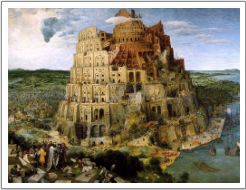
The reason for this fact that all human beings have an ethnic identity may be revealed in Genesis.

Now the whole earth had one language and the same words. And as people migrated from the east, they found a plain in the land of Shinar and settled there. And they said to one another, “Come, let us make bricks, and burn them thoroughly.” And they had brick for stone, and bitumen for mortar. Then they said, “Come, let us build ourselves a city and a tower with its top in the heavens, and let us make a name for ourselves, lest we be dispersed over the face of the whole earth.” And the LORD came down to see the city and the tower, which the children of man had built. And the LORD said, “Behold, they are one people, and they have all one language, and this is only the beginning of what they will do. And nothing that they propose to do will now be impossible for them. Come, let us go down and there confuse their language, so that they may not understand one another’s speech.” So the LORD dispersed them from there over the face of all the earth, and they left off building the city. Therefore its name was called Babel, because there the LORD confused the language of all the earth. And from there the LORD dispersed them over the face of all the earth.1

The creature God created appears to have had a remarkable unity until this time in history. That unity probably was a racial one as well. This can be seen from the fact that God chose to place an identifying mark upon Cain to protect him from future vengeance.2 So, if racial distinctions were passed on through Adam, one would expect Cain’s appearance to be already distinct enough that such a mark would be unnecessary.

Perhaps the transformation that God caused at Babel was more than a simple change of languages. It might have been the beginning point for racial distinctions as well. If that were so, the communities that eventually emerged from the scattering at Babel would be based on linguistic and racial distinctions. Cultural differences would evolve from these separated communities.

Jenkins suggests that that the Babel story is given to answer at least two questions: “1) Where did the variety of languages come from? and 2) How did man disperse and populate the world.”3 Perhaps the answer to a third question, “What is the origin of ethnic identity” may be found here also. What is certain is that at some point in human history the human species has diverged into a number of distinct ethnic groups.

From One Ethnic Identity to Many

The king James version follows the textual tradition which added the word haimatos (blood)4 to Acts 17:26. Thus the KJV reads “And hath made of one blood all nations of men for to dwell on all the face of the earth.” This rendering accents the fact that the human race has an origin in one bloodline. Most modern translations reject the word haimatos as an editorial addition, and translate something like “And he made from one man every nation.”5 But the word “man” is not in the text. It might just as easily be translated “And he made from one nation every nation.”

The word for nation in that text is ethnos, which is the generic word for ethnic groups as well as political groups. The apostle Paul was of one ethnic group (Jews) and he was speaking to the Athenians, who were of another ethnic group (Greeks). His statement recognized the ethnic distinctions between the two groups, while at the same time appealing to a common origin.

The Purpose of Ethnic Identities

God’s intention for the existence of these ethnic identities is to preserve them throughout eternity under the lordship of Christ. That can be inferred from Rev. 7:9, where John says “After this I looked, and behold, a great multitude that no one could number, from every nation, from all tribes and peoples and languages, standing before the throne and before the Lamb, clothed in white robes, with palm branches in their hands.” John uses four terms, and each implies ethnic distinctions. It is clear that eternity is not intended to eradicate ethnic distinctions, but will celebrate them. These distinctions, which cause a great deal of turmoil, hatred and violence in this fallen world, will be enjoyed passionately in the restored world.

In Revelation, the Lamb is the king of the ethnic groups.6 All ethnic groups will come and worship him.7 Satan will be banished to the bottomless pit so that he will be unable to deceive the ethnic groups any longer.8 The ethnic groups will walk in the light of the Lamb himself.9 The ethnic groups will bring their glory and honor into the new Jerusalem.10 Each ethnic group will receive healing and life from the tree of life.

No Favorites

Jesus was born into a human context, so he has an ethnic identity as well. He had a conversation once with a woman who was a Samaritan. She was from another ethnic group. As soon as she perceived that Jesus was “a prophet” she immediately called to attention a distinction between Jews and Samaritans: “Our fathers worshiped on this mountain, but you say that in Jerusalem is the place where people ought to worship.”12

Jesus’ reply to her tells us how seriously we should take ethnic distinctions when it comes to our relationship to God:

“Woman, believe me, the hour is coming when neither on this mountain nor in Jerusalem will you worship the Father. You worship what you do not know; we worship what we know, for salvation is from the Jews. But the hour is coming, and is now here, when the true worshipers will worship the Father in spirit and truth, for the Father is seeking such people to worship him. God is spirit, and those who worship him must worship in spirit and truth” (John 4:21-24).

For the Samaritans, worship of God was defined by ethic considerations: it had to take place on Mt. Gerazim. For the Jews, worship had to take place at the temple, which was in Jerusalem. Jesus spoke of a time when worship did not have to do with ethnic externals. God was going to reach out to all ethnic groups and call them to himself equally through the Gospel.

Salvation is “from the Jews” in the sense that the message of salvation by grace originated in the Old testament. Also, it was through the Jewish ethnic group that Christ came. But that does not imply that God favors any particular ethnic group – not even the Jews. He wishes to redeem the entire human race, and that includes people from every race and culture. Christ’s death put an end to the hostility that had separated the ethnic groups:

For he himself is our peace, who has made us both one and has broken down in his flesh the dividing wall of hostility by abolishing the law of commandments and ordinances, that he might create in himself one new man in place of the two, so making peace, and might reconcile us both to God in one body through the cross, thereby killing the hostility. (Ephesians 2:14-16).

So, when Jesus gave his marching orders for his disciples to convert the world to the Christian faith, he told them to make disciples of panta ta ethné: every ethnic group.13 The good news is for everybody. This is also why the apostle Paul got very angry when false teaches came to the churches he established and taught them that they had to be more Jewish to please God.14 Paul said that those teachers — who taught a kind of ethnocentricity — were ruled by the flesh, not the Holy Spirit.15 Many today are deceived into believing that they have to become more Jewish in order to be more spiritual. Nothing could be further from the truth.

God Hates Racism

Racism is a special kind of hatred that exists because of ignorance and fear. God does not endorse any kind of hatred. God loves the entire human species and wants to show that love to everyone for eternity. Our differences may have begun as a result of God’s judgment upon humanity at Babel. But the end result of those differences is the greater glory of God. His majesty will be enhanced by the great diversity of those who stand before the throne and the Lamb, clothed in white robes, with palm branches in their hands. Christians of diverse ethnic groups should unite under Christ their king and worship and serve together. We do not need to preserve our ethnic unity when we assemble in Christ’s name. Christ’s authority supersedes all other authorities. He is the King of kings and Lord of lords.16

In our modern society, ethnic diversity is celebrated. Churches who intentionally seek to win all the people in their communities to Christ – regardless of race or ethnic origin – are noticed. These are the kinds of churches that the general population will take seriously. Churches have an opportunity to model the kind of unity in Christ that we claim will be ours for eternity. We do not have to wait until Christ returns to begin doing that.

______________________________________

1 Genesis 11:1-9

2 Genesis 4:15. This mark was not a racial distinction. It was given only to Cain, not his descendents. Also, the human race as we know it today is completely descended from Noah, who was a descendant of Seth, not Cain.

3 Everett Jenkins, The Creation: Secular, Jewish, Catholic, Protestant, And Muslim Perspectives (Jefferson, NC: McFarland & Co., 2003), 170.

4 Gk. Haimatos is the genitive of haima.

5 ESV.

6 Rev. 15:3.

7 Rev. 15:4.

8 Rev. 20:3.

9 Rev. 21:23-24.

10 Rev. 21:25.

11 Rev. 22:2.

12 Matt. 28:19.

13 Gal. 1:6; 2:16; 3:8, 13-14, 28; 4:9, 20, 25-26; 6:15.

14 Gal. 3:3; 4:23, 29; 5:13-21, 24; 6:8, 12.

15 John 4:20.

16 1 Tim. 6:15; Rev. 17:14; 19:16.

ACST 22. The Social Being

Genesis 1:27 shows that human beings were invested at their creation with an authority and responsibility for the rest of creation by virtue of their being created in God’s image and likeness. The verse is also important because it defines human beings as “male and female.” Here is the foundation for a recognition of human beings as social beings. Human beings are capable of being alone, but are designed at the outset (as Genesis records) to operate in groups.

This fact is essential to the study of the human nature. A theology that merely accents the nature and destiny of the human person as an individual misses much of what the Bible has to say. It is in the context of our relationships with God and with other sentient beings that humans learn what God wants from them. The Bible does not just consist of didactic material, but also provides a great deal of history as a record of human interactions and human-divine interactions. Even much of the didactic material in the Bible consists of instructions on how to live among other human beings.1

Political theorist Hannah Arendt speaks of humanity as having a two-fold origin: “As God’s creature, man has his origin in his Creator, before whom he stands as an individual; as descendant from Adam, man has his origin in his First Parent, which is a common origin ensuring the unity of the human race and accounting for the human person’s social nature.”2

Each of these origins has implications that help us to understand who we are as human beings. The fact that human beings had their origin as a distinct creation of God leads to an awareness that humans are not independent of God. This leads to many implications, among which are human creature-hood, mortality and responsibility (as discussed in chapters 19-21). Likewise, the fact that all human beings trace their origin to that of Adam accents our unity, and leads to an awareness that humans are not independent of each other.

This unity and inter-dependence manifests itself in a diverse number of social contexts in which interpersonal relationships are developed and thrive. The core context for relationship development is the marriage. Moses recounts that in creating Adam God said “It is not good that the man should be alone; I will make him a helper fit for him.”3 A great deal of theological information is packed into that short statement.

1. This is the first hint in the Genesis historical account that something is not quite right. It is not yet an account of sin, or of the coming rebellion, or of the subsequent fall (about which we learn in Genesis 3). Instead, it represents the creation as needing completion in order for it to function properly as God intended it. The creation of light on the first day4 needed the help of special lights which were created on the fourth day.5 The creation of an expanse of sky and a planet of water on the second day6 called for air and sea creatures to fill them on the fifth day.7 The creation of the land on the third day8 called for the creation of land animals and humanity on the sixth day.9 So, in Moses’ first creation account, God is said to have created both male and female together.10 In his second account Moses elaborates on the creation of humanity itself, pointing out that Adam was created first, then Eve was added to be a helper to him. These two accounts are both historical. The first highlights how humanity is needed to complete the picture of creation as a whole. The second highlights how Eve was needed to complete the picture of Adam – for Adam to become what God intended of him.

2. God identified the element that was “not good” in Adam. It was not good that Adam – of all the creatures of the earth – was alone. Adam was capable of functioning alone. He had been placed in the garden “to work it and keep it.”11 He was capable of relating to God alone. God gave Adam instructions about what he could eat in the garden, and what he should avoid. God warned Adam not to eat of the forbidden tree in the midst of the garden. Adam apparently understood those instructions and that warning. His relationship with God was intact. We are not told how long Adam existed in this state before Eve was created. We are only told that God decided (or at least declared) that the situation was not good.

3. Adam needed Eve because of the plan of God. The creator wanted humanity to “be fruitful and multiply and fill the earth.”12 Adam could not do that himself. God brought the human relationship of marriage into existence in order to complete what he started in creation. He could have created billions of perfect humans himself and immediately filled the planet. Instead, he chose to complete his masterpiece utilizing those who bore his image. It is also difficult to imagine Adam having dominion over the earth without reproducing himself and sharing that dominion with other humans. So Adam needed Eve in order to fulfill both the reproduction and the dominion mandates.

4. Eve was the proper fit for Adam. She complemented him. Her strengths bolstered his weaknesses. Her weaknesses gave him opportunity to manifest his strengths. Perhaps the story of God’s surgery on Adam suggests this connection between the two:

So the LORD God caused a deep sleep to fall upon the man,
and he slept; then He took one of his ribs and closed up the
flesh at that place. The LORD God fashioned into a woman
the rib which He had taken from the man, and brought her to
the man. The man said, “This is now bone of my bones, And
flesh of my flesh; She shall be called Woman, Because she was
taken out of Man.” (Genesis 2:21-23 ESV)

What is left of Adam is incomplete. Likewise, Eve was created for a purpose and finds her purpose (at least partly) in the completion of Adam.

The Norm, But Not A Mandate

These texts fall short of mandating that every man must become married in order to fulfill God’s plan for his life. Neither do they say that every woman must be married in order to be in the center of God’s will. The texts do establish that the male and female relationship solemnized by marriage13 was God’s intention for humanity as a whole, in order for the human race to accomplish God’s will and find personal fulfillment in doing so. The Bible speaks of those who have left their houses (or households) because of their commitment to Jesus, and of those who choose to remain unmarried as a sign of their Christian commitment.14 One must avoid giving the impression that an unmarried Christian is somehow missing God’s will. At the same time, Scripture encourages healthy marriages as the norm. Christians are told to “Let marriage be held in honor among all, and let the marriage bed be undefiled, for God will judge the sexually immoral and adulterous.”15

Husband and Wife

The Bible affirms heterosexual marriages as part of the original creation mandate16 and always speaks of marriage as a union between males and females.17 Homosexual practice is regarded in the Bible as a sin that needs to be repented of, not as an alternative lifestyle that should be accommodated.18 Homosexual thoughts fall under the category of sexual sin, or works of the flesh, which must be crucified so that believers can walk by the Spirit.19

One reason that the Bible takes a hard line in its promotion of heterosexual marriage alone is that marriage is the core social unit. The social units are horizontal relationships which can help believers better understand and function in our relationship with God. By means of the social units, God teaches us his purposes and values. When the social units work correctly, we learn wisdom and spirituality. When the social units break down, we learn foolishness and depravity.

In view of this, it is not surprising that The Bible has a great deal to say to wives on how they are to relate to their husbands,20 and to husbands on how they are to relate to their wives.21 Both parties are responsible to uphold the relationship while maintaining the dignity and integrity of the marriage. For this reason, the Bible speaks of marriage as an analogy for the relationship between God and his people,22 or between Christ and his church.23 The potential dynamic of mutual love and adoration combined with mutual submission and respect that can be manifested in human marriage serves as a helpful similitude for God’s relationship with his people.

Families

Another social unit that serves as a factory for producing spiritual success or failure is the family. Once again, the Bible takes family relationships very seriously, providing insight and instruction for fathers and mothers24 and sons and daughters.25

The children who learn to respect their parents honor them, while foolish children dishonor and abuse their parents. The parents who take advantage of their children’s loyalty to lead them into sin reap the consequences of the rebellion they encouraged.

Other Communities and Societies

A variety of social units exist which can be used by the Holy Spirit to turn us into the kind of people God wants us to be. Connections with some of these societies are geographically based. Some, however, find these connections by means of identifying with personal interests, goals and associations. Sociologists have long understood the vital ties between voluntary associations with communities and personal well-being.

Benefits Derived from Social Connections
26

• Recognition of others; feedback from others about ourselves
• Acknowledgement and reciprocation of emotion and feelings
• Provides safety net or social support
• Enhances health and well-being, recovery from illness, longevity
• Expands friendships and creates new social networks
• Connectedness gives life meaning and happiness
• Connections are necessary to meet basic needs of survival
• Connections are the way we learn the rules for living in a particular culture
• Connections link the past and present
• Through connections we identify with others, share ideas, and talents that may benefit larger groups of people

We not only learn from these voluntary associations with communities, but we also have opportunity to minister to others through them. God intended for this to be the case. The second greatest commandment he gave humanity was to love our neighbors as ourselves.27 In fact, a great deal of the Mosaic Law had to do with neighbor relations.28

The Church

Chief among these communities and societies is the Church of Jesus Christ. The Church is not an evolutionary by-product. It is God’s intention for every believer. Chapters 55-60 of this book will explore the nature, purpose, and identity of the Church. At this point it is important to address the Church’s role as a means of producing human beings that function as God intends them to. Acts 9:31 highlights five aspects of the church’s role in making human beings the kind of people God intended: “So the church throughout all Judea and Galilee and Samaria had peace and was being built up. And walking in the fear of the Lord and in the comfort of the Holy Spirit, it multiplied.”

The church should seek peace in all it’s forms, but should also be prepared for persecution. Christ warned that persecution and trouble would never be far from the church.29 But it was the church’s responsibility to seek peace, both politically and culturally.

The Church should promote edification among its members through the operation of spiritual gifts.30 As each member uses the talents and supernatural ministries and manifestations, the whole body is built up, which in turn strengthens every member.

The Church should promote a healthy balance between fear of God and the comfort the Holy Spirit can bring. Fear of God keeps people from taking him for granted, or abusing the privilege of his presence or his name. Church discipline helps to maintain that healthy fear.31 The Comfort the Holy Spirit gives promotes a social atmosphere of peace and courage. Prayer during times when that peace is challenged is an important role for the church.32

The Church should manifest growth due to local witnessing33 and global missions.34 Just as growth is expected in healthy organisms, so it is to be expected in the church, which is described as a body.

The Heavenly Realms

Paul shows that the church plays a very important role in terms of proving God’s wisdom to the spirit beings among us as well:

To me, though I am the very least of all the saints, this grace was given, to preach to the Gentiles the unsearchable riches of Christ, and to bring to light for everyone what is the plan of the mystery hidden for ages in God who created all things, so that through the church the manifold wisdom of God might now be made known to the rulers and authorities in the heavenly places. This was according to the eternal purpose that he has realized in Christ Jesus our Lord, in whom we have boldness and access with confidence through our faith in him (Ephesians 3:8-12).

This highlights the important role human beings play in confirming the faithfulness of the elect angels, and condemning the rebellious ones. The context in which we manifest God’s wisdom is our social relationships. Theologians recognize that “to be human means to be a social being. Our existence is always embedded in some wider social reality.”35 That social reality is even more immense than the planet. It reaches to the heavens themselves.

_______________________

1 Note, for example, how the OT Wisdom literature and Christ’s Sermon on the Mount concern themselves with how to live properly in the context of human societies. Their principles are not abstract, but apply to those who are seeking to skillfully live among other human beings.

2 Stephan Kampowski, Arendt, Augustine, And The New Beginning (Grand Rapids: Wm B. Eerdmans, 2008), 229.

3 Genesis 2:18.

4 Genesis 1:1-5

5 Genesis 1:14-19.

6 Genesis 1:6-8

7 Genesis 1:20-23

8 Genesis 1:9-13.

9 Genesis 1:24-31

10 Genesis 1:26-27.

11 Genesis 2:15.

12 Genesis 1:28.

13 Genesis 2:24.

14 Matt. 19:29; 1 Cor. 7:1-40.

15 Hebrews 13:4.

16 Genesis 2:24.

17 1 Cor. 7, Eph. 5.

18 1 Cor. 6:9; 1 Tim. 1:10.

19 Gal. 5:19-24.

20 Ezekiel 16:45; Amos 4:1; John 4:18; 1 Cor. 11; 14:35; Eph. 5:22-24; Col. 3:18; Titus 2:4-5; 1 Pet. 3:1-6,10.

21 Prov. 5:15; Eccl. 9:9; Ezekiel 18:6,11,15; 22:11; 33:26; Mal. 2:14-15; 1 Cor. 7; Eph. 5:25-28; Col. 3:19; 1 Pet. 3:7.

22 Isaiah 54:6; 61:9; 62:5; Jeremiah 2:2, 32; 3:1,20; Ezekiel 16:1-32; Hosea 1:2; 2:2.

23 John 3:29; Eph. 5:32; Rev. 19:7; 21:2,9; 22:17.

24 Prov. 23:24; 30:11.

25 Exodus 20:12; Prov. 23:25.

26 John G. Bruhn, The Sociology of Human Connections (Las Cruces, New Mexico: Springer, 2005), 10.

27 Leviticus 19:18; Matt. 19:19; 22:39; Mark 12:31.

28 Exodus 20:6; 22:7-15; Leviticus 19:13-18; 25:14-15; Deuteronomy 19:4-12.

29 Matthew 24:9.

30 Acts 13:1; 1 Cor. 14; Eph. 4:11-12.

31 Matthew 18:17.

32 Acts 12:5.

33 Acts 1:8; Eph. 3:10.

34 Acts 11:21.

35 Stanley J. Grenz, Theology for the Community of God (Grand Rapids: Wm B. Eerdmans Publishing, 2000), 425.