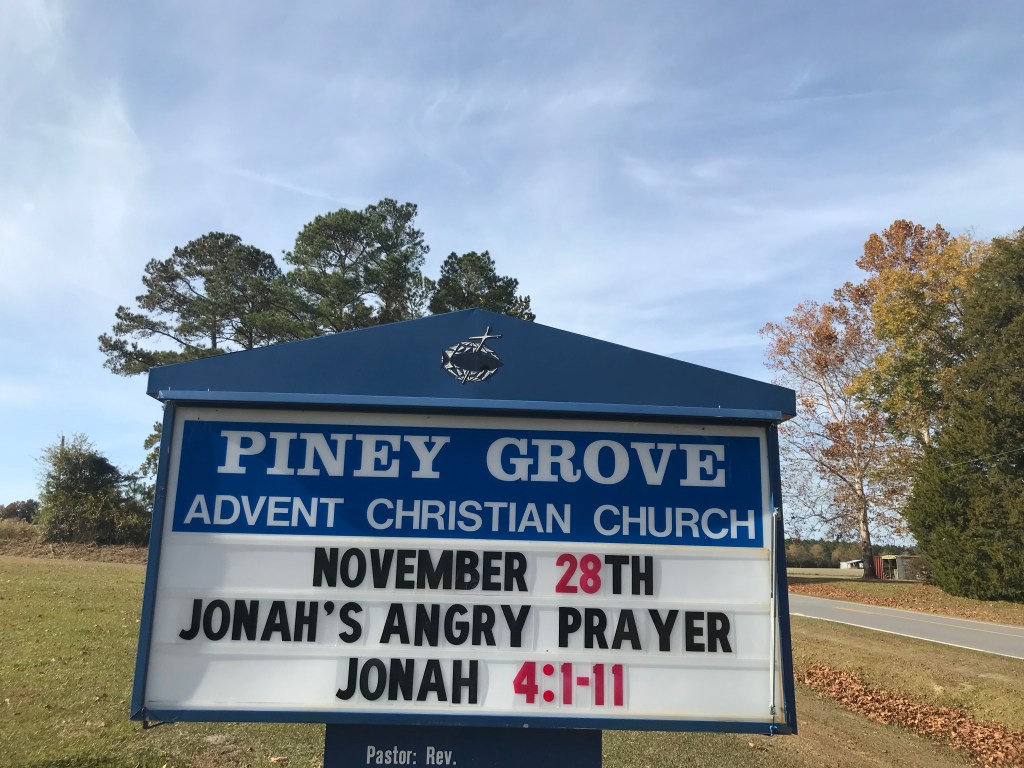
JONAH’S ANGRY PRAYER
Jonah 4:1-11 NET
1 This displeased Jonah terribly and he became very angry. 2 He prayed to the LORD and said, “Oh, LORD, this is just what I thought would happen when I was in my own country. This is what I tried to prevent by attempting to escape to Tarshish! — because I knew that you are gracious and compassionate, slow to anger and abounding in mercy, and one who relents concerning threatened judgment. 3 So now, LORD, kill me instead, because I would rather die than live!” 4 The LORD said, “Are you really so very angry?” 5 Jonah left the city and sat down east of it. He made a shelter for himself there and sat down under it in the shade to see what would happen to the city. 6 The LORD God appointed a little plant and caused it to grow up over Jonah to be a shade over his head to rescue him from his misery. Now Jonah was very delighted about the little plant. 7 So God sent a worm at dawn the next day, and it attacked the little plant so that it dried up. 8 When the sun began to shine, God sent a hot east wind. So the sun beat down on Jonah’s head, and he grew faint. So he despaired of life, and said, “I would rather die than live!” 9 God said to Jonah, “Are you really so very angry about the little plant?” And he said, “I am as angry as I could possibly be!” 10 The LORD said, “You were upset about this little plant, something for which you have not worked nor did you do anything to make it grow. It grew up overnight and died the next day. 11 Should I not be even more concerned about Nineveh, this enormous city? There are more than one hundred twenty thousand people in it who do not know right from wrong, as well as many animals!”
We have been taking a look at the Old Testament book of Jonah this month. In most of the Old Testament, the Prophets of God are the ones his people should be patterning themselves after. But Jonah is the odd person out in that regard. All through the book, we learn that Jonah is charged to obey God’s plan, but he tries to follow Jonah’s plan. God’s plan was to go to Nineveh and preach. Jonah’s plan was to go as far away from Nineveh as he could possibly go. Thus, the storm, the frightened sailors, the toss overboard, almost dying in the belly of Sheol, and a rescue – and some time to evaluate things in the stomach of a fish.
When Jonah finally agreed to obey God’s plan to go to Nineveh — he adapted his plan. He got burped up on the beach. He went to Nineveh and he preached there. But his purpose was still not God’s purpose. God’s plan was to save the Ninevites. Jonah’s plan was to condemn them, and to have a front-row seat at their execution. Once again, God intervenes. The Ninevites repented. They humble themselves – they fast – they pray. God relents. They did what God wanted them to do, and God responds in his grace. But that was not part of Jonah’s plan, and he was angry about it.
Jonah’s prayer expresses his anger at God’s grace (1-3).
The fact that God relented from destroying the Ninevites “displeased Jonah terribly and he became very angry.” If someone has God’s heart, then seeing someone repent and turn to God should not make him angry. If someone wants to see other people saved, then that someone should not get angry when God steps down and gives them the grace to repent and be saved.
Jonah 2 showed us Jonah’s grateful prayer for God’s grace in rescuing him from the danger of dying in the ocean. But in Jonah 4, this same God manifests his same grace to rescue the Ninevites and this same prophet gets angry. Notice why Jonah is angry. He tells God “this is just what I thought would happen when I was in my own country. This is what I tried to prevent by attempting to escape to Tarshish! – because I knew that you are gracious and compassionate, slow to anger and abounding in mercy, and one who relents concerning threatened judgment.
Jonah’s problem was not his theology. He knew that when the LORD was having Moses go back up Mount Sinai for the second copy of the ten commandments, he revealed himself as “the LORD, the compassionate and gracious God, slow to anger, and abounding in loyal love and faithfulness, keeping loyal love for thousands, forgiving iniquity and transgression and sin” (Exodus 34:6-7 NET). So, Jonah knew that it was God’s nature when he finds iniquity, transgression or sin to come to those people with his grace, to be slow to anger toward them and to treat them mercifully.
But God’s grace was not in Jonah’s plan that day. He did not want God to manifest his grace. Brother John Roller describes God’s grace as his “generosity in giving us good things that we don’t deserve to have.” God was showing his grace to the Ninevites by giving them a word of warning through Jonah. But Jonah did not want to be a representative of God’s grace to the Ninevites. He wanted to be a representative of God’s judgment.
When Jonah discovered that God intended to rescue the Ninevites, he got so angry that he asked God to kill him instead. Now, I have never been that angry, but I can understand that kind of anger. When anger takes hold of a person, it leads him to say things and do things that go overboard. Jonah was experienced with that. But it wasn’t just God’s grace that Jonah was reacting to.
Jonah’s ordeal while waiting reveals his anger at God’s sovereignty (4-9).
Previously, in the book of Jonah we saw God use a ship, a storm and a fish to teach Jonah a lesson. In this chapter, God uses the sun, a plant, and a worm. The section begins and ends with the same question. God asks Jonah if he is really so very angry about his sparing the Ninevites. Then Jonah goes outside the city, and he sits and stews. He is watching the city. He knows God has spared it, and it makes him mad. While Jonah is watching, the sun comes out, and it starts to make him uncomfortable. But God had placed a plant near where Jonah was watching, and God by his sovereign power caused that plant to grow so that it shaded Jonah from the sun. God had appointed that little plant and “caused it to grow up over Jonah to be a shade over his head to rescue him from his misery.” Jonah was very delighted about the little plant.
But the next day, this same sovereign God sent a worm to attack the plant. The plant died that day, and Jonah got so hot that he also wanted to die.
Now, it just so happened that while I was writing this sermon, I got to this point and it became very hard for me to see what I was doing. The sun was coming through the window in the pastor’s study. I did not get angry. All I had to do was stand up, go to the window, and drop the blinds.
That incident reminded me that Jonah was still trying to do his ministry according to Jonah’s plan. God had not told Jonah to leave the city. Jonah just wanted to get away and stew. God did provide the plant for Jonah by his sovereignty, but God also provided the worm.
Jonah had no real reason to be angry at God because of the worm. Jonah did not plant that plant. God did. God did not owe Jonah another comfortable day.
You and I have to come to grips with God’s sovereignty. He does things according to his plan, and he does not have to get our approval to do it.
This applies to our prayer list as well. We have a list of people who we ask God to heal and save every day. But God in his sovereignty does not heal and save these people every day. He has reasons for what he does, and reasons for what he doesn’t do. At the end of the day, we need to evaluate what happened and what did not happen on the basis of God’s sovereignty. We need to be able to say what Job did when he lost everything: “The LORD gives, and the LORD takes away. May the name of the LORD be blessed!” (Job 1:21 NET).
Now, if we or someone we love is suffering, we should follow the example of Jesus and pray for our Father to remove that cup. But we should also be willing to say “not my will but yours be done” (Luke 22:42 NET).
That was Jonah’s problem. He knew God was gracious and merciful, but he wanted God to be gracious and merciful according to Jonah’s plan, not God’s. It doesn’t work that way.
God showed Jonah that he had no right to be angry at him (10-11).
The plant was a real plant, but it was also a parable. God used Jonah’s ordeal of the plant and the worm to show Jonah that every good thing and every bad thing that happened to Jonah was all in God’s plan. Jonah didn’t plant that plant, and Jonah didn’t kill that plant. The LORD gave and the LORD took away. Jonah’s proper response should have been “May the name of the LORD be blessed!”
God told Mary that he had some good news and some bad news. The good news is she is going to give birth to the Son of God, and he is going to save his people from their sins. The bad news is that there was going to be a sword of suffering. She felt that sword as she watched her son crucified. But through it all, she was right there, trusting God to work out his plan.
God told Peter that he had some good news and some bad news. He said to Peter that the good news is he was going to use him as the foundation of his church. The bad news is that when he gets older, they’re going to tie him up and bring him where he doesn’t want to go. Peter would remember that when they were preparing him for his own crucifixion. But through it all, he was right there, trusting God to work out his plan.
God told Paul that he had some good news and some bad news. Paul would become a great missionary, and speak to kings and governors, proclaiming the gospel to the Gentiles as well as the Jews. But he would also suffer much for the sake of Christ’s name.
When we spent some time in Hebrews 11, we saw that pattern in the lives of the heroes of faith. They were great men and women, not because everything went well for them, but because they had learned to trust God as he worked out his plan.
Abraham trusted God that he would make good on his promise of a land. The only land he ever actually owned there was a burial plot.
Joseph trusted God that he would make him a great ruler. He held on to that trust while languishing as Potiphar’s slave and then in prison. He held on to God’s sovereignty.
All these great heroes were tested, and passed the test. Jonah was failing the test. His anger at how things were going was causing him to lose sight of God’s heart for the nations. He should have been cheering when he was grumbling. He needed to get his eyes off the dead plant and focus on an entire city that had been given new life.
LORD God, give us your heart. Help us to see things from your perspective. And when things happen that we did not expect and cannot understand, help us to trust in your sovereignty.