Some Guidelines for Prayer

IMG_2286


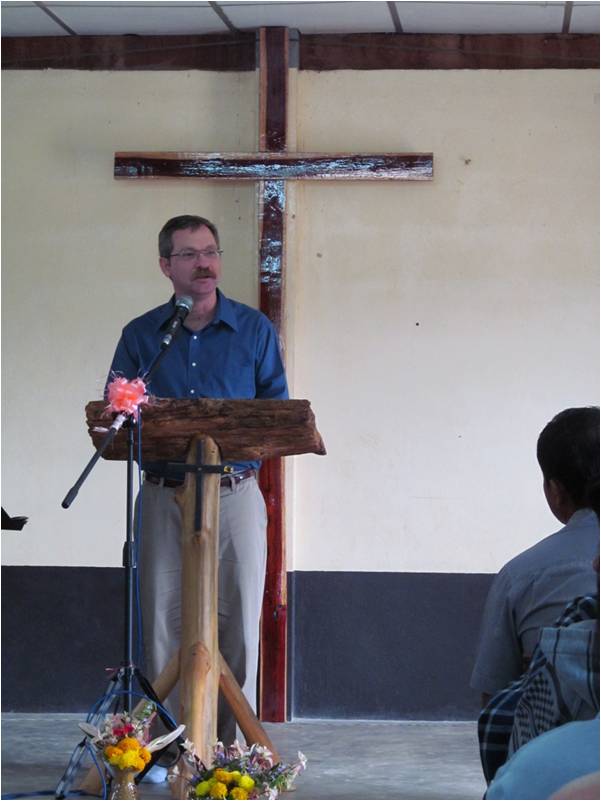
A chapel message at Oro Bible College

Cagayan de Oro, Philippines


Based on James 5:13-20

1. Pray what you feel (13).

“Is anyone among you suffering? Let him pray. Is anyone cheerful? Let him sing praise.”

So many of our prayers are just reciting formulas and words that we have learned. The LORD is more interested in our being honest with him. He wants to hear our complaints when we are suffering, and our praises when we are happy. He’s our Father and he wants to hear our voice.

2. Get help when you need it (14-15a) (16a).

“Let him call for the elders of the church, and let them pray over him” “pray for one another”

Sometimes our pride keeps us from getting the benefits of prayer, because the LORD wants others to minister to us, but we want to do everything ourselves. The LORD loves us all, and he is pleased when we pray for others, and others pray for us.

IMG_2285

3. Unconfessed sin can ruin your prayer life (15b-16a).

“if he has committed sins, he will be forgiven.” “Therefore, confess your sins to one another”

Sin puts a barrier between us and the One we are praying to. It cuts off the connection. Nothing destroys relationships like guilt. We need to keep short accounts with God, so that our prayers are not hindered.

4. Pray for both spiritual and physical healing (16b) (19-20).

“pray for one another, that you may be healed” “whoever brings back a sinner from his wandering will save his soul from death.”

Sin and sickness are both evidence that there is something wrong with this world we live in. God created the universe in a state of perfection, but when our ancestors rebelled, sin and sickness and death entered in. Our prayers are not always going to stop people from sinning, being sick, or dying. But we do know that reconciliation and restoration can happen, and the LORD encourages us to keep praying until it does.

5. You do not have to be a spiritual giant to pray powerfully; you just have to pray in tune with God’s desire (17-18).

IMG_2283

“Elijah was a man with a nature like ours, and he prayed fervently”

Elijah was an ordinary man whom God used. The LORD is looking for ordinary men and women who are willing to pray. That way, he gets the glory for his work, not the instrument he uses. When we find out what God wants, we pray accordingly, and let God be God. But, even then, there are no guarantees. That is why it is called the prayer of faith.

Four Passions of a Committed Discipler

Colossians 1:24-29 ESV
 24 Now I rejoice in my sufferings for your sake, and in my flesh I am filling up what is lacking in Christ’s afflictions for the sake of his body, that is, the church,  25 of which I became a minister according to the stewardship from God that was given to me for you, to make the word of God fully known,  26the mystery hidden for ages and generations but now revealed to his saints.  27 To them God chose to make known how great among the Gentiles are the riches of the glory of this mystery, which is Christ in you, the hope of glory.  28 Him we proclaim, warning everyone and teaching everyone with all wisdom, that we may present everyone mature in Christ.  29 For this I toil, struggling with all his energy that he powerfully works within me.
_____________________________________
When people truly encounter and respond to the gospel of Jesus Christ, a number of transformations happen:

First, they become aware that they are sinners, totally incapable of solving their sin problem.

Secondly, they realize that the only person who can do anything about their sin problem is Jesus, and that he has already solved their problem by dying on the cross.

Thirdly, a profound gratitude emerges in their lives.  They are so grateful for having been set free from the penalty of sin, that they naturally seek to worship their Savior forever.

Fourthly, they have a strong desire to please Christ, and be transformed into his image as it is reflected in their daily walk.  This is the desire to be discipled.

Fifthly, their hope is now firmly placed not in this age, but in the age to come.  They now have the blessed hope: the hope of the glorious appearing of Christ – the expectation of his second coming.
________________________________
All of these transformations are the natural result of the atoning work of Christ on the cross, and the Holy Spirit who indwells believers.  Yet, for some people that is not enough.  The apostle Paul was one of those who wanted more, and God called him to be and do more.  He was not content to be a mere disciple.  The LORD called him to be a committed discipler.
I want to be that kind of a believer too.  I want my life to make a difference in the lives of others, helping them to come to Christ, grow in Christ, and be more than conquerors for Christ.  I do not think that this kind of life will require a second blessing, or second touch of the Holy Spirit.  I think it comes to those who are willing to make discipling a priority in their lives.  It comes when people embrace the passions that governed the lives of the great apostles and evangelists.  Today’s passage reflects some of those passions.
proclaiming Christ
Let me draw your attention to today’s text, and three words which are found in verse 28:  “Him we proclaim.”  A committed discipler makes witnessing a priority.  It does not say “ourselves we proclaim.”  The gospel is not about us, our church, our denomination, our goals, our families, our programs, our methods, or even our doctrines or our choices or our lifestyles.  The gospel is about him. Him we proclaim. 
You can do a lot of things for your church that do not by themselves proclaim Christ.  You can do a lot of religious things that never convey the fact of Christ’s existence.  You can even say a lot of religious things without communicating the reality of Jesus Christ.  A committed discipler understands that it’s not about me, it’s about him.  When the apostle Paul entered a new mission field, he brought the message of Christ with him.  Committed disciplers do that. 
In order to capture the passion of proclaiming Christ, we need to really believe in the sufficiency of Christ.  I think this is the reason  there are so many Christians who fail to live up to this standard.  They trust Christ for their eternal salvation, but they trust the doctors to heal them, and the lawyers to take care of their interpersonal problems, and the politicians to change their society.  Those who have a passion for proclaiming Christ understand that he is not just one of the answers, he is the answer.

making God’s word known
Another passion we see reflected in Paul’s words here is in verse 25.  A committed discipler sees his ministry as a “stewardship from God.” The purpose of the stewardship is “to make the word of God fully known.”  I like that translation which uses the word “stewardship” because it implies that the word of God is a valuable treasure.
But there is a difference between the stewardship from God and other kinds of stewardship.  Usually stewards are hired to protect a treasure, but stewards of God’s word are called to give it away.
Also, notice that Paul’s passion was not just to preach some of God’s word, but to make it “fully known.”  Lots of preachers today are experts at proclaiming some of God’s word – usually the positive parts.  But Paul made it his ambition to give people the whole message.  His confidence was in the whole word, not just the parts that are easily digested.
The full word of God is not a simple message, and it defies our attempts to put it in a nutshell.  Read your Bible.  Read the whole Bible.  Some parts you will cheer and proclaim with confidence.  Other parts will confuse you.  Some might even anger you.  But if you are really going to make a difference in the lives of others, you will have to embrace and declare those parts too.  The word of God is not a buffet table where people are free to pick and choose what appeals to them.  It is a full meal, because it is a balanced meal.

laboring to produce mature Christians
A third passion revealed in this passage is seen in verses 28-29.  Paul says “warning everyone and teaching everyone with all wisdom, that we may present everyone mature in Christ. For this I toil, struggling with all his energy that he powerfully works within me.” He worked hard to produce mature Christians.  He was not just about bodies in the pews.  He wanted to prepare disciples of Christ.
One of the means that Paul used to make mature believers was the systematic instruction in the word of God.  In some of the places where he planted churches, he spend long periods of time training them.  In others, he send other missionaries like Timothy and Titus to do that.  But he never dunked people and dropped them.  He was a believer in intensive systematic training in the word of God.  My challenge to you is that if you are serious about producing mature Christians, get all the training you can get, from whatever source you can get it.

suffering to build the church
My last inference from this passage is perhaps going to be the hardest to accept.  I am convinced that there is a missing element in much discipling today.  Paul says in verse 24 “Now I rejoice in my sufferings for your sake, and in my flesh I am filling up what is lacking in Christ’s afflictions for the sake of his body, that is, the church.”  I think that in some way suffering has a role to play in the process of disciple-making.
Now, I do not think that Paul is saying that it is necessary for disciplers to suffer for the same reason that Christ suffered.  He suffered and died on the cross to atone for the sins of the world.  There is not a one of us who is qualified to do that.  Besides, Jesus has already paid the price for every sin of every sinner.  When he said “it is finished” on the cross, God stamped the bill with the words “paid in full.”
So, what could Paul have been implying when he spoke of “filling up what is lacking in Christ’s afflictions”?   I think the key to interpreting this challenging text is seeing it in the light of the question we have been asking in this message.  Just as Christ suffered in order to save us, he calls disciplers to suffer in order to build up the body.
If that is the right way to read his words here, it means that if we want to make a difference in people’s lives, we need to be prepared to put ourselves in uncomfortable situations for their sake.  We need to cross boundaries that exist outside our comfort zones.  Discipling is a messy business.  Nobody comes gift wrapped in appropriate clothes, proper attitudes, and in complete agreement with our theology. If you are looking for people like that to disciple, you will never be a discipler.
In fact, I think it can get worse.  Discipling means daring to represent Christ.  As such the discipler will be praised by those who praised him, and quite possibly crucified by those who crucified him.  Disciplers suffer at the hands of unbelievers because we represent a message that unbelievers reject, and a master that unbelievers have rebelled against.  In one of Jesus’ parables, a master sent his servants among his people to collect his tribute, and they beat them, wounded them, and sent them away empty-handed. 
Suffering, then, does not mean that we have failed at our job.  It means that we are doing our job correctly.  Fortunately, we do not always suffer. Sometimes by God’s grace, the rebellious repent and return to their master.  But if we are serious about being disciplers, we will have to endure many hardships. 
In fact, some of those hardships will be at the hands of those within the church, not outside it. Paul himself is an example of that fact.  He wrote some of his epistles to churches which he had founded who were beginning to reject his ministry and criticize his methods.  But some of the most profound and life-changing words in scripture are found in those epistles.  By Paul’s suffering, the body was built.
________________________________________
I want my life to make a difference in the lives of others, helping them to come to Christ, grow in Christ, and be more than conquerors for Christ.  If you examine your heart closely, I think you will find that you want that too.  Will you join me in praying that the Holy Spirit will make us more than just disciples?  Will you dare to be a discipler?
Jefferson Vann
Maranatha Bible Church
Cagayan de Oro City, Philippines

Sunday, June 9th, 2013.

ACST 59: The Voice

IMG_0752

John’s Revelation describes (among other things) the conflict that believers will have in this age before Christ’s return. He depicts that conflict as a battle between them and a great dragon, representing Satan. John reveals that the battle will be won by Christ. Christ will return and depose the great dragon from his usurped place in heaven. John explains that there will be three key elements to the church’s endurance, which will overcome the dragon:

“And I heard a loud voice in heaven, saying,

“Now the salvation and the power and the

kingdom of our God and the authority of his

Christ have come, for the accuser of our

brothers has been thrown down, who accuses

them day and night before our God. And they

have conquered him by the blood of the Lamb

and by the word of their testimony, for they

loved not their lives even unto death.”[1]

Those key elements can be described this way: 1) the atoning sacrifice of Jesus Christ on the cross, 2) the things proclaimed by the church as Christ’s voice on the earth, 3) the courage and selfless devotion of the church in the face of demonic opposition.

The first of these three key elements is what Christ did for us on Calvary’s cross. It cannot be changed, and its results are ours to enjoy. We know that whatever happens to us in this life, another awaits us at Christ’s return because the sin that would keep us from eternal life has been atoned for. The tree of life is once again available for redeemed humanity to partake in. What’s more, any victory we might experience over the devil in this life is contingent on that victory already accomplished.

The latter two elements in the success of the church in enduring Satan’s attacks are conditional. Believers must have the courage to deny themselves and follow Christ wherever he leads, even if we, too, must go to our deaths. Believers must also take up the task of testifying to the existence and significance of Christ. We overcome the enemy by testifying of Christ. We, the church, must be the current earthly voice of our risen Lord.

The Church has not exhibited an unbroken succession of centuries dedicated to the high ideals established for her in scripture. Rather, the current earthly voice of God has often struggled with Satanically orchestrated political antagonism from without and religious apostasy from within. The marks of the true Church have not always been evident, but have never been completely hidden. One place where the Bible shows that reality is Jesus’ letters to the seven churches in Revelation 2-3.

letters from Jesus

John was the last of the apostles who had trained under Jesus, and had been witnesses to his resurrection. He had been instrumental in establishing a number of churches throughout the Roman province of Asia Minor. The Roman emperor had John banished to the island of Patmos, but allowed people to visit him. These visitors could bring messages from the churches to their elder, John, and receive messages that they could bring back to the churches. The Greek word for messenger is angelos, so our English bibles usually refer to these messengers as “angels.”[2] They were not. They were human messengers, and often Jesus condemned their sins as well as those of the churches they served. These letters to the churches described the state of the church in general in the late first century, but they also serve as a pretty good description of the church in general down through the ages.

A survey of these letters can give believers a good glimpse at the kind of struggles that await us as we seek to be Christ’s earthly voice in this age of conflict. Jesus has some very high praise to give to some who were victorious in the conflict (in the first century), and some severe warnings to those who did not quite measure up to that aspiration. Readers today are left to determine which category they should be placed in.

Ephesus – the orthodox voice

The letter to Ephesus begins: “To the angel of the church in Ephesus write: ‘The words of him who holds the seven stars in his right hand, who walks among the seven golden lampstands.”[3] The salutation reflects back on the vision of Jesus revealed in 1:12-16, where our Lord is pictured holding stars in his hand, and walking among seven lampstands. Revelation 1:20 leaves no question as to what these images stand for: “As for the mystery of the seven stars that you saw in my right hand, and the seven golden lampstands, the seven stars are the angels (messengers) of the seven churches, and the seven lampstands are the seven churches.” Both lampstands and stars are images which suggest the shedding of light, which is often used in the Bible for the passing on of knowledge.[4] As believers, the messengers were responsible to take the message of Jesus, the light of the world,[5] to the world. The churches they represented had the same responsibility, because all believers are also the light of the world.[6] Jesus stands amidst the lampstands, ready to remove any church that refuses to remain lit with the knowledge of the gospel.

It can be reasonably assumed that Ephesus had remained orthodox. They were continuing to teach the gospel message, unadulterated, in spite of challenges they had faced. This is actually encouraging news, because the city of Ephesus was known for its paganism, and Paul warned Timothy that he would have to confront false teachers as he ministered there.[7] Jesus commended them for their endurance under this pressure to paganize. He told them “I know your works, your toil and your patient endurance, and how you cannot bear with those who are evil, but have tested those who call themselves apostles and are not, and found them to be false. I know you are enduring patiently and bearing up for my name’s sake, and you have not grown weary.”[8] He also commended them because they “hate the works of the Nicolaitans, which (he) also” hated.[9] It is not clear whether this refers back to those who falsely claimed apostleship, or another group. Regardless, it is clear that Ephesus had a reputation of remaining orthodox in spite of the challenge of false teachings.

But Jesus did have a warning for these stalwarts of orthodoxy. He told them “I have this against you, that you have abandoned the love you had at first. Remember therefore from where you have fallen; repent, and do the works you did at first. If not, I will come to you and remove your lampstand from its place, unless you repent.”[10] His complaint was not that the church in Ephesus had abandoned the truth, but that they had abandoned the work. They were theologically accurate, but missiologically flawed. They had stopped doing the things that they were still teaching. Jesus warned them that if they did not turn back and do the things that they had originally done – their first love — they were in danger of being replaced.

Love does more than just say “I love you.” Love proves itself by works. Faith that does not work is dead faith.[11]

If Ephesus passes this test and goes back to practicing what it preaches, Jesus promises them this: “To the one who conquers I will grant to eat of the tree of life, which is in the paradise of God.”[12] Readers will remember that the Garden of Eden had two prominent trees in its midst, one forbidden, one not. The forbidden tree was that of the knowledge of good and evil. After eating of this tree, our ancestors were banished from the garden so that they would not have opportunity to partake of the tree of life, and live forever.[13] God prevented humanity from having immortality because immortality would be a curse in our fallen, sinful condition. Jesus promises the Ephesians that if they continued to do the works of the gospel, as well as proclaim its truth, they would have access to the tree of eternal life. In the final vision of Revelation, we discover that this tree will be present in the New Jerusalem.[14]

At many times throughout its history, the church of Jesus Christ has resembled the church at Ephesus. We have often gone to war with ourselves over doctrine rather than obey his teachings about loving one another. We have acted like the Pharisees, whom Jesus said would “travel across sea and land to make a single proselyte, and when he becomes a proselyte, (they) make him twice as much a child of hell as (themselves).”[15] Good theology is important, but it can never be the only goal. We were commanded to make disciples, not merely converts. A convert knows, a disciple does.

Smyrna – the tested voice

Jesus introduces himself to the church at Smyrna as “the first and the last, who died and came to life.”[16] He is the first of the children of Adam who would be raised from the dead, and the last of the children of Adam who would ever need to fear death, because now he has the keys to death and Hades (the grave).[17] Death is a prison that we all await, but we need not fear it, because Christ came before us, conquered death, and has a set of shiny keys dangling from his belt. No one need ever fear death again, because he can rescue us from it. He will do that by raising us from the dead when he returns.

If anyone needed to keep that picture before them, it was the believers in Smyrna. Notice how what Jesus says to them is sandwiched by the word “tribulation.” He says “I know your tribulation and your poverty (but you are rich) and the slander of those who say that they are Jews and are not, but are a synagogue of Satan. Do not fear what you are about to suffer. Behold, the devil is about to throw some of you into prison, that you may be tested, and for ten days you will have tribulation.”[18] Believers in Smyrna were about to undergo severe trial, persecution, accusation, imprisonment, and would be threatened with death itself.

As a missionary, I have at times struggled with just what to say to people who are putting their lives on the line by preaching the gospel in a hostile culture. I want to encourage believers to keep being salt and light in their contexts. At the same time, I have questioned my own motives, because I have wondered how vocal I would be if living in a nation that forcefully opposed that voice.

Jesus told the believers in Smyrna to “Be faithful unto death, and (promised to) give (them) the crown of life.”[19] Their ordeal of testing was likened to an Olympic game, in which the winning contestants would have undergone great testing, but would emerge from it victorious, wearing a crown. The crown would be the same thing that Jesus had promised the victorious church at Ephesus: life itself. To wear the crown of life is the same thing as taking from the tree of life: it is to be raised from the dead when Christ returns. In the end, that is the only victory that matters.

The believers at Smyrna could also take solace in the fact that Jesus promised their time of testing to be limited. What those ten days of testing were, we can only speculate. We do know that at least some would pass the test. Some would live to see the time of testing completed, and gain victory over the apostate Jewish community by surviving their attacks. Others would gain victory by martyrdom, as all of the other apostles besides John had already done. In either case, Jesus warned that this time of testing was coming, and urged the believers in Smyrna to be like their brothers in Ephesus, who had been famous for their endurance.[20]

The church of Jesus Christ has never known a time when not put to the test. Although some speak of “the tribulation” as if it is some special event that will happen in history, Jesus told his disciples that in the world they (and we who follow them) would have tribulation.[21] He spoke of some professing Christians whose lives have no root, who fall away in time of testing.[22] The sad fact is, many who claim to trust in Christ will give in the temptation to abandon that faith if it is challenged. The voice becomes the voice of the accused and incarcerated. It is then that we need to hear the encouragement of the apostle:

“Who shall separate us from the love of

Christ? Shall tribulation, or distress, or

persecution, or famine, or nakedness,

or danger, or sword? As it is written,

“For your sake we are being killed all the

day long; we are regarded as sheep to be

slaughtered.” No, in all these things we

are more than conquerors through him

who loved us. For I am sure that neither

death nor life, nor angels nor rulers, nor

things present nor things to come, nor

powers, nor height nor depth, nor any-

thing else in all creation, will be able to

separate us from the love of God in

Christ Jesus our Lord.”[23]

A voice that keeps proclaiming the gospel of life in the midst of threats of its own death is an authentic voice. There can be no suggestion that this voice is being sounded out of ulterior motives. The gallows and chopping block have a way of purifying the church. It is no wonder that history records many of these times of testing. While it is improper for Christians to pray for persecution, it is quite possible that without it, the earthly voice of Christ might have been muted.

Pergamum – the compromised voice

Jesus introduces himself to the messenger from Pergamum by again referring back to the vision that John had just seen of him. He describes himself as “him who has the sharp two-edged sword.”[24] In the vision, Jesus is not holding that sword. It is coming out of his mouth.[25]

In the Old Testament, God’s people were pictured as wielding two-edged swords, executing his vengeance on his enemies.[26] Fathers warned their sons to stay away from forbidden women, because although their lips seem to drip honey, and their speech be as smooth as oil, in the end they will prove to be as bitter as wormwood, and as “sharp as a two-edged sword.”[27] The common denominator in these two references is that of impending judgment.

In the New Testament, apart from the two references in Revelation, the two-edged sword appears in a passage from Hebrews:

“So then, there remains a Sabbath rest

for the people of God, for whoever has

entered God’s rest has also rested from

his works as God did from his. Let us

therefore strive to enter that rest, so

that no one may fall by the same sort of

disobedience. For the word of God is

living and active, sharper than any two-

edged sword, piercing to the division of

soul and of spirit, of joints and of

marrow, and discerning the thoughts

and intentions of the heart. And no

creature is hidden from his sight, but

all are naked and exposed to the eyes

of him to whom we must give account.

Since then we have a great high priest

who has passed through the heavens,

Jesus, the Son of God, let us hold fast

our confession. For we do not have a

high priest who is unable to sympathize

with our weaknesses, but one who in

every respect has been tempted as we

are, yet without sin. Let us then with

confidence draw near to the throne of

grace, that we may receive mercy and

find grace to help in time of need.”[28]

The church at Pergamum is in danger of some kind of heresy – some kind of compromise. They live in a place so well-known for its evil that Satan himself is said to live there. A church living in such a place is bound to be tempted to contextualize a bit too much.

Jesus identifies two different teachings that were prevalent in Pergamum. First, he spoke of the “the teaching of Balaam, who taught Balak to put a stumbling block before the sons of Israel, so that they might eat food sacrificed to idols and practice sexual immorality.”[29] Most of us remember this prophet for his tendency to speak to animals. Jesus reminds his readers of another incident in Balaam’s life, when he tricked the Israelites into sinning. Pergamum apparently had some prophets who were leading the church astray.

The second group Jesus refers to as “some who hold the teaching of the Nicolaitans.”[30] Jesus had commended the Ephesians for hating the works of the Nicolaitans, but did not explain what those works were. Both the Ephesians and the believers in Pergamum knew full well what the Nicolaitans were teaching. While the Ephesian Christians had been able to resist their influence, the church at Pergamum had not. They had been compromised by – not one, but two heresies.

It is possible that the reference to the two-edged sword is a clue to the nature of the problem at Pergamum. The author of Hebrews spoke of the grace of God as a new Sabbath rest for the people of God. Believers can trust in God’s completed work through Christ and rest in his grace, with no need to prove their worthiness by works of their own. Christ is our high priest, interceding for us, and because of his atonement, we can now enter into God’s presence by his merit, not our own. Probably the heresies being propagated in Pergamum were adding some kind of works for personal merit to grace.

Jesus commands the church at Pergamum to repent. This is significant because Jesus has not charged the entire church of heresy. He had merely stated that some within the church were holding the teaching of Balaam, and some (others) the teaching of the Nicolaitans. Yet, Jesus warns that he is coming soon, and will actively “war against” those heretics “with the sword of (his) mouth.”[31] He promises to actively intervene in the affairs of this congregation and execute his vengeance on those who have fallen away from grace. The implication is that if the whole church does not repent and rid itself of these heresies, the whole church is in danger of losing its lamp-stand.

The church in history has – at times – sought to eradicate itself of heretics. Many have turned away from religion altogether because of stories of hangings, drowning, torture, burnings and beheadings in the name of eradicating heretics. It sickens people to know that such things have been done in the name of Christ, and rightfully so. Jesus has never commanded such action. His one command in the face of heresy – so evident here – can be summed up in one word: repent. The problem is not that such teachings exist. The problem in Pergamum was that the congregation was allowing them to exist within it. A Church that repents of false teachings, disassociating herself from them, is a church that overcomes this test.

Jesus promises that those who overcome this test will be given some of the hidden manna, and “a white stone, with a new name written on the stone that no one knows except the one who receives it”[32] These references probably also identified the particular teachings Jesus was warning against. He wanted the believers to realize that the promises of these false teachers were false. Throughout its history, the church has been inundated by esoteric teachings which promised some secret blessing to their adherents. By speaking out against this kind of thing at Pergamum, Jesus is warning us all against falling for that kind of deception. The true gospel is not a secret. It is a message for everyone.

Thyatira – the seduced voice

The problems in Thyatira are very similar to those in Pergamum. False teachings have entered into the congregation, and threaten to cause the church to lose its identity as a source of the gospel. In Thyatira, however, the false teachings appear to come from a leader within the church itself. Jesus names her “that woman Jezebel, who calls herself a prophetess and is teaching and seducing my servants”[33] This woman has apparently gained some kind of position of authority within the group of churches, and is passing her false teachings on to other leaders within the congregations. In the Old Testament, Jezebel was the queen of king Ahab, a powerful woman who forced her pagan religion upon the Israelites. She took advantage of her position of authority to introduce syncretism and impurity into Israel. The New Testament Jezebel was doing the same thing.

Jesus introduces himself to the messenger from Thyatira as “the Son of God, who has eyes like a flame of fire, and whose feet are like burnished bronze.” Unlike Jezebel, whose power was in her impurity and her ability to make others impure, Christ’s power is in his purity. He will invade the churches at Thyatira, first throwing Jezebel onto a sickbed, and giving her followers tribulation, unless they repent of her works. He will then strike her children dead, so that “all the churches will know that I am he who searches mind and heart, and I will give to each of you as your works deserve.”[34]

The members of the churches at Thyatira were, in one way, opposite of those at Ephesus. Ephesus had been commended for defending the truth, but criticized for not following their orthodoxy through with appropriate works. Jesus told the believers at Thyatira “I know your works, your love and faith and service and patient endurance, and that your latter works exceed the first.”[35] He does not call on this church to repent. He did call on Jezebel to repent, and she refuses to do so. He will visit those who have been seduced by her. To the rest, he simply encourages them to “hold fast” what they have.[36]

Sardis – the sleeping voice

Jesus told the messenger from Sardis that he was a dead man. He said “You have the reputation of being alive, but you are dead.”[37] This was a church that was going through the motions, but was asleep to its own existence and calling. Jesus commands them to wake up, and warns that if they do not, he will come against them suddenly, like a thief.[38]

Philadelphia — the faithful voice

The only church that Jesus has no criticism for is that at Philadelphia. Instead, he tells them “Because you have kept my word about patient endurance, I will keep you from the hour of trial that is coming on the whole world, to try those who dwell on the earth.”[39] The churches and believers who remain faithful in spite of the challenges they face will become pillars in the temple of God, residents of the new Jerusalem.[40]

Laodicea — the lukewarm voice

Jesus condemned the seventh church because they were like lukewarm water, neither cold nor hot.[41] Since they had the things they needed in life, they felt no compulsion to be radical with their religion. They were just there. It is to this group that Jesus presents himself as a visitor, knocking at the door. That relationship that the church in Laodicea assumed they had was possible, but they had to pursue it. Taking it for granted was producing a tepid faith, and remaining in that lukewarm state would be disastrous.

ears and shoes

To each messenger and church Jesus repeated this same advice: “He who has an ear, let him hear what the Spirit says to the churches.”[42] The advice is similar to the common expression “if the shoe fits, wear it.” Jesus challenges all churches and all believers of all ages to consider the plight of these seven churches in first century Asia Minor. The challenges they faced as they attempted to be Christ’s earthly voice are the same challenges we face. The church must not be distracted or sidetracked. The testimony must continue. The voice must not be allowed to be silenced.


[1] Revelation 12:10-11 ESV.

[2] Revelation 2:1,8,12,18; 3:1,7,14.

[3] Revelation 2:1 ESV.

[4] Psalm 42:16; 43:3; Daniel 2:22; John 12:35.

[5] John 8:12; 9:5-6.

[6] Matthew 5:14.

[7] 1 Timothy 1:7; 2 Timothy 4:3.

[8] Revelation 2:2-3 ESV.

[9] Revelation 2:6.

[10] Revelation 2:4-5 ESV.

[11] James 2:17, 26.

[12] Revelation 2:7.

[13] Genesis 3:22.

[14] Revelation 22:2, 14, 19.

[15] Matthew 23:15.

[16] Revelation 2:8.

[17] Revelation 1:17-18.

[18] Revelation 2:9-10a.

[19] Revelation 2:10b.

[20] Revelation 2:2-3.

[21] John 16:33.

[22] Luke 8:13.

[23] Romans 8:35 39 ESV.

[24] Revelation 2:12.

[25] Revelation 1:16.

[26] Psalm 149:6.

[27] Proverbs 5:3-4.

[28] Hebrews 4:9-16 ESV.

[29] Revelation 2:14 ESV.

[30] Revelation 2:15 ESV.

[31] Revelation 2:16.

[32] Revelation 2:17 ESV.

[33] Revelation 2:20 ESV.

[34] Revelation 2:23 ESV.

[35] Revelation 2:19 ESV.

[36] Revelation 2:25.

[37] Revelation 3:1 ESV.

[38] Revelation 3:2-3.

[39] Revelation 3:10 ESV.

[40] Revelation 3:12.

[41] Revelation 3:16.

[42] Revelation 2:7,11,17,29; 3:6,13,22.

double blessing

profile-jd

So far, I have had two opportunities to publically share about my recent trip to India and Thailand.  First, our home church has a missions team which prays for and field’s requests for the church to support mission projects.  We met on a Sunday afternoon, and I shared a presentation about the trip.  Hearing from someone who has been on the field is not as good as going yourself, but it is better than nothing.

The team members heard the “low down” from me – both the positive and negative.  We should never be afraid of giving people the whole truth.  Believers are already committed to spreading the gospel.  They know that sometimes it falls on hard ground, and sometimes it falls on receptive ground.  Telling it like it is allows them to praise joyfully, and to pray responsibly.

My second opportunity came for a campus ministry (AGAPE Christian Fellowship) at William & Mary college.  Penny and I meet with this organization when they have their weekly “large group” for worship and prayer on Friday nights.  The president of ACF asked me to share last Friday night.

•“encourage each other and build each other up” 1 Thess. 5:11

That was my theme.  I shared that the primary goal of my trip to both countries was to encourage the workers there.  I told about some of the things about both fields that made gospel work difficult, so that the students could get a better idea how to pray for those workers.  I also shared how many of those workers encouraged me by their determination to take the gospel to less receptive, and often resistant people.  I was encouraged that the workers in India and Thailand faced obstacles and opposition, but kept persevering in the work.

I went on to share that God has built into our lives ways for us to encourage others.  Some of those ways are…

•Testimonies.  People want to know how the Holy Spirit works in other people’s lives.  Hearing my testimony may embolden someone to answer God’s call.  If people do not hear my testimony, they might assume that the LORD is not as important to me as he is.

•Friendships.  God gives us friends for a reason.  They are not cosmic accidents.  Each of my true friends is a gift from him, given for the purpose of building me up, and I am in their lives for the same reason.

•Prayer.  Prayer itself does not really change things.  That is just a cliché that some people like to say and others like to hear.  But God does change things, and he often invites us to be part of the change by praying.  Our prayers encourage those we pray for, and their answers encourage us.  A life without prayer can be a discouraging thing.

•Gathering together.  When the author of Hebrews commanded that his readers continue to gather together, it was for the purpose of encouraging one another (10:25).  It’s not about ticking our names off the list.  It’s about ministering to one another.  When we are not there, our ministry is missing.

Short-term missions trips can be a double blessing.  You can bless those you visit by reminding them that there are people praying for them on the other side of the world.  When you get back, you can be a blessing to the people here by telling them of the courage and faith of the believers there.

ACST 58: The Gathered

After Israel was scattered throughout the nations as part of their punishment for rejecting the LORD, the prophets began to predict that God would restore them to himself. The scattered people would become the gathered people. God would redeem them and would call on the nations to restore them to himself:

“I will say to the north, ‘Hand them over!’ and to the

south, ‘Don’t hold any back!’ Bring my sons from

distant lands, and my daughters from the remote

regions of the earth, everyone who belongs to me,

whom I created for my glory, whom I formed—

yes, whom I made!”[1]

From that time on, the people of God began to see themselves not as a people planted (In Israel) but as a people harvested from the nations. When the New Testament era dawned, the word chosen to identify Jesus’ disciples as a group was ekklesia,[2] which had been a general term for assembly. The church is God’s gathered community, harvested from among the nations.

harvest

Jesus used the analogy of harvest to explain the work of building his church. He told his disciples: “The harvest is plentiful, but the laborers are few; therefore pray earnestly to the Lord of the harvest to send out laborers into his harvest.”[3] The analogy is an excellent one, because it shows both the value that Christ puts on the souls harvested, and the hard work and cooperation it will take to bring them in.

After a short discussion with Jesus a Samaritan woman went into her village and proceeded to bring them to him. Commenting on the event, Jesus said to his disciples:

“Do you not say, ‘There are yet four months, then

comes the harvest’? Look, I tell you, lift up your eyes,

and see that the fields are white for harvest.

Already the one who reaps is receiving wages and

gathering fruit for eternal life, so that sower and

reaper may rejoice together. For here the saying

holds true, ‘One sows and another reaps.’ I sent

you to reap that for which you did not labor.

Others have labored, and you have entered into

their labor.”[4]

The “others” who had sown probably implies John the Baptist, those who had brought the scriptures to the Samaritans, and the Samaritan woman herself. They had done the preliminary work, so that when Jesus appeared, the crowds could recognize him, and accept him as the Messiah.

Often that passage is used to encourage people to do missions, but there is a potential problem with using it for that purpose. There are still “fields” all around the world where the hard work of planting the seeds has not yet been done. Those fields are not ripe for harvest. For some of them, it might take many more years and much more spilled blood before they move from resistant to receptive. Of course, this is not to discourage missions, but to prepare those who are called to resistant areas for the difficulties that calling may entail.

Pentecost can properly be called the first Christian gathering. From that time on, it became typical for believers to gather together at various places, some public, others private.[5] Each gathering is a kind of foretaste of the greater gathering, when all believers will be “gathered together to” Christ, at his second coming.[6] Living believers are, according to James, “a kind of firstfruits,”[7] a preliminary harvest with a promise of that greater harvest to come. As such, we are expected to begin showing some of the awesomeness of that future harvest. That is why James transitions from the idea of firstfruits to that of demonstrating godly character.[8] If we are part of God’s harvest, we will radiate his glory.

worship

The church is God’s gathered community, designed to radiate his glory through (among other things) worship. When his people honor his person and praise him for his works, they help the creation to reboot. Somewhere along the line, this planet has lost its purpose. Worship is our way of revisiting that purpose.

When Jesus was clip-clopping into Jerusalem at his triumphal entry, some Pharisees (who did not have a clue what was going on) demanded that Jesus stop his disciples from worshipping him. Not only did Jesus refuse to stop them, he told the Pharisees that if they were silenced “the very stones would cry out.”[9] Now that our Savior has come, his worship is imperative. We all do it poorly, compared to how we will do it, but we try anyway. It is as natural as breathing for us.

Worship is supposed to be “in spirit and truth,”[10] which is simply a hendiadys for “authentically.” Its opposite would be worshipping in the flesh without a true feeling of awe or gratitude. Perhaps you remember the last time you attended a service that just seemed to be going through the motions? That is not worship. Authentic worship is a reaction to God’s felt presence, and God’s manifested works. It is not an expression of our “worth— ship” but his. The worshipper does not get carried away with herself, but caught up in him. That is why the fruit of the Spirit – self control – must manifest in worship as well. Much damage has been done by confusing self-honoring frenzy with God-honoring worship.

Yet, there is something to the process of worship which at times may seem like loss of control. Paul told the formerly pagan Ephesians not to get drunk on wine, but to be filled with the Spirit.[11] They were to replace one kind of intoxication for another. Instead of wine causing them to abuse one another, they were to drink deeply of the Holy Spirit, which would influence them. It would result in “addressing one another in psalms and hymns and spiritual songs, singing and making melody to the Lord with all your heart, giving thanks always and for everything to God the Father in the name of our Lord Jesus Christ, submitting to one another out of reverence for Christ.”[12]

When the Holy Spirit is manifested in our gatherings, he causes us to do things which outsiders may not understand, and may attribute to the wrong cause. At Pentecost, Peter had to remind the crowd that those who were receiving manifestations were not drunk; it was (after all) only nine o’clock in the morning.[13] From that time on, “praising God” was a description of what believers constantly do.[14]

Worship is always to be directed God-ward, but there is a side effect benefit that we who are gathered can gain from it. The author of Hebrews insisted that his readers keep gathering together for the purpose of “encouraging one another.”[15] It is an encouragement to see what God is doing in the lives of other Christians, and we can see the Holy Spirit at work within them as they worship. While worship is not a show that we put together for one another’s benefit, there are aspects of the Christian life that are only seen in the community context. That is why the New Testament contains so many reciprocal commands: love one another, care for one another, submit to one another, etc.

instruction

The church is God’s gathered community, designed to proclaim and explain God’s word through instruction. Jesus commanded us to make disciples by teaching each other to obey his commands. There is actual content to the commands of Christ. It is impossible to be a mere worshipping church. A true church is a discipling church, and a discipling church is a teaching church. One of the earliest criticisms that unbelieving authorities hurled at the early church was that they were teaching in Christ’s name.[16] The apostles arose at daybreak, and started teaching.[17]

As previously mentioned (in chapter 34), the content of Christ’s commands can be summarized thus:

1. Make your choices based on God’s permanent realities, rather than the world’s temporary ones. Invest your life in eternity.

2. Put Christ and his kingdom first in your life. Be devoted to him.

3. Be genuine: don’t pretend to be something you are not, and don’t forget who you are in Christ. Be what you claim to be.

4. Trust your heavenly Father to take care of your needs, and to win your battles. Rely on God to do what you cannot do.

5. Keep in contact and communication with God through prayer.

6. Concentrate on learning, living and proclaiming the truth.

7. Expect the power of the Holy Spirit to make up for your weaknesses and insufficiencies. Be used by God to fulfill his will.

8. Live in expectancy because the king is coming! Be alert, and ready for his arrival.

Discipling consists of bringing people to the point of commitment to Christ (baptizing) and then nurturing that commitment through a lifelong process of teaching. The gathered church is a teaching church.

The means of the church’s teaching ministry is not a creed or a set of church traditions. It is the Holy Spirit, who is continuing the discipling ministry of Jesus Christ among us. The medium He uses is the Bible, the word of God.

“they proclaimed the word of God in the synagogues

of the Jews”[18]

“He was with the proconsul, Sergius Paulus, a man

of intelligence, who summoned Barnabas and Saul

and sought to hear the word of God.”[19]

“the Jews from Thessalonica learned that the word

of God was proclaimed by Paul at Berea also”[20]

“he stayed a year and six months, teaching the word

of God among them.”[21]

“I became a minister according to the stewardship

from God that was given to me for you, to make

the word of God fully known”[22]

“when you received the word of God, which you

heard from us, you accepted it not as the word

of men but as what it really is, the word of God,

which is at work in you believers.”[23]

“I write to you, young men, because you are

strong, and the word of God abides in you”[24]

Believers with the Holy Spirit inside them, and the word of God coming out of them, are a strong force for change in the world. Jesus intends for his gathered church to not simply sit by and wait until his return. He has commanded us to “engage in business” until he comes.[25] “Until I come, (he said) devote yourself to the public reading of Scripture, to exhortation, to teaching.”[26] The gathered church is a teaching church.

fellowship

The church is God’s gathered community designed to radiate his glory by growing closer together and demonstrating our unity. This is done through fellowship. The act of gathering us together was intentional. God did not mean for us to be spiritual lone rangers. He does not have one church of doers and another church of viewers. He has one body, with many members.[27] Fellowship is the way we show our unity among ourselves, and to the watching world.

“And they devoted themselves to the apostles’

teaching and fellowship, to the breaking of

bread and the prayers.”[28]

“Do not be unequally yoked with unbelievers.

For what partnership has righteousness with

lawlessness? Or what fellowship has light with

darkness?”[29]

“that which we have seen and heard we

proclaim also to you, so that you too may have

fellowship with us; and indeed our fellowship

is with the Father and with his Son Jesus Christ.”[30]

“if we walk in the light, as he is in the light,

we have fellowship with one another”[31]

The gathered church is not a saved soul here, and a saved soul there. We are a collected crop. We are gathered sheaths, prepared to be harvested for our master on the last day. The gathered church is a fellowshipping church.

evangelism

The church is God’s gathered community designed to radiate his glory by snatching people from among the doomed and bringing them to eternal life in Christ. We do this through dynamic witness. Jesus told us that we would be his witnesses “in Jerusalem and in all Judea and Samaria, and to the end of the earth”.[32] We are witnesses to the fact that there is now hope because Jesus Christ has been raised from the dead. Peter told the first gathered community that they were all witnesses of this fact: God raised Jesus from the dead![33] We are to witness to two facts: 1) that the risen Christ is coming again to judge the world, 2) that forgiveness of sins is available to all who believe in Christ.[34] These two facts must not be separated. A gospel that only emphasizes God’s love and forgiveness misses the first fact. It ignores the bad news, without which people cannot understand the good news. Attempting to evangelize without pointing out why we need forgiveness is only half a witness.

The world is used to Christians tell them that God wants them to join them in heaven. He wants no such thing. The gospel is about a risen Christ who is coming back to conquer the earth. The early Christians did mention heaven. They spoke of Christ, “whom heaven must receive until the time for restoring all the things about which God spoke by the mouth of his holy prophets long ago.”[35] Heaven was only mentioned because that is where Christ is now, and were he is coming from when he returns. True evangelism is not an offer of a new location. It is an offer of life.

“For God so loved the world, that he gave

his only Son, that whoever believes in him

should not perish but have eternal life.”[36]

“Whoever believes in the Son has eternal

life; whoever does not obey the Son shall

not see life”[37]

“Already the one who reaps is receiving

wages and gathering fruit for eternal life”[38]

“whoever hears my word and believes him

who sent me has eternal life.”[39]

“Whoever loves his life loses it, and whoever

hates his life in this world will keep it for

eternal life.”[40]

“to those who by patience in well-doing seek

for glory and honor and immortality, he will

give eternal life”[41]

“so that, as sin reigned in death, grace also

might reign through righteousness leading

to eternal life through Jesus Christ our Lord.”[42]

“Fight the good fight of the faith. Take hold

of the eternal life to which you were called”[43]

“in hope of eternal life, which God, who

never lies, promised before the ages began”[44]

“And this is the testimony, that God gave us

eternal life, and this life is in his Son.”[45]

The church needs to be done with this “good people go to heaven when they die” gospel, because it is not the biblical gospel. A church that wants to truly be the church will testify to what the Bible says. It will hold out the hope that the Bible calls “the blessed hope,” which is “the appearing of the glory of our great God and Savior Jesus Christ.”[46] Any hope that replaces this hope is a false hope.

Any “evangelism” that sidesteps the centrality of Jesus Christ raised from the dead is too sanitized by human philosophy. If all we have to say to people is that Jesus died for them, we are telling the truth, but it is not the whole truth. The whole truth includes the fact that this same Jesus who died for them was raised to rule them. He is coming back, and any gospel that does not take that fact into account is too truncated. Much of modern evangelicalism has missed this point. For that reason, what has passed for evangelism has failed to capture people’s loyalty to Christ. Its recipients are interested only in what Jesus can do for them because that is the only gospel they know. The church who truly evangelizes leads people from accepting Christ’s gift of forgiveness to embracing Christ’s authority and his coming kingdom. The church is God’s gathered community designed to radiate his glory by bringing others into his kingdom through dynamic witness.


[1] Isaiah 43:6-7 NET.

[2] Often those who analyze the Greek word ekklesia draw the wrong conclusion from the analysis. While it is composed of the words for out (ek) and call (kaleo), the idea is not that it is a group separated from others, but an assembly of those gathered from among others.

[3] Matthew 9:37-38 ESV.

[4] John 4:35-38 ESV.

[5] Acts 12:12; 13:44; 14:27; 15:30; 20:7-8;

[6] 2 Thessalonians 2:1.

[7] James 1:18.

[8] James 1:19-27.

[9] Luke 19:40 ESV.

[10] John 4:23-24.

[11] Ephesians 5:18.

[12] Ephesians 5:19-21 ESV.

[13] Acts 2:15.

[14] Acts 2:47; 4:21.

[15] Hebrews 10:25.

[16] Acts 4:18; 5:28.

[17] Acts 5:21.

[18] Acts 13:5.

[19] Acts 13:7.

[20] Acts 17:13.

[21] Acts 18:11.

[22] Colossians 1:25.

[23] 1 Thessalonians 2:13.

[24] 1 John 2:14.

[25] Luke 19:13.

[26] 1 Timothy 4:13.

[27] 1 Corinthians 12:12.

[28] Acts 2:42.

[29] 2 Corinthians 6:14.

[30] 1 John 1:3.

[31] 1 John 1:7.

[32] Acts 1:8.

[33] Acts 2:32; 3:15.

[34] Acts 10:40-43.

[35] Acts 3:21.

[36] John 3:16.

[37] John 3:36.

[38] John 4:36.

[39] John 5:24.

[40] John 12:25.

[41] Romans 2:7.

[42] Romans 5:21.

[43] 1 Timothy 6:12.

[44] Titus 1:2.

[45] 1 John 5:11.

[46] Titus 2:13.