Joshua 20:2 “Tell the Israelites: Select your cities of refuge, like I instructed you through Moses,
Joshua 20:3 so that a person who kills someone unintentionally or accidentally may escape there. These will be your refuge from the avenger of blood.
Joshua 20:4 When someone flees to one of these cities, stands at the entrance of the city gate, and states his case before the elders of that city, they are to bring him into the city and give him a place to live among them.
Joshua 20:5 And if the avenger of blood chases him, they must not hand the one who committed manslaughter over to him because he killed his neighbor accidentally and did not hate him beforehand.
Joshua 20:6 He is to stay in that city until he stands trial before the assembly and until the death of the high priest serving at that time. Then the one who committed manslaughter may return home to his city from which he escaped.”
Joshua 20:7 So they designated Kedesh in the hill country of Naphtali in Galilee, Shechem in the hill country of Ephraim, and Kiriath-arba (in other words, Hebron) in the hill country of Judah.
Joshua 20:8 Across the Jordan east of Jericho, they selected Bezer on the wilderness plateau from Reuben’s tribe, Ramoth in Gilead from Gad’s tribe, and Golan in Bashan from Manasseh’s tribe.
Joshua 20:9 These are the cities appointed for all the Israelites and the foreign residents living among them, so that anyone who kills a person unintentionally may escape there and not die at the hand of the avenger of blood until he is tried before the assembly.
Joshua 20 quotes:
“God reminds Joshua of some unfinished business in the division of the land. God commands in Numbers that cities be set aside to protect those who face the threat of blood revenge (Num. 35:8—34), and Moses repeats that command in Deuteronomy (Deut. 19:1-13). Joshua 20 states that cities need to be set aside as places of “refuge,” “admittance,” or “inclusion” (the term does not appear in Deut. 19). The passage in Joshua lists three cities west of the Jordan from north to south (v. 7) and three cities east of the Jordan south to north (v. 8). The verses designate the cities as geographical regional centers of asylum. The lists also mention cities east of the Jordan by tribe. The cities of refuge are Kedesh, Shechem, and Hebron in Canaan, and Bezer, Ramoth-Gilead, and Golan in Transjordan. These are designated as Levitical or priestly cities in Joshua 21. As religious centers they may provide asylum for those running for their lives.”
Harris J. Gordon et al. Joshua Judges Ruth. Hendrickson Publishers ; Paternoster Press 2000. p. 103.
“The need for cities of refuge arose from the fact that it was the duty of the nearest relative of a man who had been killed to search out and kill the killer. But when it was clearly not a murder (intentional killing) but manslaughter (accidental killing), then the killer could seek asylum in one of the six cities of refuge, three on the west Side and three on the east side of the Jordan River.”
Bratcher Robert G and Barclay Moon Newman. A Handbook on the Book of Joshua. United Bible Societies 1992. p. 254.
Joshua 19:1 The second lot came out for Simeon, for the tribe of his descendants by their clans, but their inheritance was within the inheritance given to Judah’s descendants.
Joshua 19:2 Their inheritance included Beer-sheba (or Sheba), Moladah,
Joshua 19:3 Hazar-shual, Balah, Ezem,
Joshua 19:4 Eltolad, Bethul, Hormah,
Joshua 19:5 Ziklag, Beth-marcaboth, Hazar-susah,
Joshua 19:6 Beth-lebaoth and Sharuhen – thirteen cities, with their settlements;
Joshua 19:7 Ain, Rimmon, Ether, and Ashan – four cities, with their settlements;
Joshua 19:8 and all the settlements surrounding these cities as far as Baalath-beer (Ramah in the south). This was the inheritance of the tribe of Simeon’s descendants by their clans.
Joshua 19:9 The inheritance of Simeon’s descendants was within the territory of Judah’s descendants because the share for Judah’s descendants was too large. So, Simeon’s descendants received an inheritance within Judah’s portion.
Joshua 19:10 The third lot came up for Zebulun’s descendants by their clans. The territory of their inheritance stretched as far as Sarid;
Joshua 19:11 their border went up westward to Maralah, reached Dabbesheth, and met the brook east of Jokneam.
Joshua 19:12 From Sarid, it turned due east along the border of Chisloth-tabor, went to Daberath, and went up to Japhia.
Joshua 19:13 From there, it went due east to Gath-hepher and Eth-kazin; it extended to Rimmon, curving around to Neah.
Joshua 19:14 The border then circled Neah on the north to Hannathon and ended at Iphtah-el Valley,
Joshua 19:15 along with Kattath, Nahalal, Shimron, Idalah, and Bethlehem – twelve cities, with their settlements.
Joshua 19:16 This was the inheritance of Zebulun’s descendants by their clans, these cities, with their settlements.
Joshua 19:17 The fourth lot came out for the tribe of Issachar’s descendants by their clans.
Joshua 19:18 Their territory went to Jezreel, and included Chesulloth, Shunem,
Joshua 19:19 Hapharaim, Shion, Anaharath,
Joshua 19:20 Rabbith, Kishion, Ebez,
Joshua 19:21 Remeth, En-gannim, En-haddah, and Beth-pazzez.
Joshua 19:22 The border reached Tabor, Shahazumah, and Beth-shemesh and ended at the Jordan—sixteen cities with their settlements.
Joshua 19:23 This was the inheritance of the tribe of Issachar’s descendants by their clans, the cities, with their settlements.
Joshua 19:24 The fifth lot came out for the tribe of Asher’s descendants by their clans.
Joshua 19:25 Their boundary included Helkath, Hali, Beten, Achshaph,
Joshua 19:26 Allammelech, Amad, and Mishal and reached westward to Carmel and Shihor-libnath.
Joshua 19:27 It turned eastward to Beth-dagon, reached Zebulun and Iphtah-el Valley, north toward Beth-emek and Neiel, and went north to Cabul,
Joshua 19:28 Ebron, Rehob, Hammon, and Kanah, as far as Greater Sidon.
Joshua 19:29 The boundary then turned to Ramah as far as the fortified city of Tyre; it turned back to Hosah and ended at the Mediterranean Sea, including Mahalab, Achzib,
Joshua 19:30 Ummah, Aphek, and Rehob – twenty-two cities, with their settlements.
Joshua 19:31 These cities with their settlements were the inheritance of the tribe of Asher’s descendants by their clans.
Joshua 19:32 The sixth lot came out for Naphtali’s descendants by their clans.
Joshua 19:33 Their boundary went from Heleph and the oak in Zaanannim, including Adami-nekeb and Jabneel, as far as Lakkum, and ended at the Jordan.
Joshua 19:34 To the west, the boundary turned to Aznoth-tabor and went from there to Hukkok, reaching Zebulun on the south, Asher on the west, and Judah at the Jordan on the east.
Joshua 19:35 The fortified cities were Ziddim, Zer, Hammath, Rakkath, Chinnereth,
Joshua 19:36 Adamah, Ramah, Hazor,
Joshua 19:37 Kedesh, Edrei, En-hazor,
Joshua 19:38 Iron, Migdal-el, Horem, Beth-anath, and Beth-shemesh – nineteen cities, with their settlements.
Joshua 19:39 These were the inheritances of the tribe of Naphtali’s descendants by their clans, the cities with their settlements.
Joshua 19:40 The seventh lot came out for the tribe of Dan’s descendants by their clans.
Joshua 19:41 The territory of their inheritance included Zorah, Eshtaol, Ir-Shemesh,
Joshua 19:42 Shaalabbin, Aijalon, Ithlah,
Joshua 19:43 Elon, Timnah, Ekron,
Joshua 19:44 Eltekeh, Gibbethon, Baalath,
Joshua 19:45 Jehud, Bene-berak, Gath-rimmon,
Joshua 19:46 Me-jarkon, and Rakkon, with the territory facing Joppa.
Joshua 19:47 When the territory of the descendants of Dan slipped out of their control, they went up and fought against Leshem, captured it, and struck it down with the sword. So they took possession of it, lived there, and renamed Leshem after their ancestor Dan.
Joshua 19:48 These cities with their settlements were the inheritance of the tribe of Dan’s descendants by their clans.
Joshua 19:49 When they had finished distributing the land into its territories, the Israelites gave Joshua, son of Nun, an inheritance among them.
Joshua 19:50 By Yahveh’s command, they gave him the city Timnath-serah in the hill country of Ephraim, which he requested. He rebuilt the city and lived in it.
Joshua 19:51 These were the portions that the priest Eleazar, Joshua son of Nun, and the family heads distributed to the Israelite tribes by lot at Shiloh in Yahveh’s presence at the entrance to the tent of meeting. So, they finished dividing up the land.
Joshua 19 quotes:
“Territorial descriptions in these chapters present tribal inheritances as recorded by at least the time of the book of Judges, which lists foreign populations living in tribal territories whom tribes must subjugate or in whose midst tribes must live. Judges 1:27-36 mentions unconquered populations in Canaan. By contrast, Joshua presents an ideal picture of tribal inheritances, including land not yet conquered. The lists in Joshua divide the land of Canaan and eliminate its gaps. Boundaries of the tribes coincide with those of Canaan.”
Harris J. Gordon et al. Joshua Judges Ruth. Hendrickson Publishers ; Paternoster Press 2000. p. 100.
“The second assignment made was for the families of the tribe of Simeon. Its territory extended into the land assigned to the tribe of Judah. 2 It included Beersheba, Sheba, Moladah, 3 Hazar Shual, Balah, Ezem, 4 Eltolad, Bethul, Hormah, 5 Ziklag, Beth Marcaboth, Hazar Susah, 6 Beth Lebaoth, and Sharuhen: thirteen cities, along with the towns around them.”
Bratcher Robert G and Barclay Moon Newman. A Handbook on the Book of Joshua. United Bible Societies 1992. p. 240.
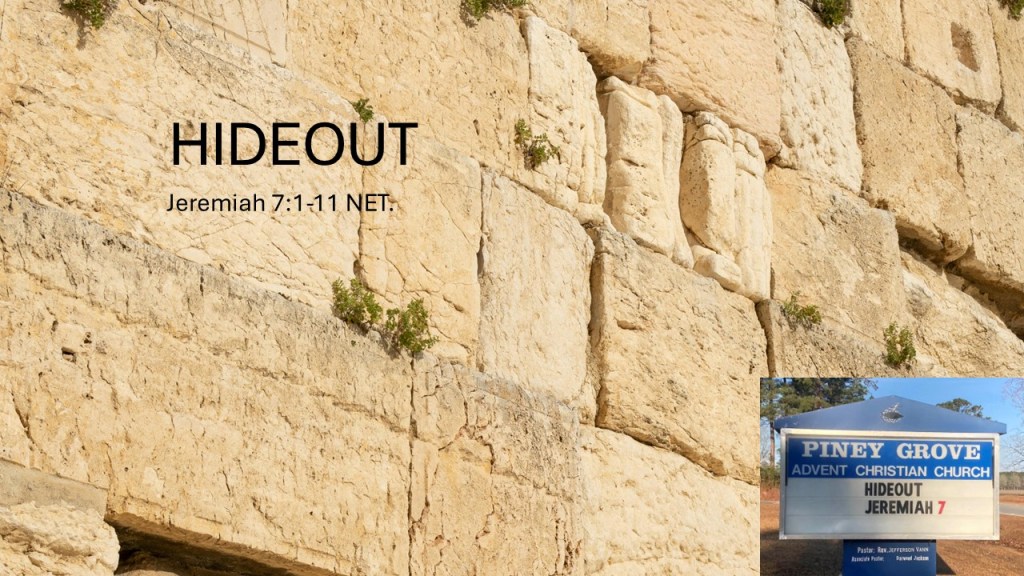
1 The LORD said to Jeremiah: 2 “Stand in the gate of the LORD’s temple and proclaim this message: ‘Listen, all you people of Judah who have passed through these gates to worship the LORD. Hear what the LORD has to say. 3 The LORD God of Israel who rules over all says: Change the way you have been living and do what is right. If you do, I will allow you to continue to live in this land. 4 Stop putting your confidence in the false belief that says, “We are safe! The temple of the LORD is here! The temple of the LORD is here! The temple of the LORD is here!” 5 You must change the way you have been living and do what is right. You must treat one another fairly. 6 Stop oppressing foreigners who live in your land, children who have lost their fathers, and women who have lost their husbands. Stop killing innocent people in this land. Stop paying allegiance to other gods. That will only bring about your ruin. 7 If you stop doing these things, I will allow you to continue to live in this land which I gave to your ancestors as a lasting possession. 8 “‘But just look at you! You are putting your confidence in a false belief that will not deliver you. 9 You steal. You murder. You commit adultery. You lie when you swear on oath. You sacrifice to the god Baal. You pay allegiance to other gods whom you have not previously known. 10 Then you come and stand in my presence in this temple I have claimed as my own and say, “We are safe!” You think you are so safe that you go on doing all those hateful sins! 11 Do you think this temple I have claimed as my own is to be a hideout for robbers? You had better take note! I have seen for myself what you have done! says the LORD.
We are now in the 24th book of the Bible. I want to congratulate y’all for staying with me through this adventure. We must spend some quality time in the Old Testament. One evangelist I used to watch on television said that the trouble with some people is that they don’t use the whole sword. They have the handle but not the blade. The handle is the New Testament, and many are familiar with it. But some of the most powerful truths the New Testament authors knew are found in the Old Testament. It is the blade of the sword.
Jeremiah is classified as a major prophet. That doesn’t mean his teachings are more important than those of the minor prophets. It just means he was more prolific. He wrote more. Probably, when people look back on my ministry, they will say the same thing. They might say I wasn’t very influential, but I sure wrote a lot. Well, I identify with Jeremiah, and not just because I write a lot. He was called the weeping prophet. He suffered much during his ministry. He paid the price for standing up for God and his word. His life was not easy, nor was his ministry. His message was not peace and prosperity.
I think it is ironic that some people who hold to the prosperity gospel use a verse in Jeremiah as their life verse. Jeremiah 29:11 says, “For I know what I have planned for you,’ says the LORD. ‘I have plans to prosper you, not to harm you. I have plans to give you a future filled with hope.” People think that if they keep quoting that verse and believing its words that they will eventually succeed financially and improve their health. But Jeremiah 29 is not about getting rich and healthy. It’s about turning back to God. All of Jeremiah is about that. The prophet Jeremiah was called to proclaim God’s word to a people who had already turned their backs on him.
A Sermon at the Gate (2).
The LORD told Jeremiah to preach a sermon on his behalf. He didn’t ask him to stand at a pulpit in a church building. He told him to go to the gate of the temple in Jerusalem. This was a significant venue. Everyone who was committed to the temple and its religious rituals would frequent that gate. They would have the opportunity to hear what Jeremiah was saying. He probably preached this same sermon many times – perhaps over several days. We know, for example, that Jeremiah preached a similar message, and that was recorded in chapter 26. So, people who might not have been paying attention one day would hear the rerun the next. The words would eventually become embedded in the minds of these listeners. They would find themselves quoting the crazy prophet in their conversations.
He was obnoxious. He was confused. He was too negative. He was many things. People hated him. They hated his message. They tried to get rid of him by throwing him into a mud pit. But thousands of years later, Jeremiah is still shouting his message at the temple gate. It is still relevant. It is still significant. It still speaks to people who are outwardly religious but struggle to live out their faith. Jeremiah spoke to people who had substituted ritual for reality. They regularly worshipped God at the temple, but their lifestyle had not changed as God required.
A Misplaced Faith (4).
God tells the crowds entering the temple to stop placing their confidence in the false faith – faith in the temple itself. They cry out, “We are safe! The temple of the LORD is here! The temple of the LORD is here! The temple of the LORD is here!” They see the temple as a magical place to hide from the cares of the world. They see it as a place they can run to on a regular basis, and just by going there, the ugliness and corruption of the city will not cling to them. They think that as long as they practice the temple rituals and enter the temple courts regularly, the temple will protect the nation.
Later in this chapter, Jeremiah will point out the danger of misplaced faith. He will remind them that before the temple existed, there was the tabernacle. One of the places where the tabernacle resided was called Shiloh. Jeremiah invited the inhabitants of Jerusalem to go on a hike and visit Shiloh. He told them to go to the place in Shiloh where he allowed himself to be worshiped in the early days. He wanted them to see what he did to Shiloh because of the wicked things his people, Israel, did. God made Shiloh a desolate place. Its inhabitants had worshipped the place rather than the God it was supposed to represent. As a result, God turned Shiloh into a desolate place. When the place becomes more important than God, God afflicts it with desolation.
Fast-forward to Jeremiah’s time, and we now see God saying that what he did to Shiloh he is prepared to do to the temple in Jerusalem. God says he will destroy this temple, which he had claimed as my own, the temple they trust to protect themselves. He will destroy this place he gave to them and their ancestors, just as he destroyed Shiloh. And he will drive them out of his sight, just as he drove out their relatives, the people of Israel.
It is wonderful to have a place where people can come to seek God’s face. It is a blessing to have a place where our relationship with God can be nurtured and made a priority. Yet there is always a danger that this incredible place might evolve into something evil. When God’s place takes the place of God himself, that place risks becoming a hideout for robbers.
That is what Jeremiah proclaimed about the Jerusalem temple in his day. It had become not a place of spiritual renewal and nurture. Instead, it had become a hideout where people could rest, then go back out to commit more crimes.
A Call to Repentance (3,5).
God’s purpose for his temple had not changed. But the people had created a new purpose for that place. The place had not changed, but the people had. So God demanded that they change back. He wanted them to repent.
However, even as I use that word, I need to define it because people seldom use ‘repent’ nowadays, and when they do, they often think it means only admitting their sins. Admitting you are a sinner is part of what it means to repent. Trusting in God’s grace to forgive your sins on the basis of the blood of Christ is part of repentance as well. But Jeremiah did not merely ask his listeners to admit that they were sinning. Through the prophet, God commanded them to change their ways.
The Hebrew verb Jeremiah used for “change” was יָטַב. It is related to the word טוֹב, which means “good.” The verb means to make something good or right, or beautiful. Jeremiah used it to describe the process of repenting. It means turning away from the bad, wrong, and ugly things in one’s life and exchanging them for good, right, and beautiful things. Instead of hiding behind a veneer of religious propriety, Jeremiah wanted his people to turn away from their sins and seek a genuine relationship with God, as evidenced by their good behavior.
Jeremiah knew this was a nation of hypocrites. He could not leave his message there because the people had convinced themselves they were not doing anything wrong. So Jeremiah had to list the crimes the people were committing to show them that he knew what they were hiding. Here is the list:
They were not treating one another fairly (5). Their courts and justice system had become corrupt and were used to exploit people.
They were taking advantage of the weak in their society and exploiting them (6). The weak people that Jeremiah identified were foreigners who lived in their land, children who had lost their fathers, and women who had lost their husbands. These people who needed protection the most had become prey to the powerful.
They were killing innocent people (6). That was a general statement, but one of the particular incidents was the sacrifice of innocent children to Molech. This was a detestable practice. It involved taking a new infant and burning it alive. It was an unthinkable sin, but it was practiced because some were teaching that the gods would make you more fertile and prosperous if you did it.
They were paying allegiance to other gods (6). You would think that if a people had become obsessed with the Jerusalem temple and put their trust in it for their safety, they would want nothing to do with other gods. But the devil had convinced them to sin in both ways. They had rejected an authentic relationship with God and had substituted a faith in a building: the temple. But lacking a genuine spiritual life in Yahveh, they sought out other gods.
This list was not exhaustive. There were many more things Jeremiah’s audience was doing wrong. But God, in his mercy, said that if they changed these behaviors, he would allow them to continue living in the land he gave to their ancestors as a lasting possession (7).
History tells us that Jerusalem was destroyed, the temple was lost, and the people were exiled from the land. They did not listen to the prophet, refused to repent, and failed to stop sinning. They put their confidence in the temple and wound up losing both the temple and the land.
Long after that temple was destroyed, Herod built a new one. But the people in Jesus’ time were just as guilty of hypocrisy and a lack of repentance as the people in Jeremiah’s time. That’s why Jesus quoted from Jeremiah 7 when he saw corruption in the temple during his time. He said that God’s house was supposed to be a house of prayer, but they were turning it into a hideout for robbers.[1]
We no longer worship in a temple. We are the temple. We worship in a church building. Yet we can still sin against God by trusting in this physical building instead of the God it is dedicated to. We can still sin against him and against others, as Jeremiah’s people did. We can still run to the building every week and hide our sins by appearing respectable. But God sees everything.
The same God who pleaded with his people to repent in Jeremiah 7 is pleading with us to do the same. He still wants a genuine relationship with us. We can learn to turn from our evil ways to his good ways while we are in this building. Or we can learn to hide our sin well. But we can’t fool all the people all the time, and we can’t fool God ever.
Joshua 18:1 The whole Israelite congregation assembled at Shiloh and set up the tent of meeting there. The land had been subdued before them,
Joshua 18:2 but seven tribes among the Israelites were left who had not divided up their inheritance.
Joshua 18:3 So Joshua asked the Israelites, “How long will you be lax about taking possession of the land that Yahveh, the God of your fathers, gave you?
Joshua 18:4 Appoint for yourselves three men from each tribe, and I will send them out. They are to go and survey the land, write a description of it for their inheritance, and return it to me.
Joshua 18:5 Then they are to divide it into seven portions. Judah is to remain in its territory in the south and Joseph’s family in their territory in the north.
Joshua 18:6 When you have written a description of the seven portions of land and brought it to me, I will cast lots for you here in front of Yahveh our God.
Joshua 18:7 But the Levites among you do not get a portion because their inheritance is the priesthood of Yahveh. Gad, Reuben, and half the tribe of Manasseh have taken their inheritance beyond the Jordan to the east, which Moses Yahveh’s slave gave them.”
Joshua 18:8 As the men prepared to go, Joshua commanded them to write down a description of the land, saying, “Go and survey the land, write a description of it, and return to me. I will then cast lots for you here in Shiloh in front of Yahveh.”
Joshua 18:9 So the men left, went through the land and described it by towns in a document of seven sections. They returned to Joshua at the camp in Shiloh.
Joshua 18:10 Joshua cast lots for them at Shiloh in front of Yahveh where he distributed the land to the Israelites according to their divisions.
Joshua 18:11 The lot came up for the tribe of Benjamin’s descendants by their clans, and their allotted territory lay between Judah’s descendants and Joseph’s descendants.
Joshua 18:12 Their border on the north side began at the Jordan, went up to the slope of Jericho on the north, through the hill country westward, and ended at the wilderness around Beth-aven.
Joshua 18:13 From there, the border went toward Luz, to the southern slope of Luz (that is, Bethel); it then went down by Ataroth-addar, over the hill south of Lower Beth-horon.
Joshua 18:14 On the west side, from the hill facing Beth-horon on the south, the border curved, turning southward, and ended at Kiriath-baal (that is, Kiriath-jearim), a city of the descendants of Judah. This was the west side of their border.
Joshua 18:15 The south side began at the edge of Kiriath-jearim, and the border extended westward; it went to the spring at the Waters of Nephtoah.
Joshua 18:16 The border descended to the foot of the hill that faces Ben Hinnom Valley at the northern end of Rephaim Valley. It ran down Hinnom Valley toward the south Jebusite slope and went down to En-rogel.
Joshua 18:17 It curved northward and went to En-shemesh and on to Geliloth, which is opposite the Ascent of Adummim, and continued down to the Stone of Bohan son of Reuben.
Joshua 18:18 Then it went north to the slope opposite the Arabah and proceeded into the plains.
Joshua 18:19 The border continued to the north slope of Beth-hoglah and ended at the northern bay of the Dead Sea, at the southern end of the Jordan. This was the southern border.
Joshua 18:20 The Jordan formed the border on the east side. According to its surrounding borders, this was the inheritance of Benjamin’s descendants by their clans.
Joshua 18:21 These were the cities of the tribe of Benjamin’s descendants by their clans: Jericho, Beth-hoglah, Emek-keziz,
Joshua 18:22 Beth-arabah, Zemaraim, Bethel,
Joshua 18:23 Avvites, Parah, Ophrah,
Joshua 18:24 Chephar-ammoni, Ophni, and Geba– twelve cities, with their settlements;
Joshua 18:25 Gibeon, Ramah, Beeroth,
Joshua 18:26 Mizpeh, Chephirah, Mozah,
Joshua 18:27 Rekem, Irpeel, Taralah,
Joshua 18:28 Zela, Haeleph, Jebus (that is, Jerusalem), Gibeah, and Kiriath—fourteen cities with their settlements—were the inheritances of Benjamin’s descendants by their clans.
Joshua 18 quotes:
“A narrative summary shifts the scene from Gilgal (Josh. 14:6) to a tribal assembly at Shiloh (Josh. 18:1), ten miles northeast of Bethel. The narrative mentions that the assembly set up the Tent of Meeting at that place. The Tent of Meeting at this time is more important than a permanent structure, for it is the symbol of the presence of God. Only later did the tribes house the ark of the covenant in a more permanent structure at Shiloh (1 Sam. 1-4). The Bible reports that Eli and his sons later ministered in a permanent shrine until the Philistines conquered Shiloh and captured the ark (1 Sam. 4:1-22).”
Harris J. Gordon et al. Joshua Judges Ruth. Hendrickson Publishers ; Paternoster Press 2000. p. 97.
“Chapters 18 and 19 describe the territories west of the Jordan assigned to the remaining seven tribes: Benjamin, Simeon, Zebulun, Issachar, Asher, Naphtali, and Dan.”
Bratcher Robert G and Barclay Moon Newman. A Handbook on the Book of Joshua. United Bible Societies 1992. p. 231.
Photo by Miguel u00c1. Padriu00f1u00e1n on Pexels.com
Joshua 17
Joshua 17:1 This was the allotment for the tribe of Manasseh as Joseph’s firstborn. Gilead and Bashan were given to Machir, the firstborn of Manasseh and the father of Gilead because he was a man of war.
Joshua 17:2 So the allotment was for the rest of Manasseh’s descendants by their clans, for the sons of Abiezer, Helek, Asriel, Shechem, Hepher, and Shemida. These are the male descendants of Manasseh, son of Joseph, by their clans.
Joshua 17:3 Now Zelophehad son of Hepher, son of Gilead, son of Machir, son of Manasseh, had no sons, only daughters. These are the names of his daughters: Mahlah, Noah, Hoglah, Milcah, and Tirzah.
Joshua 17:4 They came in front of the priest Eleazar, Joshua son of Nun, and the leaders, saying, “Yahveh commanded Moses to give us an inheritance along with our male relatives.” So they gave them an inheritance among their father’s brothers, in keeping with Yahveh’s instruction.
Joshua 17:5 As a result, ten tracts fell to Manasseh, besides the land of Gilead and Bashan, which are beyond the Jordan,
Joshua 17:6 because Manasseh’s daughters received an inheritance among his sons. The land of Gilead belonged to the rest of Manasseh’s sons.
Joshua 17:7 The border of Manasseh went from Asher to Michmethath near Shechem. It then went southward toward the inhabitants of En-tappuah.
Joshua 17:8 The region of Tappuah belonged to Manasseh, but Tappuah itself on Manasseh’s border belonged to the descendants of Ephraim.
Joshua 17:9 From there, the border went down to the Brook of Kanah; south of the brook, cities belonged to Ephraim among Manasseh’s cities. Manasseh’s border was on the north side of the brook and ended at the Mediterranean Sea.
Joshua 17:10 Ephraim’s territory was to the south and Manasseh’s to the north, with the Sea as its border. They reached Asher on the north and Issachar on the east.
Joshua 17:11 Beth-shean, Ibleam, and the inhabitants of Dor with their surrounding villages; the inhabitants of En-dor, Taanach, and Megiddo – the three cities of Naphath – with their surrounding villages.
Joshua 17:12 The descendants of Manasseh were not able to possess these cities because the Canaanites were determined to stay in this land.
Joshua 17:13 However, when the Israelites grew stronger, they imposed forced labor on the Canaanites but did not completely drive them out.
Joshua 17:14 Joseph’s descendants said to Joshua, “Why did you give us only one tribal allotment as an inheritance? We have many people because Yahveh has been blessing us greatly.”
Joshua 17:15 “If you have so many people,” Joshua replied to them, “go to the forest and clear an area for yourselves there in the land of the Perizzites and the Rephaim because Ephraim’s hill country is too small for you.”
Joshua 17:16 But the descendants of Joseph said, “The hill country is not enough for us, and all the Canaanites who inhabit the valley area have iron chariots, both at Beth-shean with its surrounding villages and in the Jezreel Valley.”
Joshua 17:17 So Joshua replied to Joseph’s family (that is, Ephraim and Manasseh), “You have many people and great strength. You will not have just one allotment,
Joshua 17:18 because the hill country will be yours also. It is a forest; clear it and its outlying areas will be yours. You can also drive out the Canaanites, even though they have iron chariots and are strong.”
Joshua 17 quotes:
“Canaanites were determined to live in that region: Significant cities remained in the hands of the Canaanites in the Jezreel Valley: Megiddo, Taanach, Ibleam, Endor, and Beth Shan. The fortresses dominated passes that served as entrances to this fertile plain. These cities made it impossible for the tribes to unify their territory (see map 33, Beitzel, The Moody Atlas of Bible Lands, p. 103).”
Harris J. Gordon et al. Joshua Judges Ruth. Hendrickson Publishers ; Paternoster Press 2000. p. 96.
“The information in this section is considerably easier to understand, and the translations do not differ so widely from one another. The section heading West Manasseh may be translated in the same manner suggested for the section heading at 16.5.”
Bratcher Robert G and Barclay Moon Newman. A Handbook on the Book of Joshua. United Bible Societies 1992. p. 221.





 jeffersonvann