Making Disciples

Matthew 28:19-20 “Go therefore and make disciples of all nations, baptizing them in the name of the Father and of the Son and of the Holy Spirit, 20 teaching them to observe all that I have commanded you. And behold, I am with you always, to the end of the age.”

Revelation 7:9-10 “After this I looked, and behold, a great multitude that no one could number, from every nation, from all tribes and peoples and languages, standing before the throne and before the Lamb, clothed in white robes, with palm branches in their hands, 10 and crying out with a loud voice, “Salvation belongs to our God who sits on the throne, and to the Lamb!”
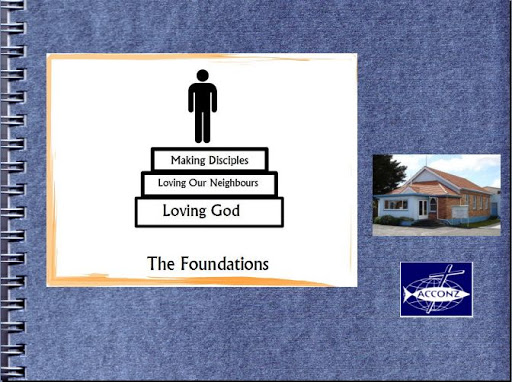
Making Disciples
This message is part of a series of “how-to” messages built around the three most important commands of scripture: the commands that I call the foundations of life and ministry.

The first command is what Jesus called the greatest commandment: that we should love God with all of who we are: our heart and soul and might. This command is found in Deuteronomy 6:5, and is repeated by Jesus in Matthew 22:37-38. This command motivates our relationship with the LORD, and our ministry to Him, including personal and corporate Bible study, prayer, and worship.

The second command is what Jesus called the second greatest commandment, that we should love our neighbors in the same way as we love ourselves. This command motivates our relationship with our neighbors. Neighbors as the Bible defines them include everyone on the planet, especially those that need our love, and those whose path we cross so that we have opportunity to express God’s love to them. This command is found in Leviticus 19:18, and is repeated by Jesus in Matthew 22:39.

The third most important command is what we usually call the Great Commission. It is one of the texts that we read for today’s message:

Matthew 28:19 “… make disciples of all nations,…

The reasons this command is important enough to “make the top three” are as follows:

1.God has always desired to bring all the nations back to himself, and this is the means by which he has chosen to do it.

Bear in mind that the original Greek word for nations signifies an ethnic, cultural or linguistic people group, not simply a political entity. Our churches should look more like soccer teams, which are usually multi-ethnic.

2.Jesus showed us how to obey all three of the greatest commands: he showed us how to love God, how to love our neighbor, and he was the first to make disciples like this.

3.One of the reasons that Jesus promised the Holy Spirit for all believers is that he can empower us to fulfill this commandment.

Luke 24:47-49 “… repentance and forgiveness of sins should be proclaimed in his name to all nations, beginning from Jerusalem. 48 You are witnesses of these things. 49 And behold, I am sending the promise of my Father upon you. But stay in the city until you are clothed with power from on high.”

Acts 1:8 “But you will receive power when the Holy Spirit has come upon you, and you will be my witnesses in Jerusalem and in all Judea and Samaria, and to the end of the earth.”

The book of Acts records how the gospel spread throughout the known world during the first century A.D. The book is called the Acts of the Apostles. It has also been called the Acts of the Holy Spirit. I call it Obedience in Action because it is a record of the early Church’s obedience to this foundational command.

It’s not hard to explain why Jesus’ disciples – who had seen him ascend to heaven – would be so motivated to make disciples among all nations. After all, they didn’t know that the task would still be undone after two millenniums. They probably thought that if they worked as hard as they could to reach the world with the gospel – they would get to see Jesus again in their lifetime.
Nowadays we know better. We know that – chances are – we could spend our last dime, and our last breath on world missions, and still not be any closer to the second coming.

God’s timing is just that way. Peter says that a thousand years is like one day with God (2 Pet. 3:8). That means that if I’m really strong and live to be 100 years old, my entire lifetime is like less than the time we will spend in church today. So, even if we are “waiting for and hastening the coming of the day of God” (2 Peter 3:12) it still will probably not come in our lifetime.

So, why should we bother reaching the world for Christ today? Why should we bother reaching our neighborhood or our nation? Why should we care about those strangers so far away?

Here are four reasons why 21st century believers should keep on making disciples for Christ.

First, Love Motivates us to Reach the Nations for Christ.
Anyone who sincerely seeks to love God, and to love his neighbor, will naturally proceed to put the two together. After all if I really love God, I will want to share him with those who do not know him. And if I really love my neighbor in the same way that I love myself, I will want that neighbor to enjoy all the good things I enjoy, especially my relationship with God which is the source of all those good things.

Also, it is ridiculous to say that we love someone, while we are ignoring their greatest need. Love seeks someone’s welfare. The Good Samaritan expressed love for a Jew, who was a foreigner to him. Jesus told that story because someone wanted to know who was their neighbor. The point of the story was that love does not limit itself geographically, politically, or racially. Love looks for a need and seeks to fill that need. The greatest need that the nations have today is not terrorism or global warming. The greatest need the world has is that billions are living without the hope of eternal life.

Now, just how much do we love the people with the greatest need? A study recently published in Mission Frontiers magazine divides the world’s population into people groups. It found that “Only an estimated 10,000 of the global foreign mission force are working within the 10,000 unreached groups, while 41 times that number of foreign missionaries continue to work within people groups already reached.”1 This tells me that even though we are sending and supporting missionaries, we are still not expressing our love to the neighbors who are so different from us. Like the Levite and the priest in the Good Samaritan story we have our own little communities that we choose to express love to.

But when we choose to only love those who are close at hand, we are not expressing God’s kind of love. Remember that God loved us when we were separated from Him by the curse!

Romans 5:7-8 “For one will scarcely die for a righteous person – though perhaps for a good person one would dare even to die – 8 but God shows his love for us in that while we were still sinners, Christ died for us.”

God’s love is unconditional. If he had decided to only love those who deserve it – those who are like Him – we would all still be lost. True love is like that. It gets out of its comfort zone and invests itself in the beloved. When Jesus gave the Great Commission to his Church, he assumed that we would invest ourselves in the nations. That is messy, because it involves going to strange places, and learning to live in strange cultures, adapting to strange cultures, and loving strange people incarnationally, the way Jesus did.

One of the best complements that I received when I was leaving the Philippines came from one of my former students, who is now a pastor. He simply said, “thank you for your investment.” That meant a lot to me, because I know he is sincere in thanking me for caring enough to spend the last thirteen years preparing him and others like him to serve the Lord. He recognized that he was a different person because of the investment of the faculty of Oro Bible College.

True love dares to believe that time, efforts, and resources invested in the lives of others is worth it. World evangelism and discipleship are manifestations of God’s love for the nations. God gives us the opportunity to love the nations that he loves. He allows us to love the world in the same way that he did. He loved the world and sent his Son to prove it. In the same way, we can go, or send, or support missionaries through prayer and money to manifest his love to the nations.

Secondly, Obedience Demands that we Evangelize and Instruct the Nations.

There is only one command in the Great Commission: MAKE DISCIPLES. But there are two specific means by which we carry out that command. In other words, obeying the Great Commission requires that we accomplish two specific tasks. If we accomplish neither of those tasks, we will not make disciples. We will have not been obedient at all. If we only accomplish one of the tasks, we have not made disciples. We will have not yet been completely obedient.

Matthew 28:19 “Go therefore and of all nations, baptizing them in the name of the Father and of the Son and of the Holy Spirit,”

Circle the words “make disciples.” That is the command, the imperative case in Greek. Now underline the word “baptizing” in verse 19. That is what is called an adverbial participle of means in Greek. In other words, that is one of the means by which the persons commanded (that’s us) can obey the command.

But what does it mean to baptize? There was only one person in the New Testament called the Baptizer. His name was John. He led the people of Israel into a new and authentic relationship with God. The sign of that new relationship was baptism. The Israelites repented and turned to God, and testified to that new relationship with God by being baptized in water.

John was doing the work of an evangelist. The role of baptizing in obedience to the Great Commission to MAKE DISCIPLES is winning people to Christ – making converts. Therefore obedience demands that we evangelize the lost in every nation. God accomplished that for the Israelites by sending John to lead his own people back to himself. Likewise, we can be obedient to the Great Commission by sending people – not just books, or money to specifically target the lost with the gospel of salvation.

But that is not all there is to obeying the Great Commission.

Matthew 28:20 “teaching them to observe all that I have commanded you. And behold, I am with you always, to the end of the age.”

Underline the word “teaching.” That is another adverbial participle of means. It is the second stage in the disciple-making process. If we do not teach people to obey the commands of Christ, we have not discipled them. It is not enough to make converts -people who want to do God’s will. We must teach them how, because being a disciple is doing God’s will.

A few years ago, I did a Bible study on all the commands of Christ. I found hundreds of commands, and all of them are just as relevant today as they were when Jesus first commanded them. I also found that many of those very things that Jesus commanded are seldom even mentioned in our pulpits today. I was challenged to focus my teaching on the things that Jesus focused on. You see, it is not just teaching in general that Jesus commanded. He did not say “teach them anything you want,” or “teach them whatever you think they need.” He commanded us to keep teaching the things that he had taught his disciples.

So, obeying the Great Commission is not over when we have planted churches and established church conferences in the nations of the world. We must ensure that those new converts and churches are firmly grounded in God’s word, and equipped to continue the disciple-making process themselves. That is where Bible colleges, like OBC, and other training programs come in. They can be tools by which we finish the task, and train the next generation to be obedient to the whole Great Commission.

Thirdly, Victory is Assured because Missions is God’s Will.

I draw your attention now to today’s second passage, from Revelation 7.

Revelation 7:9-10 “After this I looked, and behold, a great multitude that no one could number, from every nation, from all tribes and peoples and languages, standing before the throne and before the Lamb, clothed in white robes, with palm branches in their hands, 10 and crying out with a loud voice, “Salvation belongs to our God who sits on the throne, and to the Lamb!”

The apostle John sees a vision of the end result of the Great Commission. This great multitude which no one can number is all believers of all time. If you are a disciple of Christ, you are in the picture. But it is not just you, it’s your children and grandchildren, if they are in the Lord.

It is important to know why Jesus revealed this picture to John. It is like the answers in the back of the textbook. It’s good to know that there are answers in the back of the book, otherwise we might get overwhelmed with the problem. If we get stumped, we can always check the answer key in the back.

Here was the problem for John. Earlier in the vision he had seen 144,000 Jews. I believe these were the Jews who came to Christ at Pentecost and the generations that followed them in obeying the Great Commission up until the time when John received the vision. Many of them gave their lives for the gospel. That was the problem. John’s vision was encouragement for those still struggling to obey Christ’s Great Commission. It let them know that God’s plan was being, and was going to be fulfilled.

If you want to be on the winning team, get on the Great Commission team, because victory is certain. When we invest ourselves in doing God’s will, his victory is ours.

Finally, Every Christian should be Involved in the Task of World Missions.

Jesus gave the Great Commission to the eleven, who at that time represented every disciple he had. I believe he did it that way so we could not rely on the professional clergy to do the task of discipling for us. Don’t get me wrong: I believe in professional clergy. In fact, I am one. But a more biblical term for us would be equipping ministry.

Ephesians 4:11-12 “And he gave the apostles, the prophets, the evangelists, the pastors and teachers, 12 to equip the saints for the work of ministry”

The reason for the professional clergy is to train all the saints for the work of ministry. Ministry is the work of all the saints. To put it in Great Commission terms, the equipping ministry trains the evangelists and the teachers. The church is the venue for that training. The goal is to make disciples of all nations.

We can divide the work of ministry into the three categories as well. There are ministries which are primarily ministries of love to the Lord: devotions, bible study, praise and thanksgiving prayer, meditation on the word, memorizing the bible, and personal and corporate worship. There are ministries which are primarily ministries to our neighbors: helping the needy, intercessory and supplication prayer, visiting and assisting the sick and shut-in, giving to various needs, emergency relief work, and some kinds of missions work, for example. There are ministries which are primarily discipling ministries: Bible studies, evangelistic events, outreaches to specific groups, and short and long term missions, to name a few.

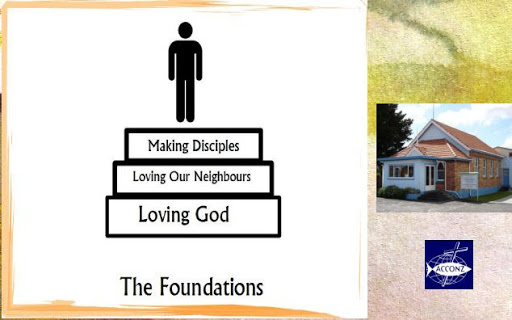
Remember the three great commandments: love God, love your neighbor, and make disciples. God blesses those whose foundations are sure: who put the first things first.

Loving Our Neighbours

I have had a little opportunity to “spy” on this country in the past few weeks. One of the things I have found out through the internet is that some New Zealanders are not happy with the flag. I think the chief complaint is that the flag is not distinctive enough, because it is similar to so many other flags. Some of the suggested alternatives feature the color black prominently, or a large while stripe to represent a cloud, or a kiwi bird, or a silver fern, or some maori design.

I’m not suggesting that you should change your flag, but I can understand the need to identify yourselves clearly among the nations of the world. The Bible says that the way Christians identify themselves is by obeying Christ’s commands:

NIV 1 John 2:3 We know that we have come to know him if we obey his commands.

This message is part of a series of “how-to” messages built around the three most important commands of scripture: the commands that I call the foundations of life and ministry.

The first command is what Jesus called the greatest commandment: that we should love God with all of who we are: our heart and soul and might. This command is found in Deuteronomy 6:5.

Deuteronomy 6:5 You shall love the LORD your God with all your heart and with all your soul and with all your might.

The command is repeated by Jesus in Matthew 22:37-38.

Matthew 22:37-38 And he said to him, “You shall love the Lord your God with all your heart and with all your soul and with all your mind. This is the great and first commandment.

This command motivates our relationship with the LORD, and our ministry to Him, including personal and corporate Bible study, prayer, and worship.

The second command is what Jesus called the second greatest commandment, that we should love our neighbors in the same way as we love ourselves. This command motivates our relationship with our neighbors. Neighbors as the Bible defines them include everyone on the planet, especially those that need our love, and those whose path we cross so that we have opportunity to express God’s love to them. This command is found in Leviticus 19:18.

Leviticus 19:18 You shall not take vengeance or bear a grudge against the sons of your own people, but you shall love your neighbor as yourself: I am the LORD.

It is repeated by Jesus in Matthew 22:39.

Matthew 22:39 And a second is like it: You shall love your neighbor as yourself.

But the best place to study just what it means to love our neighbors is the story Jesus told to answer that question. It is the parable of the Good Samaritan.

Luke 10:30-37 ESV
30 Jesus replied, “A man was going down from Jerusalem to Jericho, and he fell among robbers, who stripped him and beat him and departed, leaving him half dead. 31 Now by chance a priest was going down that road, and when he saw him he passed by on the other side. 32 So likewise a Levite, when he came to the place and saw him, passed by on the other side. 33 But a Samaritan, as he journeyed, came to where he was, and when he saw him, he had compassion. 34 He went to him and bound up his wounds, pouring on oil and wine. Then he set him on his own animal and brought him to an inn and took care of him. 35 And the next day he took out two denarii and gave them to the innkeeper, saying, ‘Take care of him, and whatever more you spend, I will repay you when I come back.’ 36 Which of these three, do you think, proved to be a neighbor to the man who fell among the robbers?” 37 He said, “The one who showed him mercy.” And Jesus said to him, “You go, and do likewise.”

Excuses That Keep us from Loving our Neighbors.

The first thing that came to my mind when I studied this passage is how unusual this story is. It seems that Jesus went out of his way to make this story as unbelievable as possible. The main character in the story is a Samaritan. In Jesus’ day, the Samaritans were not known for being loving. The Jews avoided the Samaritans, and the Samaritans probably avoided the Jews in return. If anybody in the story were expected to be compassionate to the hurting, it would have been the priest or the Levite. So one of the things that this story communicates is that there are a number of excuses that can prevent us from loving our neighbors.

First, there is the excuse of jurisdiction. Imagine being in a restaurant, ordering a nice bowl of soup, then the waiter leaves before you realize that you haven’t got a spoon. After several minutes of waiting for your waiter to reappear, you finally spot another waiter. You ask for a spoon, but the waiter just says, “Sorry, not my table.”

I call this the excuse of jurisdiction because, when it comes to acts of love and compassion, we often create artificial limits. We narrow down the places where and the people to whom we choose to manifest God’s love. I read a book many years ago called “The Pursuit of Loneliness” which claimed that most of us spend our lives separating ourselves from other people.

It would have been very easy for the Samaritan to use the “not my table” excuse. After all, he was literally a stranger. The road from Jerusalem to Jericho is not in Samaria – not even close. Surely someone else would have an easier time giving the wounded man medical help.

The reason Jesus told this story in the first place is that somebody was trying to use the excuse of jurisdiction to get away with being unloving. Luke tells us that a lawyer, ‘desiring to justify himself, said to Jesus, “And who is my neighbor?” ‘ (10:29). He probably thought that this question would put Jesus in his place. After all, we can’t be expected to extend a helping hand to everyone, can we? Jesus made it clear that true love finds a need and fills it… it looks outside the box.

The second excuse the Samaritan could have used is the excuse of ethnic priority. Jesus clearly implied that the man who had been robbed and beaten was not a Samaritan. The Samaritan could have looked at the victim, assessed that he was in need, but turned away because he was “not one of my people.” He might even have reasoned with himself that if he wasted his resources and time on this stranger, what if there’s a wounded Samaritan just a few minutes up the road?

But Jesus’ story is just that more significant because the Samaritan chose to love someone who was different. His love was based on something inside of him, not something he saw in the object of his compassion. In that respect, it mirrors God’s love, because he loved us and sent his Son to die for us while we did nothing to deserve that love.

That is the kind of love that Jesus commands us to give – an impartial love that seeks out those who need it the most, whoever they are. James said “If you really fulfill the royal law according to the Scripture, “You shall love your neighbor as yourself,” you are doing well. But if you show partiality, you are committing sin and are convicted by the law as transgressors” (James 2:8-9). If our love is limited to “people like us” it does not even qualify as love. It is sin!

The third excuse the Samaritan could have used is the excuse of busyness. He could have looked at the need before him, and then at his watch (ok, I know he didn’t have a watch, but you know what I mean), and then walked away.

It is very easy to let your own busyness trap you into a routine that effectively keeps you from loving your neighbors. The priest and Levite were both probably guilty of this. The impression we get in the story is that both of these guys had some important “ministries” that would have been delayed if they stopped to render aid to the mugging victim. Or, maybe they were coming home from a long hard day at the office in Jerusalem. Either way, each man assessed that the problem before him was “not worth my time.”

Committed Christians can really get caught up in this trap as well. We want to do all we can for the Lord, and so often can fill up our schedule to such an extent that when these opportunities present themselves, we cannot seem to make room for them. Churches struggle to keep a balance between all three foundational commandments, and sometimes lose sight of this one entirely. When that happens, the churches might have great worship, devotional, and evangelism programs, but fail to reach out to the needy all around them.

The only way to avoid the busyness excuse is to make sure acts of love and compassion are built into our daily business. I’ll talk more about how to do that in a few minutes.

A fourth excuse the Samaritan could have used is the excuse of selfishness. Loving that mugging victim cost the Samaritan not only time, but also money. He would have been tempted to say, “not my stuff.” I can hear him say to himself, “Look, I’m away from home; I do not have many provisions to begin with, and if I use them up on this stranger, what’s going to happen if I need them?

We Christians are also tempted to use this excuse, but we label it stewardship. We are more comfortable thinking that our money is being reserved for “the Lord’s work.” But often that is just an excuse for holding on to what’s in our wallets.

Principles that Enable us to Love our Neighbors.

Let me briefly share a few principles implied in this text. I’m pretty sure that keeping these principles in mind will enable us as individuals and as churches to love our neighbors like this Samaritan did.

First, the principle of providence. Of all the characters in the story, it was only the Samaritan who saw the mugging victim as an opportunity instead of a liability. He was not a bystander that day. He was an emergency medical technician, and his donkey was an ambulance.

We Christians operate under the principle of providence when they see life’s trajedies and unfortunate events as opportunities for us to manifest God’s love.

Secondly, the principle of preparation. Of all the characters in the story, it was only the Samaritan who was prepared to treat and transport the man who had the need for it.

We Christians need to look for ways to love those who are being overlooked. We need to think outside the box of our own needs and plans, and anticipate the needs of others.

Our churches need to develop programs that reach out to those people that our society has forgotten. To make sure that acts of love and compassion are built into our daily business, we need to plan for them. That means providing for means of loving our neighbors when we set our annual budgets, and when we hire our church workers.

Thirdly, the principle of partnership. Of all the characters in the story, it was only the Samaritan who worked together with someone else to make sure the hurting man had a chance to recover. The innkeeper became a partner in the Samaritan’s act of kindness.

Like him, we Christians should seek ways to network with those who can help us to manifest God’s love. Those potential partners are everywhere: the government, non-government organizations, charities, hospitals, rehab centers, … everywhere that somebody is doing something for someone else.

ACST 12. The Gift

The apostle Peter said that “God has given us everything we need for living a godly life” (2 Peter 1:3 NLT). One of those gifts is the Bible itself. Unfortunately our need for God’s word is so significant that we often ignore it, and take it for granted. Like the air that we breathe, we take God’s gift of his word for granted, assuming its existence, but never contemplating its importance.

Since God is the source of the truth we find in the Bible, loyalty to God demands loyalty to that truth. Since God’s word comes from him, it is the standard by which we judge all truth claims, and the tool with which the Holy Spirit transforms our lives. It is the ultimate authority because it expresses God’s will as nothing else can. It sheds light on today’s path as well as yesterday’s. God has given us sure knowledge of himself through his word, and that knowledge is sufficient for our present needs. Although we do not yet understand everything about our present standing and future hope, what we do understand is enough to motivate our trust in him, and to guide us in obeying him.

There are obstacles to that kind of trust, and those obstacles should be avoided. Identifying how Satan tries to undermine that trust can help believers to fully appreciate the gift we have from God in his word, and avoid taking it for granted.

Science and the Bible

God created science, because he created the natural world and created within humanity the desire to understand its mysteries. The word of God accurately interpreted can never oppose reality. Likewise, true science (which is intended to reflect that reality) can never be in opposition to what God has revealed in his word.

However, much of what passes as scientific knowledge today is neither scientific nor knowledge. It is a conspiracy which starts from the unproven presupposition that all that is can be explained without God, and then devises unprovable theories of origin, and defends them without the slightest glance toward all the evidence for intelligent design. It persecutes free thinkers who dare to challenge those basic assumptions which drive it, forbidding them access to jobs in the field of scientific research or education.

Much of the blame for this state of intellectual blindness is put on Charles Darwin, and his theory of evolution. Darwin posited that all species originated from the same source, and came to that conclusion from the similarities he observed among the species. In his day, Darwin was effectively refuted by the scientific community, which answered his presupposition by pointing out that similarities among the species is to be expected if all of the species had the same Creator, who used the same processes and building blocks to create them.

The real cause for the conspiracy against intelligent design is not a proven scientific theory, but an unprovable religious philosophy: secularism. It was the secularists who attached themselves to Darwin’s theory, and applied it in a number of different areas of scientific pursuit.1 Secularism has taken the scientific and education fields hostage for its own purpose. That purpose is to produce a social atmosphere void of religious norms.

One of the religious norms that secularism has fought strenuously is that of biblical authority. By removing the biblical concept of creation as an acceptable concept of origins, the secularists have effectively removed the idea of God from its connection with true knowledge itself. Theistic theories are branded as taboo, and those who espouse them are ostracized.

Many individual scientists and educators, however, have come to Christ, because they realize that God’s word is true, and have put their faith in what that word says about Jesus’ death, and God’s promises. This has led to a somewhat dualistic existence, since the rules of their religious life are at odds with the rules imposed upon them by their “secular” lives.

This situation is truly intolerable, and it cannot last forever. The scientific and education communities must eventually own up to their being held hostage by an unproven religious philosophy. Until that happens, at least the religious community must hold fast to fiat creationism. The so-called theistic evolution perspective is a compromise that does no good for the Church, and only encourages secularists, whose goal is not the truth, but a social structure free from religion.

The Bible is a gift given to humanity in order that we accomplish God’s will for us. Attempts (like those made by the secularists) to lessen the importance of the Bible should be fought militantly. Unfortunately, the evangelical church in the 21st century has failed to engage in this battle. One of the results of this failure is that our view of the Bible has suffered. Although we call the Bible God’s word, and insist that it is reliable, what the world hears is “the Bible is true except for when it is not.”

Supernatural Experience and the Bible

Another major attack on the believer’s view of the Bible has been an elevation of the role of supernatural experience. Since God, angels and demons exist, there will always be supernatural experiences, some of them orchestrated from heaven, others from a different place. Historically, these supernatural experiences have increased our appreciation of the Bible, because they affirm that the same God who spoke through such experiences in the past (as recorded in the Bible) is still working today. Unfortunately, Satan loves to abuse a good thing. He has encouraged believers to put too much trust in their own experiences, rather than to rely on God’s truth. This is not new. The Israelite society that conquered the promised land under Joshua faced a similar situation. After successfully possessing the land under the power of God, they soon fell under the influence of those nations that they had defeated. Part of the reason for that is that they intermingled with those very cultures that God had sent them to displace. They became enamored with those people, and listened to their stories of religious encounters at the Asherah poles and oak trees. Soon they began experimenting with the rituals themselves, and had similar experiences. It was not long before the law of Moses was a dim memory, and the real religious life of the Israelites was of pagan origin. The result, as the book of Judges demonstrates, is that the Israelites were soon controlled by the very cultures which God had commanded them to displace.

Whenever a society places more emphasis on supernatural experience than God’s revelation in his word, it opens itself up to demonic deception. Satan and his demons look for ways to distract people from the truth of the Bible. They use dreams and visions, and pretend to be lost loved ones with messages from “the other side.” The demons can be very convincing in this role, since they would have witnessed these loved ones while they were still alive. Satan does not have the power to awaken anyone from the dead, but he does have the ability to deceive those who believe it is possible.

A biblical story which shows this strategy the devil uses is that of Saul and the medium at En-dor. This story is found in 1 Samuel 28:7-20 (ESV).

7 Then Saul said to his servants, “Seek out for me a woman who is a medium, that I may go to her and inquire of her.” And his servants said to him, “Behold, there is a medium at En-dor.” 8 So Saul disguised himself and put on other garments and went, he and two men with him. And they came to the woman by night. And he said, “Divine for me by a spirit and bring up for me whomever I shall name to you.” 9 The woman said to him, “Surely you know what Saul has done, how he has cut off the mediums and the necromancers from the land. Why then are you laying a trap for my life to bring about my death?” 10 But Saul swore to her by the LORD, “As the LORD lives, no punishment shall come upon you for this thing.” 11 Then the woman said, “Whom shall I bring up for you?” He said, “Bring up Samuel for me.” 12 When the woman saw Samuel, she cried out with a loud voice. And the woman said to Saul, “Why have you deceived me? You are Saul.” 13 The king said to her, “Do not be afraid. What do you see?” And the woman said to Saul, “I see a god coming up out of the earth.” 14 He said to her, “What is his appearance?” And she said, “An old man is coming up, and he is wrapped in a robe.” And Saul knew that it was Samuel, and he bowed with his face to the ground and paid homage. 15 Then Samuel said to Saul, “Why have you disturbed me by bringing me up?” Saul answered, “I am in great distress, for the Philistines are warring against me, and God has turned away from me and answers me no more, either by prophets or by dreams. Therefore I have summoned you to tell me what I shall do.” 16 And Samuel said, “Why then do you ask me, since the LORD has turned from you and become your enemy? 17 The LORD has done to you as he spoke by me, for the LORD has torn the kingdom out of your hand and given it to your neighbor, David. 18 Because you did not obey the voice of the LORD and did not carry out his fierce wrath against Amalek, therefore the LORD has done this thing to you this day. 19 Moreover, the LORD will give Israel also with you into the hand of the Philistines, and tomorrow you and your sons shall be with me. The LORD will give the army of Israel also into the hand of the Philistines.” 20 Then Saul fell at once full length on the ground, filled with fear because of the words of Samuel. And there was no strength in him, for he had eaten nothing all day and all night.

This passage is not intended to justify what Saul did. It was obvious that Saul was acting outside the boundaries of God’s law, since he himself had commanded that all such mediums be destroyed (9). But God appears to have used his desperate attempt to rescue himself as another means of communicating with him, to announce his judgment for disobedience, and confirm that the kingdom belonged to David. Neither is this story intended to legitimize the function of the medium. Actually, the medium herself expressed surprise when she discovered that she could see Samuel (12). She expected a demon pretending to be Samuel. Whether this was actually Samuel resurrected (awakened) by God for this occasion, or whether it was merely a vision that God gave, this whole story reaffirms the principle that God’s people are to look to Him and his word for guidance, not to supernatural experiences.

Ecclesiastical Authority and the Bible

If Satan cannot dilute our trust in God’s words with science or the supernatural, he will attempt to replace those words with our traditional understanding of them. Because the Church has theologized in the past, she has developed theological traditions. These are not wrong in themselves – in fact, they prove quite helpful. The problem is when “tradition in effect becomes a lens through which the written word is interpreted. Tradition therefore stands as the highest of all authorities, because it renders the only authoritative interpretation of the sacred writings.”2 When these theological traditions are defended by ecclesiastical authorities, then the authorities themselves wind up replacing God’s word.

Jesus encountered this problem with the Pharisees and scribes. He accused them of leaving God’s word and holding to the traditions of men (Mark 7:8). When God gave his word to the Israelites through Moses, he specifically commanded them not to add to it or take away from it (Deut. 12:32). Success and prosperity depended upon them knowing and obeying God’s written revelation, and not turning from it to the right hand or the left (Joshua 1:7-8).

However, it is so easy for those who are part of an ecclesiastical tradition to place undue authority on that tradition. Like Paul, who commended his churches for maintaining the traditions that he had set up for them (1 Cor. 11:12; 2 Thess. 2:15; 3:6), we are right to resist change unless it is clearly called for by scripture. But our commitment to sola scriptura requires that we constantly compare our traditional understandings with God’s word, and it must be the standard by which we judge them.

Being Christian About the Bible

To possess and maintain a proper view of the Bible, believers should look to Jesus himself for an example. Our bibliology (view of God’s revelation through scripture) must be “…bound up with our loyalty to Jesus Christ. If He is our Teacher and our Lord, we have no liberty to disagree with him. Our view of Scripture must be His.”3 The following texts demonstrate that Jesus viewed the Bible as a divinely inspired text which could be relied upon because it was free from error and falsehood:

Matthew 22:29 NET “Jesus answered them, “You are deceived, because you don’t know the scriptures or the power of God.”

Luke 22:37 NET “For I tell you that this scripture must be fulfilled in me, ‘And he was counted with the transgressors.’ For what is written about me is being fulfilled.”

Matthew 4:4 NET “But he answered, “It is written, ‘Man does not live by bread alone, but by every word that comes from the mouth of God.’”

John 10:35 NET “…and the scripture cannot be broken”

Nor did Jesus limit his view of the reliability of the Bible. In fact, it was the Old Testament scripture to which he was referring when he made his statements defending the Bible’s veracity.

Those who look to the Bible itself (like Jesus did) for their view of the Bible will find that “every word of God proves true” (Prov. 30:5). They will find that the biblical authors unashamedly proclaimed that what they were saying and writing were God’s words and as reliable as He is. The phrase “Thus says the LORD,” for example, appears in the Old Testament 416 times. The phrase “…declares the LORD” appears 361 times. Therefore “…any attempt to find in the Bible some encouragement to restrict the areas in which Scripture is reliable and truthful will surely fail, for the implication of literally hundreds of verses is that God’s word is reliable in every way.”4

It is to this word from God, this Scripture, this Bible, that we turn to discover the answers to the questions we have today about God, humanity, sin, Christ, salvation, the Church, and the future. We will not ignore the voices of science, supernatural experience, or ecclesiastical tradition. But in the final analysis it will be in God’s message itself that we place our trust. It is that message that we will proclaim to this and the next generation.

___________________________________

1 Once the theory of evolution suggested that long periods of time were all that was necessary to explain the biological universe, similar presuppositions were brought to bear on geological and astronomical questions. These three fields of scientific endeavor have ever since served as the major evidence for evolution. For some arguments against secularist presuppositions, see http://www.creationtips.com/evoluwrong.html;
http://www.straight-talk.net/evolution/arguments.shtml; http://www.frankcaw.com/science.html

2 John MacArthur, “The Sufficiency of the Written Word.” in Don Kistler, ed., Sola Scriptura. (Morgan, PA: Soli Deo Gloria Publications, 1995), 152.

3 John R. W. Stott, You Can Trust The Bible. (Grand Rapids: Discovery House, 1982), 38.

4 Wayne A. Grudem, “Scripture’s Self-Attestation.” in D. A. Carson and John D. Woodbridge, Scripture and Truth. (Grand Rapids: Zondervan, 1983), 58.

Loving God

Psalm 103:1-22 ESV

OF DAVID. Bless the LORD, O my soul, and all that is within me, bless his holy name! 2 Bless the LORD, O my soul, and forget not all his benefits, 3 who forgives all your iniquity, who heals all your diseases, 4 who redeems your life from the pit, who crowns you with steadfast love and mercy, 5 who satisfies you with good so that your youth is renewed like the eagle’s. 6 The LORD works righteousness and justice for all who are oppressed. 7 He made known his ways to Moses, his acts to the people of Israel. 8 The LORD is merciful and gracious, slow to anger and abounding in steadfast love. 9 He will not always chide, nor will he keep his anger forever. 10 He does not deal with us according to our sins, nor repay us according to our iniquities. 11 For as high as the heavens are above the earth, so great is his steadfast love toward those who fear him; 12 as far as the east is from the west, so far does he remove our transgressions from us. 13 As a father shows compassion to his children, so the LORD shows compassion to those who fear him. 14 For he knows our frame; he remembers that we are dust. 15 As for man, his days are like grass; he flourishes like a flower of the field; 16 for the wind passes over it, and it is gone, and its place knows it no more. 17 But the steadfast love of the LORD is from everlasting to everlasting on those who fear him, and his righteousness to children’s children, 18 to those who keep his covenant and remember to do his commandments. 19 The LORD has established his throne in the heavens, and his kingdom rules over all. 20 Bless the LORD, O you his angels, you mighty ones who do his word, obeying the voice of his word! 21 Bless the LORD, all his hosts, his ministers, who do his will! 22 Bless the LORD, all his works, in all places of his dominion. Bless the LORD, O my soul!

This is the first of three messages which I will call The Foundations. These are the foundations for lives of individual Christians, and the foundations of Bible believing Churches as well. My concern is, “After we have come to Christ, and have been born again, how do we live these new lives?” Really, the whole Bible is our source for answering that question, but the answers can all be summed up by three commands: These three commands are what I call the Foundations. I believe if we constantly order our lives around these commands then we will find ourselves living the Christian life successfully, and fulfilling God’s will for us. I also believe that God blesses those who obey him, and that includes churches who obey him as well.

The first Foundation command is the Old Testament command to Love God, which is expressed in Deuteronomy 6:4-5.

Deuteronomy 6:4-5 ESV “Hear, O Israel: The LORD our God, the LORD is one. You shall love the LORD your God with all your heart and with all your soul and with all your might.

When people asked Jesus what was the greatest commandment, he quoted this text.

Loving God is not easy. It is supposed to be, but it is not. You cannot truly love someone you do not know. God is so different from you, that you are going to have to go through a process in order to get to know him. To know him is to love him, but the process of getting to know him is not easy. It will take some disciplined effort. Are you willing to try? Here is what you need to do:

First, Love God by Listing what he has done for you and others (1-7).

A few years ago, Michael Jackson’s sister Janet had a hit song, entitled “What have you done for me lately?” That question can be a little bit intimidating when you are in a relationship. Even the most devoted spouse, or “significant other” might get caught with little evidence to show that he cares. But God is never caught off guard with that question. If we dare to ask it, and seriously look at our lives, we will find that God has done a great deal for us.

Stop every now and then and make a list of all that God has done for you. Another song says “Count your blessings, name them one by one, and it will surprise you what the Lord has done.” But don’t let it just surprise you. Let that evidence of God’s love lead you to love him more and more.

You see, God is a person. He is omnipresent, so we can’t see him like we see other persons, but that does not change the fact that what we do affects him. He doesn’t like it when we ignore him. He does like it when we show our appreciation for him.

When David decided to love God with all that he is, he started by making a list of all his benefits (vs. 2). The English language is not strong enough to convey what David says here. We use the word “benefits” for things like what you get from an insurance policy. I can see an insurance agent spouting off a list of benefits I might get if I took out an auto policy with his company.

But David was not talking about a list of legal responsibilities. The word he used suggests that God has taken a personal interest in him, and has decided to personally bless him with a number of good things because God is good.

We would do well to take a notepad along with us as we go about our daily lives. Just observe and record. What we will find is that there are long lists of expressions of God’s kindness that we never think about on Thanksgiving Day. Like spoiled children, we do not stop to give thanks for the One who gives more than we can ever repay.

Have you ever stooped to thank God when you get home with several bags of groceries? Have you ever stopped to thank God when you’ve just filled your gas tank? When it comes time to talk to the insurance people about renewing your auto policy, have you stopped to thank God that you didn’t have to use it this time? How many times did you pause to thank God for that house full of noisy kids? If you didn’t do that enough, you may regret it when the nest is empty.

Here are the ten specific things that David wrote on his notepad (we see them all in vs. 1-7:

1.Forgiveness for sins,
2.Healing from diseases,
3.A life redeemed from the pit of death,
4.Persistent reminders that God loves him,
5.Numerous times when David did not get what he deserved, but got mercy instead,
6.Provision for his every need,
7.Strength and Renewal from God when he grew tired,
8.Wisdom to change when he needed to become more righteous,
9.Justice when he was wronged by someone else,
10.Knowledge of God’s character and works from his word.

I don’t think it is a coincidence that David listed ten reasons why he loved God. I think he’s showing that God is not being unrealistic when he required him to obey his ten commandments. He’s saying it’s only fair, since God has shown his love by providing all these benefits.

Something within us turns on a light when we start taking God seriously. It is a small, but very important step toward the goal of loving him. It leads to the second step, which is…

Secondly, Love God by Observing what God is Like (8-13).

Did you notice the transition that takes place in this psalm at verse 8? Verses 1-7 talk about what God does, but verse 8 explains what God is like – his character.

Psalm 103:8 The LORD is merciful and gracious, slow to anger and abounding in steadfast love. (ESV)

All those things that David listed in verses 1-7 are what God did for him, but verse 8 explains why God did it. What David is doing here is expressing the fact that his love for God has matured. He has taken his love for God to the next level. While he continues to thank God for all his expressions of divine love, he adds to that praise for who God is – his character.

I want to encourage you to take your thanksgiving to the next level too. I want you to get a grasp of who God is. The song says “Turn your eyes upon Jesus, look full in his wonderful face, and the things of earth will grow strangely dim, in the light of his glory and grace.”

David says four things about God here, and all four of them are definitions of someone who loves. The New Testament tells us that God is love (1 John 4:8,16). Here in the Old Testament, we find the same truth. Notice what David says about the God he is learning to love.

God is merciful. He does not always give us what we deserve, because he loves us. The apostle Paul said that “love is patient”, “bears all things,” and “endures all things” (1 Cor. 13:4,7). That’s how God treats us, because that is who God is. He is merciful.

You remember that long list of every-day gifts that we can thank God for? There is an even longer list of things that we have deserved, that God has not given us. We should be thankful for that as well. Try these prayers on for size!

“Thank you God that you did not allow me to become an addict when I experimented with things that have put others in bondage.”
“Thank you God for keeping me safe when I have casually put my life in danger, and tested your love.”
“Thank you God for giving me friends and loved ones who were willing to put up with my stupidity.”
“Thank you God that you did not give up on me during the years that I resisted your Holy Spirit.”

God is gracious. Grace is the positive where mercy is the negative. God’s mercy holds back the punishments we deserve. Grace gives us blessings we do not deserve. The apostle Paul said that believers are “justified by (God’s) grace as a gift” (Rom. 3:24). He said that God’s promise to us is guaranteed because it rests on his grace, not our works (Rom. 4:16; 11:6). God’s grace is the source of the spiritual gifts that he gives to each member of the body of Christ (Rom. 12:3,6). It was grace that motivated our Lord’s becoming poor like us, so that we could become rich like him (2 Cor. 8:9).

God is slow to anger. The Hebrew original actually says that God has long nostrils, which is an idiom for patience. This actually parallels the attribute of mercy.

God is abounding in steadfast love. This parallels the attribute of grace. The term used in the original Hebrew is the one used most often for grace. I believe it is also the word God had in mind when he made the Hebrews mark their door-posts with the blood of a lamb on the first passover (see Exod. 12:7). He wanted to constantly remind his people that he is a God of grace.

Thirdly, Love God by Vindicating his Love for the World (14-19).

People who are in love enjoy remembering their experiences with the beloved. They also enjoy being with their loved ones and thinking about them, because they appreciate who they are. But true love also manifests a tendency toward jealousy. One of the quickest ways to make an enemy is to criticize someone’s spouse. People in love naturally seek to defend their loved ones.

That is how loving God will affect us as well. God does not need anyone to defend him, but the closer we get to God, the more sensitive we will get to other people’s careless words of blasphemy. We will find ourselves wanting not just to proclaim God’s glory, but to vindicate his reputation against those who blame him for their troubles.

Listen to this version as it translated verses 14-19:

For he knows what we are made of; he realizes we are made of clay. A person’s life is like grass. Like a flower in the field it flourishes, but when the hot wind blows by, it disappears, and one can no longer even spot the place where it once grew. But the LORD continually shows loyal love to his faithful followers, and is faithful to their descendants, to those who keep his covenant, who are careful to obey his commands. The LORD has established his throne in heaven; his kingdom extends over everything (Psalm 103:14-19 NET).

It is as if the psalmist is saying “you just don’t understand God’s perspective. He does love us and care for us, but he’s not limited like we are. If you could just see things from the perspective of eternity and sovereignty, you would see that God is good all the time.”

Learning to love God means staying on his side. It means standing up against the people who want to blame God for all the problems of the world. It means defending him against his enemies because you care about him. We do this not just because we are loyal to a religion, but because we care about God as a person. The more we know him, the more we love him. The more we love him, the more we want others to know him. So we become defensive when people accuse our God of wrongdoing. It becomes personal to us.

Finally, Love God by Expressing your Worship of Him (20-21).

Worship is more than participating in a worship service. In fact, what we are doing today is just practicing worship. True worship takes place 24/7. It has a symbiotic relationship with love: true love worships, and true worship produces love.

Do you know that the Bible has an entire book that is a love song? It’s called “The Song of Songs.” Most of us call it the Song of Solomon. There’s a phrase that appears seven times in that love song. The phrase is “you are beautiful” (1:15,16; 4:1,2; 6:4).

That’s what worship is. It is declaring God’s worth – his worth-ship. David expresses worship by commanding his readers to “bless the Lord.” He starts with the angels, then the hosts, the ministers, then all God’s works, and concludes by encouraging his own soul to bless the Lord.

This message was last preached …

at Takanini Church of Christ, 160 Great South Road, Takanini, Auckland, New Zealand
on March 14th, 2010
by Jefferson Vann