
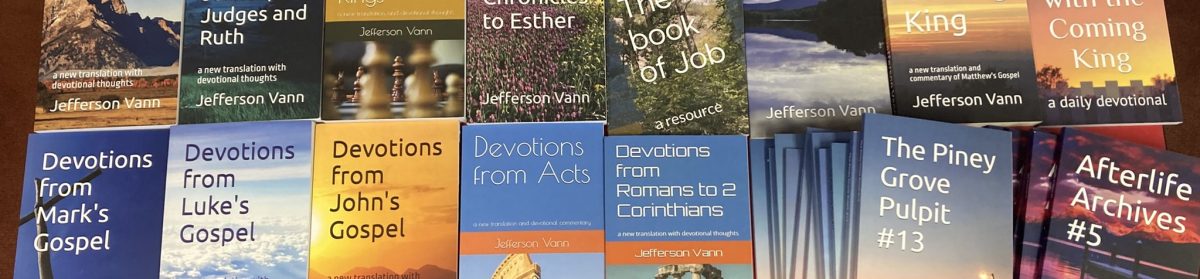
an ad for my current e-books
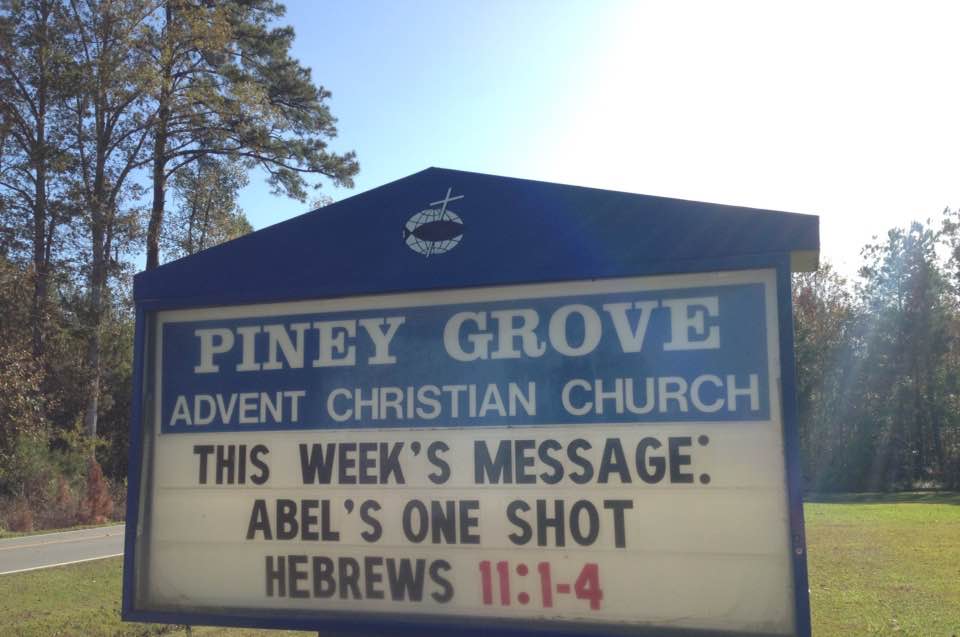 ABEL’S ONE SHOT
“By faith Abel offered to God a better sacrifice than Cain did. By faith he was approved as a righteous man, because God approved his gifts, and even though he is dead, he still speaks through his faith” (Hebrews 11:4 CSB).
The author of Hebrews encourages his fellow Jewish Christians not to draw back into unbelief, but to live their lives by faith. Note the final words of chapter 10:
“So don’t throw away your confidence, which has a great reward. For you need endurance, so that after you have done God’s will, you may receive what was promised. For yet in a very little while,
the Coming One will come and not delay. But my righteous one will live by faith; and if he draws back, I have no pleasure in him. But we are not those who draw back and are destroyed, but those who have faith and are saved” (Hebrews 10:35-39).
It is in that context that he wrote that amazing chapter that we will be studying in this series. It highlights several heroes of the faith, who serve as illustrations of what a life of faith looks like.
Abel is the first in the list, and he is one hero who we know very little about. Besides these four verses, he is mentioned in Genesis:
“The man was intimate with his wife Eve, and she conceived and gave birth to Cain. She said, “I have had a male child with the Lord’s help.” She also gave birth to his brother Abel. Now Abel became a shepherd of flocks, but Cain worked the ground. In the course of time Cain presented some of the land’s produce as an offering to the Lord. And Abel also presented an offering—some of the firstborn of his flock and their fat portions. The Lord had regard for Abel and his offering, but he did not have regard for Cain and his offering. Cain was furious, and he looked despondent. Then the Lord said to Cain, “Why are you furious? And why do you look despondent? If you do what is right, won’t you be accepted? But if you do not do what is right, sin is crouching at the door. Its desire is for you, but you must rule over it.” Cain said to his brother Abel, “Let’s go out to the field.” And while they were in the field, Cain attacked his brother Abel and killed him” (Genesis 4:1-8 CSB).
What is it that made Abel a hero, and Cain a villain? Is it just the fact that he died? Is that what makes a person righteous before God? If so, we are all set, because we are all going to die. But the author of Hebrews highlighted Abel not because he died, but because he manifested faith before he died. Abel’s story is also significant because it highlights only one act of faith. Abel had only one shot at being in the heroes list of Hebrews 11, and he did not throw away his shot.
Abel is a hero of faith because he believed in the unseen God who created him.
Abel’s one shot at faith in God gave him hope (1)
“Now faith is the reality of what is hoped for, the proof of what is not seen”
Both brothers responded to a religious need to show their appreciation for God. Both gave from what they had to give. But God accepted Abel’s sacrifice and did not accept Cain’s sacrifice.
Why? We do not know, and that is the point. There is something going on in the heart of Abel that is not going on in the heart of his brother. It may have had something to do with the animal sacrifice that God performed in Eden in order to clothe his parents. We don’t know.
What we do know is that Abel’s hope was real, and Cain’s was not. But the only reality – the only evidence was Abel’s faith. It was Abel’s faith in God which led him to expect God’s approval.
My friend, if you have hope for the future today, then the reason for your hope cannot be explained by what you have experienced in the past. If you have hope for a permanent future, you did not manufacture that hope. It came from God, when he gave you faith.
“For by grace you have been saved through faith; and that not of yourselves, it is the gift of God” (Ephesians 2:8 NASB).
When God gives gifts, he gives them in bundles. The gift of salvation comes bundled with faith, hope and love. You get all of them at the same time.
That is why Abel was happy and hopeful about his sacrifice, but Cain was despondent and furious about his. He had no hope. It was in that hopeless, faithless, loveless condition that Cain decided that if he was never going to have a happy life, he was going to make sure that Abel didn’t have a long life.
Abel’s one shot at faith in God gave him understanding (3)
“By faith we understand that the universe was created by the word of God, so that what is seen was made from things that are not visible.”
The world without God looks at itself and thinks “this is all we have, and it is all that is real.” Abel looked at his world and believed in its creator, even though he had never seen him. Abel dared to have a relationship with God sight unseen. That is faith. Faith filled in the blanks in Abel’s understanding.
Now, we live in a world just like Abel’s world. We can choose to only trust the things we see, or we can do like Abel did and let our faith fill in the blanks of our understanding.
Abel’s one shot at faith in God gave meaning to his life (4a)
“By faith Abel offered to God a better sacrifice than Cain did. By faith he was approved as a righteous man, because God approved his gifts…”
What was better about Abel’s sacrifice? Well, we know that without the shedding of blood, there is no forgiveness, but Abel didn’t know that. It was Abel’s faith that pushed him to give up the lives of his animals, but not just any animals — “some of the firstborn of his flock and their fat portions.” He gave his best. He wanted to show his appreciation and respect to God. His relationship with God was what gave meaning to his life.
People who are in the royal family live different lives than others because of who they are related to. People related to celebrities live different lives because of who they are related to. We believers in Christ have been adopted into God’s family, and it is that relationship that gives meaning to our lives as well.
Abel’s one shot at faith in God outlasted his life (4b)
“and even though he is dead, he still speaks through his faith.”
In our Bible studies in Ecclesiastes, we discovered that the name of Abel (Hebrew hevel) became a word describing anything that is temporary. Because Abel’s life was cut short, his name became synonymous with things that do not last.
Solomon discovered that the pursuit of knowledge is not as satisfying as he thought it would be, because it does not last. He tried partying his life away; that didn’t last. He tried building a bunch of things; that didn’t last. So Solomon concluded that everything was hevel. He finally concluded that the best thing to do is to fear God and obey him, because only a relationship with God will last. Our only future is him.
But Abel knew that. He did not live long, and he is dead today. He has not yet received the inheritance that God promised him. But Abel’s short life was worth it, and even though he is dead today, he still speaks by the example of his life of faith.
If Abel were to join us today, he would tell us that even if we are given only one shot at living a life of faith, we should not throw away our shot. We should take that one shot and make the best of it.
We have the opportunity to live lives of faith like Abel. We are not guaranteed long lives. Abel’s life wasn’t long. But God has prepared a city for us. He has another life in store for us. It is better to live a short life focused on God than to live a long life of hopelessness and selfishness.
In Wednesday’s Maranatha Devotional, Millie Griswold asked “Has your name been added to the litany of faithful people in Hebrews 11?” You may just get one shot a life of faith, like Abel did. Don’t throw away your shot.


Gold can be found throughout the pages of this book. It is a simple book, with a new translation of Genesis, some devotional thoughts, and some prayers. But there is gold here. I challenge you to find it.
For more information, or to order your copy of this e-book, click the link below:
 the Gospel of LOVE
“For you were called to be free, brothers and sisters; only don’t use this freedom as an opportunity for the flesh, but serve one another through love. For the whole law is fulfilled in one statement: Love your neighbor as yourself” (Galatians 5:13-14 CSB).
We are approaching this study in Galatians with this question in mind: How does Paul define the gospel that he preached, in contrast to the counterfeit gospel that was being spread among the Galatian churches?
So, I want to draw your attention to a word repeated four times in this chapter: the word love.
“For in Christ Jesus neither circumcision nor uncircumcision accomplishes anything; what matters is faith working through love” (6)
“For you were called to be free, brothers and sisters; only don’t use this freedom as an opportunity for the flesh, but serve one another through love” (13)
“For the whole law is fulfilled in one statement: Love your neighbor as yourself” (14) (Leviticus 19:18).
“But the fruit of the Spirit is love, joy, peace, patience, kindness, goodness, faithfulness” (22)
Paul teaches in this chapter that love is the motivating force behind what the gospel believer does. People can say that they believe the gospel, but if they are not living in love, others will have reason to doubt their sincerity. A life of love is the evidence of faith in Christ.
the four loves
But what kind of love was Paul talking about? Nowadays, we use the word love for just about anything. In Paul’s day, people were a bit more specific. There were four major Greek words that we could translate as love, and each had a different meaning.
Gospel love is not storgē – the love of family, respect and familiarity.
Gospel love is not philia – the love of friendship and shared experiences.
Gospel love is not eros – the love of passion and romance.
God’s love is agapē – the love of unconditional care and self-sacrifice.
When I see the word agapē in the Greek New Testament, I use the word “care” to translate it. C.S. Lewis used the word picture of a gardener who poured himself into his garden every day. That is what agapē does. Believers in the gospel focus their lives on caring for others.
Now that we have that established, let’s see what Paul says about this kind of love in Galatians 5.
Love is how faith and freedom work together (1-6)
“For freedom, Christ set us free. Stand firm, then, and don’t submit again to a yoke of slavery. Take note! I, Paul, am telling you that if you get yourselves circumcised, Christ will not benefit you at all. Again I testify to every man who gets himself circumcised that he is obligated to do the entire law. You who are trying to be justified by the law are alienated from Christ; you have fallen from grace. For we eagerly await through the Spirit, by faith, the hope of righteousness. For in Christ Jesus neither circumcision nor uncircumcision accomplishes anything; what matters is faith working through love.”
Paul says that believers in the gospel are set free, and they have a choice. They can either stand firm in that freedom or become enslaved again. He urges the Galatians to stay in grace and not fall from it. He knows they are concerned about living righteously before God, so they are being told that they need the law to do that. But Paul tells them to await righteousness through Christ. Meanwhile, they need to focus on working out their faith through love – caring for the people around them.
Love is how believers fulfill the law (13-14).
“… serve one another through love. For the whole law is fulfilled in one statement: Love your neighbor as yourself.”
Love redirects the focus of your life. Love focuses on blessing your neighbor, not yourself.
Love serves reciprocally. People in agapē love serve one another.
Love is how believers defeat the works of the flesh (19-21).
“Now the works of the flesh are obvious: sexual immorality, moral impurity, promiscuity, idolatry, sorcery, hatreds, strife, jealousy, outbursts of anger, selfish ambitions, dissensions, factions, envy, drunkenness, carousing, and anything similar. I am warning you about these things—as I warned you before—that those who practice such things will not inherit the kingdom of God.”
The works of the flesh are all self-focused. That is why Paul said that they are obvious. You know it when someone is caught up in the flesh. these sins just pour out of them. They are in slavery to those self-motivated passions and perversions. Practicing the works of the flesh get people further and further from the kingdom of God. But believers can defeat these works in our lives by redirecting our walk toward agapē love – caring about others more than ourselves.
Love is how believers begin the journey of walking by the Spirit (16, 22-23, 25).
“I say, then, walk by the Spirit and you will certainly not carry out the desire of the flesh”
“But the fruit of the Spirit is love, joy, peace, patience, kindness, goodness, faithfulness, gentleness, and self-control. The law is not against such things.”
“If we live by the Spirit, let us also keep in step with the Spirit.”
Love is the launching point to manifesting all the attributes of Christlike holiness. It is the first step of walking in step with the Holy Spirit. All the other attributes will fall in line if we get the first step right. Don’t worry about all the things you have to do to manifest all the fruit of the Spirit. Take the first step and focus on loving others and the other attributes will be reflected in your life.
It was Donald Grey Barnhouse who said: “Love is the key. Joy is love singing. Peace is love resting. Longsuffering is love enduring. Gentleness is love’s true touch. Goodness is love’s character. Faithfulness is love’s habit. Meekness is love’s self-forgetfulness. Self-control is love holding the reins”
We have the opportunity to live out the gospel we believe in. Love is how we as believers begin that journey. As we continue to focus on loving others, the Holy Spirit will change us into the people God wants us to be.
Lord, we confess that somewhere along the walk, we have taken some false steps. But we commit ourselves to getting back on track by walking in love, fulfilling your law, loving our neighbors, and loving one another. Demonstrate your love through us, and draw the nations to yourself.


“…appreciate those who diligently labor among you” (1 Thessalonians 5:12 NASB).
It was cold that morning when we woke up. We had driven for hours the previous day so we could see the beautiful Fall colors of the Blue Ridge Mountains. We stayed overnight at the Appalachian Advent Christian Campground at Blowing Rock. I was destined for some lessons in appreciation that weekend. My first lesson came as we enjoyed breakfast with the camp caretakers – Rob and Pam Buchanan. It was such a treat to spend time with those wonderful people. Due to the COVID-19 pandemic, we had not had much time together with other couples in ministry.
But we had been determined to see some Autumn leaves, so we tore ourselves away, and went back to the Blue Ridge Parkway. It seemed that everyone else on the planet had the same idea that day. We shared our hike in the mountains with a lot of other sightseers. It was still magnificent.
As we returned to our car for lunch at an overlook on the Parkway, we discovered a dead battery. Our key fob did not work for the car doors, and the key only worked for the trunk. So, I could only open the doors by emptying the trunk and crawling through a small square panel into the back seat.
Then we could get into the car, but the battery was still dead. We have a AAA membership, but it would have taken hours for a service vehicle to go through the bumper-to-bumper traffic to get to us. There were thousands of people flowing through the parkway, so, even though our phones had no signal, it was not long before we found a willing stranger to pull out his jumper cables, and give us a boost. That was another appreciation lesson.
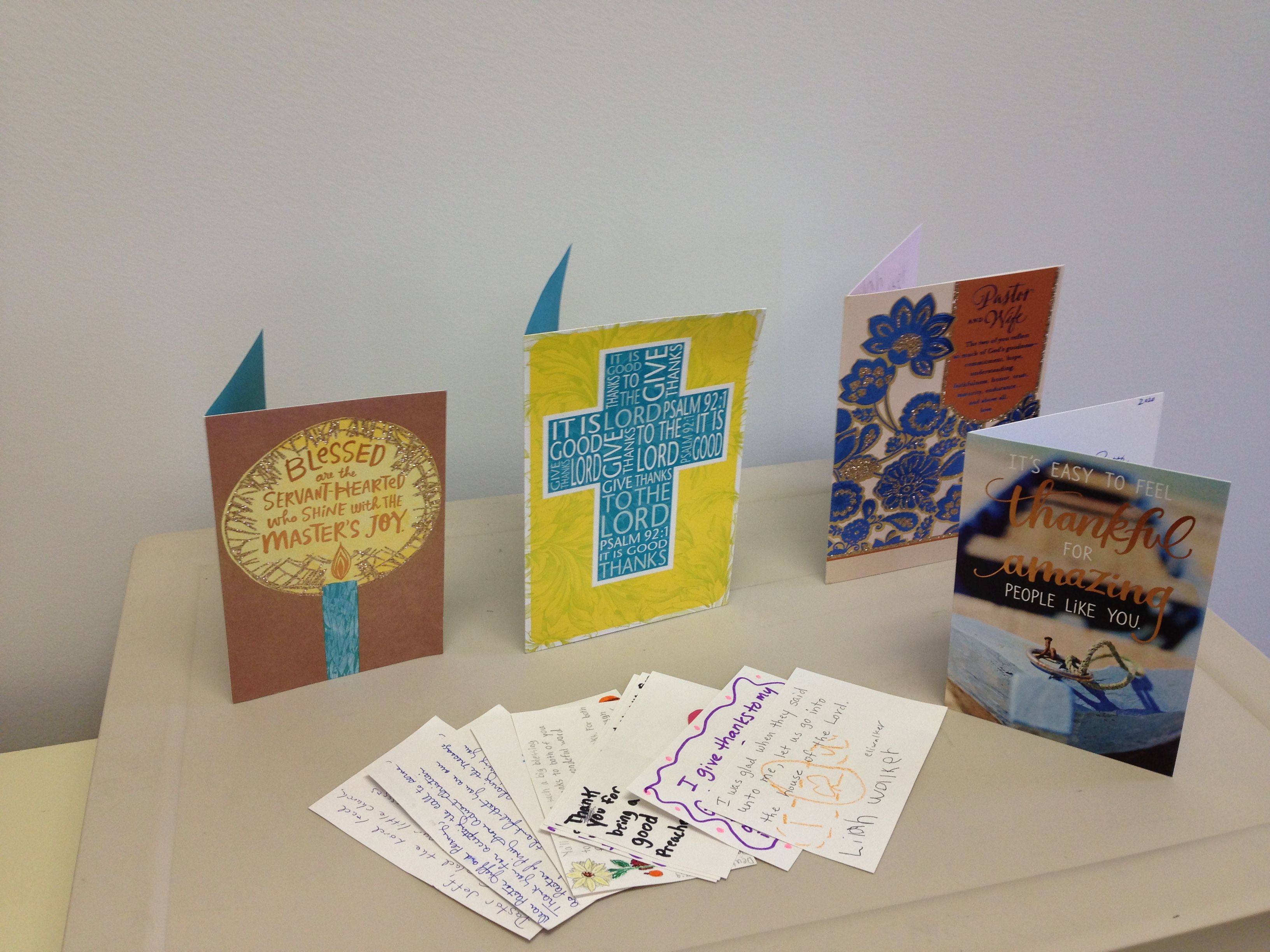 Lots of Advent Christians celebrate pastor appreciation month in October. It is very encouraging to get a postcard, or a greeting card with words of appreciation from members of one’s congregation. I have also been using this month for another kind of pastor’s appreciation. During the announcements, I have been mentioning people with prominent ministries in our congregation, sometimes praying for them.
At the worship service yesterday, the congregation presented me with a gift. It was one of those portable battery boosters that we can carry with us – just in case we need a boost again. I really appreciate these folks.

