
How is your health?

Slide1

This next series of sermons will focus on some questions we encounter when reading Isaiah chapter 1. The questions are designed to make us a bit uncomfortable, because they expose our reluctance to examine ourselves.
Isaiah 1:1-6

1 A vision from Isaiah son of Amoz, which he saw with reference to Judah and Jerusalem during the reigns of Uzziah, Jotham, Ahaz, and Hezekiah, kings of Judah. 2 Listen, sky, and discern, land, because Yahveh has spoken: I reared children and I brought them up, but they rebelled against me.3 An ox knows its owner and a donkey the trough of its master. Israel does not know; my people do not understand. 4 Wow, sinful nation, a people weighed down with iniquity, offspring of evildoers, children who deal corruptly. They have forsaken Yahveh; they have despised the holy one of Israel. They are estranged and perverted. 5 Why do you want to be beaten again? You continue rebelling. All of your head is sick, and all of your heart is weak.    6 From the sole of the foot and up to your head there is nothing healthy; your bruise and sore and bleeding wound has not been cleansed, and they have not been bound up and not treated with healing oil. (Isa. 1:1-6 JDV)

Slide2

Today’s question is “How is your health?” Are you really as spiritually healthy as you think you are?

Slide3

First Symptom: spiritual dementia (2-3)

2 Listen, sky, and discern, land, for Yahveh has spoken: I reared children and I brought them up, but they rebelled against me.
3 An ox knows its owner and a donkey the trough of its master. Israel does not know; my people do not understand.

Isaiah pictures Judah as having suffered a horrible debilitating disease. He describes the disease as a kind of spiritual dementia, because not only does it cause much physical suffering, it has also caused Judah to forget who she is, where she came from, who she belongs to. Consequentially, she is not aware of the relationship she has with Yahveh, a relationship which would offer her relief, treatment and recovery. The disease goes untreated, and is just getting worse.

Slide4

Second Symptom: psychological aberrations (4)

4 Wow, sinful nation, a people weighed down with iniquity, offspring of evildoers, children who deal corruptly. They have forsaken Yahveh; they have despised the holy one of Israel. They are estranged and perverted.

Yet, if you had asked the average citizen of Judah in Isaiah’s time how his spiritual health is, he would say he is healthy and normal. The first thing to go in them was their since of shame over their own sinfulness. Sin was something that the outsiders did. They saw themselves as a holy island in a sea of corruption. They were the holy nation. But look at how Isaiah described them.

Nowadays, our society is in denial, refusing to categorise anyone as abnormal. In fact, this generation defends anyone who insists he or she be treated just like everyone else, no matter how he or she acts. It is as if the category of psychological deviancy no longer exists. We are like the world that was described in the book of Judges, where everyone does what is right in his own eyes. The result of that kind of aberant behaviour in Judges, and here in Isaiah — is bondage.

Slide5

Third symptom: refusal of treatment (5-6)

5 Why do you want to be beaten again? You continue rebelling. All of your head is sick, and all of your heart is weak.
6 From the sole of the foot and up to your head there is nothing healthy; your bruise and sore and bleeding wound has not been cleansed, and they have not been bound up and not treated with healing oil.

So Isaiah puts his generation onto the scanner, and the results reveal a society that is totally sick, which has refused any treatment. Denying that there is anything wrong, the whole nation — sick in the head, sick in the heart, sick from the foot up to the head — continues to walk around pretending that everything is ok.

Such was the case with the scribes and Pharisees during Jesus’ day.

“When the scribes of the Pharisees saw that he is eating with the sinners and tax collectors, they were saying to his disciples, “Why is he eating and drinking with tax collectors and sinners?” So after hearing this, Jesus says to them, “It is not the ones who have strength who need a doctor, but the ones who are having something wrong with them; I did not come to call upright ones, but sinful ones.” (Mk. 2:16-17 JDV)

Such is the case with the world today as well. We deny that there is something wrong, and we have forgotten that there is a Great Physician who is ready to treat us. We go from bad to worse, refusing to acknowledge that God is ready to undo the damage.

So, here we are, the church of Christ, a hospital for the broken ones, a clinic for those who recognise that there is something wrong with us.

LORD, here we are, checking in to your hospital. Forgive us for denying that we have a health problem, for forgetting that you are the answer to our debilitating disease.

destroy this!

Slide1

John 2:13-22

Joh 2:13 And the Passover that the Jews celebrate was coming, so Jesus travelled to Jerusalem.
Joh 2:14 And He found in the temple the sellers of oxen and sheep and doves, and the moneychangers sitting.
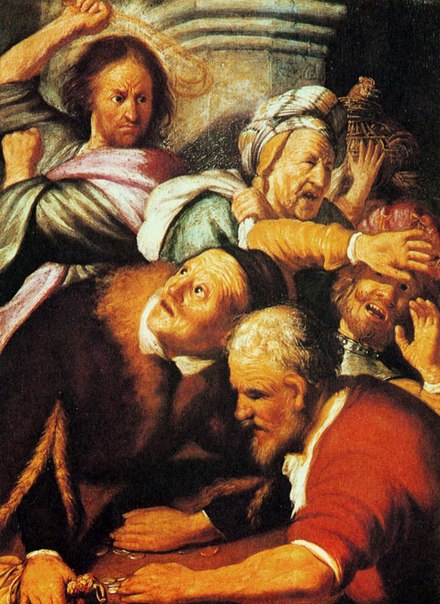
Joh 2:15 And after he made a whip out of cords, he threw them all out of the temple, with the sheep and the oxen; and He poured out the coins of the moneychangers, and flipped their tables;
Joh 2:16 and he said to the dove sellers, “Take these away; stop making my Father’s house a market house.”
Joh 2:17 His disciples remembered that scripture says, “Zeal for your house will consume me.”
Joh 2:18 The Jews responding asked him, “What sign will you show to us, proving that you have the right to do these things?”
Joh 2:19 Jesus responded by telling them, “Destroy this temple, and in three days I will raise it back up.”
Joh 2:20 To that the Jews responded, “It took forty-six years to build this temple, and will You raise it back up in three days?”
Joh 2:21 But he had been referring to the temple which is his body.
Joh 2:22 So, after he had been raised from the dead, his disciples had remembered that He promised this; and they believed both the scripture, and the prediction which Jesus had made. (Joh 2:13-22 JDV)

What does the resurrection really prove? I mean, we Christians make some bold claims about our Jesus, being raised from the dead, and the eternal difference that his resurrection makes. Do we really have any basis for such claims? I want to examine that question this Easter morning, and I have brought along a text of scripture which I think is relevant to the question.

Let me set the stage for the drama we read about in today’s text. The events described in John 2:13-22 take place early in Jesus ministry. It can be a bit confusing, because there was a similar event where Jesus chased out the moneychangers just prior to his crucifixion. But today’s text records Jesus doing this years earlier, when he was still relatively unknown except to his disciples.

Behind the worship in the Jewish temple in Jesus’ day, there had been a long history of a kind of symbiotic relationship between the ministers who worked in the temple and the merchants who kept the system going by providing a means for people to purchase animals for sacrificing — at a tidy profit. The system had worked for a long time, and nobody wanted to change it — except Jesus.

An insult (2:16)

Slide2

Jesus saw the temple market system as an insult to his heavenly Father. The temple was supposed to be a place where people could go and find the glory of God, not the greed of humanity. It was supposed to be a place where God’s covenant loyalty could be seen clearly in spite of the sinfulness and and coveting of the people that he had chosen to save by his grace. Putting a market in the temple was an insult to the character of the God who had chosen to reside there.

Jesus felt that insult more than anyone else because he was the only begotten Son of the Father. He was offended by the audacity of these people and their blasphemous approach to worship. He could not stand there and just take it in. He had to respond, and his violent response was absolutely appropriate. It was appropriate not because violence is always appropriate. No, it was appropriate because of who God is, who Christ is, and what worship is supposed to be.

An insight (2:17)

Slide3.JPG

It was also appropriate because of the response it triggered in his disciples. It was a visual demonstration of Christ’s devotion to his Father’s house, and his Father’s plan. When the disciples saw their teacher flipping tables and chasing away the businessmen from the place they should not have been, they remembered scripture.

Particularly, they remembered this scripture: “Because for your sake I have been disgraced; Dishonour has covered my face. I have become estranged from my brothers, And I am like a foreigner to my mother’s sons. Because zeal for your house has consumed me, And the disgraceful acts of those who embarrass you have fallen on me. (Ps. 69:7-9 JDV)” These words were originally part of a psalm in which David admitted that he had sinned, and that his sin had embarrassed God. David repented, and his prayer in Psalm 69 was that his act of stupidity would not cause true believers to lose their faith in God. Notice the prayer in Psalm 69:6 “Do not let those who put their hope in You be disgraced because of me, Lord Yahweh of armies; do not let those who seek You be embarrassed because of me, God of Israel (Ps. 69:6 JDV). After repenting, David’s only purpose in life was to restore the reputation of his heavenly Father. Now, Jesus’ disciples see him as the coming Messiah David predicted, who would never sin, and whose only purpose in life is to ultimately restore the reputation of his heavenly Father.

Another insult (2:18)

Slide4

The self-proclaimed experts in scripture miss that insight entirely. Instead of seeing what Jesus had done as a fulfilment of scripture, they saw it as a challenge to their own authority. How dare this upstart young prophet come in here on our area of expertise and pretend to tell us what to do! They demand a miraculous sign to prove that Jesus is the Son of the Father he claims to be.

Before we criticise these Jews too much, I want us to be fully aware of what is happening here, because I think we are often guilty of the same thing. The difference is that except for the disciples, these Jews did not know who Jesus really was. They demanded a sign because only the Messiah would have had the authority to come into the temple and change the system.

What is our excuse? I am talking about those times in our lives when things are not going right with us, and we are tempted to just stop believing what we know is true about Jesus. We say he is the saviour of the world, but we often find ourselves coming to him in prayer and saying “just one more sign, Lord.”

Remember what Jesus said about his generation?

“An evil and adulterous generation is asking for a sign, but no sign will be given to it except the sign of the prophet Jonah. Because just as Jonah was three days and three nights in the belly of the sea monster, so will the Son of Man be three days and three nights in the heart of the ground. The men of Nineveh will rise up at the judgement with this generation and condemn it, because they repented when Jonah preached, and see, something much more than Jonah is here. The queen of the South will rise up at the judgement with this generation and condemn it, because she came from the ends of the land to hear the wisdom of Solomon, and see, something much more than Solomon is here” (Matt. 12:39-42 JDV).

I know how hard it is when you keep praying for something and you do not get your answer. But I also know that it is an insult to God to effectively say to Jesus “You died on the cross for me, but I will refuse to believe you until you fix my present problem.” It is better to pray,”Lord, since you died on the cross for me, I know you love me, and I will trust you to bring me through this problem too.”

Another insight (2:22)

Slide5

Jesus knew that the temple officials did not have that kind of trust in him. So he challenged them to “destroy this temple” — something he knew they had no intention to do. He said he could raise it back up in three days. They knew he could do no such thing. It was only years later that the disciples, reflecting on Jesus being raised back to life after three days dead –they finally got it. I can imagine them sitting around talking about the amazing revelations they had seen, and somebody said “Oh, and remember when he challenged the temple officials? He said destroy this temple. He was talking about his body then!

Today we celebrate Easter — the season when we remember that Jesus died on the cross, and then was miraculously raised to eternal life.

Destroy this!

Slide1

What does the resurrection really prove? I am asking again that question I started with. We make some bold claims about our Jesus, being raised from the dead, and the eternal difference that his resurrection makes. Do we really have any basis for such claims? Yes, we do. We have the scriptures. They testified for thousands of years that Jesus would appear, that he would die, and that he would be raised again. When people saw what Jesus did, they recognised him as the fulfilment of those scriptures.

But those scriptures go on to say that the one who was raised from the dead would return to this earth as its rightful king. We have every reason to believe and expect that this same Jesus whom the disciples saw ascend to heaven will return in the same way. After reflecting on the resurrection of Christ, the world is left with only two choices. We can either saw “Now we get it, come Lord Jesus” or we can stubbornly say “prove it again.” May God give us the wisdom to make the right choice.

how faith devotes us

Slide2

I am concluding my series based on the book of Titus today.  Titus is an epistle, and we have seen that its words were first written by Paul to Titus as a sort-of instruction manual for the missions assignment in Crete.  Titus was a younger missionary, and Crete was a hard place to plant the church, so Titus needed all the help and encouragement he could get.

In his epistle, Paul described what the church should be in that hostile environment.  He described church members who were disciplined so that they set the standard for the community around them, and devoted to Christ and the gospel, so that the Cretens would know where the difference came from.

Here is my translation of Titus 3:

1 Keep reminding them to be submissive to their rulers and authorities, to obey them, to be ready to do every good work, 2 to insult no one, to be a non-combatant, to be gentle, and to demonstrate consideration of all people. 3 Because we ourselves were once stupid, disobedient, led astray, slaves to our lusts and various pleasures, spending our lives by being mean and envious, hateful, hating one another. 4 But when the goodness and loving kindness appeared from our Saviour God, 5 it appeared, not because of works done by us in righteousness, but according to his own mercy, by the washing of regeneration and renewal of the Holy Spirit, 6 whom he poured out on us generously through Jesus Christ our Saviour, 7 so that having been declared not guilty by his grace we might become heirs, confident of inheriting eternal life. 8 The word is trustworthy, and I intend for you to insist on these things, so that those who have believed in God may be careful to devote themselves to good works. These things are good and profitable for people. 9 But avoid stupid controversies, genealogies, arguments, and fights about the law, because they are unprofitable and useless.  10 As for a person who causes division, after warning him once and twice, refuse to participate with him, 11 since we know that such a person has been warped and is being sinful; he is self-condemned. 12 When I send Artemas or Tychicus to you, put forth your best effort to come to me at Nicopolis, because I have decided to spend the winter there. 13 Put forth your best effort to support and send Zenas the lawyer and Apollos; so that neither of them lacks the resources to join me. 14 And let our people learn to devote themselves to good works, so they can bring relief in these urgent cases, and not be unproductive. 15 The ones who are with me send greetings to you. Greet our friends in the faith. Grace be with you all.   (Tit. 3:1-15 JDV)

Slide3Just as he did in chapter two, Paul sets the foundation for Titus’ ministry assignment in the gospel message itself.  Nothing that Paul instructs Titus to do is arbitrary.  Everything is based on what God had already done for us in Christ.  Notice the elements of the gospel message here. In theological terms, incarnation, justification, regeneration and sanctification are all works of grace and they are the foundation of the church’s ministry.

Slide4

Now, notice what Paul says the church in Crete should be doing because of what God in his grace had done for them.  The faith that was given by God’s grace should produce a change in inner character and outer relationships.

Even in an environment known for its abuse of authority, Titus was to teach the Cretan believers to submit to those very authorities and obey them.  The reason had nothing to do with the worthiness of the authorities.  It had to do with the task of the church: to demonstrate God’s grace among the unbelievers.  This was the reason that Christ submitted to the earthly authorities.

Also, in a world where you have to look out for number one or you will be stomped on, Titus was to teach the Cretan believers to be considerate and kind to others.  Just like Jesus, who went out of his way to minister to the poor and marginalized, the church was to demonstrate God’s grace by being considerate of and kind to the unbelievers.

When it came top their relationships with each other, the church in Crete was to avoid division and promote unity.  This was another way that they were to stand out among the various brawling groups in Crete.

We could all use a character makeover in the direction of mutual submission, consideration and unity.  But this is especially true for members of Christ’s church, because that is how we demonstrate God’s grace within our context.

Slide5

But let’s not forget the final words of Paul here in Titus.  I know we need to be careful not to read too much doctrine into the travel arrangements that Paul is making for his fellow missionaries.  But I see it as especially significant that Paul slipped so naturally into this subject while he was talking about demonstrating God’s grace as a church.

The missions mandate is present in every gospel presentation.  It is part of every believer’s job description.  The church is made up of those who serve as missionaries, those who send missionaries, and those who support the missionaries and missions work.

  • The servers particularly implied or listed in this chapter are Paul, Titus, Artemas, Tychicus, Zenas and Apollos.
  • The senders particularly implied or listed in this chapter are Paul and Titus.
  • The supporters are Titus and the Cretan believers, whom Paul calls “our people” (14) and “our friends in the faith” (15).

Our church has a long history of missions involvement. We have those who have served, senders, and supporters.  Jesus commissioned his apostles to make disciples of all nations, and we understand that commission as extending down to each disciple and each church.  Our faith directs us into a relationship with God, and also devotes us to reaching others with the gospel.

Slide2

So, there you have it.  The little book of Titus in the New Testament.  It turns out to be more significant that we might have thought.  It challenges us to confirm what we believe by living up to the gospel, and by sharing it with others.

how faith dignifies us

Slide2

In this series, we have been looking at Paul’s letter to Titus.  We have seen that Paul is writing from the standpoint of a veteran missionary, giving some instruction to Titus, who is now on the field in Crete, managing the new church plants there.

In what we know as chapter 2, Paul gave specific instructions to Titus relating to what kinds of things he should be teaching, what his chief activity should be as a missionary, and the focus of his ministry toward others.  Here is my translation of that chapter:

1 But you should say what fits in with healthy teaching.  2 Teach older men to be balanced, dignified, self-controlled, healthy in the faith, in the love, and in the perseverance.  3 In the same way, teach older women to be reverent in how they act, not slanderers or slaves to a lot of wine. They should be good teachers, 4 so that they can train the young women to show love to their husbands and show love to their children, 5 to be self-controlled, devout, hard workers for their families, good, and submissive to their own husbands, so that the word of God may not be accused of being useless.  6 In the same way, encourage the younger men to be self-controlled.  7 Offer yourself to be a model of these good works in every way, demonstrating in your teaching integrity, dignity, 8 and a healthy message which is beyond criticism, so that anyone wanting to oppose you may be put to shame, finding nothing worthless to say about us.  9 Teach bondservants to be submissive to their own employers in all matters; they should be satisfactory, not argumentative, 10 not embezzling, but demonstrating that they can be trusted to do all kinds of good, so that in everything they make the teaching about God our Saviour attractive.  11 Because the grace of God has appeared, announcing salvation for all people, 12 training us to renounce ungodliness and worldly lusting, and to live self-controlled, fair, and godly lives in the present age, 13 waiting for our blessed hope, the glorious appearance of our great God and Saviour Jesus Christ, 14 who gave himself for us to redeem us from every kind of lawlessness and to purify for himself a remnant people who are enthusiastic about doing good works.  15 You should say these kinds of things; encourage and reprimand because you have every right to do so. Do not let anyone wonder about your right to teach them.”  Tit 2:1-15, JDV

Slide3

It is very important to see that there has been no change to the core gospel message.  The basic teaching about who Jesus is, what he did, and what our hope is has not been altered.  The gospel in summary is that Jesus is the Son of God who was sent to die in our place on the cross, and because he has done that, we who believe in him are now redeemed from sin’s penalty, and look for the day when we can live eternally with him when he returns.  That was Titus’ faith.

how faith dignifies us

The beautiful thing about Titus chapter 2 is that Paul uses that gospel truth as an overlay, and proceeds to give Titus his job description as it relates to all the various people in the church he will teach.

  • Teach older men to be balanced, dignified, self-controlled, healthy in the faith, in the love, and in the perseverance (2).
  • Teach older women to be reverent in how they act, not slanderers or slaves to a lot of wine. (3a) These older women should be good teachers, (3b) so that they (not Titus) can train the young women to show love to their husbands and show love to their children, 5 to be self-controlled, devout, hard workers for their families, good, and submissive to their own husbands (4-5).
  • Teach younger men to be self-controlled (6).
  • Teach bondservants to be submissive to their own employers in all matters; they should be satisfactory, not argumentative, not embezzling, but demonstrating that they can be trusted to do all kinds of good (9-10).

Showing integrity and dignity in all our relationships is how Christians back up what we believe about Christ.

Slide5

Titus himself had to be the model of that lifestyle, as well as its proponent.

  • “Offer yourself to be a model of these good works in every way, demonstrating in your teaching integrity, dignity, and a healthy message which is beyond criticism, so that anyone wanting to oppose you may be put to shame, finding nothing worthless to say about us” (7-8).
  • “You should say these kinds of things; encourage and reprimand because you have every right to do so. Do not let anyone wonder about your right to teach them” (15).

He had to encourage those who were getting it right, and reprimand those who were getting it wrong.  Otherwise, nobody would want to believe the gospel.

Here is the point I am trying to make:  The gospel is not about being good; it is the story of God’s grace given to us who dare to believe it.  But Christians are encouraged to live good lives of integrity and dignity because otherwise those who are looking at us are going to miss the gospel.  Our goodness cannot save us.  But our goodness can attract others to Christ – who is the world’s only Saviour.

If you are a believer in Jesus Christ today, and there is anything wrong with your relationship with someone else, I urge you to make it right, because the devil is using that problem to keep others out of the kingdom.

But, if you are not a believer in Jesus Christ today, I have only one message for you.  Believe the gospel.  Don’t wait around until you find a group of perfect Christians, because you are not going to find them.  We came to Christ because we knew we were not perfect, so we are trusting in him.  And that’s the only way into the coming kingdom.  Believe the gospel.  Then, the Holy Spirit can make you into a better person.  Your faith in Christ can give you a life of integrity and dignity.

how faith disciplines us

Slide2

This sermon series is based on Paul’s letter to Titus. Paul was writing as a missionary who was overseeing the churches in Crete. He wrote to Titus, because Titus was the missionary Paul had left in Crete to finish the work of establishing the church groups there. The whole idea of establishing and perfecting a church work suggests that our faith is supposed to change us. I wanted to use the letter to Titus as a model to talk about how being people of faith should change us.

Today we are going to look at a section of the letter which describes what Titus was responsible to do.

Titus 1:5-16

5 This is why I left you in Crete, so that you might put what remained into order, and appoint elders in every town as I directed you- 6 if anyone is above reproach, the husband of one wife, and his children are believers and not open to the charge of debauchery or insubordination. 7 For an overseer, as God’s steward, must be above reproach. He must not be arrogant or quick-tempered or a drunkard or violent or greedy for gain, 8 but hospitable, a lover of good, self-controlled, upright, holy, and disciplined. 9 He must hold firm to the trustworthy word as taught, so that he may be able to give instruction in sound doctrine and also to rebuke those who contradict it. 10 For there are many who are insubordinate, empty talkers and deceivers, especially those of the circumcision party. 11 They must be silenced, since they are upsetting whole families by teaching for shameful gain what they ought not to teach. 12 One of the Cretans, a prophet of their own, said, “Cretans are always liars, evil beasts, lazy gluttons.” 13 This testimony is true. Therefore rebuke them sharply, that they may be sound in the faith, 14 not devoting themselves to Jewish myths and the commands of people who turn away from the truth. 15 To the pure, all things are pure, but to the defiled and unbelieving, nothing is pure; but both their minds and their consciences are defiled. 16 They profess to know God, but they deny him by their works. They are detestable, disobedient, unfit for any good work.

TITUS’ JOB DESCRIPTION

Titus was not a local pastor hired by the believers in Crete to preach sermons and manage their church’s ministries. He was a missionary, appointed by Paul, and under Paul’s direction. In verse five, we see what Paul had left Titus in Crete for.

…so that you might put what remained into order,

and appoint elders in every town …(5).

Titus had two basic functions as a missionary. He was responsible to straighten out the things in the churches which were disorderly, and dysfunctional. He was also responsible to develop leaders who would lead the church groups which were being formed in every town. As the gospel spread throughout the island, more and more groups were being formed, and these groups were going to need local leadership. Titus was not responsible to preach every message, and lead every group. If Titus did his job well, he would make himself redundant.

THE ELDERS’ JOB DESCRIPTION

There are a lot of good studies of the qualification lists for elders like we see here in Titus and also in Paul’s letters to Timothy. I wrote one myself and used it to train pastors in the Philippines. There is another recent one written by my friend Geoff Paynter who lives on the South Island. He wrote his to train church elders in Africa. Usually these studies focus on the moral qualities and leadership skills needed to lead churches and serve in church ministries. The lists do focus on those moral qualities and leader skills. But notice what Paul said was the function of these elders once appointed to lead church groups:

… so that he may be able to give instruction in sound doctrine,

and also to rebuke those who contradict it. (9).

Paul’s primary concern was not that Titus pick out some good moral people with good leadership skills, and just turn the church over to them. No, Paul had planted the church in Crete by bringing people the gospel message. Paul wanted to protect the gospel from being replaced by some other teaching. Paul was confident that if a church keeps preaching the gospel of Christ crucified, then it would stay strong and keep leading people to Christ. But Paul was also aware that something else could happen at Crete. The wrong doctrine preached could lead to the wrong kind of elders being appointed.

FALSE AND TRUE ELDERS CONTRASTED

Notice the way Paul contrasts those who are false elders with those who are true elders.

False elders


True elders


  • upsetting whole families (11)
  • devoting themselves to Jewish myths and the commands of people who turn away from the truth (14)
  • They profess to know God, but they deny him by their works (16).


  • … hospitable,
  • a lover of good,
  • self-controlled, upright, holy, and disciplined. (8).


  • False elders destroy families by inciting people to divide over doctrinal differences. But true elders are peacemakers. They help to stabilize families.
  • False elders focus on insignificant trivial differences. True elders devote themselves to what is good for everyone.
  • False elders tell one thing and show another. True elders live self-controlled lives. They have been disciplined by their faith.

That brings me back to the title of today’s message: “how faith disciplines us.” Paul expected Titus to find and train and appoint elders to take over the leadership of all the new groups being formed on Crete. Where did he expect to get those true elders from? There was no bible college or seminary on Crete. He had no denominational recruiter with a list of vetted ministry professionals from which he could pick his choices. No, Paul expected the church itself to produce its own leaders. By focusing on preaching the gospel of God’s grace demonstrated by Christ crucified, a church should automatically produce next generation’s leaders. I’m not saying that there is no need for intensive training. But I am saying we should stop using these qualification lists as disqualification lists. Look in your heart. Is your faith genuine? If your faith is genuine, you have what you need to lead someone else to genuine faith. Let that genuine faith discipline you into the kind of person you should be, then dare to lead others into that same kind of genuine faith!