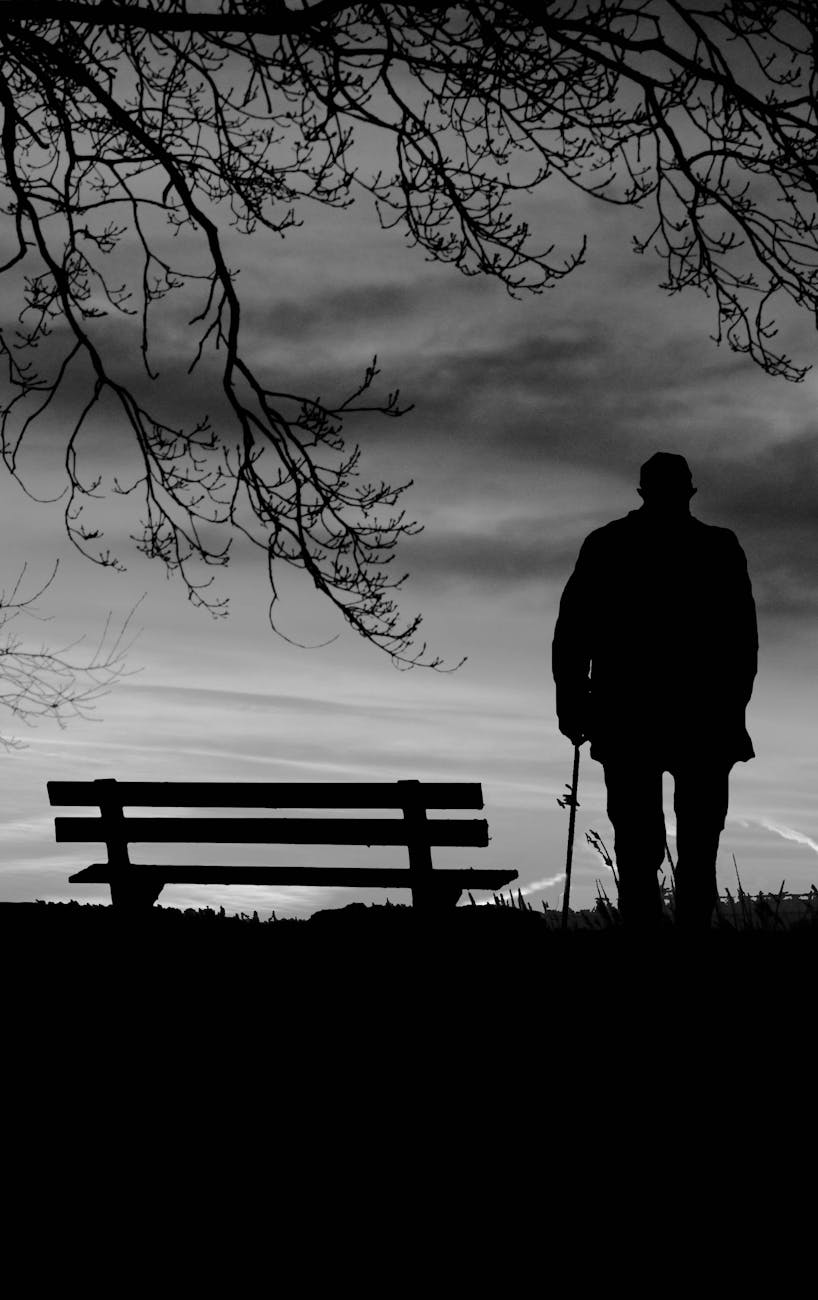
THE EVIL DAYS
Ecclesiastes 12:1-5 KJV.
1 Remember now thy Creator in the days of thy youth, while the evil days come not, nor the years draw nigh, when thou shalt say, I have no pleasure in them; 2 While the sun, or the light, or the moon, or the stars, be not darkened, nor the clouds return after the rain: 3 In the day when the keepers of the house shall tremble, and the strong men shall bow themselves, and the grinders cease because they are few, and those that look out of the windows be darkened, 4 And the doors shall be shut in the streets, when the sound of the grinding is low, and he shall rise at the voice of the bird, and all the daughters of musick shall be brought low; 5 Also when they shall be afraid of that which is high, and fears shall be in the way, and the almond tree shall flourish, and the grasshopper shall be a burden, and desire shall fail: because man goeth to his long home, and the mourners go about the streets.
Growing older is a strange experience.
One day you’re young and energetic, and the next day you make a noise when you stand up— a noise you didn’t practice, a noise you didn’t choose, a noise that happens because your joints have decided to speak in tongues.
But aging is not a punishment. It’s a privilege. It’s a long, winding testimony of God’s patience, provision, and sense of humor.
And if we’re wise, we learn to laugh along the way.
Solomon’s final chapter in Ecclesiastes gives us a blunt, unvarnished look at the so‑called “golden years.” He doesn’t soften the reality of aging with polite euphemisms or sentimental language. Instead, he offers a painfully accurate allegory—one only an older man could write. Every image, every metaphor, every fading sense and trembling limb reflects a stage of decline Solomon now knows firsthand. He doesn’t call them the golden years. He calls them the evil days.
This is Ancient Near Eastern humor. Solomon walks us through the slow unraveling of the body: the dimming eyes, the shaking hands, the failing teeth, the stooped back, the sleepless nights, the shrinking appetite, the fear of falling, the loss of desire. It is a house slowly collapsing, a once‑strong structure now creaking under the weight of time. Solomon is not mocking old age; he is describing his own.
Solomon’s honesty is not meant to depress us but to awaken us. He wants the young to understand what he did not: life is precious because it is temporary. Enjoy it while you have it. Honor God while your strength is still intact. Live fully, gratefully, and wisely before the days come when desire fades and opportunities close.
Old age is not a failure; it is a reminder.
- A reminder that we are creatures, not gods.
- A reminder that our days are numbered.
- A reminder that the One who gave us life is the only One who can give it again.
Solomon’s final chapter is not just a description of aging—it is an invitation to live well now, while the light still shines.
Solomon contrasts the fading years of old age with the bright, energetic prime of life—when everything works, everything is clear, and everything feels possible. He has lived those years. He was a sprite young prince, courting a beautiful young shepherd girl. We have that story in the Bible, too. It’s Solomon’s song. We also have a book Solomon wrote in his middle years. It’s his magnum opus, his collection of proverbs. But this book of Ecclesiastes is Solomon’s last. It’s his final reflection.
In it, he teaches us that when we’re young, our eyes look out their windows and see the world in sharp detail. But as the years pass, the days grow dimmer. The world doesn’t change, but our ability to take it in does.
- Our bladders become like rain clouds that fill up again almost as soon as they empty.
- Our once‑strong legs—the guardians of our bodies, the pillars of our houses—turn soft and unsteady.
- Our teeth become few and idle, no longer grinding our food with youthful strength.
- Our doors of opportunity close; we no longer venture far from home.
- We miss the sound of business and busyness, the hum of life we once took for granted.
- We wake at the slightest chirp of a bird, yet we don’t hear nearly as much as we used to.
It is a portrait, both honest and compassionate. Solomon is not mocking old age; he is describing the slow unraveling of a body that was never designed to be immortal in its present form.
And that is his point. Life is short—don’t waste it. We shouldenjoy it fully, especially while we are young and able to savor its gifts. But as we enjoy the gift, we should remember the Giver. The Creator who gave us life is the One who will remain when everything else fades. Our relationship with Him is the one joy that does not diminish with age.
We do not possess endless life in ourselves. Our strength, our senses, our opportunities—all of them are temporary. We live because God gives life, and we will live again only because God gives life again.
So Solomon urges us to use our time wisely.
- Don’t squander our prime years.
- Don’t drift through life as if our days are unlimited.
- Enjoy the world God made, but anchor our joy in the God who made us.
Not only is it appropriate for us to remember our creator in the days of our youth. It is also quite proper for us to remember God when we cannot seem to remember anything else.
- Remember God when you can’t remember where you put your glasses, your phone, where you left your keys, or where you parked your car.
- Remember God when you can’t remember why you walked into the kitchen, or why you opened the refrigerator.
- Remember God when you can’t remember that you already told that story… twice.
- Remember God when you cannot remember the name of that person you have known for 20 years, and the one you just met 20 seconds ago.
- Remember God when you cannot remember that birthday, that anniversary, that doctor’s appointment, or what day it is.
- Remember God when you cannot remember whether you have taken that pill or taken out the garbage.
And don’t get me started on punchlines to jokes, or travel directions, whether you locked the front door, or how to turn off notifications that won’t stop dinging. We are now living in the evil days when everything slips away. But the LORD is the One who remains—and the One who can give life that truly lasts.
Let’s pray:
LORD, thank you for life. Thank you for the air we breathe and the lives you have given us to live. Thank you that no matter where we are, you are there. Thank you also for no matter what point we are in our lives, you are with us and for us. Praise your holy name. Amen.