RETURN AND REPENT

RETURN AND REPENT

Hosea 14: 1-9 NET

I’m beginning the new year with a series of sermons based on repentance and believing. These two ideas go together: repentance from sin and believing in what God has revealed to us in his word.

I am beginning our study of these two ideas in the Old Testament. Repentance and faith did not just magically show up in the New Testament. If we ignore what the Old Testament says about these subjects, we will be missing some vital pieces of the puzzle.

So, this morning we are going to look at Hosea 14, where the prophet Hosea talks about repentance.

Hosea urges his people to repent (1-3)

1 Return, O Israel, to the LORD your God, for your sin has been your downfall!

2 Return to the LORD and repent! Say to him: “Completely forgive our iniquity; accept our penitential prayer, that we may offer the praise of our lips as sacrificial bulls.

3 Assyria cannot save us; we will not ride war horses. We will never again say, ‘Our gods’ to what our own hands have made. For only you will show compassion to Orphan Israel!”

Hosea uses two Hebrew words to explain the process of repenting. First, he uses the word shuv (שׁוב) – which means to turn or return. That is the word translated return in verse 1 and repent in verse 2. In the military, if you have a soldier looking in one direction, and you want that soldier to look in the opposite direction, you give the command: about-face. That’s what shuv means. Repenting requires a person to change direction.

But how do you change direction in your life? Hosea explains how to get started doing that in verse 2 as well. He says literally “take words with you.” The Hebrew word for take is lakach (לָקַח). If you really want to repent, before you do your about-face, you have to come before God’s face. You have to do that with words. Don’t try to repent without saying anything. God knows the thoughts of your heart. But being truly repentant requires that we tell him something.

The principle is called confession. The New Testament elaborates on this principle, but it is right here in the Old Testament first.

Hosea urged his people to confess four things.

He urged them to confess their inability to save themselves. They had fashioned idols made of wood, stone, and metal. Then they bowed down to those idols and called them their gods. So, in verse 3, Hosea instructs his people to say “We will never again say, ‘Our gods’ to what our own hands have made. For only you will show compassion to Orphan Israel!”

He urged them to confess that they had trusted the wrong things. In Hosea’s time, the political superpower was Assyria. Hosea tells his people to come to God and confess “Assyria cannot save us; will not ride war horses.” God wanted his people to admit that if they were going to be delivered, it was not going to happen by aligning themselves with a more powerful nation. They had to align themselves with the most powerful God.

Hosea urged them to confess faith in God’s ability to forgive them completely. He told them to ask God to forgive them. They were to ask for a return to the position they held before they rebelled.

Hosea urged them to confess the desire to return to proper worship. They promised to offer God the praise he deserved.

True repentance begins with these four confessions. When you are ready to repent, you are ready to acknowledge that you cannot save yourself. You have tried other ways, and they just got you more lost. But you believe that God can save you completely. One cross fits all. Not only do you dare to ask God for help, but you are also committed to acknowledging his salvation for the rest of your life by regular worship.

God promises repenters that he will turn away his anger and bless them instead (4-8)

4 “I will heal their waywardness and love them freely, for my anger will turn away from them.

5 I will be like the dew to Israel; he will blossom like a lily, he will send down his roots like a cedar of Lebanon.

6 His young shoots will grow; his splendor will be like an olive tree, his fragrance like a cedar of Lebanon.

7 People will reside again in his shade; they will plant and harvest grain in abundance. They will blossom like a vine, and his fame will be like the wine from Lebanon.

8 O Ephraim, I do not want to have anything to do with idols anymore! I will answer him and care for him. I am like a luxuriant cypress tree; your fruitfulness comes from me!

Forgiveness is just the beginning of what God offers the truly repentant. It is the door to the house. Once you enter through the door, you can start enjoying everything in the house. Look at what God has in his house in store for those who repent.

God promises to heal us.

God promises to turn his anger away from us.

God promises to make us blossom and be fruitful like a lily or a vine, or a cypress tree.

God promises to give us strong deep roots like a cedar.

God promises to protect us like shade protects those exposed to the sun.

God promises to make his fame and glory shine through us.

It all begins with a prayer of repentance.

Hosea reminds his people that wisdom begins with repentance (9).

9 Who is wise? Let him discern these things! Who is discerning? Let him understand them! For the ways of the LORD are right; the godly walk in them, but in them the rebellious stumble.

Do you feel that sometimes you are just not wise enough to deal with all the problems you face, or discerning enough to help others? If you have come to God through Jesus Christ, you have already begun the process of getting God’s wisdom.

The next step is going to God’s word and letting him teach you wisdom. A prayer of repentance is a prayer of dependence. It consists of telling God you want him to teach you. Once you have repented, you can begin a hard reboot of your life.

Now, God has given us a body of literature in his word that is expressly for the purpose of reconfiguring our minds to his wisdom. It’s called wisdom literature.

It starts with Job – God’s wisdom when life does not make sense.

Then, Psalms – God’s wisdom in poetic form.

Proverbs – God’s wisdom collected.

Ecclesiastes – God’s wisdom applied to aging.

Finally, Song of Solomon – God’s wisdom applied to human love.

Now, the key to actually learning from the wisdom literature is this: you have to start with repentance.

LORD, we want to start the new year right and live right all the rest of our years. For that reason, if we have never done so before, we come to you in repentance. Accept our heart’s yearning for a new relationship with you, where we denounce our own self-sufficiency and trust you to bless us. Make us wise by teaching us wisdom. Restore the years that the locust has eaten. Heal us. Turn your anger away from us. Make us blossom and be fruitful like a lily or a vine, or a cypress tree. Give us strong deep roots like a cedar. Protect us like shade protects those exposed to the sun. Make your fame and glory shine through us. In Jesus’ name, Amen.

video
click for my e-books

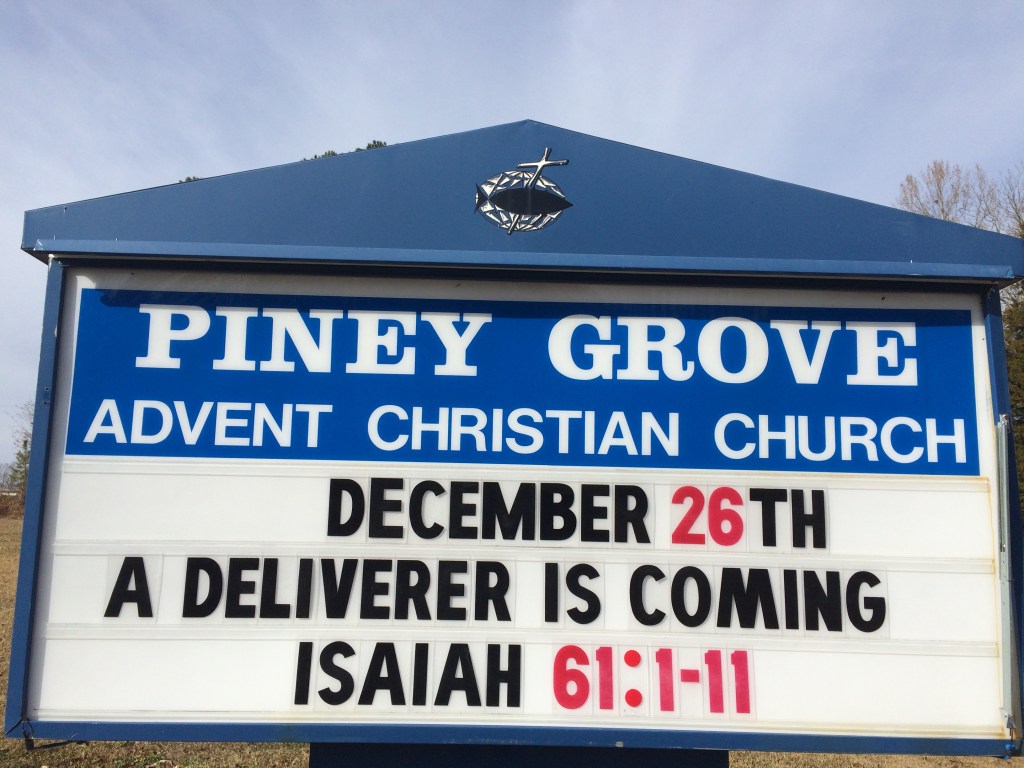
A DELIVERER IS COMING

A DELIVERER IS COMING

Isaiah 61:1-11 NET

Christmas is a time for us all to reflect on what it meant for Christ to come to earth, as a gift to humanity. The whole life of Jesus Christ was a gift to us. This year, I have been reflecting on some aspects of Christ as a gift that are not usually associated with Christmas. I think it is important for all of us to see that Jesus’ fulfillment of prophecy did not end after his nativity. He was the Messiah his whole life, and he still is. So, now that Christmas day is past, I still want to talk about Jesus. That child whose miraculous birth we celebrated yesterday grew up to be the Messiah.

I want to talk about the prophecy in Isaiah 61 today. This was the passage that Jesus himself used to announce himself as the fulfillment of the Old Testament prophecies of the coming Messiah. Isaiah was speaking to a people who had been humiliated by defeat and bondage. His prophecies referred specifically to what the Jewish Messiah would do for the Jewish people. But the words also speak to us – believers in Christ, no matter what our ethnic background is.

Isaiah predicted an encouraging Messiah (1-3)

1 The spirit of the sovereign LORD is upon me, because the LORD has chosen me. He has commissioned me to encourage the poor, to help the brokenhearted, to decree the release of captives, and the freeing of prisoners, 2 to announce the year when the LORD will show his favor, the day when our God will seek vengeance, to console all who mourn, 3 to strengthen those who mourn in Zion, by giving them a turban, instead of ashes, oil symbolizing joy, instead of mourning, a garment symbolizing praise, instead of discouragement. They will be called oaks of righteousness, trees planted by the LORD to reveal his splendor.

Luke tells us that “Jesus came to Nazareth, where he had been brought up, and went into the synagogue on the Sabbath day, as was his custom. He stood up to read, and the scroll of the prophet Isaiah was given to him. He unrolled the scroll and found the place where it was written, “The Spirit of the Lord is upon me, because he has anointed me to proclaim good news to the poor. He has sent me to proclaim release to the captives and the regaining of sight to the blind, to set free those who are oppressed, to proclaim the year of the Lord’s favor.” Then he rolled up the scroll, gave it back to the attendant, and sat down. The eyes of everyone in the synagogue were fixed on him. Then he began to tell them, “Today this scripture has been fulfilled even as you heard it being read” (Luke 4:16-21).

Anyone can see that Jesus was reading from Isaiah 61 here. By saying that the scripture has been fulfilled is to say that he was the Messiah that the scripture predicted. Apparently, the copy of Isaiah that Jesus read from also contained the phrase “and the regaining of sight to the blind” – which was no problem for Jesus. But Jesus stopped before the place in Isaiah 61 where it says “the day when our God will seek vengeance.”

The reason he did not say that part is very important. The Messiah’s primary ministry when he first came was to encourage his own people. He was commissioned to encourage, console and strengthen his people. He was to proclaim the year when the LORD would show his favor. He did speak of the day of the LORD’s vengeance. It was the judgment day we talked about last week. But Jesus didn’t want to concentrate on that. He wanted to tell his own people that God had not given up on them.

Jesus’ message to you and me is also one of encouragement. He finds us in poverty, bondage, blindness, and oppression. We have lived our lives under the control of the devil and in mourning and deep depression. He comes to us with the good news of the gospel.

Isaiah predicted a rejuvenating Messiah (4-7)

4 They will rebuild the perpetual ruins and restore the places that were desolate; they will reestablish the ruined cities, the places that have been desolate since ancient times. 5 “Foreigners will take care of your sheep; foreigners will work in your fields and vineyards. 6 You will be called, ‘the LORD’s priests, servants of our God.’ You will enjoy the wealth of nations and boast about the riches you receive from them. 7 Instead of shame, you will get a double portion; instead of humiliation, they will rejoice over the land they receive. Yes, they will possess a double portion in their land and experience lasting joy.

Isaiah painted a picture of a nationwide rebuilding program under the Messiah. Cities would be rebuilt and reestablished. People from other nations would work in their fields and vineyards. That was the opposite of what was happening in Isaiah’s day. The Israelites had become slaves to foreigners. Isaiah predicted that God’s people would be rejuvenated. But for that to happen, the people would have to accept him as their Messiah. Some did, but most did not. “He came to what was his own, but his own people did not receive him” (John 1:11). “But to all who have received him – those who believe in his name – he has given the right to become God’s children – children not born by human parents or by human desire or a husband’s decision, but by God” (John 1:12-13).

So, instead of rebuilding the nation of Israel – at least right now – Jesus offers to rebuild our lives. The lasting joy he promises is to everyone who comes to him and says ‘Here, Jesus – here is my life. It has been in perpetual ruins. Please rebuild it. It is a desolate place. Please restore it. I have been a slave long enough. Here’s my life Lord. Make me your priest, your servant. Here’s my humiliation Lord. I will exchange it for your gift of lasting joy. Here’s my thirst Lord. Let me drink. Here’s my sore neck Lord. I’m ready for your easy yoke and your light burden.

Isaiah predicted a blessing Messiah (8-11)

8 For I, the LORD, love justice and hate robbery and sin. I will repay them because of my faithfulness; I will make a permanent covenant with them. 9 Their descendants will be known among the nations, their offspring among the peoples. All who see them will recognize that the LORD has blessed them.” 10 I will greatly rejoice in the LORD; I will be overjoyed because of my God. For he clothes me in garments of deliverance; he puts on me a robe symbolizing vindication. I look like a bridegroom when he wears a turban as a priest would; I look like a bride when she puts on her jewelry. 11 For just as the ground produces its crops and a garden yields its produce, so the sovereign LORD will cause deliverance to grow, and give his people reason to praise him in the sight of all the nations.

Isaiah predicted a new covenant – a permanent covenant to replace the temporary one. The temporary covenant was the one established on Sinai. The Israelites broke it and continued to break it. As a result, that old covenant became a curse. But the Messiah would come with a new covenant. All who see those who are under the new covenant will recognize that the LORD has blessed them.” The first blessing is the covenant itself. It was not a conditional covenant requiring faithfulness to the law. It was a declaration by God that he would bless believers because of his own faithfulness.

Jesus declared to his disciples that his blood was “the blood of the covenant, that is poured out for many for the forgiveness of sins” (Matthew 26:28). His righteous blood was shed so that God could forgive us for our unrighteous lives. Debt paid. We are now free.

But Isaiah predicted another blessing in today’s text beside the enormous blessing of forgiveness. He said that “just as the ground produces its crops and a garden yields its produce, so the sovereign LORD will cause deliverance to grow, and give his people reason to praise him in the sight of all the nations.” For the last two thousand years, God’s deliverance has been growing among the nations. Every hour, every day, more people stream into the household of our God because of this great deliverance. Missions was built into the DNA of the new covenant. Jesus commanded his church to make disciples of all nations, to proclaim the gospel to all nations, to offer repentance and forgiveness of sins to all nations. If the old covenant could be described as “come to us,” the new covenant is best described as “go to them.” In the Great Commission text, the participle “go” does not have the same weight as the imperative “make disciples.” However, the fact that Jesus was sending his disciples somewhere (in actuality, Jerusalem) was significant. It set the stage for a church that would always be going with the gospel.

That role of expanding ourselves through reaching new lands and cultures with the gospel is also described by Jesus in his “vine and branches” message. He told his disciples “You did not choose me, but I chose you and appointed you that you should go and bear fruit” (John 15:16) Jesus did not simply command us to stay where we are and bear fruit. He appointed us to “go” and “bear fruit.” The word translated “go” in that text is used for sending someone off in a particular direction for a particular purpose. The mission of reaching new lands, peoples, and cultures with the gospel is built into our new identity as branches of Christ’s vine, and as recipients of his new covenant.

The Messiah’s ministry was a ministry of encouragement, rejuvenation, and blessing. As representatives of Christ, our ministry should be that too. There are still some poor discouraged people who need the good news. There are still some broken-down lives that need rebuilding. There are still many whose lives are cursed, who need the blessing of the permanent covenant of forgiveness.

LORD, just as the Father sent you, now send us. Send us to encourage, rebuild, and bless others with your forgiveness.

video

A JUDGE IS COMING

A JUDGE IS COMING

church sign

Isaiah 11:1-5 NET

1 A shoot will grow out of Jesse’s root stock, a bud will sprout from his roots.
2 The LORD’s spirit will rest on him — a spirit that gives extraordinary wisdom, a spirit that provides the ability to execute plans, a spirit that produces absolute loyalty to the LORD.
3 He will take delight in obeying the LORD. He will not judge by mere appearances, or make decisions on the basis of hearsay.
4 He will treat the poor fairly, and make right decisions for the downtrodden of the earth. He will strike the earth with the rod of his mouth, and order the wicked to be executed.
5 Justice will be like a belt around his waist, integrity will be like a belt around his hips.

During this advent season, we have been looking at some of the things predicted about the coming Messiah. Last year we focused on some of the things we usually associate with Christmas. But this year we are looking at some predictions about Jesus that we normally don’t talk about at Christmas. In today’s text, Isaiah described the coming Messiah as a shoot that will grow out of Jesse’s root stock, a bud that will sprout from his roots.

The prophet Ezekiel used similar imagery to describe the coming Messiah. He predicted that God would put an end to the kingdom of Judah, but that he would pull a sprig from Judah, and replant it on a very high mountain. That shoot would grow into a huge cedar and birds of every kind would be protected under it (Ezekiel 17:23). This coming king from the line of Judah would rule over not just Judah, but birds of every kind.

We now know who that king is, and what Ezekiel meant by the birds of every kind. When we celebrate the newborn king, the wise men from the east join in the celebration. They realize that the Messiah is not just a Jewish king. He is everyone’s king.

Now, Isaiah’s message about this coming Messiah emphasizes not the ability to rule over all people, but his ability to judge all people fairly.

What comes to your mind when you hear the word justice? Maybe you picture the image of a woman with a blindfold on, carrying a scale. That is actually a good image because it portrays some of the aspects of justice that we have come to expect. It is a woman, so we would expect justice to have compassion for the weak and helpless. She has a blindfold on because she is not influenced by prejudice or greed or the color of a defendant’s skin. She carries a scale because she is interested in doing the right thing exactly.

Jesus has the wisdom to judge everyone fairly (2)

During his earthly life, Jesus demonstrated all those abilities we would expect in the perfect judge. He came from humble circumstances, so he has compassion for the needy. He treated people with decency no matter who they were. He was able to deal with others without prejudice or chauvinism. When others wanted to stone the adulterous woman, he saw beyond the sin and treated it with the proper balance. When his own disciples wanted him to call down fire, he rebuked them.

Jesus demonstrated what the Bible calls wisdom. Isaiah predicted that “The LORD’s spirit will rest on him — a spirit that gives extraordinary wisdom.” That is what we need in a judge. We need someone who can look past the things that we get hung up on, and find the root of the problem. We need someone who cares about everyone the same — who does not play favorites.

God has appointed a day in which he will judge the world and its inhabitants and has given us a wise judge who will do the judging.

Jesus has the compassion to bring justice to those who have been mistreated (4a)

I love that time in Jesus’ ministry when he looked over the crowds coming to him and the Bible says that he had compassion on them because they were harassed and helpless. He knows things like that. He not only knows our strengths, he knows our weaknesses. If I am being mistreated, I want a judge who understands that.

Isaiah predicted that the Messiah “will treat the poor fairly, and make right decisions for the downtrodden of the earth.” Jesus came preaching the gospel — and he made it a point to reach the poor and downtrodden with that gospel message. The kingdom is open to everyone, but Jesus knew that the ones whom life had treated unfairly would be looking for a chance at making things right. His gospel proclaimed that.

Jesus defined his mission when he quoted “The Spirit of the Lord is upon me because he has anointed me to proclaim good news to the poor. He has sent me to proclaim release to the captives and the regaining of sight to the blind, to set free those who are oppressed, to proclaim the year of the Lord’s favor” (Isaiah 61:1-2 quoted in Luke 4:18-19).

Jesus has the authority of a judge to execute the wicked (4b)

Isaiah says that the Messiah “will strike the earth with the rod of his mouth, and order the wicked to be executed.” That’s his call. Religion says that God made us so that we cannot be unmade. But God says differently. He will not only condemn the wicked, he will execute them. There is a reason that the book of Revelation talks about a lake of fire, and calls it the second death.

So the Old Testament tells us that our Messiah will judge the world. But when Jesus came to this earth for his first advent, he did not come as judge. John said that “God did not send his Son into the world to condemn the world, but that the world should be saved through him” (John 3:17). Paul told the Athenians that God “has set a day on which he is going to judge the world in righteousness, by a man whom he designated, having provided proof to everyone by raising him from the dead” (Acts 17:31). That is one of four normative texts in the New Testament that explain about the coming day of judgment.

The other three texts are 2 Corinthians 5:10; Romans 2:16 and 2 Timothy 4:1.

2 Corinthians 5:10 NET For we must all appear before the judgment seat of Christ, so that each one may be paid back according to what he has done while in the body, whether good or evil.

Romans 2:16 NET on the day when God will judge the secrets of human hearts, according to my gospel through Christ Jesus.

2 Timothy 4:1 NET I solemnly charge you before God and Christ Jesus, who is going to judge the living and the dead, and by his appearing and his kingdom:

Let me summarize for you what those four normative New Testament passages teach about the coming day of judgment.

They teach that Christ is the means of judgment.

St. Peter is not going to be standing at the pearly gates letting people in or telling them to go you know where. Jesus is the judge. The one who has set a day has also designated a man to judge, and that man is the one he authorized by means of raising him from the dead. “We must all appear before the judgment seat of Christ.”

They teach that Christ will judge us all.

He’s going to judge the world. We “must all appear before the judgment seat of Christ.” He “will judge the secrets of human hearts.” And all means “the living and the dead” so there will have to be a resurrection.

Revelation describes that courtroom. It mentions a large white throne. It says “Then I saw a large white throne and the one who was seated on it; the earth and the heaven fled from his presence, and no place was found for them. And I saw the dead, the great and the small {That’s everybody, folks}, standing before the throne. Then books were opened, and another book was opened — the book of life. So the dead were judged by what was written in the books, according to their deeds. The sea gave up the dead that were in it, and Death and Hades gave up the dead that were in them, and each one was judged according to his deeds. Then Death and Hades were thrown into the lake of fire. This is the second death — the lake of fire. If anyone’s name was not found written in the book of life, that person was thrown into the lake of fire” (Revelation 20:11-15 NET).

They teach that Christ will judge on the Judgment Day.

The timing is important. There is a popular teaching among the religious that people are judged when they die. That is not the case. God has set a day, and that day corresponds to Christ’s appearing and his kingdom. So, until Christ returns, the judgment will not take place. If you have unsaved loved ones, they are not suffering in hell. They are doing the same thing your saved loved ones are doing. They are waiting for the judge. Just like in a modern courtroom, the judgment doesn’t start until the judge arrives.

Revelation talks about that judgment day. It says “the time has come for the dead to be judged, and the time has come to give to your servants, the prophets, their reward, as well as to the saints and to those who revere your name, both small and great, and the time has come to destroy those who destroy the earth” (Revelation 11:18 NET). God has set a day for both judging the lost and rewarding the saved, and that day corresponds to the day of Christ’s appearing. No one suffers the lake of fire until that day. No one goes to their reward until that day.

Isaiah predicted that the coming Messiah would be a judge. He would not be wearing a blindfold, because he will know all things, and be able to judge with wisdom. Instead, he will be wearing justice as a belt around his waist, and integrity as a belt around his hips. He will judge fairly. But really, the only thing we need to know about judgment day is whether our name is listed in his book of life. He has a list, and he does not need to check it twice. It is not a list of nice boys and girls. It is a list of those redeemed by the blood of the Lamb. Only the righteous will be rewarded and righteousness comes only through faith in Jesus Christ. Our judge will be the one who went to the cross for us. We will be in good hands.

video

A SNAKE KILLER IS COMING

the sign for today’s message

A SNAKE KILLER IS COMING

Genesis 3:14-15 NET

14 The LORD God said to the serpent, “Because you have done this, cursed are you above all the wild beasts and all the living creatures of the field! On your belly you will crawl and dust you will eat all the days of your life.
15 And I will put hostility between you and the woman and between your offspring and her offspring; her offspring will attack your head, and you will attack her offspring’s heel.”

Last year during the Advent season, we took some time and focused on the themes of advent that apply to Christ’s first coming and to his next coming.

In 1 Peter 1, the apostle encouraged his readers to set their hope completely on the revelation of Jesus Christ. Christ was revealed to us first as a baby in a manger, but soon he will be revealed again. Christmastime has always been a time to rekindle our hope in Christ.

In Isaiah 9, the prophet predicted that Christ’s coming would bring peace. He did bring peace, but that peace did not happen through warfare. It came in the form of a peaceful child, sleeping in a manger. The peace he offered was peace with God. Christmastime offers us a chance to step back from the troubles and anxiety of life and enjoy a few silent nights.

In John 16, our Savior promised to come again, and it would bring Joy to us — a joy that no one can take away. Christmastime helps us to focus on our joy in Christ by bringing joy into the lives of others — especially the children.

In Revelation 1, the apostle sees Jesus as the coming king. Christmastime is a season to reflect on what it means for Jesus to be the newborn king then, the king who reigns in our hearts now, and the king of kings to whom every knee will soon bow.

In John 12, Jesus tells us that he has come as the light of the world so that everyone who believes in him would not remain in darkness. Christmastime, with its lights and stars, is a time to reflect on how Jesus has lit up our lives and promises to light up the universe when he comes again.

So, again this year, I want to focus on some things that were predicted about Jesus and were partly fulfilled at his first advent. There are some things that Jesus did that only gave us a small taste of what he is going to do when he comes again.

The first prediction about Jesus in the Bible is embedded in today’s text. It is kind of weird that it is there because what the text describes is actually God’s curse on the serpent in Eden. But if we look a little closer, we will discover that God is saying something on a different level.

On the surface level, God describes his punishment of the serpent for his role in the fall.

The creatures that we now know as snakes were an entirely different species before this event. When we were looking at this text in our Sunday evening Bible study a few weeks ago, sister Nancy got us all laughing when she questioned why Eve was so captivated by the serpent. She reckons that it would be more understandable if the creature had been more cuddly, like a Koala bear.

Well, we don’t know much about what the serpent looked like before this event. We do know that it had been described as “more shrewd than any of the wild animals that the LORD God had made” (3:1). It didn’t crawl. It didn’t slither. It didn’t hiss. It didn’t rattle. When people looked at it, they saw something wise, something beautiful — something glorious.

For some reason, this beautiful, glorious creature could also communicate with human beings. Milton suggests that it was Satan who gave this creature the ability to talk so that he could demonstrate how powerful the forbidden fruit was. I don’t know. Maybe the serpent already had the ability to talk. Maybe it was endowed with that gift as part of its status as the highest of all animal life. Maybe all the lions and tigers and Koala bears admired him because of this ability. Maybe the serpent was the hero of the animal kingdom.

But because of his role in the temptation of humanity, the hero has now been turned into a zero. God says to him “Because you have done this, cursed are you above all the wild beasts and all the living creatures of the field!” He was immediately transformed from the highest to the lowest.

He went from having conferences with the noble humans to the lowest of creatures, eating the dust all the days of his life. He went from being the friend of humans to being their enemy — and that status would not change. His offspring would remain the creeping, slithering, hissing, rattling lowlifes. And all of Eve’s offspring would remain hostile to his offspring. When the serpents saw humans, they would aim their fangs at their ankles. When the humans saw the snakes, they would aim their feet and rocks and shotguns and other tools at their heads.

Looking beyond the surface level, what God is describing is his condemnation of Satan.

The prophet Ezekiel tells us what that serpent had looked like when it was in Eden.

“You were in Eden, the garden of God. Every precious stone was your covering, the ruby, topaz, and emerald, the chrysolite, onyx, and jasper, the sapphire, turquoise, and beryl; your settings and mounts were made of gold. On the day you were created they were prepared. I placed you there with an anointed guardian cherub; you were on the holy mountain of God; you walked about amidst fiery stones. You were blameless in your behavior from the day you were created, until sin was discovered in you. In the abundance of your trade you were filled with violence, and you sinned; so I defiled you and banished you from the mountain of God — the guardian cherub expelled you from the midst of the stones of fire. Your heart was proud because of your beauty; you corrupted your wisdom on account of your splendor. I threw you down to the ground; I placed you before kings, that they might see you. By the multitude of your iniquities, through the sinfulness of your trade, you desecrated your sanctuaries. So I drew fire out from within you; it consumed you, and I turned you to ashes on the earth before the eyes of all who saw you. All who know you among the peoples are shocked at you; you have become terrified and will be no more” (Ezekiel 28:13-19 NET).

Ezekiel is describing more than the serpent though. He is also describing that spirit being who possessed the serpent. The book of Revelation makes that clear.

“So that huge dragon — the ancient serpent, the one called the devil and Satan, who deceives the whole world — was thrown down to the earth, and his angels along with him” (Revelation 12:9 net).

“He seized the dragon — the ancient serpent, who is the devil and Satan” (Revelation 20:2 NET).

Paul told the Roman Christians to persevere in their faith and that the God of peace would soon crush Satan under their feet (Romans 16:20). Paul recognized that the curse upon the serpent was real — but that it also pointed to another curse. The serpent would be cursed by becoming a lowly enemy of human beings. The fallen angel who possessed him would be cursed by becoming a victim of a particular offspring of Eve: the Messiah.

Satan has always known that his fate is to be destroyed by the coming Christ. One day when Jesus was teaching in Capernaum, he entered into a synagogue and found a man possessed by a demon there. The demon knew that Jesus was the Holy One of God. He asked him, “Have you come to destroy us?” (Mark 1:24; Luke 4:34).

John tells us that the Son of God was revealed for this purpose “to destroy the works of the devil” (1 John 3:8). That is why that demon was afraid that Jesus had come to destroy him. He knew about the snake killer.

Jesus’ destiny is to destroy the devil and all those who follow him.

The book of Revelation depicts Jesus as sitting on the throne and promising to make all things new (Revelation 21:5). But in order to make all things new, he is going to have to put an end to the devil and all the evil he has caused.

He promised “To the one who is thirsty I will give water free of charge from the spring of the water of life. The one who conquers will inherit these things, and I will be his God and he will be my son” (Revelation 21:6-7).

But what about the ones who are not thirsty for the water of life? What about those who do not overcome? What will be their fate?

“But to the cowards, unbelievers, detestable persons, murderers, the sexually immoral, and those who practice magic spells, idol worshipers, and all those who lie, their place will be in the lake that burns with fire and sulfur. That is the second death” (Revelation 21:8).

The snake killer is going to kill the snake and all his offspring. Their destiny is permanent destruction (2 Thessalonians 1:9). Malachi says “For indeed the day is coming, burning like a furnace, and all the arrogant evildoers will be chaff. The coming day will burn them up,” says the LORD who rules over all. “It will not leave even a root or branch” (Malachi 4:1 NET).

But we are not there yet. When Christ died on the cross for us, his last words were “it is finished.” What was finished? The atonement was finished. He took our sins on his body and he died for us. That work is finished. Your sins are no longer an obstacle. You have been reconciled to God by the blood of the Lamb.

But there is a part of Christ’s ministry for us that is still unfinished. He is more than the Lamb of God who takes away the sin of the world. He is more than the prince of peace, sleeping in a manger. He is more than the light of the world, exposing sin and showing us the way back to the Father.

We have seen him as a beacon of hope, but we have not yet seen the blessed hope — the glorious appearing of our great God and Savior, Jesus Christ! When he comes, he will have his snake stomping boots on. A snake killer is coming.

Jesus was an offspring of Eve, and just like Eve, he was tempted. He “has been tempted in every way just as we are, yet without sin” (Hebrews 4:15). He was victorious over the serpent. But his victory is still partial.

As Christians, we celebrate that partial victory. But as Advent Christians, we also look forward to the complete victory. When he comes again, our Lord is going to take back all the territory that Satan has stolen. He is going to give life to us — a life that is unlike this temporary life. It will be a permanent life.

But there will be no room in the new universe for that snake and his offspring. His destiny is destruction. Many are following him to their own destruction. But there is still time. We can snatch a few more out of the fire before he comes.

LORD, we thank you that we can look forward to a future with no snake, no Satan, no sin, and no death. Show us how to snatch people out of the fire of Gehenna. Help us to deliver people out of the snake’s kingdom before the snake killer comes.

video
click for my e-books

JONAH’S ANGRY PRAYER

JONAH’S ANGRY PRAYER

Jonah 4:1-11 NET

1 This displeased Jonah terribly and he became very angry. 2 He prayed to the LORD and said, “Oh, LORD, this is just what I thought would happen when I was in my own country. This is what I tried to prevent by attempting to escape to Tarshish! — because I knew that you are gracious and compassionate, slow to anger and abounding in mercy, and one who relents concerning threatened judgment. 3 So now, LORD, kill me instead, because I would rather die than live!” 4 The LORD said, “Are you really so very angry?” 5 Jonah left the city and sat down east of it. He made a shelter for himself there and sat down under it in the shade to see what would happen to the city. 6 The LORD God appointed a little plant and caused it to grow up over Jonah to be a shade over his head to rescue him from his misery. Now Jonah was very delighted about the little plant. 7 So God sent a worm at dawn the next day, and it attacked the little plant so that it dried up. 8 When the sun began to shine, God sent a hot east wind. So the sun beat down on Jonah’s head, and he grew faint. So he despaired of life, and said, “I would rather die than live!” 9 God said to Jonah, “Are you really so very angry about the little plant?” And he said, “I am as angry as I could possibly be!” 10 The LORD said, “You were upset about this little plant, something for which you have not worked nor did you do anything to make it grow. It grew up overnight and died the next day. 11 Should I not be even more concerned about Nineveh, this enormous city? There are more than one hundred twenty thousand people in it who do not know right from wrong, as well as many animals!”

We have been taking a look at the Old Testament book of Jonah this month. In most of the Old Testament, the Prophets of God are the ones his people should be patterning themselves after. But Jonah is the odd person out in that regard. All through the book, we learn that Jonah is charged to obey God’s plan, but he tries to follow Jonah’s plan. God’s plan was to go to Nineveh and preach. Jonah’s plan was to go as far away from Nineveh as he could possibly go. Thus, the storm, the frightened sailors, the toss overboard, almost dying in the belly of Sheol, and a rescue – and some time to evaluate things in the stomach of a fish.

When Jonah finally agreed to obey God’s plan to go to Nineveh — he adapted his plan. He got burped up on the beach. He went to Nineveh and he preached there. But his purpose was still not God’s purpose. God’s plan was to save the Ninevites. Jonah’s plan was to condemn them, and to have a front-row seat at their execution. Once again, God intervenes. The Ninevites repented. They humble themselves – they fast – they pray. God relents. They did what God wanted them to do, and God responds in his grace. But that was not part of Jonah’s plan, and he was angry about it.

Jonah’s prayer expresses his anger at God’s grace (1-3).

The fact that God relented from destroying the Ninevites “displeased Jonah terribly and he became very angry.” If someone has God’s heart, then seeing someone repent and turn to God should not make him angry. If someone wants to see other people saved, then that someone should not get angry when God steps down and gives them the grace to repent and be saved.

Jonah 2 showed us Jonah’s grateful prayer for God’s grace in rescuing him from the danger of dying in the ocean. But in Jonah 4, this same God manifests his same grace to rescue the Ninevites and this same prophet gets angry. Notice why Jonah is angry. He tells God “this is just what I thought would happen when I was in my own country. This is what I tried to prevent by attempting to escape to Tarshish! – because I knew that you are gracious and compassionate, slow to anger and abounding in mercy, and one who relents concerning threatened judgment.

Jonah’s problem was not his theology. He knew that when the LORD was having Moses go back up Mount Sinai for the second copy of the ten commandments, he revealed himself as “the LORD, the compassionate and gracious God, slow to anger, and abounding in loyal love and faithfulness, keeping loyal love for thousands, forgiving iniquity and transgression and sin” (Exodus 34:6-7 NET). So, Jonah knew that it was God’s nature when he finds iniquity, transgression or sin to come to those people with his grace, to be slow to anger toward them and to treat them mercifully.

But God’s grace was not in Jonah’s plan that day. He did not want God to manifest his grace. Brother John Roller describes God’s grace as his “generosity in giving us good things that we don’t deserve to have.” God was showing his grace to the Ninevites by giving them a word of warning through Jonah. But Jonah did not want to be a representative of God’s grace to the Ninevites. He wanted to be a representative of God’s judgment.

When Jonah discovered that God intended to rescue the Ninevites, he got so angry that he asked God to kill him instead. Now, I have never been that angry, but I can understand that kind of anger. When anger takes hold of a person, it leads him to say things and do things that go overboard. Jonah was experienced with that. But it wasn’t just God’s grace that Jonah was reacting to.

Jonah’s ordeal while waiting reveals his anger at God’s sovereignty (4-9).

Previously, in the book of Jonah we saw God use a ship, a storm and a fish to teach Jonah a lesson. In this chapter, God uses the sun, a plant, and a worm. The section begins and ends with the same question. God asks Jonah if he is really so very angry about his sparing the Ninevites. Then Jonah goes outside the city, and he sits and stews. He is watching the city. He knows God has spared it, and it makes him mad. While Jonah is watching, the sun comes out, and it starts to make him uncomfortable. But God had placed a plant near where Jonah was watching, and God by his sovereign power caused that plant to grow so that it shaded Jonah from the sun. God had appointed that little plant and “caused it to grow up over Jonah to be a shade over his head to rescue him from his misery.” Jonah was very delighted about the little plant.

But the next day, this same sovereign God sent a worm to attack the plant. The plant died that day, and Jonah got so hot that he also wanted to die.

Now, it just so happened that while I was writing this sermon, I got to this point and it became very hard for me to see what I was doing. The sun was coming through the window in the pastor’s study. I did not get angry. All I had to do was stand up, go to the window, and drop the blinds.

That incident reminded me that Jonah was still trying to do his ministry according to Jonah’s plan. God had not told Jonah to leave the city. Jonah just wanted to get away and stew. God did provide the plant for Jonah by his sovereignty, but God also provided the worm.

Jonah had no real reason to be angry at God because of the worm. Jonah did not plant that plant. God did. God did not owe Jonah another comfortable day.

You and I have to come to grips with God’s sovereignty. He does things according to his plan, and he does not have to get our approval to do it.

This applies to our prayer list as well. We have a list of people who we ask God to heal and save every day. But God in his sovereignty does not heal and save these people every day. He has reasons for what he does, and reasons for what he doesn’t do. At the end of the day, we need to evaluate what happened and what did not happen on the basis of God’s sovereignty. We need to be able to say what Job did when he lost everything: “The LORD gives, and the LORD takes away. May the name of the LORD be blessed!” (Job 1:21 NET).

Now, if we or someone we love is suffering, we should follow the example of Jesus and pray for our Father to remove that cup. But we should also be willing to say “not my will but yours be done” (Luke 22:42 NET).

That was Jonah’s problem. He knew God was gracious and merciful, but he wanted God to be gracious and merciful according to Jonah’s plan, not God’s. It doesn’t work that way.

God showed Jonah that he had no right to be angry at him (10-11).

The plant was a real plant, but it was also a parable. God used Jonah’s ordeal of the plant and the worm to show Jonah that every good thing and every bad thing that happened to Jonah was all in God’s plan. Jonah didn’t plant that plant, and Jonah didn’t kill that plant. The LORD gave and the LORD took away. Jonah’s proper response should have been “May the name of the LORD be blessed!”

God told Mary that he had some good news and some bad news. The good news is she is going to give birth to the Son of God, and he is going to save his people from their sins. The bad news is that there was going to be a sword of suffering. She felt that sword as she watched her son crucified. But through it all, she was right there, trusting God to work out his plan.

God told Peter that he had some good news and some bad news. He said to Peter that the good news is he was going to use him as the foundation of his church. The bad news is that when he gets older, they’re going to tie him up and bring him where he doesn’t want to go. Peter would remember that when they were preparing him for his own crucifixion. But through it all, he was right there, trusting God to work out his plan.

God told Paul that he had some good news and some bad news. Paul would become a great missionary, and speak to kings and governors, proclaiming the gospel to the Gentiles as well as the Jews. But he would also suffer much for the sake of Christ’s name.

When we spent some time in Hebrews 11, we saw that pattern in the lives of the heroes of faith. They were great men and women, not because everything went well for them, but because they had learned to trust God as he worked out his plan.

Abraham trusted God that he would make good on his promise of a land. The only land he ever actually owned there was a burial plot.

Joseph trusted God that he would make him a great ruler. He held on to that trust while languishing as Potiphar’s slave and then in prison. He held on to God’s sovereignty.

All these great heroes were tested, and passed the test. Jonah was failing the test. His anger at how things were going was causing him to lose sight of God’s heart for the nations. He should have been cheering when he was grumbling. He needed to get his eyes off the dead plant and focus on an entire city that had been given new life.

LORD God, give us your heart. Help us to see things from your perspective. And when things happen that we did not expect and cannot understand, help us to trust in your sovereignty.

video