HIS MAJESTY EXTENDS

HIS MAJESTY EXTENDS

Psalms 148 NET.

1 Praise the LORD! Praise the LORD from the sky! Praise him in the heavens! 2 Praise him, all his angels! Praise him, all his heavenly assembly! 3  Praise him, O sun and moon! Praise him, all you shiny stars! 4 Praise him, O highest heaven, and you waters above the sky! 5 Let them praise the name of the LORD, for he gave the command and they came into existence. 6 He established them so they would endure; he issued a decree that will not be revoked. 7 Praise the LORD from the earth, you sea creatures and all you ocean depths, 8 O fire and hail, snow and clouds, O stormy wind that carries out his orders, 9        you mountains and all you hills, you fruit trees and all you cedars, 10 you animals and all you cattle, you creeping things and birds, 11 you kings of the earth and all you nations, you princes and all you leaders on the earth, 12 you young men and young women, you elderly, along with you children! 13 Let them praise the name of the LORD, for his name alone is exalted; his majesty extends over the earth and sky. 14 He has made his people victorious, and given all his loyal followers reason to praise — the Israelites, the people who are close to him. Praise the LORD!

We are now into our eleventh month of reading through the Scriptures, two chapters a day. So far, we have encountered four main types of literature. We have read about the history of God’s people starting in Genesis and continuing through the historical books, ending with Esther. Along the way, we have read some of God’s instructions for his people. The LORD has taught his people how to live rightly and how to worship appropriately. In Job, we got a glimpse of another type of biblical writing: wisdom literature. Now that we are nearly finished with the Psalms, we have sampled the poetry of the Old Testament.

The author of Hebrews wrote that God spoke long ago “in various portions and in various ways” (Hebrews 1:1). We should not be surprised that he did so. We learn different things through different teaching methods.

Some things are best learned through experience, but that doesn’t mean we have to have the experience. We can learn from other people’s experiences. That is what history is for. We should not all have to experience loss to know that loss is painful. The lessons of the past are there to help us in the future. Learning history is not like doing an autopsy, where all you can do is discover why the death happened. Learning history teaches us how to live today, without making the mistakes of the past. It helps us make wise choices. We imitate the best options and avoid the worst choices.

However, God has not given us a mere history book in the Bible. He has also taught us principles to help us live right and doctrines to help us think right. He has taught his people how to live rightly and how to worship appropriately. He has done this in the instructional and wisdom literature portions of the books we have read so far.

Some of you have struggled with what we have been reading for the past seventy-four days. Like me, you don’t read a lot of poetry, so it is hard to figure out what is being said and why. But I hope we all have learned to appreciate the creative way the biblical poets have communicated God’s truth. Like songs, poetry is designed to help us feel what we are learning. Poems make it easier to remember the things that we are being taught.

The Hebrew poetry of the Old Testament used repetition. It said the same thing in two or three different ways to ensure that the message sinks in. It painted pictures with words to give its readers images in their minds. It took some of those same historical stories taught in earlier passages of the Bible and poetically restated them. So, we relived the crossing of the Red Sea and the conquest of Canaan through the words of the psalmist.

It took some of the same doctrines taught in the Torah and expressed them using word pictures to help us apply them to our own lives. It taught us not the mere fact that God is everywhere. It expressed that truth by talking about the feeling of having nowhere to hide from the presence of God’s Spirit.

It took some of the wisdom literature and enabled us to understand not just the fact that we should live right, but the reasons we should. It taught us that living according to God’s truth would make us like a well-watered tree that never stops producing fruit.

The poetry in the Psalms has a variety of styles. We have listened to the psalmists complain, train, and explain. We have read the Psalms of Lament and the Psalms of Ascent. Many of the Psalms in this final book (107-150) are songs of praise. They are designed to incite believers to worship and praise God for who He is and what he has done. That is what today’s Psalm is doing. Psalm 148 focuses on the majesty of Almighty God.

The LORD’s MAJESTY extends from the sky (1-6).

The poet encourages his readers to go out and look up into the sky. He is encouraging praise from God’s people, but he is not saying that if they go out and look hard enough at the sky, then they will see God. No, notice that the phrase is “Praise the LORD from the sky!” Here is what the psalmist is doing. He is telling us that a praise concert is going on right now, and it is going on in the sky and in the heavenly assembly.

Who is praising God? All God’s angels are praising him. The sun and moon are praising him. The shiny stars are praising him. The waters above the sky are praising him.

Why is this concert going on in the sky and in heaven? Because he gave the command, and they came into existence. He established them so they would endure; he issued a decree that will not be revoked.

In Genesis 1, we read that God created this expanse, which he called the “sky.” But it was empty, so he filled up all the empty spots with lights, planets, suns, moons, and flying creatures. We read elsewhere that the highest heaven is filled with angelic beings who serve the Lord and minister in his name. What we are seeing here is a picture of all these created things and created beings breaking out in song and praising their creator.

This dark world in which we live often forgets to praise God. But if we could only look up and realize that praising God is not an unnatural thing that only the intensely religious fanatics do. Praise is the regular, ordinary, typical activity of the sky and its inhabitants.

Worship is going on in the sky right now. Praise is regular for the sky beings because they recognize that their creator is worthy of that praise. The majesty of our LORD extends from the sky. His throne is there, so it is understandable that he is exalted there.

Now, the poet who wrote this Psalm is telling us that we, creatures of the land, are lagging. The LORD is our creator as well, and we should join in the celebration that began out in the sky.

The LORD’s MAJESTY extends from the land (7-14).

The poet introduces a new praise celebration. Its choir consists of the sea creatures, fire, hail, snow, clouds, storm wind, mountains, hills, trees, animals, kings and princes, young men and women, older people, and children. Everything and every person on this planet should join in the praise for the LORD.

The same creator who made an empty sky and then filled it with wonders also created an empty land and filled it with amazing things and wonderful beings. The psalmist urges all of us who are part of that creation to praise the name of the LORD, for his name alone is exalted; his majesty extends over the earth and sky.

The poet includes a final line in his writing, aimed at the people of Israel. His purpose is to add just one more thought. He reminds the Israelites that they have all the more reason to praise God, because they are the people who are close to him. Other nations hear about God’s miracles, but the Israelites have experienced those miracles. They of all people should be leading the praise celebration.

But this Psalm is for us as well. Each of us can look up and see a sky full of reasons to praise our creator. Each of us can look around at the fantastic world we were born into and find a reason to be grateful to its maker. But we must also ask the question of personal application:

Does the LORD’s MAJESTY extend to your life?

God lovingly created you, but he did not go on vacation afterward. He stayed around and taught you a few things. But he was not satisfied with even that. He saw you at your worst—after sin had turned you into someone repulsive and degenerate. He could have turned his back on you and abandoned you to the repercussions you deserved. But our great God decided to redeem you.

He sent his only Son, unspoiled, untouched by sin himself. God sacrificed the life of his Son to pay the debt that you owed. Through the shed blood of Christ, you had access to the miracle of the ages – forgiveness. God, your creator, became God, your redeemer. He decided to extend his majesty to bless you in your lowliness and lift you into his greatness.

But our heavenly Father is a perfect gentleman. He will not force forgiveness on anyone who does not ask for it, and He will withhold His blessing from anyone who refuses to approach His throne in repentance. The ground is level at the foot of the cross. We all need Christ’s atoning work, but the time to come to Him and request it is drawing to a close.

That is why my final point for today’s sermon is a question. I cannot answer the question for you. God is a God of glory whose majesty extends over the earth and sky. He is also a God of grace who has made forgiveness possible for whoever asks for it. But the sand in the hourglass is running out. The tickets to the great party in eternity are getting scarce.

Does the LORD’s Majesty extend to your life? It can. All that God has in store for you is available. You only have to come to him once. He is near, right now, even at the door. Will you open that door today?

UNITY

UNITY

Psalm 133 ESV

A Song of Ascents. Of David. 1 Behold, how good and pleasant it is when brothers dwell in unity! 2 It is like the precious oil on the head, running down on the beard, on the beard of Aaron, running down on the collar of his robes! 3 It is like the dew of Hermon, which falls on the mountains of Zion! For there the Lord has commanded the blessing, life forevermore.

Israelite pilgrims probably sang the songs of ascent as they traveled to Jerusalem to worship the Lord during the annual festivals. As the believers climbed toward Jerusalem, they prepared themselves spiritually for the importance of their visit to Mount Zion. This particular Psalm is attributed to David. It celebrates the unity of God’s people.

I believe we Christians should meditate on this Psalm. Unity is also a significant theme in the New Testament. Jesus prayed for us to live in harmony with one another when he asked the Father that we may be one, just as he and the Father are one (John 17:21). The Apostle Paul taught us not to focus on our differences but to see ourselves as one in Christ. He knew that the Christians in his time had a lot of diversity. They had ethnic diversity because the gospel had spread to many nations, and now there were Greek Christians as well as Jewish Christians. He knew the gospel had been preached to both high-class nobility and lower-class slaves. He also knew that the good news had been proclaimed to and by women as well as men. So, he taught that “there is neither Jew nor Greek, there is neither slave nor free, there is neither male nor female — for all of you are one in Christ Jesus (Galatians 3:28).”

Our relationship with Christ allows us to overlook our differences and treat each other as He commanded us to. He taught us to love, respect, and be considerate of one another. In fact, we are warned that if we only claim to love God but do not love each other, we are hypocrites. When we consider all these things the New Testament teaches about unity, we would be surprised if the same principles are not found in the Old Testament, the Bible Jesus read.

Some of the oldest Bible stories actually depict unity in a negative light. Adam and Eve were united in their defiance against the Lord in the garden, and the people of Babel were united in their attempt to disobey God’s command to scatter across the Earth.

But as revelation progresses, it becomes clear that God is not against human unity. He wants to unify us in a way that is different from the way we want to unify ourselves. We want to unify ourselves against his plan and against his heart. He wants to unify us according to his plan and in line with his heart. The way he wants to do that is to unify us in the Messiah. He wants us to be one in Christ.

The final book of the Bible, Revelation, reveals what this will look like in eternity. It shows us a vision of the redeemed from every tribe, language, people, and nation. But this vast multitude of people is one despite their former ethnic, geographic, social, and economic differences. They are the redeemed in Christ, and they are one. That’s what God wants.

Now that we have surveyed the concept of unity in the Bible, let’s examine the teachings of this particular passage.

Unity is a good thing (1).

We don’t use the word “behold” very often now, but it was frequently used in Bible times. We use it when we want to attract people’s attention to something. When we write something, we can do this by changing the font, underlining the word, or putting it in bold print. We are telling our readers to notice this word or phrase because it is crucial.

David wanted his readers to see that fraternal unity was a good and pleasant thing. He paints a picture with his words, portraying the entire nation sitting together as one person. We can understand how David could feel that way as king. He did not want his kingdom to be divided, he did not want civil war, and he wanted peace and harmony among the citizens of his nation.

But his words are more general than that. Perhaps he is expressing his gratitude for the peace that he has known in the United Israel. But he wants us to notice that God wants this of every nation.

Here is where the rubber meets the road for us in 21st-century America. This psalm reminds us that our country’s name is the United States. You all know that I rarely talk politics in the pulpit because I don’t think that is what this pulpit is for. But I need to address the reality that is all too evident in this nation today. We are taking sides and attacking each other. We are defining ourselves as us and condemning them. The last time we were polarized to such an extent, it resulted in a civil war.

God speaks to our current situation and calls us to peace, reconciliation, and unity. We need to recognize that unity is a good thing and that, as a nation, we are far from dwelling together in unity.

Unity is a calling (2).

David uses two similes to explain how good it is for brothers to be unified. In verse 2, he shows Aaron, the nation’s first high priest, being anointed with oil in his ordination ceremony.  We watch as the anointing oil flows freely down Aaron’s head and drips down his beard to the collar of his robes. No one screams, “Somebody get a towel.” Nobody wants to clean up the mess. Why? Because this is the anointing oil. Aaron is the anointed of God. He is called to represent the people before God as their high priest.

Part of explaining Scripture is showing the connections between its words so that the readers understand how they relate. There are several connections here that are not obvious, so I need to point them out. First, as high priest, Aaron unified the whole nation of Israel. They were a multitude of people, coming from a dozen tribes, but they had only one high priest. When Aaron was anointed, he stood as a symbol of the unity of Israel.

Secondly, anointing oil was an ancient symbol of purity. People anointed their heads to cleanse them from impurity and keep bugs out. Thus, oil itself became a symbol of a promise to obey one’s calling with integrity. In the Ancient Near East, three types of people were ordained by an anointing ceremony: prophets, priests, and kings.

Each would be tempted to exercise their position in a self-centered way. Their anointing was a promise and commitment to avoid corruption and selfishness. The oil flowing down their heads was a symbol of a commitment to purity.

Thirdly, every prophet, priest, or king who was anointed realized that the Scriptures predicted a coming anointed one who would be God’s ultimate anointed one. He would be not just a prophet, not just a priest, and not just a king. He would be the prophet, the priest, and the king. He would be all three. He was called the Messiah: the Anointed One. Consequently, every anointing ceremony would itself be a foreshadowing of the great event of the coming of Christ. Thus, everyone who was anointed took on the responsibility of predicting Christ through their own life choices.

Unity is a calling. That is why the Apostle Paul called the church, “those who are sanctified in Christ Jesus, and called to be saints, with all those in every place who call on the name of our Lord Jesus Christ, their Lord and ours” (1 Corinthians 1:2). He says that we “were called to the one hope of your calling, one Lord, one faith, one baptism, one God and Father of all, who is over all and through all and in all” (Ephesians 4:4-6).

We have not all been anointed with oil, but all of us have been anointed with God’s Holy Spirit. We have been given different gifts, but we are expected to use our gifts to build one another up “until we all attain to the unity of the faith and of the knowledge of the Son of God — a mature person, attaining to the measure of Christ’s full stature” Ephesians 4:13). So, just like Aaron in Psalm 133, every Christian is anointed. Our calling is to represent Christ as we grow to be more like him.

Unity is a blessing (3).

The simile changes in verse three. We are told that unity is like the dew of Hermon, but we don’t know who Hermon is. Mount Hermon is a high, snow-capped mountain located in the northern region. The picture is of the dew from this distant high mountain descending into the area of Zion, way to the South. We have heard of mountains being so large that they create their own weather. Something like that seems to be implied here. The difficulty is that there are numerous mountains in Israel, many of them in Judah itself, which is much closer to Jerusalem than Mount Hermon is. So, why did David draw attention to Mount Hermon?

I can only guess, but this is my guess. David chose a distant mountain to show us that the unity we can experience today is only an approximation of the unity we will experience when Christ returns. The dew from Hermon is a blessing upon all the pilgrims from the north as they make their way to Jerusalem for the feast. Our present unity is a blessing as well. But what we have in store when our Savior comes to reign is the blessing that the LORD commanded at Zion.

And what is that blessing? Life forevermore! Unity is good and pleasant, but the command of our God is more than unity. God wants more from us than merely getting along with others. He wants us all to make it to his destiny for us. As pilgrims together, we are blessed by the cooling dew from Mount Hermon, but we are all on our way to something even better. We are on our way to Zion. There the LORD has commanded the ultimate blessing: eternal life.

Some churches teach that we all already have eternal life. But that is not what this church teaches. The word of God speaks of a judgment day. The sheep and the goats will be separated. The goats will go to the punishment of permanent destruction, while the sheep will go to permanent life. The lost will die the second death, while the saved will get a second life. This second life will be the blessing that the LORD pronounced on Zion: life forevermore.

It is fitting that this short psalm about unity concludes by reminding us that something more important than unity exists. The unity in the Garden of Eden ended with our ancestors being expelled from paradise. The unity at Babel resulted in disorder and scattering. As we journey on this pilgrim path, we should all aim to get along with each other. However, our ultimate goal is not merely coexistence but to attain the prize of the upward call of God in Christ Jesus.

Communion Meditation:

Ephesians 2:15

“(Christ) nullified in his flesh the law of commandments in decrees. He did this to create in himself one new man out of two, thus making peace.”

After Christ’s death on the cross, there is only one people of God. He made forgiveness possible for both Jews and Gentiles. He enabled a unity based not on pedigree or works accomplished. His death made it possible for all of us to approach the throne of God based on his perfect work, not our imperfect works.

Resources for preaching Conditionalism


Jefferson Vann is a former missionary with the Advent Christian General Conference who now serves as Pastor of Piney Grove Advent Christian Church in Delco, North Carolina. He is the author of 46 books, including the two series mentioned below.


Conditional Immortality is the belief that eternal life is a blessing reserved only for the saved. Conditionalists hold that unbelievers will be raised at the return of Christ, judged and appropriately punished for their sins, and will die the second death in a place called Gehenna. We do not believe that God created all human beings with an immortal part that even he cannot destroy. When people die, they do not continue to live in a disembodied state. They actually die, ceasing to function until raised to life again consciously. This intermediate state is called “sleep” in the Bible. The Resurrection will wake all the dead, but only the saved will experience permanent life. The lost will literally perish.

Does your pastor preach conditionalism? Here are some resources that would help your pastor understand, preach, and teach the doctrines of conditionalism more clearly.

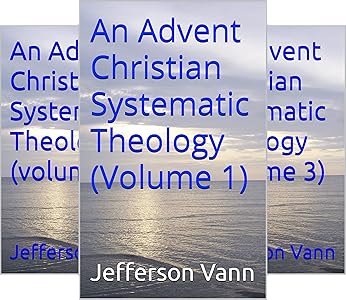
An Advent Christian Systematic Theology is a four-volume work that answers many typical questions about God, human nature, Christ, sin, salvation, and ultimate destiny.

Each volume is available in paperback (print-on-demand) and is currently being sold by Amazon for $15.

The 4-volume set is $60.


The Afterlife Archives is a series of five books that focus on conditionalism’s doctrines. These doctrines include God’s exclusive immortality, humanity’s potential for immortality, the unconscious sleep of the dead during the intermediate state, the resurrection to eternal life for the saved, and the resurrection to condemnation and the second death for the lost.

The set of all five paperback books in the Afterlife Archives series is currently available for $17.95. These prices may change on October 31st, 2025, but they will stay in effect for those who wish to bless their pastors with these resources during Pastor Appreciation Month (October).

Click on the pictures above to purchase the books.

Deuteronomy 27

Deuteronomy 27

Deuteronomy 27:1 Moses and the elders of Israel commanded the people, and they said, “Watch every command I am giving you today.

Deuteronomy 27:2 When you cross the Jordan into the land Yahveh your God is giving you, set up large stones and cover them with plaster.

Deuteronomy 27:3 Write all the words of this instruction on the stones after you cross to enter the land Yahveh your God is giving you, a land flowing with milk and honey, as Yahveh, the God of your fathers, has promised you.

Deuteronomy 27:4 When you have crossed the Jordan, you are to set up these stones on Mount Ebal, as I am commanding you today, and you are to cover them with plaster.

Deuteronomy 27:5 Build an altar of stones there to Yahveh your God – do not use any iron tool on them.

Deuteronomy 27:6 Use uncut stones to build the altar of Yahveh, your God, and offer ascending offerings to Yahveh, your God, on it.

Deuteronomy 27:7 There you are to sacrifice offerings for healthy relationships,[1] eat, and enjoy the face of Yahveh, your God.

Deuteronomy 27:8 Write clearly all the words of this instruction on the plastered stones.”

Deuteronomy 27:9 Moses and the Levitical priests spoke to all Israel, and this is what they said: “Be silent, Israel, and listen! This day, you have become the people of Yahveh, your God.

Deuteronomy 27:10 Obey Yahveh your God and follow his commands and prescriptions I am giving you today.”

Deuteronomy 27:11 On that day, Moses commanded the people, and this is what he said:

Deuteronomy 27:12 “When you have crossed the Jordan, these tribes will stand on Mount Gerizim to empower the people: Simeon, Levi, Judah, Issachar, Joseph, and Benjamin.

Deuteronomy 27:13 And these tribes will stand on Mount Ebal to deliver the affliction: Reuben, Gad, Asher, Zebulun, Dan, and Naphtali.

Deuteronomy 27:14 The Levites will answer in a loud voice to every Israelite:

Deuteronomy 27:15 ‘The person who makes a carved idol or cast image, which is repulsive to Yahveh, the work of a craftsman, and places it in secret is afflicted with a curse.’[2] And all the people will answer, ‘Amen!’

Deuteronomy 27:16 ‘The one who dishonors his father or mother is afflicted with a curse.’ And all the people will say, ‘Amen!’

Deuteronomy 27:17 ‘The one who moves his neighbor’s boundary marker is afflicted with a curse.’ And all the people will say, ‘Amen!’

Deuteronomy 27:18 ‘The one who leads a blind person astray on the road is afflicted with a curse.’ And all the people will say, ‘Amen!’

Deuteronomy 27:19 ‘The one who denies justice to a guest, a fatherless child, or a widow is afflicted with a curse.’ And all the people will say, ‘Amen!’

Deuteronomy 27:20 ‘The one who has sex with his father’s wife is afflicted with a curse, for he has violated his father’s marriage bed.’ And all the people will say, ‘Amen! ‘

Deuteronomy 27:21 ‘The one who has sex with any animal is afflicted with a curse.’ And all the people will say, ‘Amen!’

Deuteronomy 27:22 ‘The one who has sex with his sister, whether his father’s daughter or his mother’s daughter is afflicted with a curse.’ And all the people will say, ‘Amen!’

Deuteronomy 27:23 ‘The one who has sex with his mother-in-law is afflicted with a curse.’ And all the people will say, ‘Amen!’

Deuteronomy 27:24 ‘The one who secretly kills his neighbor is afflicted with a curse.’ And all the people will say, ‘Amen!’

Deuteronomy 27:25 ‘The one who accepts a “gift” to kill an innocent throat is afflicted with a curse.’ And all the people will say, ‘Amen!’

Deuteronomy 27:26 ‘Anyone who does not put the words of this instruction into practice is afflicted with a curse.’ And all the people will say, ‘Amen!’


[1]שֶׁלֶם = offering for healthy relationships.

[2]אָרָר = afflict with a curse. Deuteronomy 27:15, 16, 17, 18, 19, 20, 21, 22, 23, 24, 25, 26; 28:16, 17, 18, 19.

Deuteronomy 27 quotes:

“Chapter 27 makes an important literary and theological connection with 11:26–32 in terms of Mounts Gerizim and Ebal and the associated blessings and curses, as well as commitment to the covenant laws. As such, these passages provide a frame for the laws in chapters 12 – 26, establishing a final link between Horeb, Moab and Shechem on the basis of today (27:1, 10–11; cf. 5:1). However, chapter 27 locates the altar and the inscription of the laws upon the mountain of curse, Mount Ebal, which must be replicated when Israel crosses the Jordan (27:1–8; cf. Josh. 8:30–35). Both the elders (27:1) and the Levitical priests (27:9) witness this event, and will ensure the future of the law. Even though Moses announces both blessings and curses (27:11–13), only twelve curses are recited by the priestly Levites (27:14–26; cf. 29:17–28).This appears to be a deliberate literary and theological ploy, providing a fitting conclusion to the laws already given, and focusing especially on secret aspects of breaking the law. Furthermore, these laws remind Israel (symbolized by the twelve curses) that they stand under the curse as far as covenant and law are concerned.”

Woods, Edward J.. Deuteronomy: An Introduction and Commentary (Tyndale Old Testament Commentaries Book 5) . InterVarsity Press. Kindle Edition.

“The specific details concerning the continuity of leadership in the covenant community are stated in chs. 29–30, but in ch. 27 the general principle is given, namely, that in the future there would have to be a further renewal of obedience and commitment to God’s law, which had just been declared and expounded (chs. 12–26).”

Craigie, Peter C.. The Book of Deuteronomy (The New International Commentary on the Old Testament) (p. 327). Wm. B. Eerdmans Publishing Co.. Kindle Edition.

Deuteronomy 27 links:

an altar of stones
appreciating parents
caring for lives
determining deviancy
duty to the disabled
final affliction
getting away with it
illegitimate relationships
in retrospect- dos and don’ts
our end of the contract
respecting the contract
secret idols
shut up and listen up
Spring up, Oh Well
stipulations
supporting the marginalized
victimless crime


The DEUTERONOMY shelf in Jeff’s library.

Exodus 15

Exodus 15

Exodus 15:1 At that time, Moses and the sons of Israel sang this song to Yahveh, and this is what he sang, “I will sing to Yahveh, for victoriously he has achieved victory; the horse and his rider he has shot into the sea.

Exodus 15:2 Yahveh is my strength and my song, and he has become my salvation; this is my God, and I will praise him, my father’s God, and I will exalt him.

Exodus 15:3 Yahveh is a man of war; Yahveh is his name.

Exodus 15:4 “Pharaoh’s chariots and his army he shot into the sea, and his elite officers were sunk in the Red Sea.

Exodus 15:5 The depths covered them; they went down into the deep sea like a stone.

Exodus 15:6 Your right hand, LORD, made glorious by power, your right hand, LORD, smashes the enemy.

Exodus 15:7 In the greatness of your majesty you overthrow your adversaries; you send out your burning anger; it consumes them like stubble.

Exodus 15:8 At the breath of your nostrils the waters piled up; the floods stood up in a heap; the depths solidified in the heart of the sea.

Exodus 15:9 The enemy said, ‘I will pursue, I will overtake, I will divide the spoil, my throat will be satisfied over them. I will draw my sword; my hand will destroy them.’

Exodus 15:10 You puffed your breath; the sea covered them; they sank like lead in the grand waters.

Exodus 15:11 “Who is like you, LORD, among the gods? Who is like you, great in holiness, awesome in praiseworthy deeds, doing miracles?

Exodus 15:12 You stretched out your right hand; the land swallowed them.

Exodus 15:13 “You have led by your covenant faithfulness[1] these people whom you have redeemed; you have guided them by your strength to your sacred dwelling.

Exodus 15:14 The peoples have heard; they shudder; anguish has taken hold of the those who dwell in Philistia.

Exodus 15:15 At that time the chiefs of Edom became disturbed; trembling has taken hold of the leaders of Moab; all who live in Canaan have melted.

Exodus 15:16 Terror and dread fall upon them; because of the greatness of your arm, they keep still as a stone, till your people, Yahveh, pass by, till the people pass by whom you have bought.

Exodus 15:17 You will bring them in and place them on your own mountain, the place, LORD, which you have made for your dwelling, the sanctuary, Lord, which your hands have set up.

Exodus 15:18 Yahveh will reign permanently and continually.”

Exodus 15:19 Because when the horses of Pharaoh with his chariots and his horsemen went into the sea, Yahveh brought back the waters of the sea upon them, but the people of Israel walked on dry ground in the midst of the sea.

Exodus 15:20 Then Miriam the prophetess, the sister of Aaron, took a tambourine in her hand, and all the women went out behind her with tambourines and dancing.

Exodus 15:21 And Miriam sang to them: “Sing to Yahveh, because he has achieved victory; the horse and his rider he has shot into the sea.”

Exodus 15:22 Then Moses pulled up Israel from the Red Sea, and they went into the Shur open country. They went three days in the open country and could not find water.

Exodus 15:23 When they came to Marah, they could not drink the water of Marah because it was bitter; therefore, it was named Marah.

Exodus 15:24 And the people complained about Moses, and this is what they said, “What will we drink?”

Exodus 15:25 And he cried out to Yahveh, and Yahveh showed him a tree, and he threw it into the water, and the water became sweet. There Yahveh made for them a prescribed task and a judgment,[2] and there he tested them,

Exodus 15:26 saying, “If you will carefully listen to the voice of Yahveh your God, and do that which is right in his eyes, and give ear to his commandments and keep all his prescribed tasks, I will put none of the maladies on you that I put on the Egyptians, for I am Yahveh, your healer.”

Exodus 15:27 Then they came to Elim, where there were twelve springs of water and seventy palm trees, and they set up camp there by the water.


[1] חֶסֶד = covenant faithfulness. Exodus 15:13; 20:6; 34:6, 7.

[2] מִשְׁפָּט = judgment, justice, justly. Exodus 15:25; 21:1, 9, 31; 23:6; 24:3; 26:30; 28:15, 29, 30.

Exodus 15 quotes:

“This poem is a lyrical outpouring of emotional praise of the God who had delivered them. It enters that praise assuming that we know the story, and tells it from an alternative point of view. Rather than focusing on the human side of the story, it focuses on the spiritual and heavenly side and it does so with evocative language that has God at its centre. So, where Exodus 14:21 told us that the sea parted when a strong east wind blew through the night, Exodus 15:8 tells us that it was by the blast of God’s nostrils that the waters piled up.”

Reid, Andrew. Out of Darkness : Exodus 1- 18. Matthias Media, 2005. p. 56.

“Miriam’s Song appears at the end of a Hebrew poem about God’s deliverance at the Red Sea (Exodus 15:1-21). The entire poem is known in Judaism as Shirat ha-Yam, “The Song of the Sea.”? John I. Durham proposes that this song was “stimulated by an exceptional moment in Israel’s history.” * Israel had just witnessed God’s power through the 10 plagues and the parting of the Red Sea, walked across the seabed on dry land, and watched the complete destruction of Egypt’s pursuing army (14:21-29). Their response is summarized in verse 31: “Thus Israel saw the great work which the Lord had done in Egypt; so the people feared the Lord, and believed the Lord and His servant Moses.””

Guy, Cynthia Dianne. Struggle Seek Grow: How 12 Women in Scripture Sought Spiritual Maturity. Gospel Advocate Company, 2011. p. 136.

“So here is a hymn that looks back to a miraculous event fresh in the minds of all the Israelites, and yet looks forward to a promise of a land the people have not yet seen (Exodus 15: 17). It is a song both of experience and of faith, of proof and yet of trust. Most of all it is a people’s song, expressing praise to their God, Yahweh, the Lord, who was leading them — by displays of great power where necessary— every step of their journey.”

Stuart, Douglas K. Favorite Old Testament Passages : A Popular Commentary for Today. 1st ed, Westminster Press, 1985. p. 27.

Exodus 15 links:

ACST 2 The Promise
bitter water test
Exodus- grace to the grumbling
Exodus- inspiration
Gender Equality in Ministry
introducing the breath of God
victory songs


Maranatha Daily Devotional – Friday, July 28, 2017
Maranatha Daily Devotional – Monday, March 18, 2019
Maranatha Daily Devotional – Monday, March 20, 2023
Maranatha Daily Devotional – Saturday, July 29, 2017
Maranatha Daily Devotional – Thursday, July 27, 2017


EXODUS in Jeff’s library